A slab surface tends to get treated like it will take care of itself once it's in place. Most of the time it does, at least for a while, but the high desert conditions around Carson Valley eventually show up on any surface that gets ignored for too long.
Dust from dry summers, soot and ash from a wood stove through the winter, and everyday household grime all add up differently depending on the material. What works for keeping a porcelain slab looking new isn't quite the same as what a natural stone slab needs, and mixing up the two is one of the more common ways people end up disappointed with a surface they otherwise love.
None of this requires an elaborate routine. Most of it comes down to knowing which material is in the room, picking the right cleaner for that material, and paying attention to a handful of habits that either protect a surface or slowly wear it down.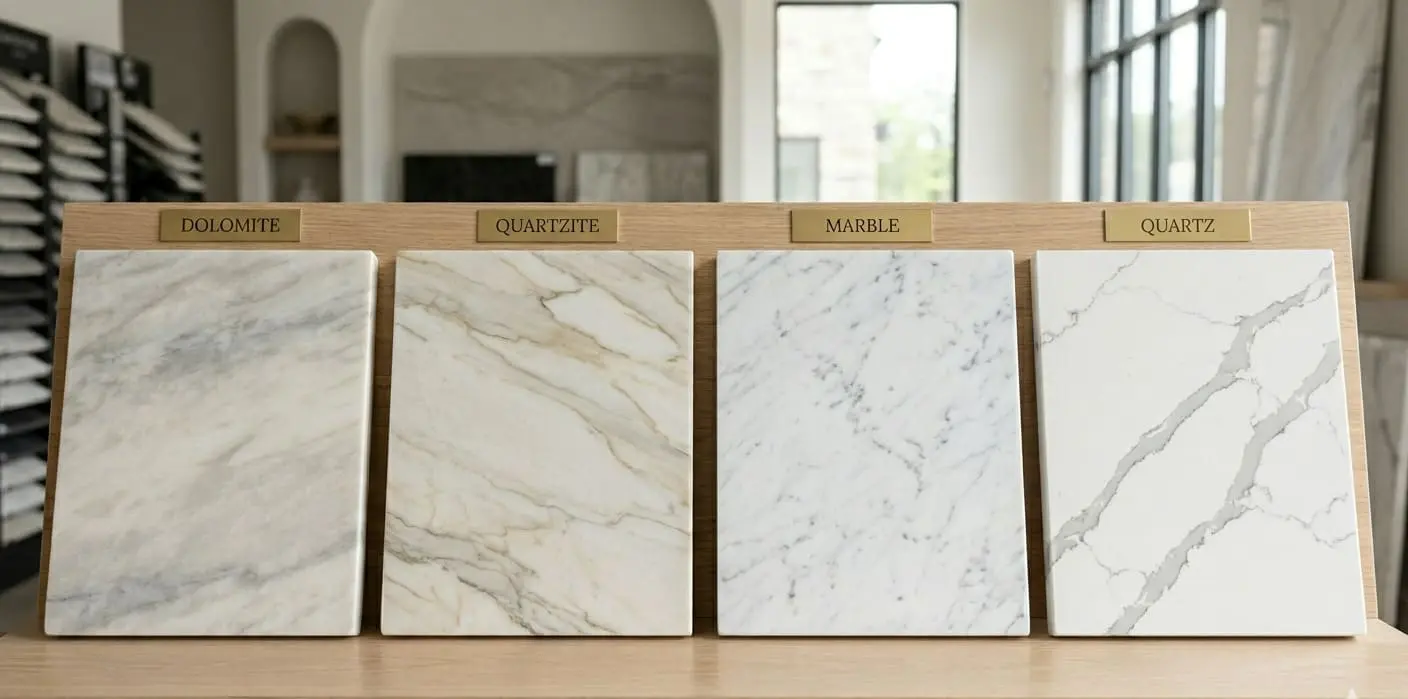
Every Material Asks For Something Slightly Different
Granite and quartzite sit at the low-maintenance end of natural stone. Both are dense enough that everyday spills and general use rarely cause trouble, though periodic resealing still keeps their resistance to staining where it should be.
Marble, dolomite, and travertine ask for more attention. These stones are more porous and more reactive to acidic substances, so something as ordinary as a splash of citrus or vinegar can dull or etch the surface if it isn't wiped up quickly. None of that makes them a poor choice, it just means routine care matters more with these three than it does with granite or quartzite.
Porcelain sits apart from the rest as an engineered material with very low porosity, which is a large part of why it needs less ongoing attention than most natural stone. Semi-precious stone falls somewhere in its own category too, since it's a resin-bonded material best cleaned with a soft cloth rather than anything abrasive, and it holds up best when kept out of direct, prolonged sun exposure.
Travertine deserves its own mention here because of its natural pitting. Those small surface holes are part of the stone's character, and many slabs come filled during fabrication, but keeping the surface clean matters more with travertine since dust and grime can settle into any holes that remain exposed.
Finish plays into this as well. A honed or leathered surface tends to show water spots and fingerprints less than a polished one, which is worth factoring in if low-maintenance appearance matters more to you than shine. Anyone still deciding on a finish can look through general guidance on selecting the ideal stone finish before committing to a look for a new project.
Browsing a current slab inventory is also a reasonable way to see which materials and finishes are actually available before deciding between two similar-looking options.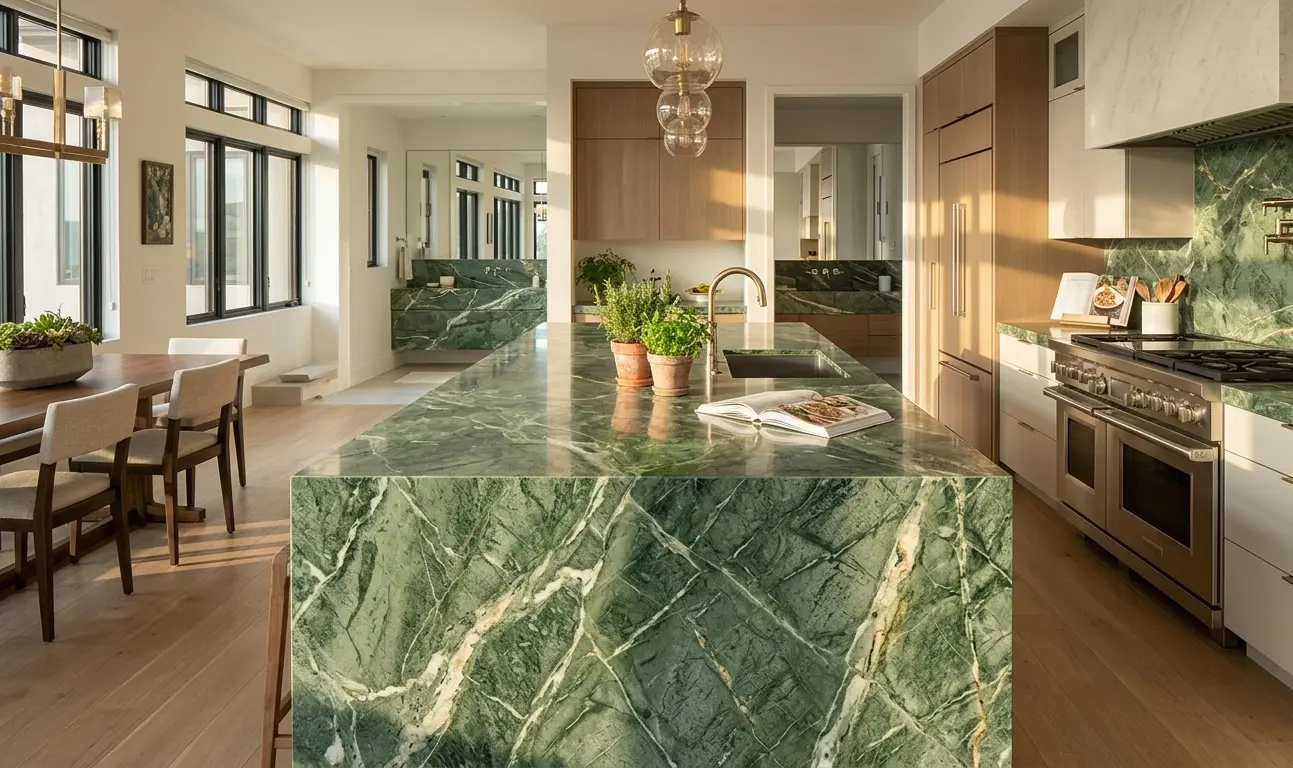
Everyday Cleaning That Actually Works
For natural stone, a pH-neutral stone cleaner and a soft cloth handle most day-to-day cleaning without stripping any sealant or dulling the finish. Ammonia, bleach, and most all-purpose household cleaners are worth skipping on stone, since they tend to do more harm than good over repeated use.
Porcelain is more forgiving here. A basic non-abrasive cleaner is usually enough, and its low porosity means spills have less chance of soaking in before they're wiped up.
Spills in general are worth cleaning up sooner rather than later, especially anything acidic or heavily pigmented like wine or coffee. Blotting a fresh spill works better than wiping it, since wiping tends to spread the liquid across more of the surface instead of lifting it away. This matters more on natural stone than on porcelain, but it's a reasonable habit either way.
Quick reference for cleaning products:
Safe on most stone: a pH-neutral stone cleaner and a soft, non-abrasive cloth.
Worth avoiding on natural stone: ammonia, bleach, vinegar, and any general household cleaner not made for stone.
For porcelain: a basic non-abrasive cleaner is usually all that's needed.
On any spill: blot rather than wipe, and act quickly if it's acidic or heavily pigmented.
If it's ever unclear which cleaning approach fits a specific slab, that's a reasonable thing to ask about when choosing a material during a free design consultation, since the right answer often depends on the exact stone and finish.
Sealing And Why Porosity Actually Matters
Sealing exists because natural stone is porous to varying degrees, and a sealant helps liquids bead on the surface instead of soaking in, buying time to wipe up a spill before it can stain. How often that seal needs renewing depends less on which stone it is and more on its specific porosity, its finish, and how much daily exposure it gets.
A simple water test gives a rough sense of where any given slab stands. A few drops of water placed on the surface that bead up mean the seal is still doing its job, while drops that soak in within a minute or two usually mean resealing is due.
Rather than guessing at a fixed schedule, it's worth reviewing general natural stone care guidelines for a clearer sense of what's reasonable for a specific stone. Quartzite, for example, often does well with a check once or twice a year, especially in a high-traffic spot or under direct sun through a large window, while a lower-exposure application of a different stone might reasonably go longer between checks.
Porcelain and semi-precious stone don't follow the same porosity rules as quarried natural stone, so the sealing conversation mostly applies to granite, marble, dolomite, quartzite, and travertine. A honed or leathered finish can also behave differently than a polished one on the same stone, since the more textured surface sometimes absorbs slightly more than a smooth, dense polished face.
Heat, Scratches, And The Wear That Adds Up
Most slab material handles everyday heat reasonably well, though setting anything straight from the oven or off a wood stove directly onto a surface still isn't a great habit, and a trivet or heat pad is an easy way to avoid the question altogether.
Scratches usually come from something being dragged rather than set down, so furniture legs, heavy cookware, or tools sliding across a surface are the more common culprits behind a scuffed-up finish. Felt pads under furniture and a bit of care when moving heavier objects go a long way toward keeping a finish looking the way it did on day one.
Around a fireplace specifically, ash and soot are more abrasive than they look, and letting them sit on a hearth ledge for weeks at a time can dull a polished finish faster than normal daily use would. A soft brush or vacuum attachment before wiping the area down keeps grit from acting like sandpaper every time a cloth passes over it.
If a slab ends up chipped, cracked, or worn past what cleaning and resealing can fix, looking at new material is usually more realistic than trying to patch around the damage indefinitely. Requesting a slab quote is the same starting point for that as it would be for any other new slab project.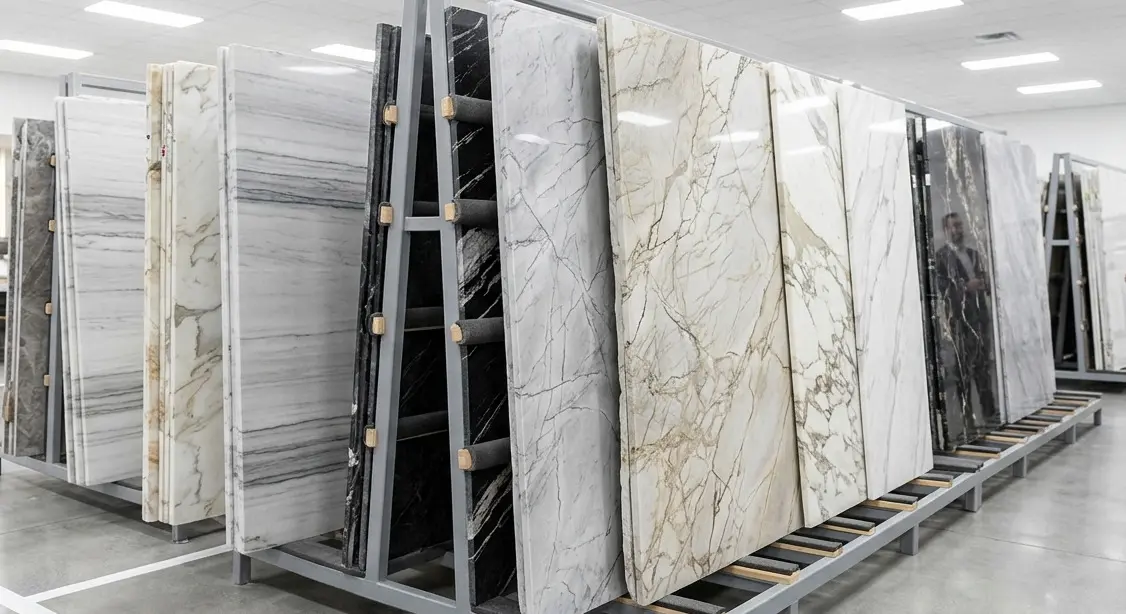
Natural Stone Or Engineered, Over The Long Run
The care difference between natural stone and engineered stone tends to show up years down the road rather than in the first few months. Granite, marble, quartzite, and travertine will each show their own wear pattern over time, shaped by sealing habits, sun exposure, and everyday use, since no two slabs age in quite the same way.
Porcelain holds a more consistent appearance over a longer stretch of time, mainly because there's less porosity and mineral variation to begin with. That consistency is part of why porcelain has become a common choice for homeowners who want a stone-look surface without the periodic resealing that comes with quarried material.
Reviewing the full range of tile and stone products available is a reasonable way to weigh that tradeoff before settling on a material, especially for a project where long-term upkeep matters as much as the initial look.
Care That Fits The Stone
None of this has to be complicated once the material in question is identified correctly. Granite and quartzite resist everyday spills and stains with the least fuss, marble, dolomite, and travertine benefit from a bit more consistency around sealing and acidic spills, and porcelain sits at the easy end of the spectrum for anyone who wants fewer routine tasks.
The habits that matter most are simple: wipe up spills before they sit, use a cleaner suited to the actual material rather than whatever is under the sink, and keep an eye on whether a surface still beads water the way it did when it was new. Getting those basics right accounts for most of what keeps a slab looking the way it did on installation day, no matter which room it ends up in.
Conclusion
Photos and online descriptions only go so far when it comes to judging how a specific slab will hold up in a specific home. Seeing the actual stone in person and asking what a particular finish typically needs going forward tends to save homeowners from surprises later.
The Minden showroom is a useful stop for comparing options against what's already in a home, since a side-by-side look tells you more than guessing from a photo ever will. Our Minden showroom is located at 2548 Business Pkwy, Minden, NV 89423, and can be reached at (775) 783-4970. The location is also listed on Google Business Profile for anyone who'd rather pull up directions than search for the address.
Nova Tile and Stone keeps a wide range of natural and engineered slab material on hand for homeowners throughout Carson Valley, along with a team that can talk through care expectations before a single slab leaves the showroom.
Frequently Asked Questions
Yes, most natural stone benefits from periodic resealing, though exactly how often depends on the specific stone, its finish, and how much daily exposure it gets rather than on any fixed rule.
A pH-neutral stone cleaner and a soft cloth handle most everyday cleaning without stripping the sealant, while ammonia, bleach, and many all-purpose cleaners are worth avoiding on natural stone surfaces.
No, porcelain has much lower porosity than quarried stone, so it generally needs less frequent sealing and holds up well with a basic non-abrasive cleaner for routine care.
A simple water test works as a rough guide: drops that bead on the surface suggest the seal is holding, while drops that soak in within a minute or two usually mean it's time to reseal.
No, sealing mainly matters for natural stone such as granite, marble, dolomite, quartzite, and travertine. Porcelain and semi-precious stone have much lower porosity and don't follow the same sealing schedule as quarried material.
Note: Some images on this page may be conceptual renderings created to illustrate design possibilities and may not depict actual installations.