Sintered stone is an engineered surface created by compressing natural mineral materials under intense heat and pressure, forming a dense slab that is often selected for kitchen island counters. In Minden homes, sintered stone is one of the countertop options available for island surfaces, valued for its compact, low-absorption structure and range of colors and finishes.
For Minden homeowners planning an island counter, sintered stone is often weighed against quartz, natural stone, and porcelain, particularly in kitchens where the island functions as the main prep and gathering space. This guide covers how sintered stone performs on a kitchen island, what design choices are available, and what else Minden homeowners typically compare it with before choosing a surface.
What Is Sintered Stone?
Sintered stone is produced by combining natural mineral raw materials such as silica, feldspar, and clay, then compacting them under high heat and pressure until they form a single, dense slab. This manufacturing method is designed to reduce porosity compared with many natural materials, which is one reason it is often considered for high-use areas like kitchen islands.
The finished slab can be produced in a wide range of colors, patterns, and textures, giving homeowners more flexibility than they might expect from a single material category. Because the raw minerals and manufacturing process can vary, performance characteristics such as color consistency and finish depend on the specific slab selected.
A kitchen island surface benefits from this manufacturing approach since it is meant to withstand repeated contact from food prep, appliances, and everyday household activity. Because the process is controlled at each stage, slab thickness and edge profiles can also be more consistent from one piece to the next, though exact specifications should always be confirmed for a specific project.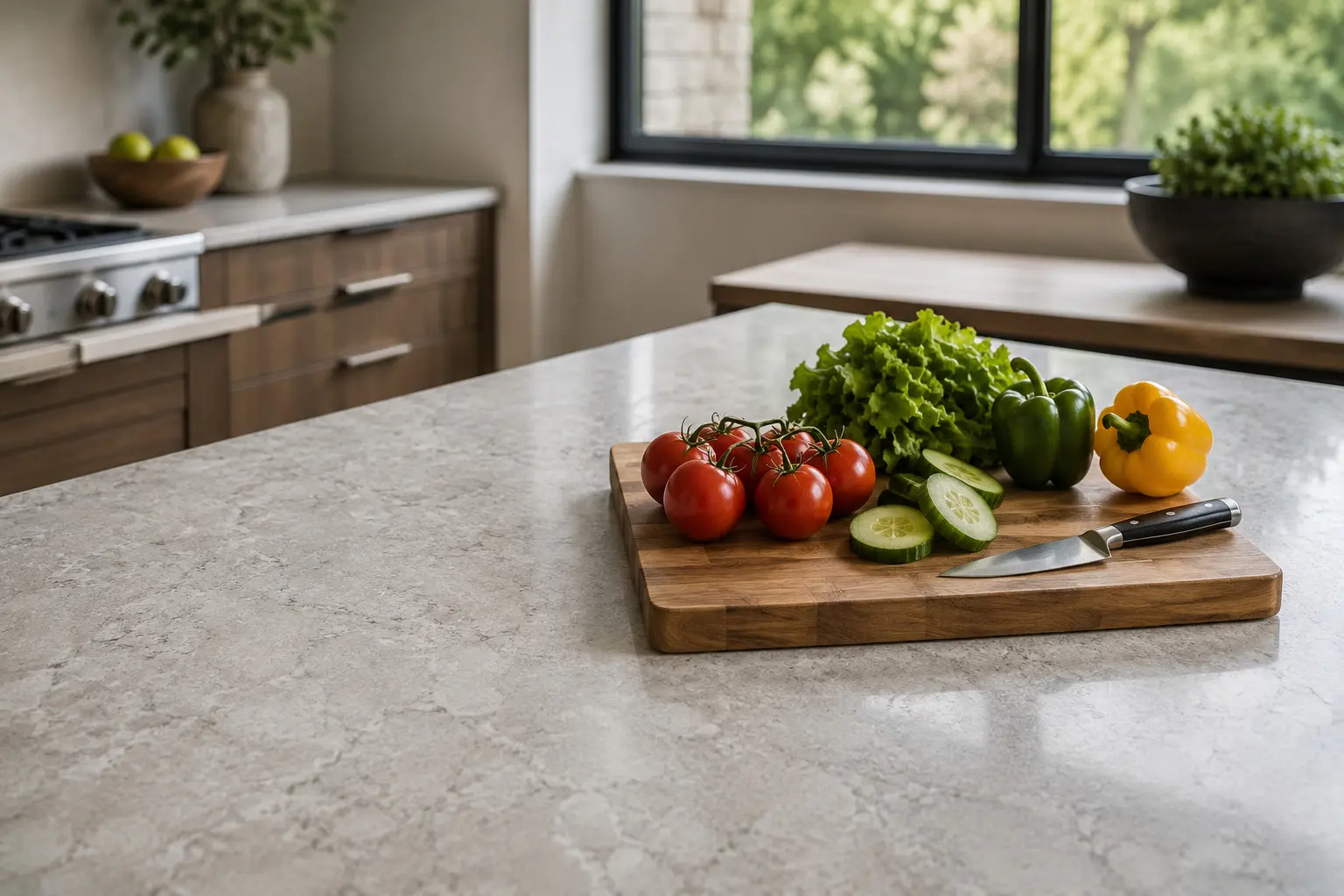
Why Sintered Stone Works Well for Kitchen Islands
A kitchen island tends to absorb more daily wear than a standard countertop section, since it is used for chopping, mixing, serving, and casual dining all in the same footprint. This is one reason sintered stone gets consideration for an island top: the surface is non-porous, though regular cleaning still keeps it looking its best over time.
Spills are another everyday reality on an island. The surface holds up well against staining, but a quick wipe-down is still the safer habit rather than letting anything sit.
Heat is less of a concern too, since the slab can handle normal kitchen heat, but resting a very hot pan directly on it is still worth avoiding. Knives are the one exception worth flagging: the surface resists scratching under normal use, but cutting straight on it isn't recommended, so a board earns its keep here.
Because an island often sits in the middle of an open floor plan and gets seen from every angle, how the finish holds up matters just as much as how the material performs underneath.
Put together, these traits make sintered stone a reasonable fit for an island that sees constant activity, with the caveat that results still come down to the specific slab, finish, and upkeep. Anyone weighing whether it fits their household's routine can also book a free design consultation to talk through daily use before committing.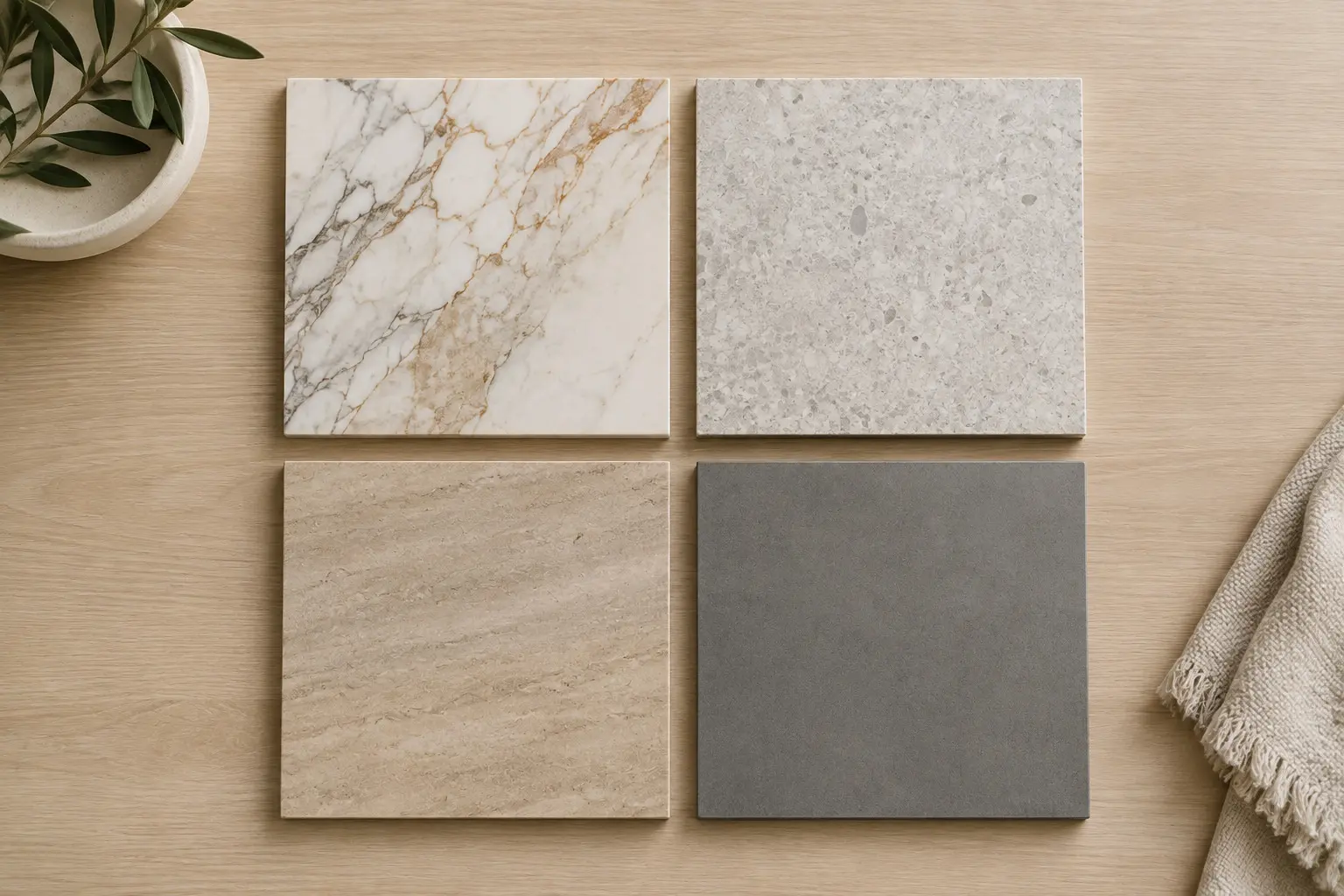
Design and Color Options for Kitchen Island Surfaces
One reason homeowners consider sintered stone for island counters is the range of visual options available within a single material category. Slabs can be produced with the look of natural marble veining, a solid matte tone, or a more textured, concrete-inspired finish, allowing a Minden kitchen island to serve as either a subtle complement or a bold focal point in the room.
Because sintered stone is manufactured in large format slabs, it can also help reduce the number of visible seams across a wide island, though seam placement still depends on the exact island dimensions and slab size chosen. Many homeowners pair their island surface with a contrasting perimeter counter material to create visual separation between the workspace and the rest of the kitchen, while others choose a matching tone throughout for a more unified look.
Thickness is worth thinking about early, since it affects more than just how the slab looks. Sintered stone is typically available in a couple of standard thicknesses, most commonly around 12mm and 20mm, and the thicker option is generally the one chosen for a waterfall edge, where the surface wraps down the side of the island as one continuous panel instead of meeting at a mitered seam.
For a more traditional kitchen, a warmer stone-look finish complements classic wood tones and fixtures, while a cooler, more uniform tone suits a contemporary layout. Tone and pattern can vary depending on the specific product and design selected, so viewing the actual slab in person is preferable to judging from a photo alone.
Homeowners can also browse our live slab inventory online first to narrow down colors and patterns before a showroom visit.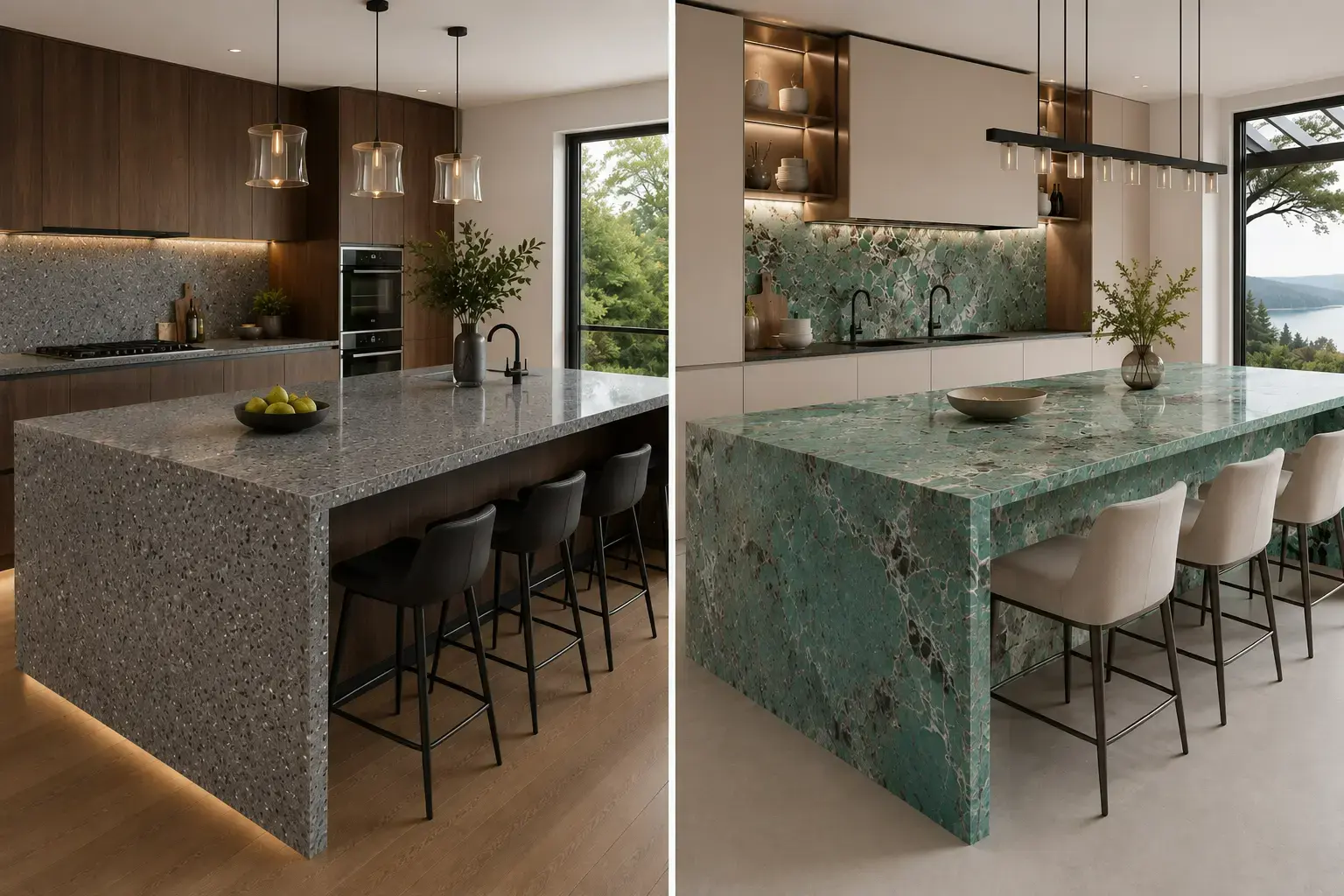
Comparing Sintered Stone to Other Countertop Materials
Kitchen islands are commonly finished in quartz, natural stone, porcelain, or pre-fabricated countertop material, and each option carries its own set of considerations. Quartz is engineered from quartz particles and resin, offering consistent patterning across a slab.
Natural stone, including granite, marble, and quartzite, is quarried rather than manufactured, so veining and color vary from one slab to the next. Porcelain slabs share some characteristics with sintered stone, including a dense, low-porosity surface, though the manufacturing process and thickness options can differ between the two.
Sintered stone is grouped alongside these materials as a modern alternative, offering a look that resembles natural stone while being produced under controlled manufacturing conditions. Pre-fabricated countertops, cut and finished ahead of time in standard sizes, can work for an island depending on the dimensions needed, though a custom slab is the better fit for larger or uniquely shaped islands.
The right choice for a kitchen island generally depends on preferred appearance, how the island will be used day to day, and how the surface fits with the rest of the kitchen design. Once a material is narrowed down, submitting a slab quote request is one way to get pricing on a specific selection.
Caring for a Sintered Stone Kitchen Island
Ongoing care plays a role in how any countertop material performs over time, including sintered stone. The material is easy to maintain, but harsh cleaners should be avoided, since some chemicals can affect certain finishes.
The surface is suitable for food preparation, but a cutting board is always recommended to help protect the finish from repeated knife contact.
For more detailed guidance on maintaining natural and engineered stone surfaces, the Natural Stone Institute's care resource offers general information that applies across several stone and stone-like materials. Following consistent care habits can help a kitchen island continue to look presentable well beyond the first few years of daily use.
Selecting the Right Finish for Your Island
Finish selection affects more than appearance. It can influence how a surface reflects light, how visible fingerprints or water spots are day to day, and how the slab feels underhand.
Finish options commonly available across sintered and natural stone slabs include polished, honed, and textured surfaces, each offering a different balance between shine and a more understated look.
Homeowners weighing finish options for a kitchen island may find it helpful to review this overview on selecting a stone finish, which explains how finish can affect the overall look and feel of a slab. Because lighting conditions in a kitchen shift throughout the day, viewing slabs under different lighting beats judging from an image online.
Visiting Nova Tile and Stone in Minden for Kitchen Island Ideas
For Minden homeowners planning a kitchen island project, seeing slab options in person remains one of the more reliable ways to judge color, veining, and finish before making a decision. Our Minden showroom is located at 2548 Business Pkwy, Minden, NV 89423, and can be reached at (775) 783-4970.
As a direct stone importer, our showroom displays an extensive selection of natural stone, along with quartz, porcelain, and sintered stone options suited to kitchen island projects.
For those exploring current selections, our overstock sale page lists options available now, and our Minden showroom location has directions for anyone planning a visit.
Our Minden showroom page covers hours and materials carried in more detail, and our main website covers our full range of surfaces across all locations.
Conclusion
Sintered stone is a practical option for Minden homeowners to consider for a new kitchen island surface, offering a dense, low-porosity slab with a wide range of design possibilities. While the material offers several performance advantages, actual results depend on the specific slab, finish, and how consistently it is cared for over time.
Comparing sintered stone against quartz, natural stone, and porcelain can help homeowners find the right balance of appearance and daily performance for their own kitchen. Visiting a showroom in person remains one of the more reliable ways to evaluate color, finish, and scale before committing to a material for an island project.
Frequently Asked Questions
Sintered stone is produced from natural mineral materials such as silica, feldspar, and clay, which are compacted under high heat and pressure to form a dense slab.
Sintered stone is often selected for kitchen islands because it is non-porous and generally resistant to stains and scratching, though care and slab selection still affect long-term performance.
Quartz is engineered from quartz particles and resin with consistent patterning, while sintered stone is manufactured through heat and pressure and can offer a wider range of textures and finishes.
Sintered stone is typically available in a couple of standard thicknesses, and a thicker slab, often around 20mm, is generally the one chosen for a waterfall edge so the surface can wrap down the side of the island in one continuous panel.
Homeowners can view sintered stone and other countertop materials at our Minden showroom, where slab options are available for in-person comparison.
Note: Some images on this page may be conceptual renderings created to illustrate design possibilities and may not depict actual installations.