Staircase Designs That Define a Home's Character
Staircase designs built from natural and engineered stone slabs bring lasting visual weight to homes throughout Silver Springs, NV. Granite, quartzite, marble, and porcelain each carry distinct stone materials and surface patterns, from bold veining to fine speckled texture, suited to different stair applications. Selecting the right slab depends on traffic level, finish, and the surrounding design scheme.
A staircase often serves as the first design statement a visitor notices, connecting entryways, living spaces, and upper floors into one continuous visual line. Stone slabs extend that line with texture and pattern that tile alone rarely achieves at the same scale. Homeowners across the Fernley, Fallon, Silver Springs, Wadsworth, and Stagecoach areas increasingly look to stone for treads, risers, and accent walls that frame a stairway rather than simply cover it.
Choosing a slab for a staircase involves more than color matching. Finish selection affects underfoot grip, exposure determines whether a material belongs indoors or out, and pattern scale should relate to the width and length of each tread. The stone slabs available through Nova Tile and Stone span every major category, giving homeowners a wide field of stone options and surface styles to draw from.
Staircase projects also differ from flat flooring in one key way: every surface is viewed from multiple angles at once. A tread is seen from above while walking, a riser is seen at eye level from below, and a landing slab is often visible from an adjoining room. Selecting stone that reads well from each vantage point takes more consideration than a single flat surface, which makes early planning worthwhile before any slab is finalized.
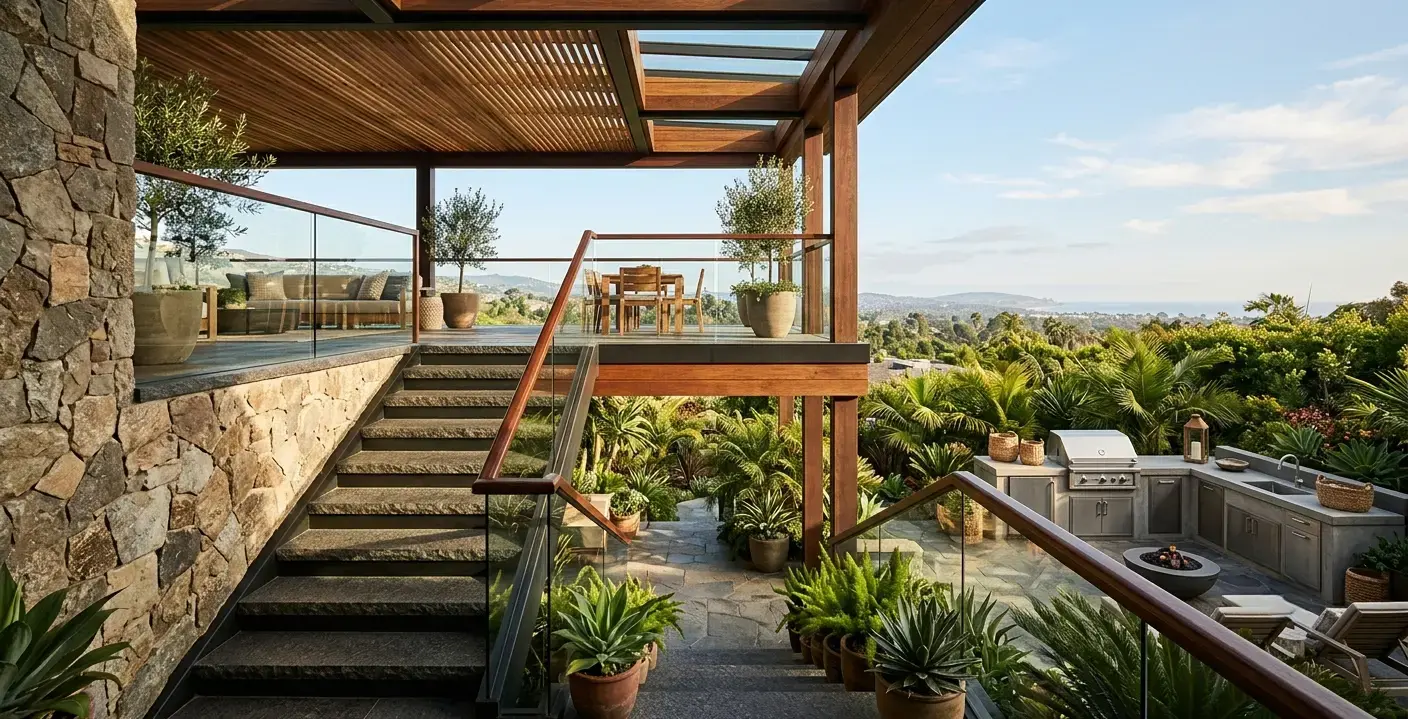 Conceptual rendering
Benefits of Stone Slab Staircase Designs
Stone slabs bring a set of practical and visual advantages to staircase projects that few other materials match at the same scale.
- Continuous slab surfaces minimize visible seams across wide treads and landings
- Natural veining and mineral patterns create a one-of-a-kind visual centerpiece
- Granite and quartzite tolerate covered outdoor exposure for exterior staircases
- Honed and leathered finishes offer more underfoot grip than polished surfaces
- Slab durability holds up to daily foot traffic when properly maintained
Each benefit carries a practical caveat. Continuous slabs reduce grout lines, but proper sealing and periodic care still preserve their finish over time. Polished surfaces show dramatic veining, but they are more slippery when wet, so a honed or leathered finish is often the safer choice for stair treads. Durability varies by material and finish, and cutting boards, trivets, and prompt spill cleanup remain good practice regardless of stone type.
Staircases also see more edge contact than flat flooring, since shoes strike the nose of each tread repeatedly over time. Denser materials like granite and quartzite tend to hold up well along this edge, while softer stone such as marble or travertine may show gradual wear sooner. None of these materials are maintenance-free, and periodic resealing helps preserve both appearance and slip performance over the life of a staircase.
Applications and Design Patterns for Stone Staircases
Interior Tread and Riser Combinations
Indoor staircases offer the widest material range, since exposure to weather is not a factor. Marble, dolomite, and travertine bring soft veining or fossil-like texture to risers, while granite and quartzite provide a denser, more uniform look for high-traffic treads. Engineered quartz remains an indoor-only option, prized for a consistent pattern with lower ongoing maintenance than natural stone.
Pairing a honed tread with a polished riser is a common design pattern, since the tread carries most foot traffic while the riser is a vertical, low-contact surface. This contrast in sheen also helps define each step visually, which can improve safety perception on longer staircases. Coordinating slab veining direction between treads adds a sense of continuity from the first step to the last.
Interior staircases near open living areas benefit from stone that echoes materials already used nearby, such as a kitchen island or fireplace surround. Dolomite, in particular, offers a softer, more muted veining pattern than marble while remaining an indoor or shaded-outdoor material, giving homeowners another option when a bright white marble feels too dramatic for a stairway setting.
Outdoor and Covered Staircase Applications
Exterior staircases call for materials rated for the conditions they will face. Granite, quartzite, and porcelain slabs tolerate full-sun exposure, marble and dolomite suit shaded or covered stairways, avoiding direct sunlight. Travertine is outdoor‑rated but not UV‑resistant, making it more suitable for areas with limited sun exposure. Porcelain slabs, backed by porcelain tile certification standards, offer a dense, low-absorption option for covered entry stairs.
Textured or leathered finishes are generally preferable to polished ones on any outdoor step, since rain and morning dew increase slip risk on smooth surfaces. Homeowners in the Fernley and Silver Springs areas planning covered porch staircases often pair a leathered granite tread with a honed riser for a cohesive, weather-appropriate look. Semi-precious stone slabs remain an indoor, wall-only accent and are not suited to any stair tread or exterior application.
Northern Nevada's temperature swings between seasons make finish selection especially relevant for exterior stairways. A leathered or honed surface holds up to freeze-thaw cycling and repeated foot traffic more predictably than a smooth polished slab, which can become more slippery once frost or morning condensation sets in. Homeowners in the Fallon, Wadsworth, and Stagecoach service areas planning exterior stone stairways should weigh local seasonal conditions alongside material choice.
Coordinating Color and Pattern With the Whole Home
A staircase rarely stands alone in a home's design scheme. Reviewing broader color scheme direction before selecting a slab helps a staircase feel connected to adjoining rooms rather than an isolated feature. Neutral granite or quartzite pairs well with warmer wood tones, while marble veining can echo patterns already present in a kitchen or bathroom slab elsewhere in the home.
Pattern scale matters as much as color. A bold, high-contrast vein pattern can overwhelm a narrow staircase, while a finer, more subtle pattern often reads better on tight treads and landings. Wider staircases and open landings can support larger slab patterns without appearing busy, giving homeowners more flexibility in material choice.
Lighting also changes how a stone pattern reads on a staircase compared to a flat floor. Natural light from a nearby window can highlight veining on a riser at certain times of day, while a shaded stairwell may call for a lighter-toned slab to keep the space from feeling closed in. Viewing full slabs under varied lighting gives a more accurate sense of the finished look.
Our latest contents
Check out what's new in our company!
Nova Tile and Stone Guidance for Staircase Projects
Selecting stone materials and surface patterns for a staircase benefits from expert guidance, particularly when balancing finish, exposure, and pattern scale across multiple steps. The team background behind Nova Tile and Stone reflects years of experience matching slab selections to staircase and interior projects across the region. Nova Tile and Stone maintains a slab selection spanning granite, quartzite, marble, dolomite, travertine, quartz, porcelain, and semi-precious stone, each viewable in showroom to compare veining and finish side by side.
Showroom visits remain the most reliable way to judge how a slab's pattern will read across a full staircase run, since lighting and scale can shift how a sample photograph appears. Homeowners near the Reno area can compare finishes in person. Those closer to Sacramento find a similarly broad selection nearby. The Minden showroom serves the same purpose for homeowners in that area, along with the Fernley service area. Staying current with industry direction from events like the Surface Event helps inform which stone patterns are trending for staircase applications this season.
Homeowners weighing several materials at once often find it useful to bring measurements or photos of the existing stairway to a showroom visit. Comparing slabs directly against a space, rather than relying on memory alone, makes it easier to judge how a pattern's scale and tone will translate once the full staircase is complete.
Ready to explore stone finishes and textures for a staircase project. Book your free consultation today.
Advantages and Design Considerations at a Glance
Material | Outdoor Rated | Recommended Stair Finish | Maintenance Note |
Granite | Yes | Honed or leathered | Moderate |
Quartzite | Yes | Honed or leathered | Moderate |
Marble | Indoor only | Honed | High |
Dolomite | Indoor only | Honed | High |
Travertine | Shaded only | Honed or Leathered | High |
Quartz | Indoor only | Honed | Low |
Porcelain | Yes | Honed | Low |
Semi-Precious | Indoor, wall only | Polished (wall use) | Low |
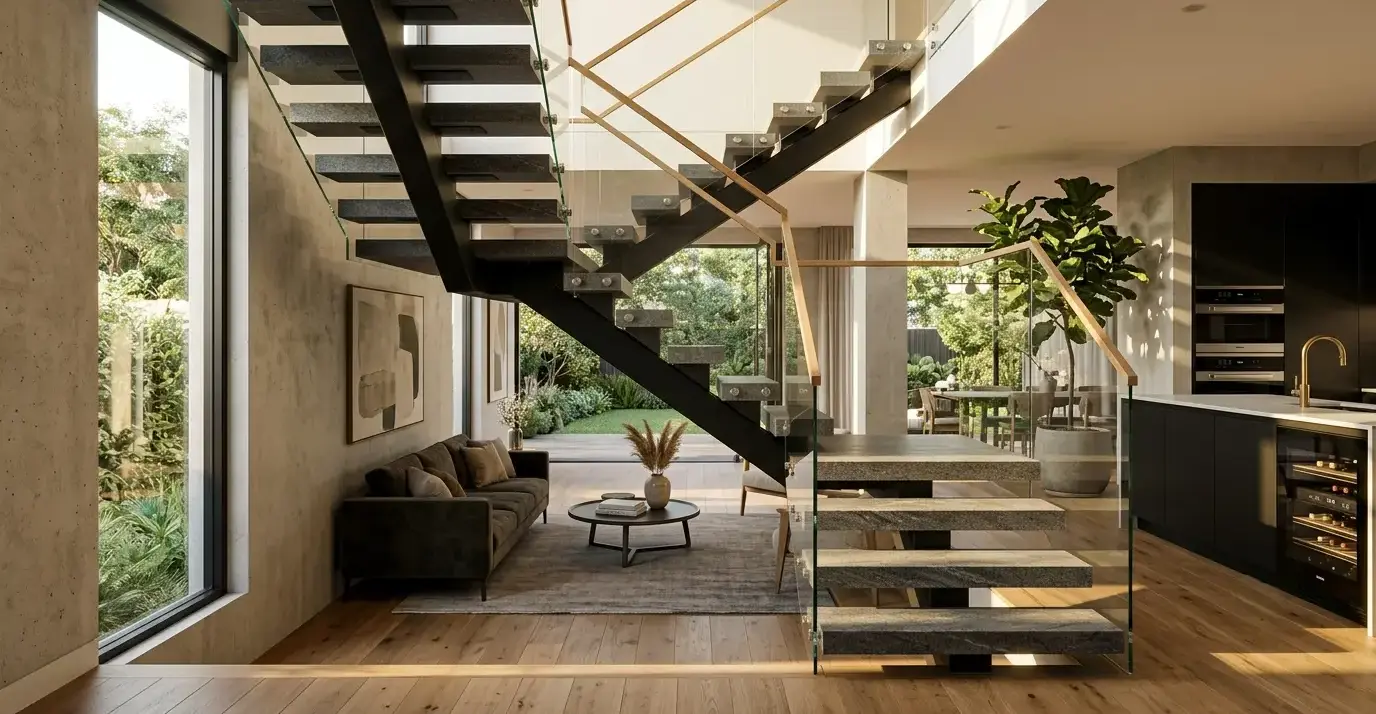 Conceptual rendering
Steps for Planning a Stone Staircase Design
- Assess the staircase location, indoor or outdoor, and its typical foot traffic
- Narrow material options based on exposure and finish safety needs
- Compare slab veining and pattern scale against the width of each tread
- Coordinate the chosen stone with adjoining flooring or wall surfaces
- Schedule a showroom visit to view full slabs before finalizing a selection
Conclusion
Stone slab staircase designs bring lasting texture, pattern, and character to homes across the Silver Springs area. From honed granite treads to shaded marble risers, the right stone types and design patterns depend on exposure, finish, and the surrounding design scheme. Explore the full slab collection to see stone materials and surface patterns firsthand. Book your free consultation today.
Frequently Asked Questions
Granite and quartzite are common choices for staircase treads because they tolerate daily foot traffic well, particularly in a honed or leathered finish that offers more underfoot grip than a polished surface.
Marble is best reserved for indoor or shaded outdoor staircases rather than direct sun exposure, since it is not rated for full outdoor conditions the way granite, quartzite, and porcelain are.
Honed and leathered finishes generally offer more underfoot grip than polished surfaces, making them a common choice for stair treads, especially in entryways or covered outdoor stairways where moisture may be present.
Engineered quartz is an indoor-only material suited to interior staircases, offering a consistent pattern and lower ongoing maintenance compared to many natural stone options.
Reviewing your home's existing color scheme and matching pattern scale to the width of each tread helps a staircase feel connected to adjoining rooms rather than an isolated feature.
Visit Our Fernley Showroom – Nova Tile and Stone
1855 US Highway 95A North, Fernley, NV 89408
 Google Maps
Store hours this week:
- Mon. - Fri.: 7:30 am - 4:00 pm
- Sat. - Sun.: Closed