Flooring Options in Silver Springs: Tile or Slab?
Homeowners across Silver Springs comparing flooring options usually land on two finalists: tile and slab. Tile offers pattern flexibility and a wide range of finishes, while slab delivers a seamless, continuous surface prized for larger open rooms. Both materials perform well in Nevada's dry climate when matched to the right room and finish. This guide breaks down the practical differences so a decision feels less like guesswork and more like a plan. Every option below reflects material behavior only, without pricing or installation instructions, since those specifics vary by project and are best discussed directly with a materials specialist. Whether the goal is a durable kitchen floor or a striking entryway, understanding how each material performs helps narrow the field before browsing flooring designs further.
Comparing Tile and Slab: Advantages and Considerations
Each material brings a distinct set of strengths and trade-offs to a Silver Springs home. Below is a straightforward advantages-and-considerations breakdown for both.
Tile advantages
- Wide range of colors, patterns, and finishes for varied room styles
- Individual pieces make repairs to a single section more manageable
- Available in porcelain, which suits many indoor and select outdoor applications
- Grout lines add visual texture and can help hide minor surface debris between cleanings
Tile considerations
- Grout lines require periodic sealing and cleaning to resist staining
- Non-rectified edges may show natural size variation, which some homeowners prefer and others do not
- Traffic rating should match the room; light residential tile is not suited to heavy commercial areas
Slab advantages
- Seamless appearance across large surfaces, including expansive kitchen islands or open floor sections
- Natural stone slabs like granite and quartzite show unique veining not found in manufactured tile
- Fewer grout lines mean less routine grout maintenance overall
Slab considerations
- Larger format means a single slab is a bigger commitment to color and pattern
- Polished finishes can be slipperier when wet, so matte or honed finishes suit damp-prone areas
- Natural stone benefits from periodic sealing depending on the material and finish chosen
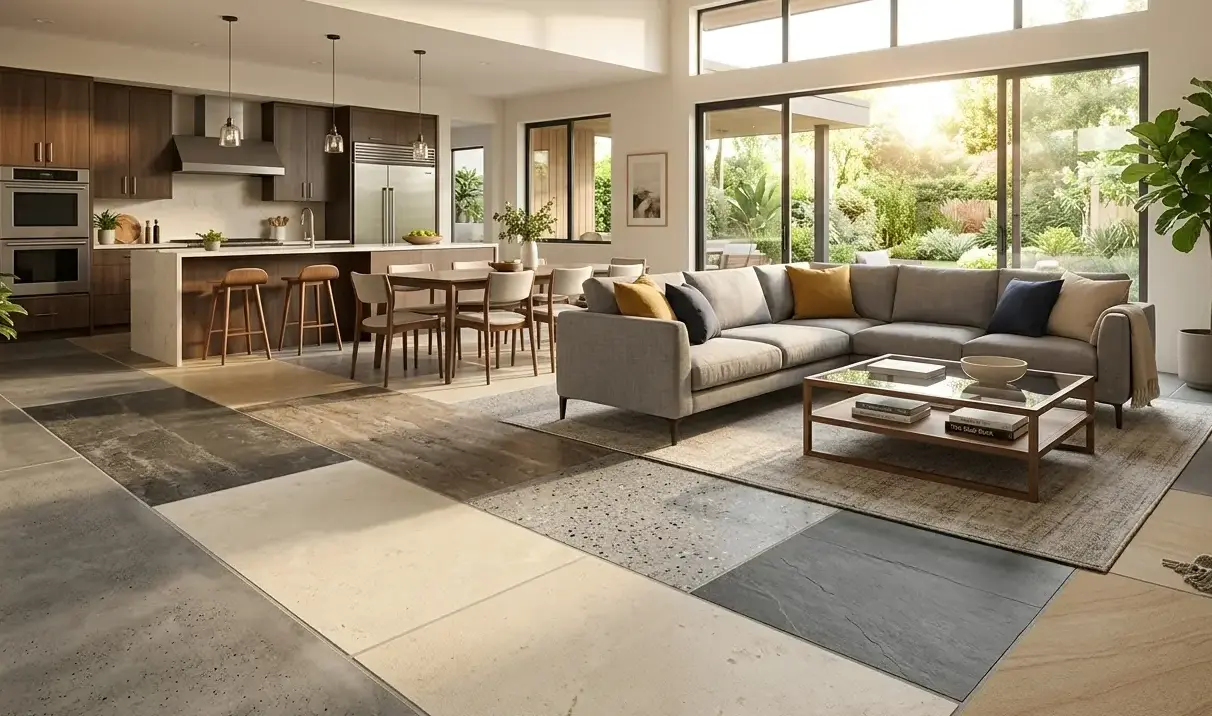 Conceptual rendering
Neither material is universally better; the right pick depends on the specific room, the household's cleaning habits, and how much visual continuity a homeowner wants across a floor plan. A large family that cooks often may lean toward porcelain tile for easier spot repairs, while a household focused on a dramatic island surround may prioritize a slab's continuous veining. Reviewing both lists side by side against the actual layout of a home tends to surface a clear front-runner fairly quickly.
Comparison Table: Tile Vs. Slab Flooring
Attribute | Tile | Slab |
Format | Individual pieces, various sizes | Large single or bookmatched pieces |
Grout Lines | Present; spacing varies by edge type | Minimal to none |
Common Materials | Porcelain, some natural stone | Granite, quartzite, marble, quartz |
Repair Approach | Individual piece can be addressed separately | Section-level approach for larger surfaces |
Outdoor Suitability | Porcelain suited to many outdoor uses | Granite, quartzite suited to full-sun |
Wet-Area Finish | Matte/textured finishes reduce slip vs. polished | Honed/matte finishes reduce slip vs. polished |
Applications and Design Direction for Silver Springs Homes
Where and how each material gets used matters as much as the material itself. Homeowners researching installation standards for either surface can review resources from the Tile Contractors' Association of America Council for general industry context. The sections below walk through common rooms and the design considerations that come with tile and slab flooring designs in a typical Silver Springs layout.
 Conceptual rendering
Bedrooms and Low-Traffic Living Areas
Bedrooms and quieter living areas see less moisture and lighter foot traffic than kitchens or entryways, which opens up more finish choices. Honed or leathered natural stone finishes can add a softer, low-glare look to a bedroom floor, while tile flooring designs in warmer tones tend to feel less clinical underfoot than in a busy hallway. Since these rooms see less wear, homeowners often use them to experiment with bolder patterns or veining that might feel overwhelming across a larger, higher-traffic footprint.
Bathrooms and Wet Areas
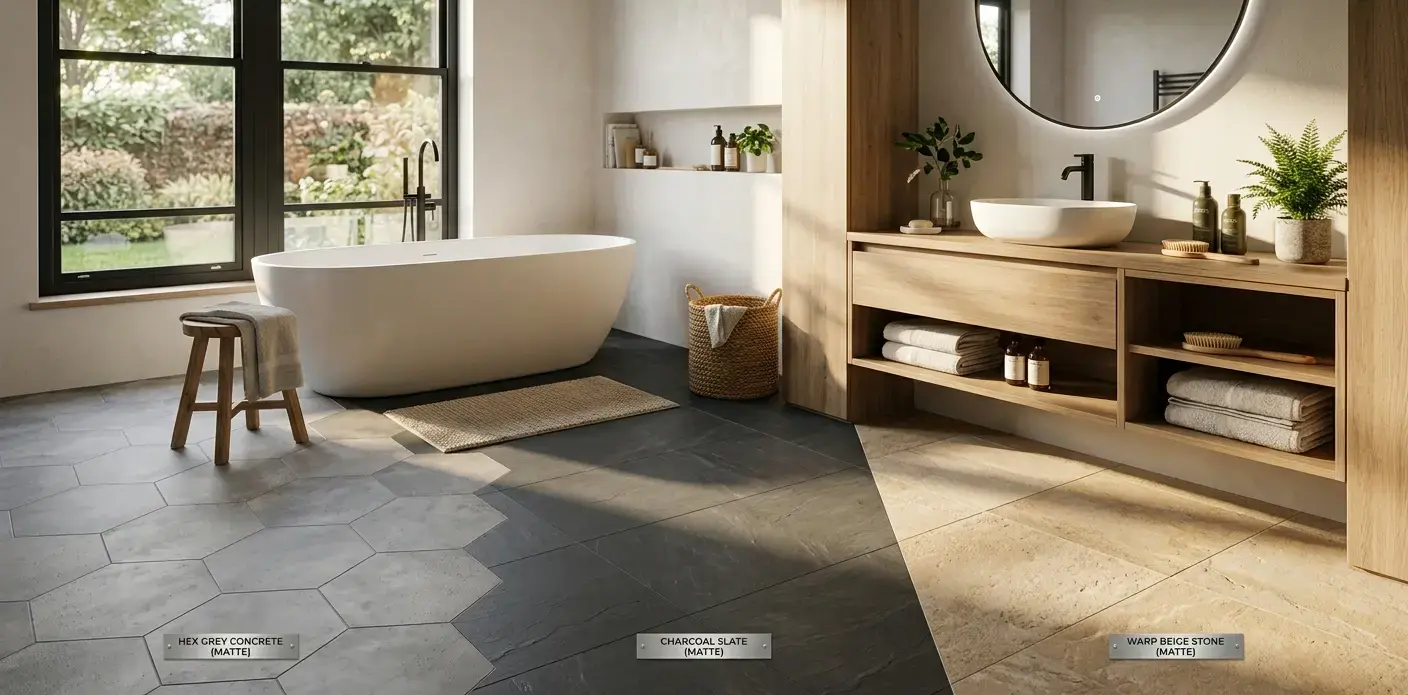
Wet areas call for finishes selected with slip resistance in mind rather than polish alone. Homeowners weighing wet-area performance often review third-party wet DCOF standards to understand how surfaces are typically evaluated for bathroom and shower use. Matte and honed finishes generally feel less slick underfoot than high-polish options, making them a common choice for shower floors and bath surrounds in both tile and slab formats. Grout lines in a tiled shower floor can also add a bit of traction between pieces, while a honed slab surround pairs well with a textured tile floor below it for a coordinated look. Neither material eliminates slip risk entirely, so bath mats near tubs and showers remain a sensible habit regardless of the surface chosen.
Entryways and Open-Concept Living
Entryways benefit from surfaces that tolerate dirt, moisture, and repeated foot traffic without showing wear quickly. Large-format slab flooring can create a dramatic, continuous look through an open-concept entry and living space, while tile flooring designs allow for pattern layouts like herringbone or basketweave that add texture to a transitional space. Either option works, and the better fit often comes down to the visual statement a homeowner wants to make. A wide entry hall may favor a single large slab for a clean, uninterrupted line of sight, while a smaller foyer often benefits from tile's ability to introduce a border pattern or transition strip between rooms.
Outdoor-Adjacent Spaces
Materials intended for covered patios or sunrooms need to be selected carefully, since not every stone or tile type is rated for full-sun exposure. Granite, quartzite, and porcelain are generally considered suitable for full‑sun outdoor applications, while travertine typically performs better in shaded or covered areas because it is less resistant to UV exposure. Matching material to light exposure helps preserve the surface's appearance over time. A covered sunroom with filtered light may still tolerate a broader material list than an uncovered patio that sees full afternoon sun for most of the year, so it helps to walk the actual space at different times of day before finalizing a choice.
Kitchens and Islands
Kitchen floors see heavy foot traffic, spills, and dropped cookware, so surface resilience matters. Porcelain tile handles daily kitchen wear reasonably well, though scratch resistance still varies by product, and cutting boards remain a smart habit regardless of material. Granite and quartzite slabs are popular for large island surrounds because they resist heat better than many alternatives, though trivets are still recommended since no surface is fully immune to thermal shock from very hot cookware. Kitchen floors also benefit from finishes that resist staining from oil and food splatter, which is one reason sealed natural stone and glazed porcelain both remain common choices in busy Silver Springs kitchens. Prompt cleanup after spills, paired with non-abrasive cleaning products, helps either material keep its appearance over years of daily cooking and gathering.
A Simple Path to Choosing Between Tile and Slab
- List the rooms involved. Kitchens, bathrooms, entries, and bedrooms each have different moisture, light, and traffic demands that shape which materials make sense.
- Note light exposure for any outdoor-adjacent areas. Full sun narrows the material list to sun-tolerant options like granite or porcelain, while shaded patios open up travertine as options.
- Decide on visual priority. Seamless slab surfaces read differently than patterned tile layouts, and that visual goal often matters more than any single spec.
- Review finish options for wet zones. Matte and honed finishes generally suit damp areas better than high polish, especially in showers and around tubs.
- Bring measurements and photos to a showroom visit for side-by-side comparison under real lighting, since screens and printed samples rarely show true color and veining.
How Nova Tile and Stone Supports the Decision
Choosing between tile and slab gets easier with the right materials in hand. Nova Tile and Stone's Fernley showroom carries an extensive selection of tile and slab so homeowners near Silver Springs can see finishes in person before committing. A materials specialist can walk through finish options, size formats, and suitability notes for any room under consideration, including which materials fit shaded versus full-sun spaces.
Tile samples ship free when ordered online, letting homeowners preview colors and textures at home before a showroom visit, which is especially useful when comparing several tile flooring designs against existing cabinetry or wall colors. For larger slab pieces, in-showroom viewing remains the most reliable way to judge veining, tone, and finish under natural light. Trade professionals working on multiple Silver Springs projects can also open a trade account to streamline sourcing across jobs. Anyone ready to compare materials side by side can browse slab selections online first. Homeowners who want to see current surface trends beforehand can check design coverage from the International Surface Event for added context. When the room list and finish priorities are set, the next step is to book a showroom visit with a specialist.
Our latest content
Check out what's new in our company !
Conclusion
Comparing flooring options between tile and slab comes down to how a space is used, how much moisture it sees, and the visual statement a homeowner wants. Tile brings pattern flexibility and repairable sections; slab brings seamless coverage and dramatic natural veining. Both perform well in Silver Springs homes when the finish matches the room. For a closer look at materials and finishes, visit the Nova Tile and Stone fernley showroom at 1855 Hwy 95A, Fernley, NV 89408.
Frequently Asked Questions
Porcelain tile and granite or quartzite slab are common choices for kitchens because they generally hold up well to daily use. The better fit depends on cleaning habits, budget for maintenance, and whether a seamless island surround or a patterned tile floor is preferred.
Polished slab finishes can be slipperier when wet compared to matte or honed finishes. Homeowners planning wet-area flooring often choose matte or honed surfaces for better underfoot feel in bathrooms and other damp zones.
It depends on the material and light exposure. Granite, quartzite, and porcelain are generally considered suitable for full‑sun outdoor use, while travertine tends to perform better in shaded or covered areas due to its lower UV resistance.
Bringing room photos and measurements to a showroom visit allows side-by-side comparison under real lighting. Ordering a tile sample beforehand can also help homeowners preview colors and textures at home first.
Natural stone generally benefits from periodic sealing depending on the specific material and finish, along with prompt cleanup of spills and avoiding abrasive cleaners. Routine care varies by stone type, so a specialist can outline the right schedule for a given material.