First Impressions Start at the Front Door
A stone slab entryway design sets the tone for an entire home before a guest crosses the threshold. Granite, quartzite, marble, and porcelain slabs turn a front hallway into a durable, polished first impression that stands up to daily foot traffic, tracked-in weather, and years of everyday wear. Homeowners across northern Nevada are pairing large-format slab flooring with statement accent walls to create a foyer that feels intentional rather than an afterthought.
Choosing the right slab comes down to three factors: how much light the space gets, how much moisture and grit get tracked in, and how the finish holds up underfoot. Polished surfaces read as elegant but turn slippery when wet, while honed and leathered finishes offer more grip for a busy front door. A well-planned entry also sets a visual cue for the flooring and wall treatments that follow through the rest of the home, so material choices here carry more weight than in a typical interior room. The sections below cover material options, layout ideas, and a short planning guide for getting a front entry right the first time.
Entryway Design Benefits of Natural and Engineered Slabs
A well-chosen slab does more than look good near the front door. Large-format stone or porcelain creates a nearly seamless surface with fewer grout lines than tile, which means less dirt-trapping texture in a high-traffic zone. Granite and quartzite bring natural pattern variation, so no two entryways look identical, while porcelain and quartz offer a more uniform, engineered look for a cleaner aesthetic.
Browse the stone slab collection to compare veining, color, and finish side by side before narrowing down options. Durability varies by material and finish, so proper sealing and routine cleaning preserve the surface long after the slab is in place. Heat resistance and scratch resistance also vary by material, and everyday care such as trivets and prompt spill cleanup goes a long way toward keeping a front entry looking sharp.
Foot traffic in an entry is different from traffic in the rest of a home, since shoes, pets, and weather all pass through the same narrow strip of floor. Grit and small stones can scratch softer finishes over time, so a slab chosen for an entry benefits from periodic inspection and prompt attention to any chips near the threshold.
Material choice also affects long-term appearance. Granite and quartzite show a natural range of pattern and color from slab to slab, so an in-person look confirms the exact veining that will show up in a specific entry. Porcelain and quartz slabs, by contrast, are manufactured for a more consistent pattern across large runs, which suits homeowners who want a predictable look across a floor and an adjoining accent surface.
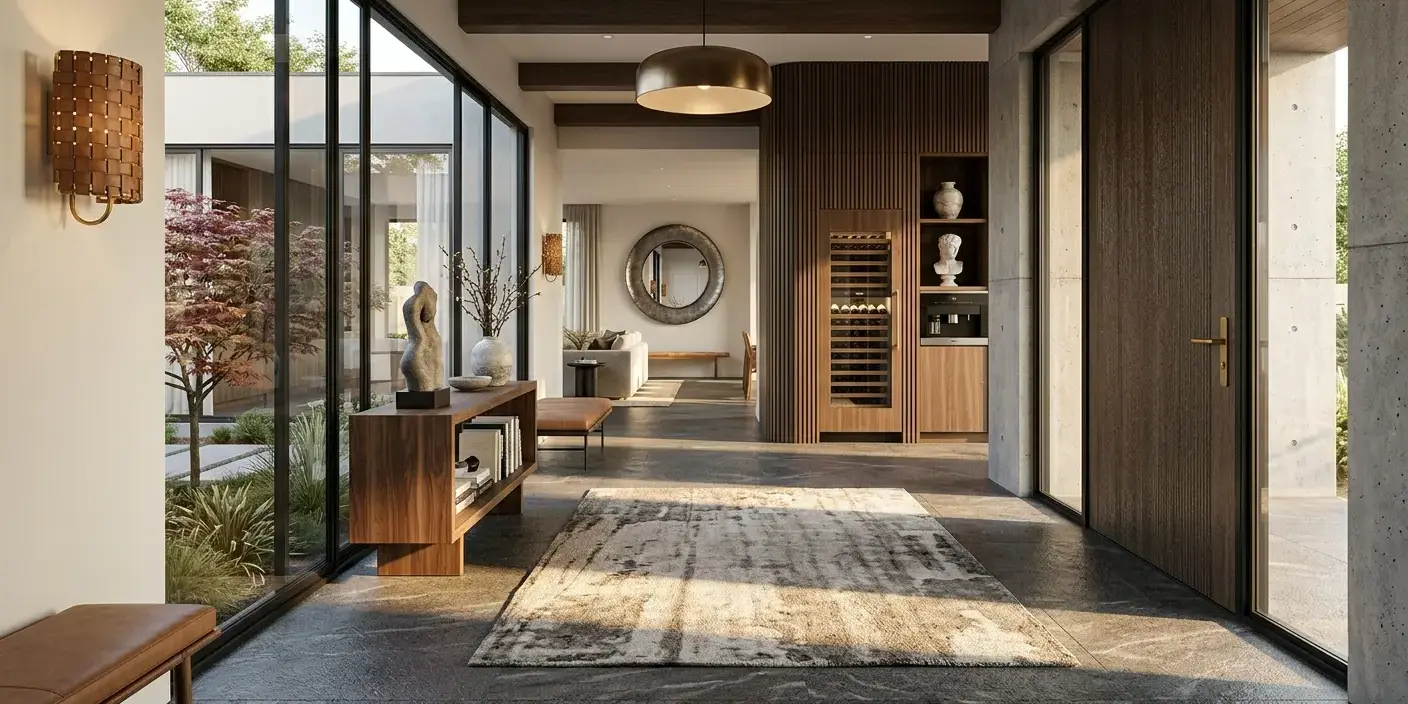 Conceptual rendering
Entryway Slab Comparison
Material | Type | Sealing Needed | Outdoor Suitable | Best Entryway Use |
Granite | Natural Stone | Yes | Yes | Floors, covered entries, accent walls |
Quartzite | Natural Stone | Yes | Yes | Floors, covered or open entries |
Marble | Natural Stone | Yes | Shaded or indoor only | Accent walls, indoor floors |
Porcelain | Engineered | No | Yes | Floors, high-traffic entries |
Quartz | Engineered | No | Indoor only | Floors, indoor entries only |
Advantages and considerations to weigh before choosing an entry slab:
- Granite and quartzite hold up outdoors if the entry has a covered approach, though indoor foyers offer more finish choices overall.
- Polished finishes highlight veining and color beautifully, but they carry more slip risk in a wet or muddy front entry.
- In most cases, porcelain and quartz resist staining without sealing, making maintenance easier, though natural stone surfaces typically need resealing as they age.
- Marble and dolomite bring soft, timeless veining indoors, but both suit shaded or interior entries rather than full outdoor sun.
- Large-format slabs cut down on grout lines and clean up easily, though any adjoining stone surface still deserves cutting-board-level care.
Modern Entryway Ideas: Layouts, Finishes, and Accent Walls
Entry spaces are small, so every material choice carries outsized visual weight. A thoughtful entryway design pairs flooring, wall treatments, and lighting so the whole space feels cohesive rather than like a leftover hallway.
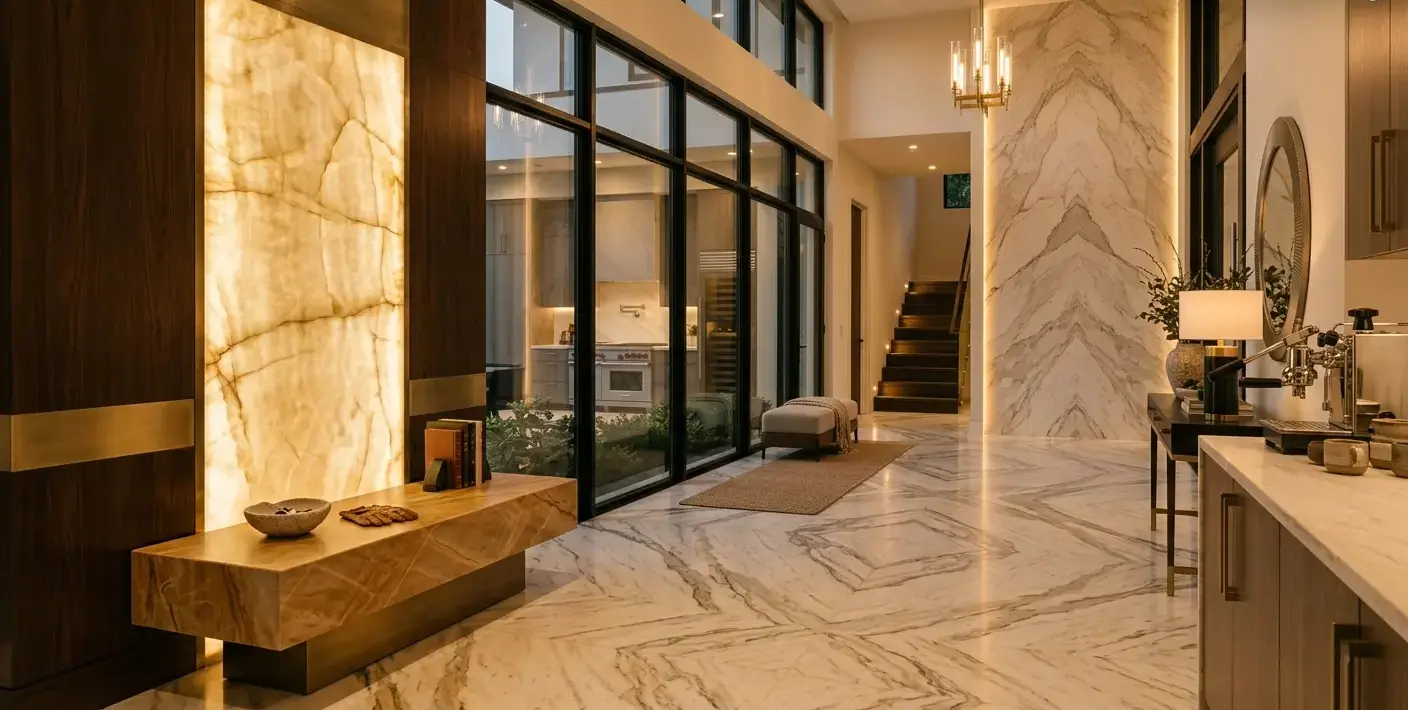 Conceptual rendering
Flooring That Sets the Tone
Polished granite and quartzite create a bright, reflective floor that reads as high-end, though both perform better with matte or honed alternatives in wet-weather entries. Wet-area slip performance is measured using standards such as the wet slip resistance benchmark, which is a useful reference when comparing finish options for a front door that sees rain, snow, or mud. Honed and leathered finishes trade some shine for better grip, a fair trade-off for a Nevada entry that faces seasonal weather. Large-format slabs laid with minimal seams also help a small foyer read as more open, and a single continuous run into an adjoining hallway can make the whole ground floor feel larger without changing the actual footprint.
Accent Walls and Statement Features
A single accent wall built from marble, dolomite, or backlit semi-precious stone turns a plain foyer into a design feature without covering the whole room. Semi-precious slabs are intended for wall applications only, so pairing a bold accent panel with a simpler floor material keeps the look balanced and practical. Design inspiration is easy to find by following current design event highlights. Emerging surface technology, covered in recent flooring innovation coverage, also shows how stone and engineered surfaces are trending for residential entries. A backlit onyx panel or a book-matched marble slab near a stairway landing can act as a focal point that guests notice the moment they step inside.
Four Steps to Plan an Entry Slab Project
- Measure the entry footprint and note the traffic flow from the front door inward.
- Match material to conditions, comparing a covered entry against one exposed to open weather.
- Choose a finish based on look and grip, favoring honed or leathered options for wet-weather zones.
- Visit the showroom to view finishes in person before confirming a final selection.
Bringing Your Vision to Life With Nova Tile and Stone
Nova Tile and Stone works with homeowners across Fernley, Fallon, Silver Springs, Wadsworth, and Stagecoach to match slab selections with real entryway layouts, lighting, and traffic patterns. Meet the design team for guidance on which materials fit a specific entry, whether the goal is a bold accent wall or a simple, durable floor. A short conversation about traffic patterns, sun exposure, and existing finishes can narrow a long material list down to a handful of realistic options.
Every finish and color can be viewed in person at the Fernley showroom, where lighting and veining are easiest to judge in person. Visit before finalizing a material, since color and pattern can look different under home lighting than in photos.
Ready to move forward? Book a consultation to walk through options with a Nova specialist. Homeowners with a specific project in mind can also request a slab quote for their entry. Design and remodeling trade professionals can also apply for trade account access for ongoing project support.
Our latest content
Check out what's new in our company !
Conclusion
Entryway design sets expectations for the rest of a home, and the right slab choice balances durability, style, and safe footing through changing weather. Granite, quartzite, marble, porcelain, and quartz each bring different strengths, from full-sun durability to soft, layered veining suited to indoor walls. Browse Nova's full collection to compare materials, then plan a front entry that holds up to daily use. Book your free consultation to talk through finish, layout, and maintenance details before making a final decision.
Frequently Asked Questions
Granite and quartzite are among the most durable choices for a front entry floor, standing up well to daily foot traffic and grit tracked in from outside. Both still benefit from routine sealing and prompt cleanup of spills to hold their appearance over time.
Polished finishes look elegant but become more slippery when wet, which matters in a foyer that sees rain, snow, or mud. Honed or leathered finishes offer better grip for a busy front door while still showing off natural pattern and color.
Marble works well indoors or in shaded entries, though it needs regular sealing and is not recommended for full outdoor sun exposure. Dolomite follows the same general guidelines and pairs well with the same care routine, making both good choices for a covered entry rather than one exposed to direct sun.
Porcelain and quartz are usually low‑maintenance and rarely need sealing, which can reduce upkeep demands in entryway applications. Both still benefit from prompt cleanup of spills and avoiding abrasive cleaners that can dull the surface finish.
An accent wall can use the same material as the floor or a different one, such as a semi-precious stone panel reserved for wall use only. Mixing textures adds contrast without overwhelming a small entry space, and a lighter wall material can balance a darker or more heavily veined floor.
Visit Our Fernley Showroom – Nova Tile and Stone
1855 US Highway 95A North, Fernley, NV 89408
Store hours this week:
- Mon. - Fri.: 7:30 am - 4:00 pm
- Sat. - Sun.: Closed