Semi-precious stone slabs are made from natural gemstones such as agate, amethyst, tiger's eye, and quartz crystal, bonded to a resin base for structural stability. They cost significantly more per square foot than granite or quartzite. Most homeowners use semi-precious stone on a single feature, such as a kitchen island or bar top, rather than across an entire kitchen's worth of surfaces. For Lincoln, CA homes, semi-precious stone is generally worth the splurge as a focal accent, but harder to justify as a full countertop replacement.
What Counts as Semi-Precious Stone
The term semi-precious stone covers a range of minerals that are harder to source and slower to quarry than common natural stone countertop materials. Agate, amethyst, citrine, tiger's eye, labradorite, and malachite all fall into this category.
Semi-precious stone slabs are typically produced at a standard 2.0 cm thickness, similar to many granite and quartzite slabs, with gemstone material bonded to a resin base for structural stability. This resin bonding is part of how the material is manufactured before it ever reaches a showroom, not something added during a later step. The resin base and the embedded gemstones behave differently from each other: the gemstones themselves can be quite hard, while the resin component is softer and more prone to scratching, so the two materials call for slightly different care.
Where Semi-Precious Stone Works in a Home
Given the cost and the more delicate care requirements, semi-precious stone rarely covers every surface in a kitchen the way granite or quartz does. Instead, it tends to show up in a single, contained application where its color and translucency can be appreciated up close by browsing our live slab inventory ahead of a visit.
Common uses include:
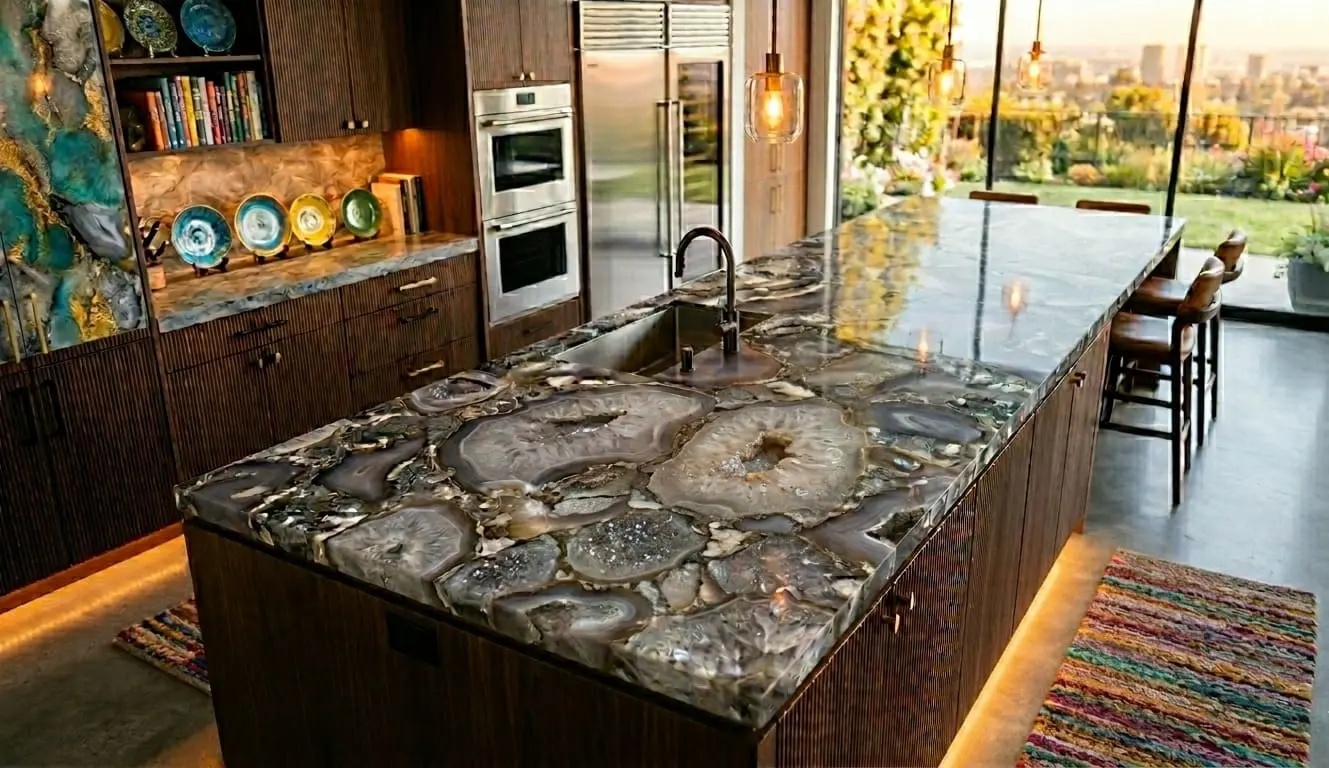
- Kitchen islands
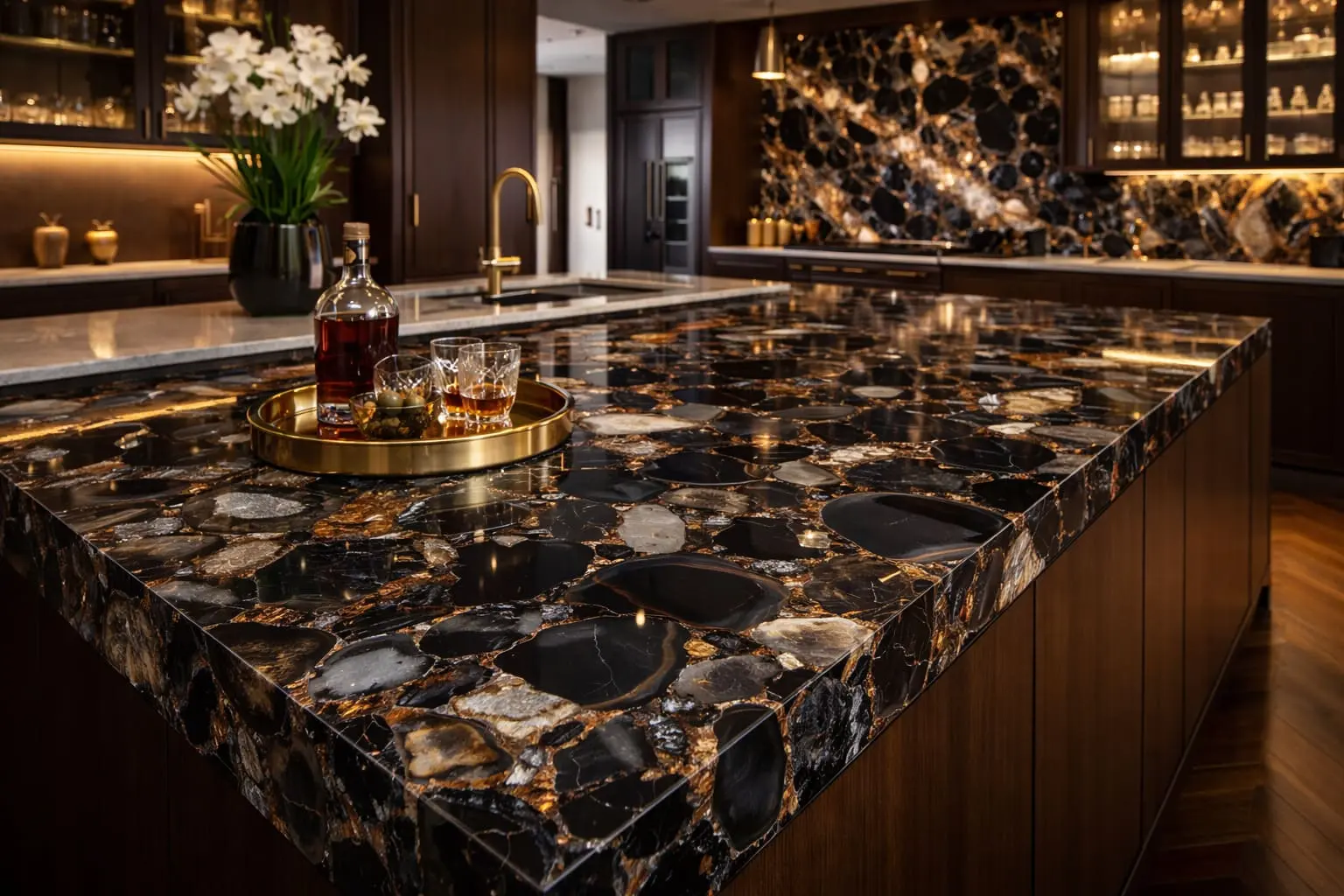
- Bar tops and wet bar surfaces
- Feature walls and backsplash accents
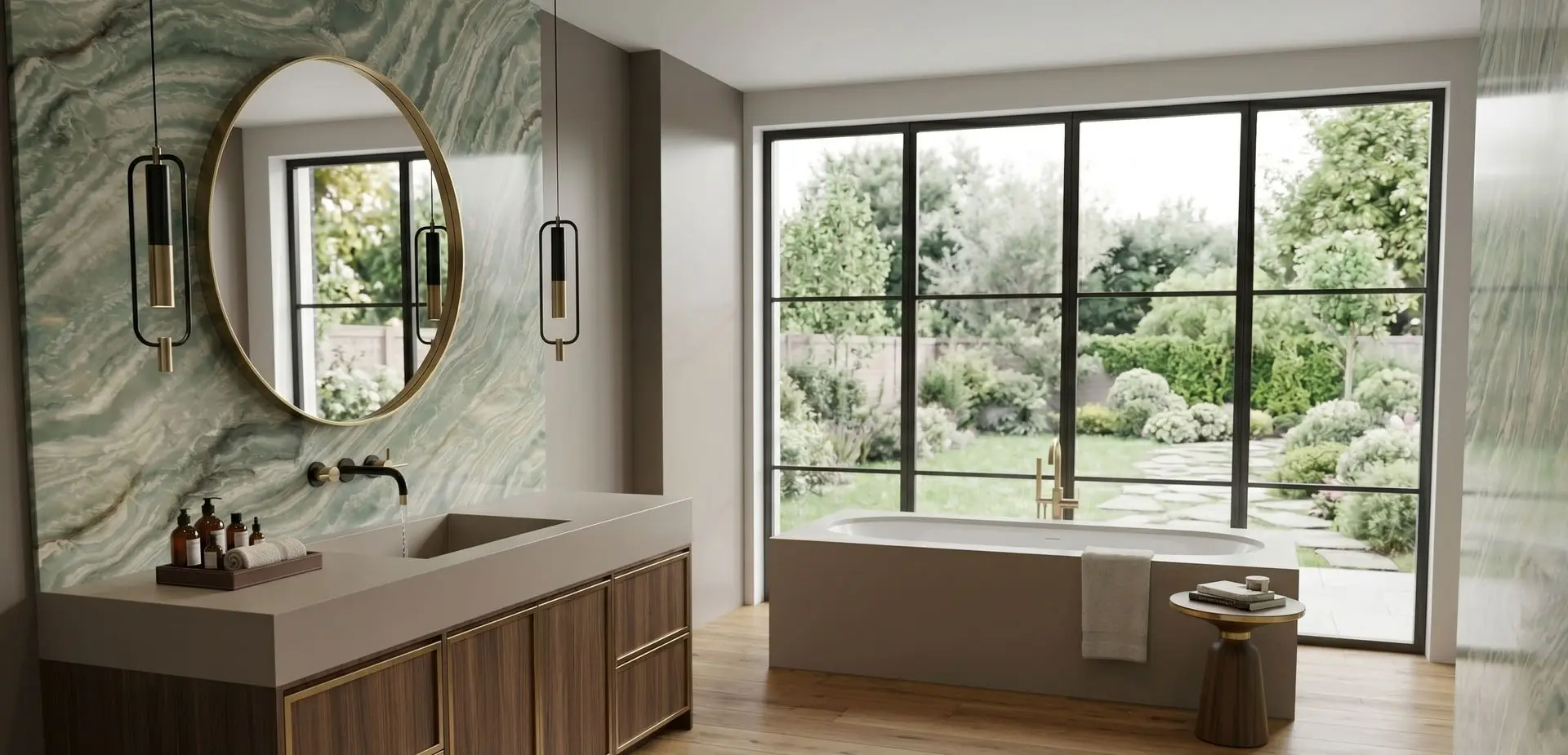
- Vanity surfaces in powder rooms and bathrooms
- Backlit features, since translucent stones such as agate and quartz crystal can allow light to pass through when lit from behind, depending on the specific slab and its thickness
This last point is one of the main reasons homeowners choose semi-precious stone in the first place. Backlighting an agate or quartz crystal panel brings out color and banding that is not visible under normal room lighting. This effect is most often used for a single focal point rather than a full room of countertops.
Cost to Expect for Lincoln, CA Projects
Semi-precious stone costs more per square foot than granite, quartzite, or manufactured quartz, often by a wide margin. Pricing depends on the specific mineral, the amount of material needed for the feature, and whether backlighting is part of the design.
A few cost factors worth knowing before budgeting a Lincoln, CA project:
- The gemstone material itself costs more than granite or quartzite due to rarity and the specialized cutting and polishing involved
- The resin bonding process that gives the slab structural stability adds to the base material cost
- Backlit installations require an internal light source and a way to access it later if a bulb or LED strip needs replacing
- Professional installation is worth planning for given the material's weight and the added complexity of backlighting integration
- Getting a slab quote early in the planning process helps set realistic expectations before the design is finalized
For homeowners comparing this against a granite or quartzite countertop project, semi-precious stone is more practically budgeted as a single feature rather than a like-for-like swap across the whole kitchen. Many Lincoln, CA homeowners choose a standard stone for most of their countertop and reserve semi-precious stone for one focal point, such as an island or bar top, which keeps the overall project cost closer to a typical remodel budget while still including the splurge element.
What to Weigh Before Choosing Semi-Precious Stone
Beyond cost, there are a few practical points worth considering before committing to semi-precious stone for a Lincoln, CA home.
Heat exposure. The resin base is sensitive to heat above 150°F, so trivets and hot pads are necessary for any surface likely to come into contact with hot pans or dishes.
Scratching and cleaning. The resin component scratches more easily than the gemstone itself, so cutting boards are recommended for any food preparation area. Cleaning should be done with pH-neutral products and a soft cloth, avoiding abrasive pads, strong chemicals, or acidic cleaners that can dull the resin and the gemstone surface.
Placement away from heavy use. Semi-precious stone tends to work well in lower-traffic spots such as an island, bar top, vanity, or feature wall, rather than a primary food-prep counter that sees constant cutting, heat, and spills.
Lighting infrastructure. If backlighting is part of the plan, the cabinetry or wall behind the panel needs to accommodate wiring and a light source. This is worth discussing early in the design process rather than after the stone has been selected. Contractors coordinating this kind of work on behalf of a homeowner can also apply for a trade account to streamline ordering.
Color and Design Variety
Part of what draws homeowners to semi-precious stone is the range of color available compared to more common countertop materials. Agate can appear in deep blues, greens, or warm amber tones depending on the specific formation. Amethyst brings a purple tone not found naturally in granite or quartzite. Tiger's eye carries a warm golden banding, while labradorite can shift in color depending on the angle it is viewed from.
This variety means the design decision is often about which mineral fits the room, not just which stone stands out most in isolation. A cool-toned agate might suit a modern bathroom vanity, while a warmer tiger's eye slab could work well as a bar top in a room with wood tones and brass fixtures. Because each slab shows unique color and banding, and availability of a specific piece can change, it helps to view current inventory before finalizing a design around a particular slab.
Pairing semi-precious stone with a more standard perimeter countertop also affects the overall look. Some homeowners choose a neutral quartzite or granite for the main counter so the semi-precious feature stands out more clearly, rather than competing with a busier surrounding pattern.
Semi-Precious Stone vs. Other Natural Stone
Compared to granite, quartzite, or marble, semi-precious stone occupies a different category. Granite and quartzite slabs are prized mainly for everyday performance in high-use areas, as covered in more general stone countertop comparisons, while semi-precious stone is chosen for visual impact first and everyday performance second. Both come in comparable slab thicknesses, but the gemstone material and resin bonding process behind semi-precious stone drive a much higher price point and a different set of care requirements.
This means the two are not really competing for the same budget line. A homeowner is not typically choosing between quartzite and agate for an entire kitchen. Instead, quartzite or granite often forms the main countertop, with semi-precious stone reserved for a single feature, such as an island or bar top, that stands out against the rest of the space.
Is It Worth the Splurge for a Lincoln, CA Home?
Whether semi-precious stone is worth the cost comes down to how it fits into the overall project. As a full countertop replacement covering every surface in a kitchen, the price per square foot makes it an impractical choice for most homeowners. As a focal accent, such as a backlit bar top or a powder room vanity, it can bring a distinct look to a home without requiring the full room to be covered in an expensive material.
Lincoln, CA homes range from newer builds in planned communities to larger custom homes with more room for a standalone bar or a larger powder room. In either case, semi-precious stone tends to make the most sense as a deliberate, contained feature rather than an everyday work surface. Homeowners who want a distinct visual centerpiece and are comfortable dedicating a larger portion of the budget to a smaller area of the home are the ones most likely to find the splurge worthwhile.
Conclusion
Semi-precious stone is not a direct substitute for granite or quartzite, and it is not meant to be. It serves a different purpose: a contained, high-impact feature rather than a full countertop material. For Lincoln, CA homeowners weighing whether the cost is justified, the answer usually depends on scale. Used sparingly, as a bar top, vanity, or backlit accent, semi-precious stone can bring a distinct look to a single space. Used across an entire kitchen, the cost and specialized care requirements make it a harder case to justify compared to more traditional natural stone options.
We keep a selection of natural stone slabs, including specialty and semi-precious materials, on display at our Sacramento showroom at 6100 Warehouse Way in Sacramento, CA, and homeowners in Lincoln and the surrounding area are welcome to get directions and stop by to see the color and lighting effects in person before making a decision. Our team can also be reached at (916) 913-6682, or you can schedule a design consultation ahead of a visit, to ask about current semi-precious stone availability.
Note: Some images on this page may be conceptual renderings created to illustrate design possibilities and may not depict actual installations.
Frequently Asked Questions
No. Semi-precious stone is made from natural gemstones such as agate, amethyst, and tiger's eye bonded to a resin base, while granite and quartzite are cut directly from quarried stone. Both are typically produced in comparable slab thicknesses, but semi-precious stone carries a much higher price point and different care needs.
It is possible but uncommon. The cost and the more delicate care requirements mean most homeowners reserve it for a single feature, such as an island or bar top, rather than every surface in the kitchen.
No, backlighting is optional. Many semi-precious stones show color and pattern without added light, but backlighting can bring out translucency in certain slabs that is not visible under standard room lighting.
Semi-precious stone typically costs more per square foot than granite, largely due to the rarity of the gemstone material and the specialized resin bonding process used to create a stable slab.
It tends to work well in contained, lower-traffic spaces such as kitchen islands, bar tops, feature walls, and vanity surfaces, rather than high-use areas like a primary food-prep counter.