Protecting Outdoor Stone and Tile Surfaces Through Fernley's Seasons
Care tips for outdoor stone protect granite, quartzite, marble, dolomite, and travertine slabs from Fernley's intense sun, dry wind, and sharp seasonal swings. In this high desert climate, stone and tile surfaces face freeze-thaw cycles in winter, UV exposure in summer, and wind-driven grit year-round. Simple, consistent maintenance keeps outdoor stone looking its best across every season.
Homeowners across Fernley, Fallon, Silver Springs, Wadsworth, and Stagecoach rely on outdoor stone for patios, kitchens, and fireplace surrounds. Desert climate conditions differ sharply from coastal or humid regions, so seasonal care routines matter more here than almost anywhere else. Dust storms, low humidity, and rapid temperature shifts between day and night all affect how stone and tile surfaces age over time.
This guide breaks down practical, season-specific care tips for outdoor stone, along with material-specific considerations for granite, quartzite, porcelain, marble, dolomite, and travertine slabs. Whether stone sits near a pool, on a covered patio, or as part of an outdoor kitchen, understanding these desert-specific factors helps preserve appearance and performance over the long term.
Benefits of Consistent Outdoor Stone Maintenance
Regularly maintained granite, quartzite, and porcelain slabs resist fading and surface wear longer than neglected surfaces, though sun exposure and abrasive grit still affect appearance over time. Routine cleaning removes mineral deposits and dust before they settle into pores, but proper technique matters as much as frequency.
Marble, dolomite, and travertine slabs develop natural patina in shaded outdoor settings, adding warmth to patios and covered kitchens. This patina is not permanent protection, however, and periodic resealing helps maintain color depth and stain resistance in Fernley's dry, dusty air. Reference standards from the material care handbook outline general performance expectations for stone used outdoors.
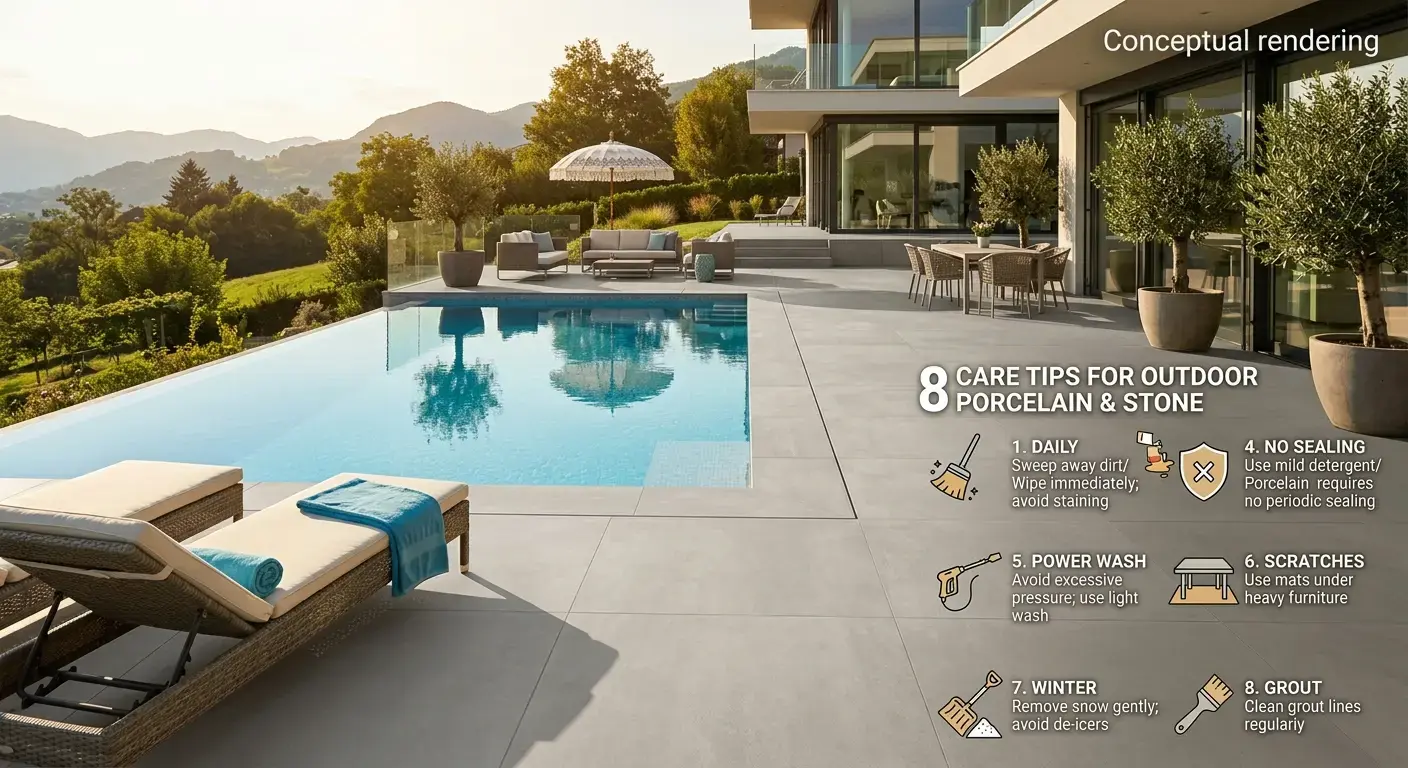
Key benefits of a consistent care routine include:
- Extended surface life: sealed slabs resist staining longer, but reapplication schedules vary by material and sun exposure.
- Consistent color retention: UV-stable materials like granite and quartzite hold color better outdoors, though pigment can still soften over years of exposure.
- Reduced surface etching: prompt cleanup of mineral-rich water spots limits etching, particularly on polished finishes.
- Safer surfaces: textured or honed finishes reduce slip risk near pools, but wet stone still requires caution regardless of finish.
- Long-term value: well-cared-for stone and tile surfaces retain their visual appeal, though desert conditions require more frequent attention than milder climates.
Seasonal Care Tips For Outdoor Stone By Season
Fernley's desert climate moves through distinct seasonal stresses that affect stone and tile surfaces differently. Summer heat and UV exposure test polished finishes, monsoon storms bring sudden moisture and grit, and winter introduces freeze-thaw cycles that can stress even durable granite and quartzite. Matching care routines to the season helps protect outdoor slabs year-round.
Spring and Summer Care
Intense summer sun raises surface temperatures quickly, and granite, quartzite, and porcelain handle UV exposure well, though placing hot cookware directly on any stone surface risks thermal shock; trivets remain necessary regardless of heat tolerance. Porcelain slabs used outdoors are evaluated against porcelain certification standards that support consistent performance in full sun.
Marble, dolomite, and travertine perform best in shaded outdoor areas during peak summer months, since prolonged direct sun can affect their long-term finish. Wind-blown dust and pollen build up quickly in spring, so rinsing outdoor stone and tile surfaces weekly prevents grit from scratching polished finishes.
Monsoon Season Care
Summer monsoon storms bring brief, intense rainfall to the Fernley area, and standing water on outdoor slabs should be cleared promptly to limit mineral staining. Granite and quartzite resist moisture well, but sealant performance still varies by product age and application, so periodic resealing supports consistent water resistance.
Sudden runoff can also carry sediment onto patios and outdoor kitchen surfaces near Fallon and Silver Springs properties. Sweeping debris before it dries prevents grit from grinding into pores during the next cleaning pass.
Winter Care
Freeze-thaw cycles occur in the Fernley high desert, and while granite, quartzite, and porcelain generally tolerate temperature swings, sealant condition affects how well any stone resists moisture that can expand when frozen. Marble, dolomite, and travertine benefit from covered or shaded winter placement, since repeated freezing may affect surface integrity over time.
Clearing snow with plastic tools rather than metal blades limits surface scratching. De-icing chemicals should be avoided entirely, since they can etch polished stone and interfere with sealant performance.
Outdoor Stone Material Comparison for Desert Climates
Material | Sun Exposure Suitability | Seasonal Consideration | Maintenance Note |
Granite | Full sun, UV-stable | Handles summer heat and freeze-thaw well | Reseal periodically; avoid abrasive cleaners |
Quartzite | Full sun, UV-stable | Performs consistently across all seasons | Rinse grit regularly; reseal as needed |
Porcelain | Full sun, UV-stable | Stable across wide temperature swings | Clean with pH-neutral products |
Marble | Shaded outdoor only | Best protected from direct summer sun | Reseal often; avoid standing water |
Dolomite | Shaded outdoor only | Benefits from covered winter placement | Clean spills promptly; reseal periodically |
Travertine | Shaded outdoor only | Sensitive to prolonged direct sun | Reseal to limit moisture absorption |
Pros and cons of outdoor stone in a desert climate:
Pros:
- Natural durability across most seasonal conditions, provided sealant maintenance keeps pace with exposure.
- Distinct veining and color variation add visual character.
- Many materials tolerate Fernley's full sun exposure without significant fading.
Cons:
- Shade-sensitive materials like marble, dolomite, and travertine require careful placement decisions.
- Freeze-thaw cycles demand ongoing sealant attention, particularly on older installations.
- Wind-driven dust requires more frequent rinsing than milder, less arid climates.
A simple seasonal care routine:
- Rinse outdoor stone and tile surfaces weekly to remove dust and wind-blown grit before it scratches the surface.
- Wipe spills promptly with pH-neutral cleaners, avoiding abrasive pads that can dull polished finishes.
- Check sealant condition each spring and fall, reapplying as needed based on material and sun exposure.
- Use trivets and cutting boards on any food-adjacent surfaces, regardless of a material's heat or scratch tolerance.
- Clear snow with plastic tools in winter and avoid de-icing chemicals that can etch or stain stone.
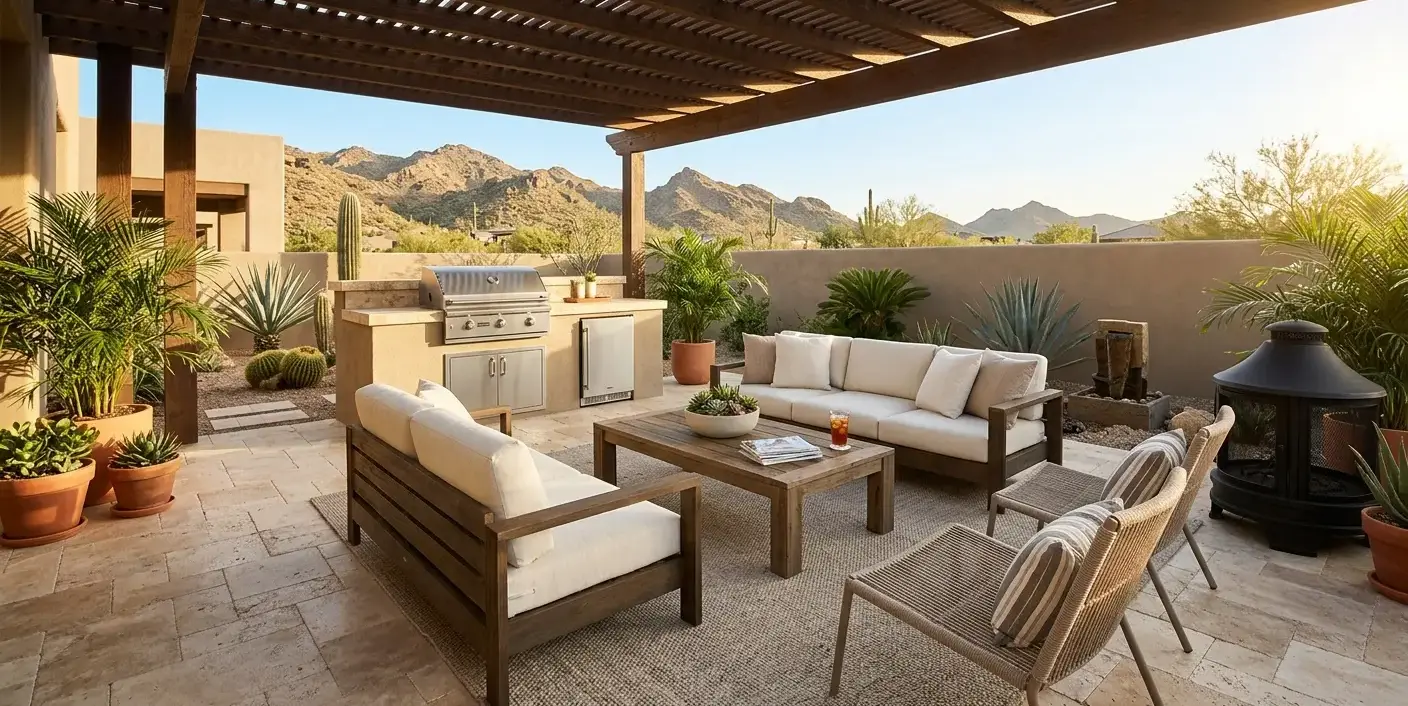 Conceptual rendering
Nova Tile and Stone: Expert Guidance for Desert Climate Projects
Viewing full slabs in person remains the most reliable way to evaluate color, veining, and finish before committing to an outdoor project. Showrooms serving Fernley, Fallon, Silver Springs, Wadsworth, and Stagecoach display granite, quartzite, porcelain, marble, dolomite, and travertine slabs suited to desert climate conditions.
Design guidance from an experienced team helps match material choice to sun exposure, shade coverage, and seasonal maintenance expectations. Homeowners planning outdoor kitchens, patios, or fireplace surrounds can visit the Fernley showroom to see finishes firsthand under natural desert light.
A nearby showroom in Reno offers additional slab selections for comparison. The Minden location carries a similar range of desert-suited materials. Homeowners farther west can also stop by the Sacramento showroom for the same slab categories. Learn more about material sourcing and design support on the company background page. Insights shared at the architects and designers event also inform ongoing material recommendations for outdoor applications.
Visiting a nearby showroom before starting an outdoor project makes it easier to compare finishes under real desert light.
Conclusion
Following seasonal care tips for outdoor stone helps granite, quartzite, porcelain, marble, dolomite, and travertine slabs perform well throughout Fernley's demanding desert climate. Consistent rinsing, sealant checks, and season-specific precautions protect both appearance and long-term durability, though no stone surface is entirely maintenance-free. Homeowners across Fernley, Fallon, Silver Springs, Wadsworth, and Stagecoach can explore the full outdoor slab collection to find materials suited to their sun exposure and seasonal needs. Matching material choice to seasonal conditions from the start makes ongoing care simpler year-round.
Frequently Asked Questions
Yes, seasonal care tips for outdoor stone change with temperature, moisture, and sun exposure, since summer heat, monsoon rain, and winter freeze-thaw each affect stone and tile surfaces differently.
Granite, quartzite, and porcelain generally handle full sun exposure well, while marble, dolomite, and travertine perform better in shaded outdoor settings.
Resealing frequency depends on material, finish, and sun exposure, so checking sealant condition each spring and fall helps maintain consistent protection.
Trivets are recommended for any stone surface, since heat resistance does not guarantee protection against thermal shock from direct contact with hot cookware.
Wind-blown grit, prolonged direct sun on shade-sensitive materials, and freeze-thaw cycles cause the most common seasonal wear on outdoor stone and tile surfaces.