Radiant Floor Heating in Wadsworth: What Homeowners Should Know
Radiant floor heating warms a home by sending gentle heat through the flooring itself instead of relying only on forced air. Dense stone and tile absorb and hold that warmth efficiently, making them a practical match for heated floor systems in colder months.
In Wadsworth, NV, and nearby communities such as Fernley, Fallon, Silver Springs, and Stagecoach, homeowners are increasingly pairing radiant heat with granite, porcelain, and quartzite flooring. These materials conduct heat evenly, though room layout, rug placement, and floor thickness all affect how quickly a space feels warm.
Not every stone or tile finish responds to sustained heat the same way, so material choice matters as much as the heating system underneath. Homeowners can browse available stone and tile options online or visit a local showroom to compare finishes suited to heated flooring before starting a project.
Beyond comfort, heated floors can reduce how often a furnace or forced air system cycles on, since warmed stone or tile continues radiating gentle heat after the system shuts off. Actual energy savings still depend on insulation, room size, and local climate conditions.
Comfort Benefits of Heated Stone and Tile Floors
Stone and tile are naturally dense, which allows them to hold and release warmth steadily across a room. That density is part of why so many homeowners pair these materials with radiant systems rather than carpet or laminate.
Heat retention alone does not guarantee comfort. Finish, thickness, and room layout all influence how evenly a floor warms and how long it stays comfortable underfoot. A well matched material can improve day to day comfort, though results still vary by room size and insulation.
Some homeowners also zone heated flooring by room, running warmth mainly in bathrooms and kitchens while other spaces rely on standard heating. Zoning can improve comfort where it matters most, though it adds complexity that a design consultant can help plan around.
Homeowners comparing options can review the stone slab collection for dense natural materials suited to heated applications. Industry trends discussed at a recent design industry event continue to highlight heated stone and tile flooring as a growing design category.
 Conceptual rendering
Benefits to consider:
- Even heat distribution across the floor, though rugs and furniture placement can block warmth in specific spots.
- Efficient heat retention in dense granite, quartzite, and porcelain, though thicker slabs take longer to warm initially.
- Reduced reliance on forced air heating in main living areas, though existing HVAC systems still manage humidity and air circulation.
- Compatibility with many honed and matte finishes, though gloss and polished finishes can heat similarly while wearing differently over time.
- Long term comfort in bathrooms and kitchens, though bath mats and floor rugs reduce heat transfer wherever they are placed.
Applications and Design Choices for Heated Floors
Radiant heat performs differently depending on where it is used, and the right stone or tile choice changes from room to room. The sections below cover common applications along with design considerations for each space.
Bathrooms and Wet Areas
Bathrooms benefit from heated flooring more than almost any other room, since bare feet on cold tile is a common complaint in colder months. Porcelain tile with a honed or matte finish is a common choice here, since polished finishes become noticeably more slippery once water is on the floor.
Marble and travertine can also work well in bathrooms, though both should be sealed and maintained carefully to resist moisture and staining over time. According to wet slip standards, textured and matte finishes are generally favored for wet floor areas.
Grout lines and joint spacing also affect comfort underfoot in bathrooms, since narrower joints tend to feel smoother when walking barefoot on a warmed floor. A design consultant can help balance joint width with the natural size variation of the chosen material.
Kitchens and Living Spaces
Kitchens see heavy foot traffic and occasional spills, so durable materials like granite and porcelain are common choices for heated kitchen floors. These materials hold heat well, though spills should still be cleaned promptly to avoid staining or slip hazards.
Living areas often use quartzite or honed granite for a warmer, more natural look underfoot. Furniture placement should be planned carefully, since heavy pieces can insulate portions of the floor and create uneven warmth across the room.
Open concept layouts that connect a kitchen to a living area benefit from consistent material choices, since matching stone or tile across the space helps heat distribute more evenly at the transition points.
Entryways and Mudrooms
Entryways handle dirt, moisture, and temperature swings from outside, making dense, easy to clean materials a practical choice. Travertine and granite are common picks, though frequent sweeping and prompt cleanup of tracked in moisture help preserve appearance over time. A heated entryway floor can also help dry off wet shoes and boots more quickly during colder months.
Comparing Stone and Tile Options for Heated Floors
Material | Typical Finish | Best Heated Floor Application | Outdoor Suitability |
Granite | Polished or honed | Kitchens, entryways | Full sun approved |
Porcelain | Matte or textured | Bathrooms, kitchens | Full sun approved |
Quartzite | Honed | Living areas, entryways | Full sun approved |
Marble | Honed | Low traffic bathrooms | Indoor or shaded only |
Travertine | Honed | Entryways | Outdoor use possible |
Quartz (engineered) | Polished | Not typically recommended | Indoor only |
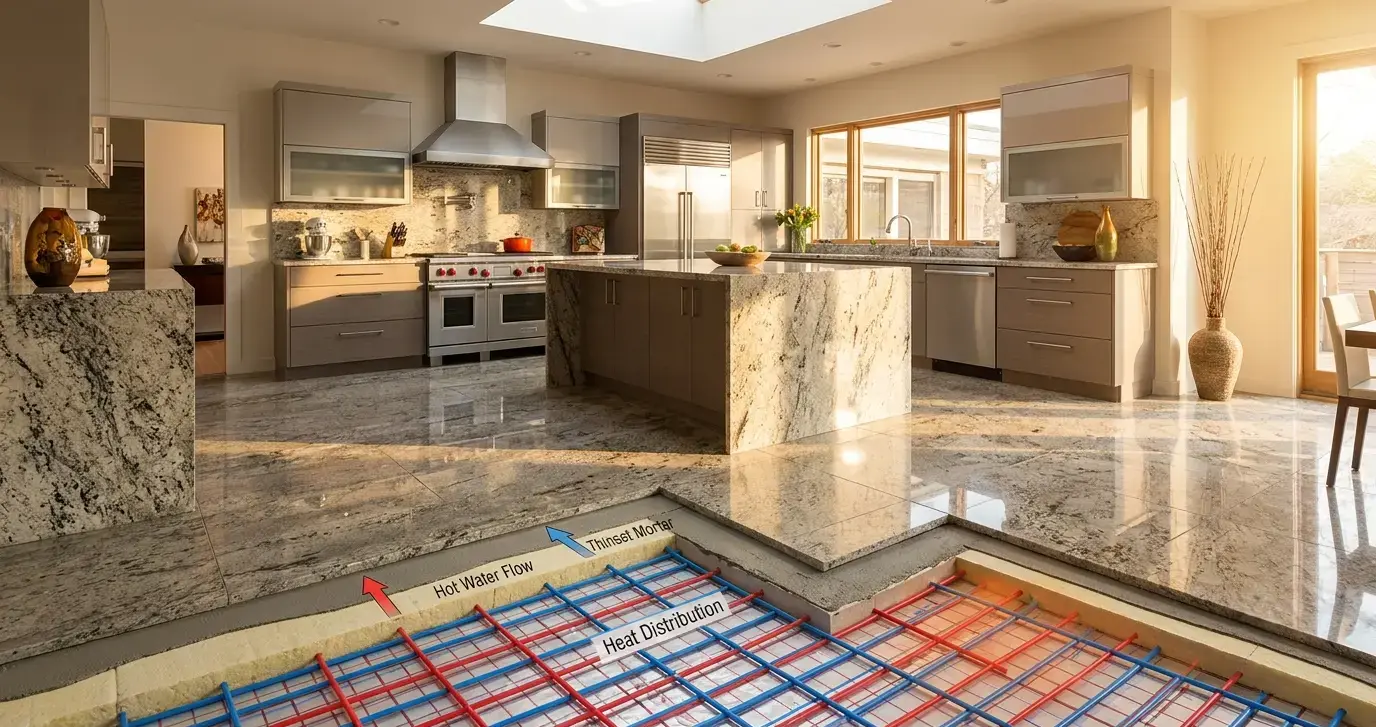 Conceptual rendering
Advantages and Considerations
- Advantage: Dense natural stone and porcelain generally conduct and retain heat well, improving comfort in cold months.
- Consideration: Engineered quartz is generally not recommended over radiant heat, since sustained warmth can affect the resin binders used in its construction.
- Advantage: Matte and honed finishes reduce slip risk in wet areas compared with high gloss polished surfaces.
- Consideration: Heat resistance in stone does not equate to thermal shock resistance. Even with radiant floor heating or cooktop applications, hot cookware should always be placed on a trivet rather than directly on the stone surface to prevent cracking or damage.
- Advantage: Many stone and porcelain options suit both indoor heated floors and select outdoor spaces, depending on material and finish.
- Consideration: Onyx and other semi-precious stones are generally reserved for wall applications rather than heated floors.
- Advantage: A wide range of colors and patterns across stone and porcelain makes it easier to coordinate heated flooring with existing cabinetry and fixtures.
- Consideration: Grout joint width and edge type affect the finished look, and a design consultant can help match those details to the chosen material.
5-Step Guide to Choosing Stone or Tile for Heated Floors
- Identify the room and its typical use, since bathrooms, kitchens, and entryways each have different moisture and traffic levels.
- Compare thermal conductivity across granite, porcelain, and quartzite to understand how quickly each material responds to heat.
- Match finish to room needs, favoring honed or matte surfaces for wet areas and reserving polished finishes for lower moisture rooms.
- Review color and pattern options with a design consultant to coordinate the flooring with cabinetry, walls, and fixtures.
- Compare final material choices in person before committing to a heated flooring project, bringing photos of the room or existing fixtures to help a design consultant offer suggestions that fit the space.
Nova Tile and Stone Support for Heated Flooring Projects
Choosing the right stone or tile for a heated floor project involves more than picking a color. Nova's showroom teams help homeowners compare finishes, thickness, and suitability for radiant applications across multiple locations.
The Reno showroom carries a wide selection of granite and quartzite suited to heated living areas. The Minden location stocks porcelain tile options well suited to bathrooms and kitchens. The Sacramento showroom features marble and travertine for homeowners seeking a softer, natural look. The Fernley showroom serves as the primary resource for Wadsworth area consultations.
Homeowners can learn about Nova's background before scheduling time with a showroom team. Free tile sample shipping lets homeowners compare finishes at home before making a final decision, which can be especially useful when coordinating heated floor projects around a busy renovation schedule.
A design consultant can walk through room photos, existing color palettes, and heating system plans to help narrow down stone or tile options before a final order is placed. That guidance can be especially useful for homeowners weighing several finishes across more than one room.
Recent flooring innovation news points to ongoing improvements in bonding materials compatible with radiant heat systems, which may expand material options over time. Expert guidance from a showroom team can help match those emerging options to a specific heated flooring project.
Our latest content
Check out what's new in our company !
Conclusion
Radiant Floor Heating pairs naturally with dense stone and tile, giving Wadsworth area homes steady warmth without relying only on forced air. Selecting the right material, finish, and thickness matters as much as the heating system underneath the floor.
Homeowners can review the full material catalog to compare granite, porcelain, quartzite, and other options suited to heated flooring. Local showroom teams can help match material choices to bathrooms, kitchens, and living spaces before any project begins. Schedule a free consultation to discuss stone and tile options for a heated flooring project today.
Frequently Asked Questions
Yes. Dense stone such as granite and quartzite conducts heat efficiently and holds warmth longer than many other flooring materials, though thickness and subfloor conditions affect how quickly a room warms.
Porcelain tile is a common choice for heated bathroom floors because it conducts heat evenly, and matte or textured finishes help reduce slip risk in wet areas.
Engineered quartz is generally not recommended for radiant heat because sustained warmth can affect the resin binders used in its construction, so natural stone or porcelain are often better suited.
Honed, matte, or textured finishes are typically preferred in wet areas since polished finishes become more slippery when exposed to moisture.
Homeowners can visit a local showroom or browse available stone and tile options online, then schedule a free consultation to review choices suited to their project.
Note: Some images on this page may be conceptual renderings created to illustrate design possibilities and may not depict actual installations.