Quartzite and granite are both durable natural stone countertops, but they form differently and look different as a result. Quartzite is a metamorphic stone that starts as sandstone and hardens under heat and pressure, giving it a dense structure and flowing veining that resembles marble. Granite is an igneous stone formed from cooled magma, giving it a speckled, crystalline look and a wider range of natural colors. The comparison below breaks down the core differences, then looks at each stone in more depth.
Quartzite vs. Granite at a Glance
Quartzite | Granite | |
Formation | Metamorphic (sandstone transformed by heat and pressure) | Igneous (cooled magma) |
Hardness (Mohs scale) | About 7 | 6 to 7 |
Appearance | Marble-like veining, mostly lighter tones | Speckled, wide color range |
Porosity | Generally lower | Slightly higher |
|
Sealing | Recommended periodically | Recommended periodically |
What Is Quartzite?
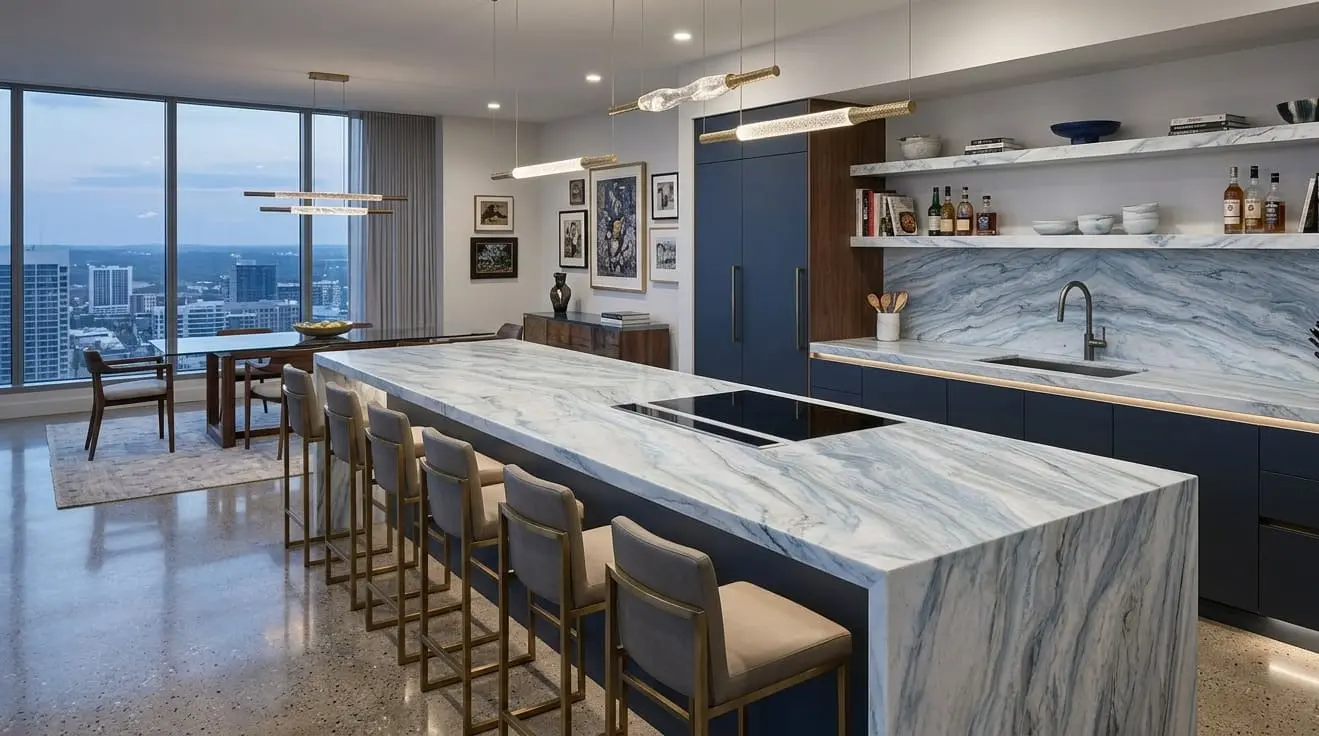
Quartzite starts out as sandstone. Under intense heat and pressure below the earth's surface, it transforms into a dense, crystalline stone, a process explained in more detail in the U.S. Geological Survey's overview of metamorphic rock formation. Quartzite is quarried in whole slabs, so no two pieces look exactly alike, and the movement in the stone can range from subtle and soft to bold and dramatic depending on the source.
Because quartzite forms underground over long periods, colors tend to lean toward whites, grays, creams, and soft golds, though bolder blues and greens do exist in certain quarries.
Granite forms in a very different way, which explains why the two stones end up looking so different on a countertop.
What Is Granite?
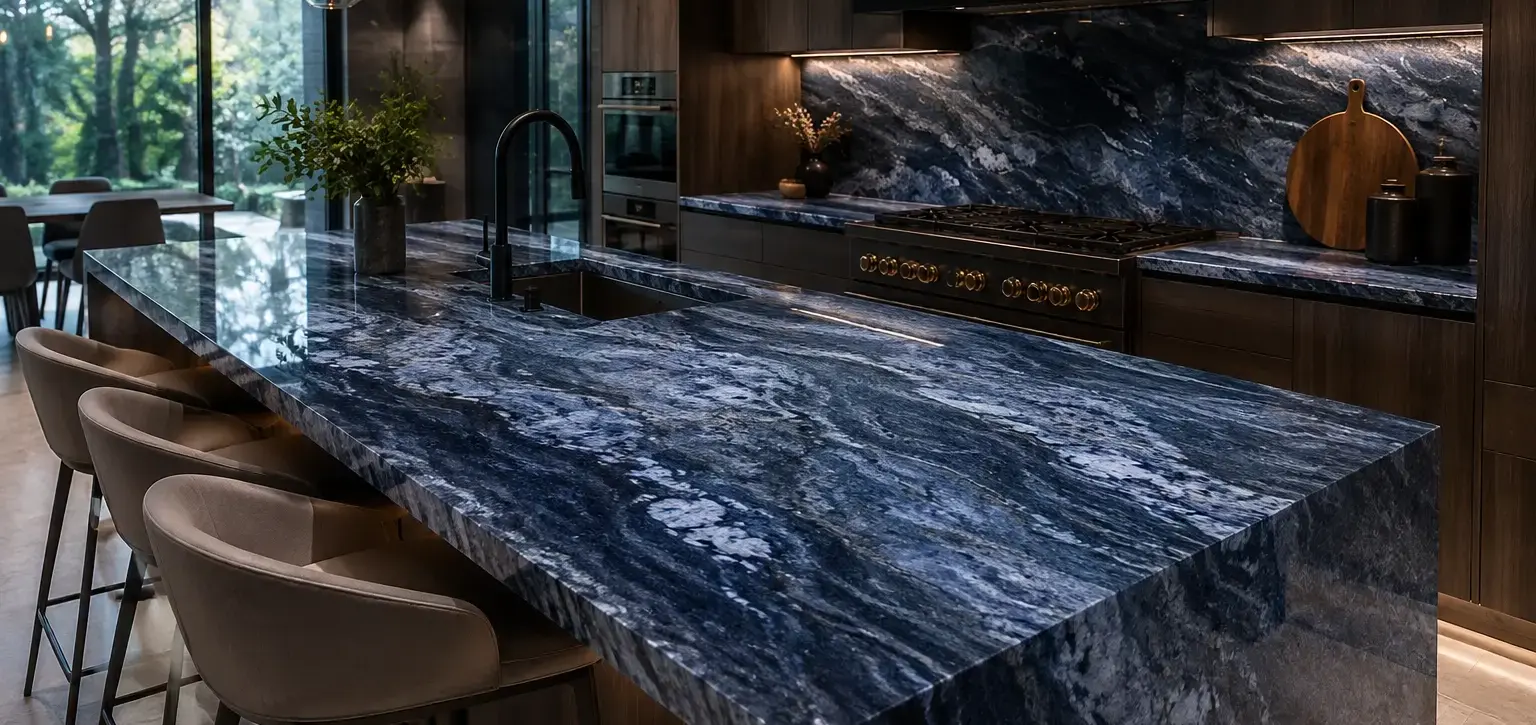
Granite forms from cooled magma deep within the earth, a process outlined in the U.S. Geological Survey's explanation of igneous rock formation, which gives it a distinctive speckled or grainy texture rather than veining. It's made up of several minerals, including quartz, feldspar, and smaller amounts of biotite mica, which is why color and pattern can vary widely from one slab to the next, ranging from black and gray to warmer browns, blues, and even greens.
Granite slabs can also show natural pitting or small fissures, a normal characteristic of the stone rather than a flaw, since granite is composed of several minerals of differing hardness that respond differently during polishing.
With both formation processes covered, the next question is how that difference plays out in everyday use.
Durability and Hardness
Both stones rank high on the Mohs hardness scale, which in practical terms means both resist scratching and everyday wear well enough for busy kitchens. Quartzite tends to be somewhat less porous than granite, which can make it more resistant to staining from spills like wine, coffee, or oil.
Granite, while slightly more porous on average, is still considered a highly durable material with decades of track record in kitchens across a wide range of climates, including colder regions where seasonal temperature swings matter. Both materials handle heat well, but hot cookware should never be placed directly on either surface. Always use a trivet or hot pad to protect the stone and avoid the risk of thermal shock or surface damage.
Durability aside, most homeowners end up deciding based on how each stone actually looks in a kitchen.
Appearance and Style
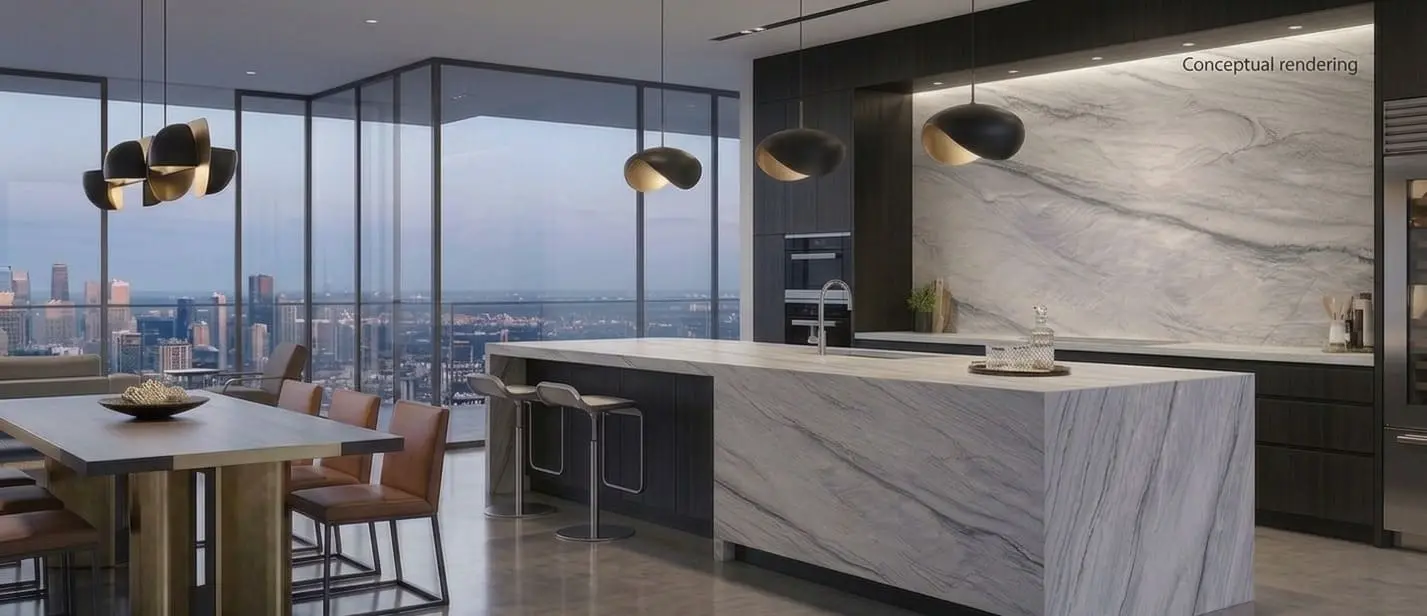
Quartzite's flowing veining gives it a softer, more organic look that pairs naturally with wood beams, timber accents, and stone fireplaces, a combination common in custom-built homes that lean on natural materials. Homeowners drawn to the look of marble, but wary of its softness, often land on quartzite as a middle ground, offering a similar aesthetic with considerably more everyday durability.
Granite's speckled pattern and broader color range can complement a wider variety of cabinetry, from darker rustic tones to lighter, more contemporary finishes. Because granite comes in so many color families, it's often easier to find a slab that closely matches an existing floor, backsplash, or piece of furniture already in the home. If you want more flexibility in matching existing wood tones or cabinetry, or simply prefer a bolder, more varied pattern, granite's range may make that easier to achieve.
Whichever stone you lean toward, keeping it looking good long term comes down to a bit of routine care.
Maintenance and Sealing
Both stones benefit from periodic sealing to guard against staining, though how often depends on the specific slab's porosity rather than a fixed rule tied to the stone type. Day-to-day care is simple for either material: warm water and a mild, non-abrasive soap, followed by drying with a soft cloth. Harsh, acidic, or abrasive cleaners can dull the surface over time and should be avoided on both stones.
For a closer look at recommended cleaning products and sealing schedules, the Natural Stone Institute's care guidelines offer material-specific detail worth reviewing before choosing a sealer.
With the fundamentals of both stones covered, it's worth looking at how they fit into the specific character of homes in this part of Northern Nevada.
Which One Fits a Virginia City Highlands Home?
Virginia City Highlands sits on the high plateau of the Virginia Range, several miles north of historic Virginia City and about 10 miles east of Reno. According to Storey County's official resident information page, the community is made up of custom estate homes on one-, ten-, and forty-acre parcels, spread across rolling terrain covered in pinion pine. Many of these homes lean into that rural, high-plateau setting with natural building materials, timber framing, and stone accents, which makes both quartzite and granite a natural fit for kitchen countertops.
If your kitchen already features a lot of warm wood tones and you want a countertop with softer veining, quartzite tends to blend in naturally and adds a bit of brightness against darker wood finishes. If you're working with a broader color palette or matching an existing stone fireplace, granite remains a dependable option.
Since every slab is unique, viewing the actual piece in person gives the clearest sense of how the veining or speckling will look in a specific space. You can also explore our complete offerings and, when you're ready to narrow down your options, request a slab quote for your project.
Conclusion
Choosing between quartzite and granite comes down to how each stone's formation shapes its look and performance in daily use. Quartzite offers softer veining with lower porosity, while granite brings a wider range of colors and a proven track record in kitchens of all kinds. Both stand up well to the rustic-modern style common throughout the area's custom estate homes. If you'd like to see quartzite and granite slabs in person and compare how each looks against your own cabinetry or wood tones, Nova Tile and Stone's Reno showroom offers free design consultations to help you find the right fit for your home.
Nova Tile and Stone
12835 Old Virginia Rd, Suite 24, Reno, NV 89521
(775) 331-6682
Frequently Asked Questions
Quartzite typically rates around 7 on the Mohs hardness scale, compared to 6 to 7 for granite, which is why quartzite tends to hold up slightly better against scratches from knives, cookware, or grit tracked in on shoes.
A simple way to check is the water-drop test. Place a few drops of water on the stone and see how long it takes to absorb. If it beads up for 15 to 20 minutes before soaking in, the seal is likely still doing its job. If it darkens the stone within a few minutes, it's due for resealing. A fabricator can also test a slab's porosity before installation to set an initial schedule.
Quartzite's heat resistance and durability make it a suitable option for fireplace surrounds and wood-stove surfaces, which are common features in custom estate homes throughout the area. Granite is also a durable choice for these applications and has a long track record in similar outdoor uses.
Quartzite is a natural stone formed underground from sandstone under heat and pressure. Quartz countertops, despite the similar name, are an engineered material made from crushed quartz combined with resin and pigments. Because of this, quartz offers more consistent coloring and no sealing requirement, while quartzite offers the one-of-a-kind variation of a true natural stone.
Both materials are dense, hard stones that perform well indoors regardless of climate. For applications with more temperature swings, such as fireplace surrounds or wood-stove surfaces on the high plateau, both stones have a long history of holding up well, though a fabricator can advise on the best fit for a specific installation.
Note: Some images on this page may be conceptual renderings created to illustrate design possibilities and may not depict actual installations.