Neither quartz nor sintered stone is better outright. Quartz costs less and performs well in indoor kitchens and bathrooms, while sintered stone holds up better to heat and UV exposure, which makes it the stronger choice for outdoor kitchens and sun-exposed counters. The right material depends on where the countertop is going and how much heat and sunlight it needs to handle.
If you're remodeling a kitchen or bath in Crystal Bay, you've probably run into both materials while browsing options, and for good reason: they can look nearly identical on a showroom sample but perform very differently once installed. Crystal Bay sits at roughly 6,270 feet on the north shore of Lake Tahoe, and homes here tend to lean into that setting, with large lake-facing windows, timber and stone finishes, and decks or patios that get used well into the shoulder seasons. That combination of high-altitude sun exposure, big glass, and outdoor living space is exactly where the differences between quartz and sintered stone start to matter for a homeowner, not just for a fabricator.
What Is Quartz?
Engineered quartz countertops are made by combining ground natural quartz, typically somewhere around 90 to 95 percent of the mix, with resins, polymers, and pigments. The blend is pressed and cured into slabs. Because the resin binds everything together, quartz is non-porous straight out of the factory, so it resists stains without ever needing to be sealed. It's also available in a huge range of consistent colors and patterns, since manufacturers can control the mix precisely. A home-improvement guide that walks through how quartz slabs are manufactured and installed confirms that same 90 to 95 percent quartz, 5 to 10 percent resin and pigment breakdown.
What Is Sintered Stone?
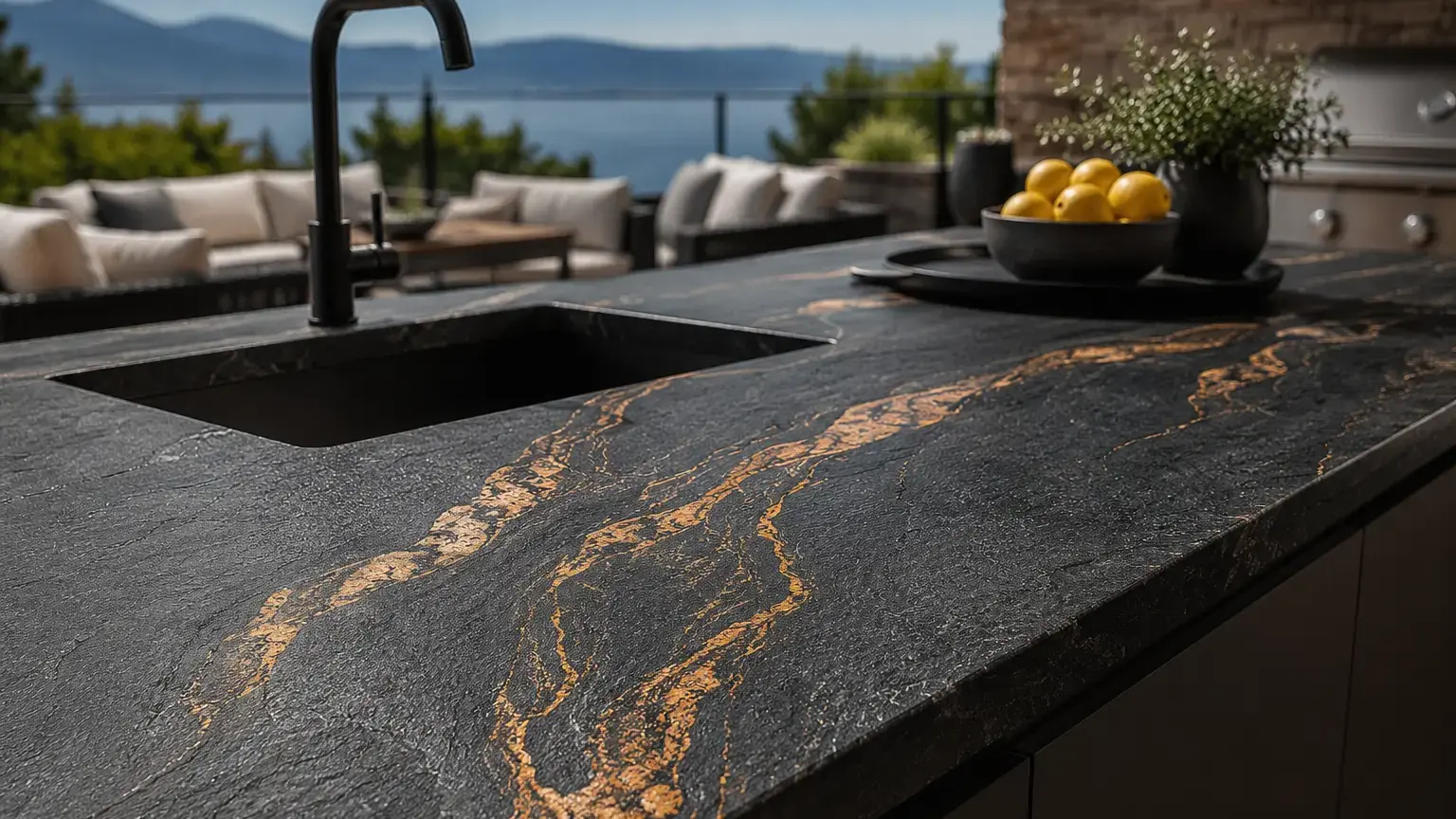
Sintered stone starts from natural mineral raw materials, things like feldspar, silica, clays, and mineral oxides, with no resin added. Those minerals are compacted under enormous pressure and heated to temperatures north of 2,000 degrees Fahrenheit, fusing them together on a molecular level. It's essentially the same process that forms natural stone underground, just compressed from geologic time into a matter of hours. The result is a fully mineral, non-porous slab that can run in large formats with fewer visible seams.
Durability and Heat Resistance Compared
With the basics of each material established, the next question is how they actually hold up. Both materials handle daily kitchen use well, but heat is where they part ways. Sintered stone's manufacturing process makes it highly resistant to heat, since there's no resin to scorch or discolor. Quartz can handle everyday warmth just fine, but its resin binder makes it vulnerable to damage from prolonged direct heat, so trivets and hot pads are still a good habit even with a quartz counter.
Sintered stone generally has an edge in overall hardness too, though that comes with a tradeoff. According to a home-improvement outlet covering the two materials, sintered stone can be more prone to chipping and cracking along its edges than quartz, and those chips are harder to repair invisibly. Quartz's resin content actually makes it a bit easier to touch up without leaving an obvious line.
Sun Exposure and Outdoor Kitchens in Crystal Bay
Heat resistance matters indoors, but it matters even more once sunlight enters the picture, and this is where Crystal Bay's setting really comes into play. Sintered stone is UV-stable, meaning it won't fade or discolor with sun exposure, which makes it a solid choice for outdoor kitchens, covered patios, or any indoor space that gets hit with strong, direct light through large lake-facing windows. Quartz, on the other hand, isn't recommended for spaces with sustained direct sunlight. Its resin binder can discolor over time when exposed to UV rays, so quartz is better suited to interior kitchens, bathrooms, and other spaces that are shaded from direct sun. A design publication that surveyed kitchen designers on outdoor countertop materials similarly points out that quartz has historically struggled outdoors because of its tendency to fade in direct sunlight, while sintered stone options are valued for staying cool and holding their color under sustained sun exposure.
At that elevation, UV intensity is meaningfully higher than it is at sea level, and a lot of Crystal Bay homes are built specifically to take advantage of lake views through expansive glass. If you're planning an outdoor kitchen, a sunny bar top, or a counter near a wall of south-facing windows, that's a strong argument for sintered stone. If the space is well shaded or fully interior, quartz remains a perfectly practical choice.
Installation Considerations for Lake-Area Homes
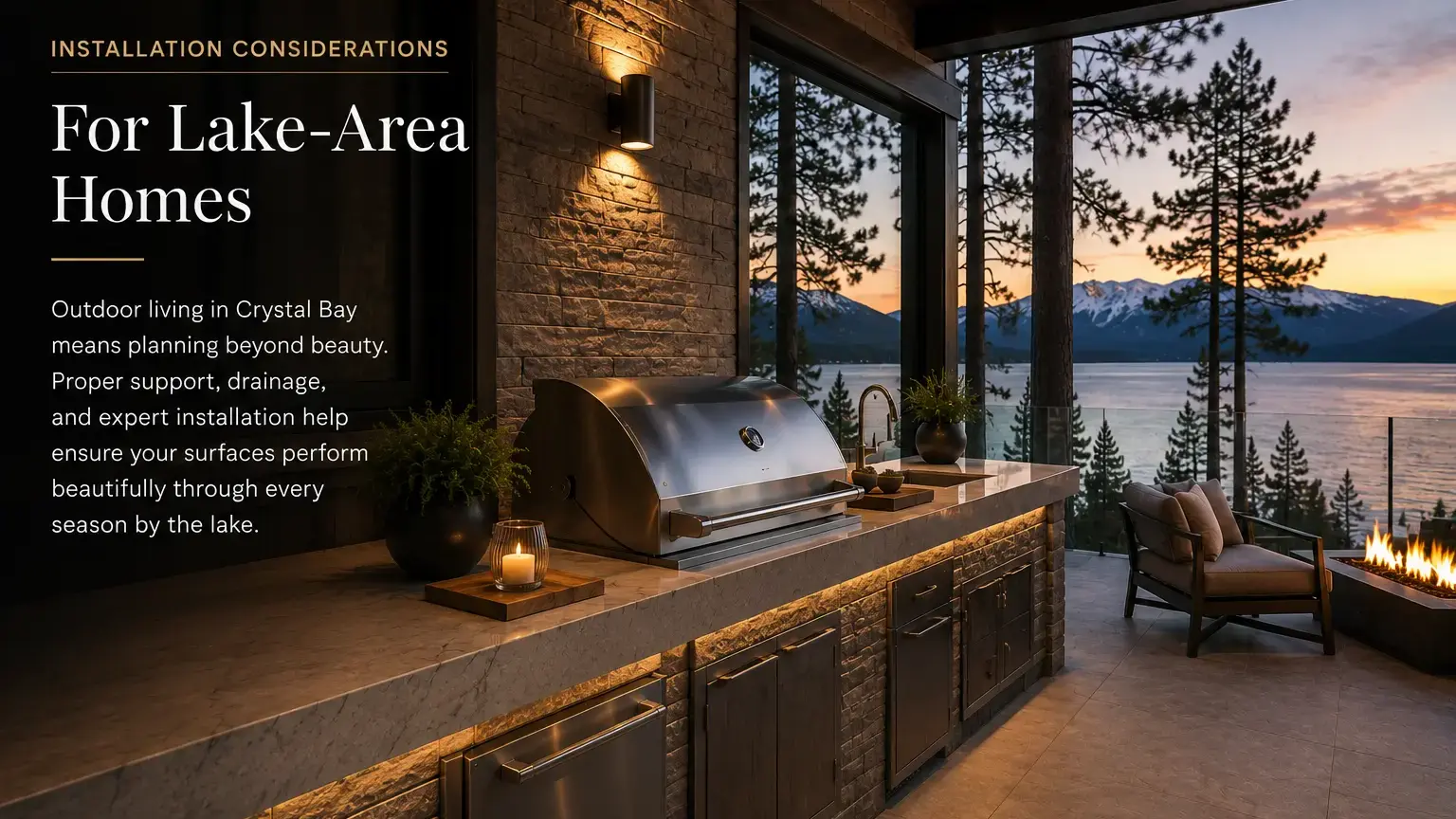
That same outdoor exposure raises a few practical considerations worth discussing with your fabricator before you commit to a material. Many Crystal Bay homes are built on granite-boulder lots with multi-level decks and outdoor living spaces that step down toward the water, so outdoor counters and bar tops often need extra attention to substrate support and drainage, regardless of which material you choose. Winters bring real snow load and freeze-thaw cycles, and while both quartz and sintered stone handle cold well once installed, any exterior application should be detailed by a fabricator experienced with outdoor installations, since improper support or drainage is a more common cause of problems than the material itself.
If your project includes both an interior kitchen and an exterior bar or grilling station, it's worth discussing the transition point with your design team early, so seams, overhangs, and edge details line up cleanly between the two surfaces rather than looking like an afterthought.
Maintenance and Realistic Expectations
Beyond the outdoor-specific concerns, day-to-day care is straightforward for both materials. Since neither one needs sealing, upkeep comes down to the basics: wipe up spills, use a mild cleaner, and avoid abrasive scouring pads on polished finishes. Neither material is indestructible, though, and it's worth setting expectations accordingly. An industry trade publication covering a recent worktop-care guide made the point that no stone surface, engineered or natural, should be expected to be bulletproof against hot pans, harsh chemicals, or the normal wear of daily life. Both materials will hold up well for years when cared for reasonably, but neither is a substitute for basic care.
Look, Finish, and Design Options
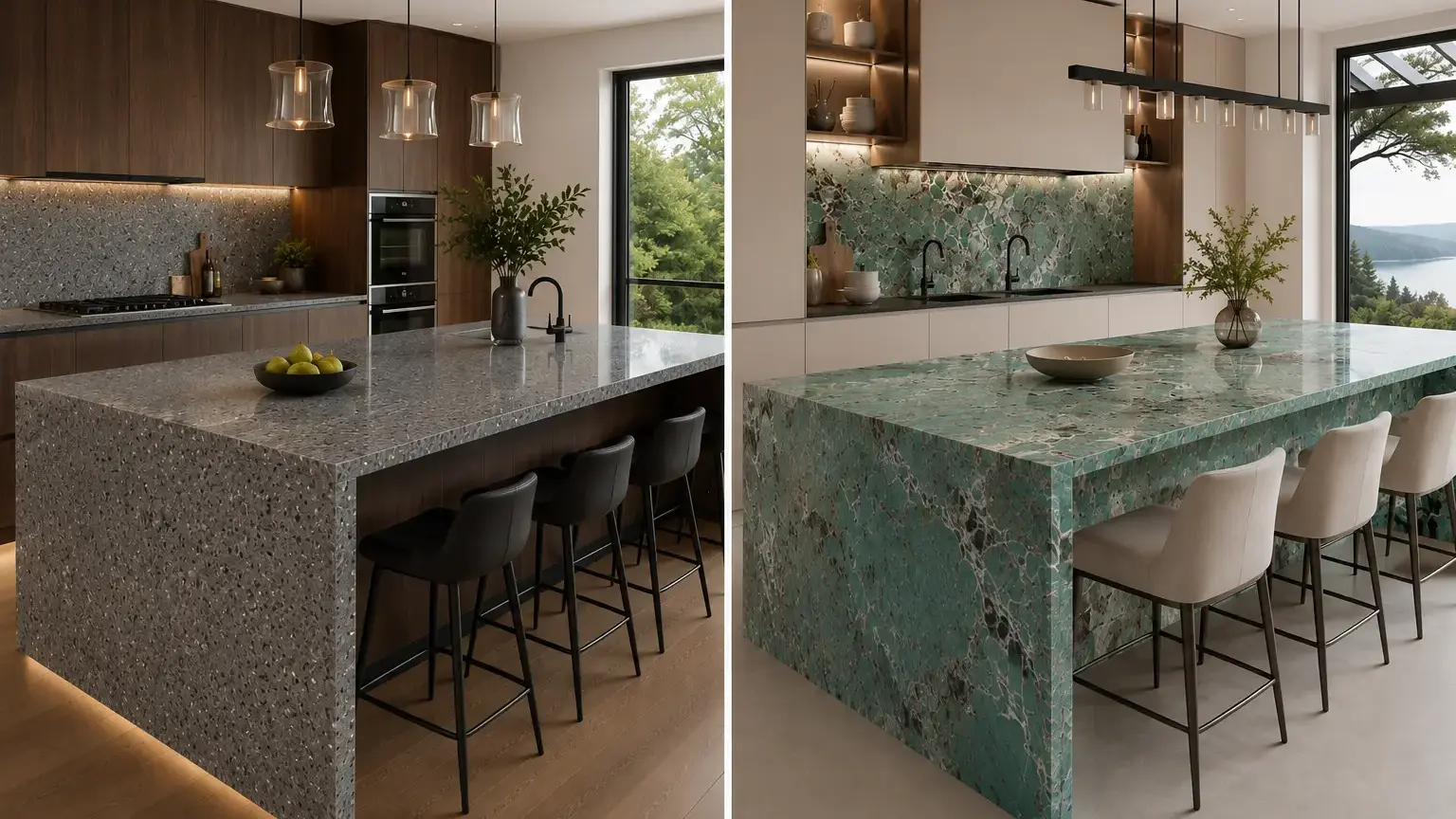
Performance aside, how each material looks day to day is usually just as big a factor in the decision. Because quartz is manufactured with tight control over color and pattern, it tends to repeat in a more predictable, uniform way from slab to slab, which some homeowners like for a clean, consistent look. Sintered stone's veining and texture often run more continuously through the material, especially in full-body designs, giving it a look that leans closer to natural marble or limestone. We offer a complete selection of quartz and sintered stone in polished, honed, and matte finishes, giving you the flexibility to choose between a more uniform, manufactured look or a more varied, natural-feeling appearance.
Cost and Availability
Once you've settled on a look and confirmed it'll perform where you need it to, budget and timeline usually decide the rest. Quartz has been on the market longer and is more widely available, which generally makes it the more budget-friendly option and easier to source quickly. Sintered stone is newer to the U.S. market, and while pricing has come down as more brands and fabricators offer it, it typically costs more than quartz and may take longer to source depending on the specific slab you choose. If budget and timeline are the deciding factors on your project, that's worth weighing early in the process.
So, Which Is Better?
Neither material is objectively better across the board. The right choice depends on where the counter is going and how it will be used. For an interior kitchen, bathroom vanity, or any space shielded from direct sun, quartz offers strong performance, a wide range of consistent looks, and generally lower cost. For an outdoor kitchen, a sun-drenched counter near big lake-facing windows, or any application where heat and UV exposure are real concerns, sintered stone's mineral composition gives it a practical edge, even at a higher price point.
For a lot of Crystal Bay homes, the answer ends up being both: quartz in the main kitchen or baths, sintered stone on an outdoor bar or a sun-exposed surface near the lake side of the house. Visit our showroom to see the materials in person and get a better sense of which option works best for your space and project.
Conclusion
Whichever direction you lean, seeing both materials in person, ideally under the kind of light your space actually gets, makes the decision a lot easier than comparing them from a photo. Lighting changes how veining, color, and finish read on a countertop, and that's especially true in a place like Crystal Bay, where a slab near a lake-facing window will look different than the same slab tucked into a shaded interior kitchen.
Before your visit, it helps to bring a few photos of the space, along with any cabinet colors, appliance finishes, or measurements you already have. That way the conversation can focus on which slabs actually work for your layout and light conditions, rather than browsing the whole floor from scratch. If you're still weighing an outdoor bar against an interior kitchen counter, or comparing sintered stone finishes for the first time, our design team can walk through current slab inventory with you and point out thickness, edge, and finish options for your project. Design consultations are free, and there's no obligation to decide during the visit.
Nova Tile and Stone - Reno Showroom
12835 Old Virginia Rd, Suite 24, Reno, NV 89521
Phone: (775) 331-6682
Frequently Asked Questions
Sintered stone is generally harder and more resistant to heat and UV, but quartz has a slight edge in impact resistance and is somewhat easier to repair invisibly if it chips.
It's generally not a good fit for spots with sustained direct sun. Quartz's resin binder tends to lose color over years of UV exposure, so it works best indoors or in shaded outdoor spots.
No. Like quartz, sintered stone is non-porous straight from manufacturing and doesn't require sealing.
Sintered stone typically costs more than quartz, largely because it's newer to the market and less widely available, though pricing varies by brand, finish, and slab selection.
Yes. It's a common approach in lake and mountain homes: quartz for interior kitchens and baths, sintered stone for outdoor bars, grilling stations, or any surface with heavy sun exposure.
Note: Some images on this page may be conceptual renderings created to illustrate design possibilities and may not depict actual installations.