Quartz and quartzite are two different surface materials that are often confused because of their similar names. Quartz is an engineered stone made by combining crushed quartz crystals with resins and pigments, while quartzite is a natural metamorphic stone formed when sandstone is exposed to intense heat and pressure underground.
The most practical difference between the two comes down to where each one can be used. Quartz is built for indoor use only, while quartzite is suitable for both indoor and outdoor applications and resists fading, though performance can vary by color and finish.
For homeowners in the Minden area, understanding these differences can make it easier to choose the right surface for a kitchen, bathroom, or outdoor feature. This guide compares finishes, durability, and everyday care for both materials to help with that decision.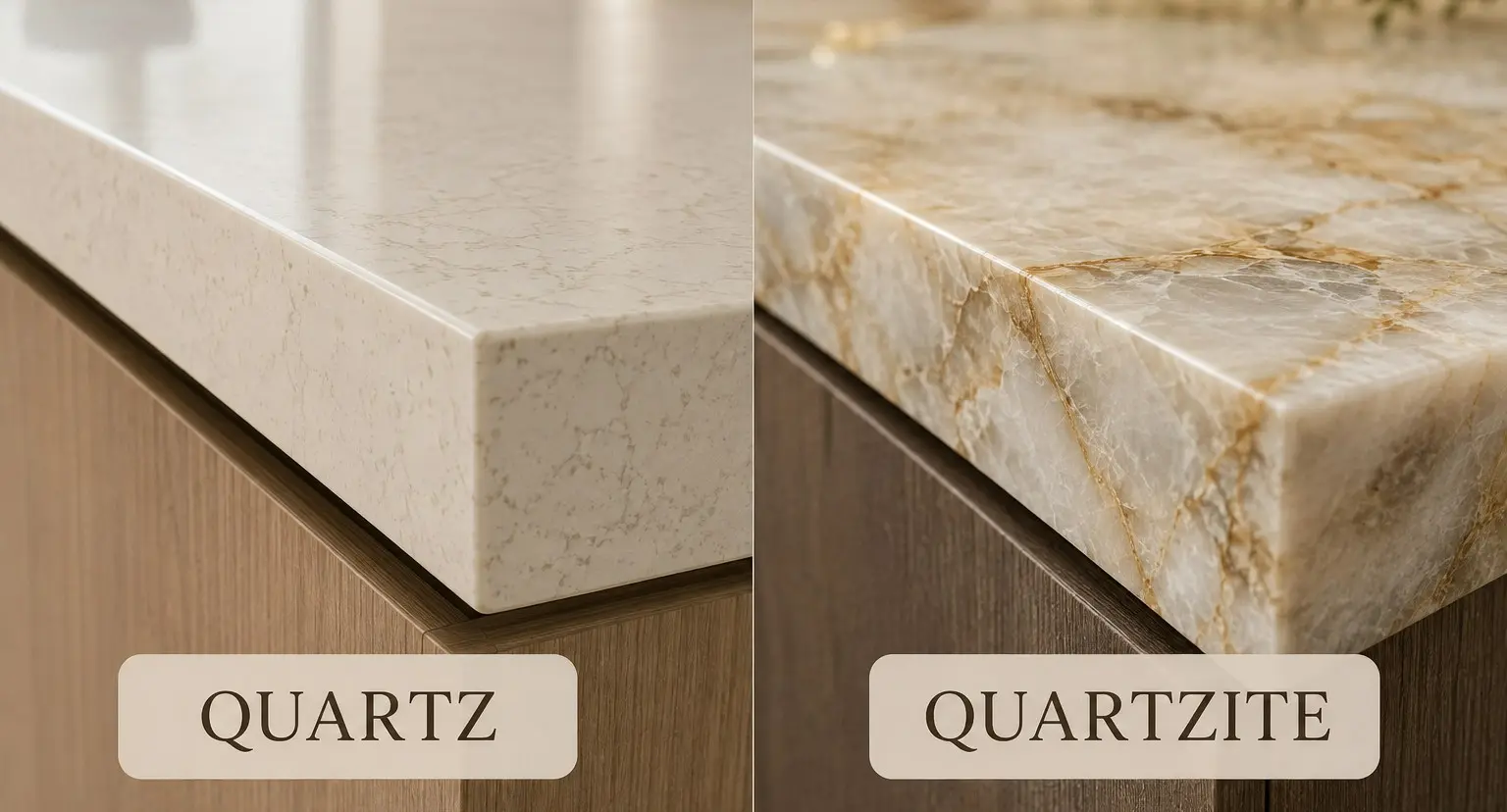
Quartz and Quartzite: Different Materials at Their Core
Because quartz is engineered rather than quarried, manufacturers can control the ratio of crystal to resin during production, which is part of why quartz countertop options tend to look nearly identical from one end of a slab to the other.
Quartzite doesn't go through that kind of controlled process. It begins as sandstone that gets compressed and heated inside the earth over long stretches of time, and the exact conditions each deposit experiences shape the crystalline structure and veining that eventually show up in the finished stone.
That difference in origin is why quartz reads as more uniform from room to room, while quartzite carries the kind of one-of-a-kind movement that draws in homeowners who want a natural stone look. This resource on quartz and quartzite offers a broader comparison for anyone who wants additional context beyond this guide.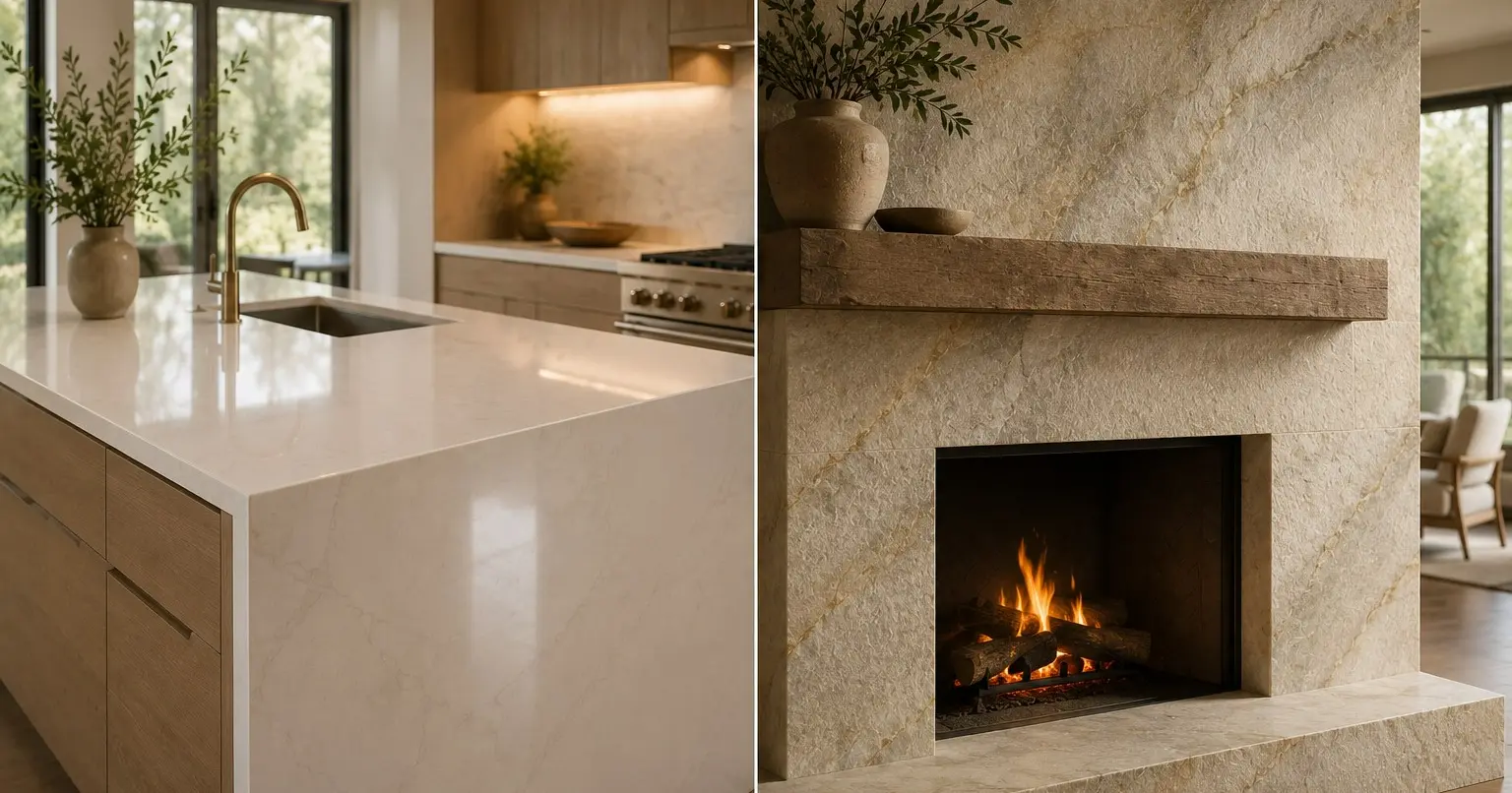
Finish Options for Each Material
Finish choice changes both the look and feel of a surface, and quartz and quartzite differ here as well. Quartz is typically available in polished or honed finishes, giving homeowners a choice between a glossy shine and a softer, matte appearance.
Quartzite offers a wider range. Along with polished and honed options, it can also be finished with a leathered texture or other specialty treatments that bring out depth in the stone's natural veining. Slabs like Taj Mahal quartzite show how a honed finish can highlight subtle color shifts within a single piece.
That wider range of finishes is why quartzite often shows up in statement features such as a fireplace surround or an accent wall, where texture plays as large a role as color.
Where Each Surface Performs Well Indoors
Both materials hold up well in everyday indoor settings, though their strongest applications differ slightly. Quartz is most often chosen for kitchen features such as a quartz kitchen island, where consistent coloring and simple upkeep are priorities, though it can also be used on floors and walls.
Quartzite is suited to an even wider set of indoor uses. Beyond floors and walls, it can also be used around fireplaces, a feature that sees frequent daily use in many homes.
Picking between the two often comes down to how much natural variation a homeowner wants in the finished space, along with which rooms and features are part of the overall project. A busy family kitchen might call for something different than a quiet reading nook or a fireplace wall.
Outdoor Use and Sun Exposure
Sun exposure is where the difference in how these materials are made becomes most obvious. The resins that hold quartz together are sensitive to UV light, so even an indoor quartz surface positioned near a large, sun-facing window can benefit from window treatments to limit direct exposure over time.
Quartzite doesn't carry that same limitation, since it contains no resin to begin with. As a natural stone, it resists fading outdoors, though prolonged exposure conditions should still be factored into the design, especially for a surface that sees direct sun for most of the day.
For an exterior feature like an outdoor fireplace or a stacked stone wall, quartzite is generally the better-suited natural stone. Our live slab inventory shows current colors and patterns available for that kind of project.
Durability, Food Prep, and Everyday Care
Because quartz is non-porous, it holds up well in a kitchen where food preparation happens daily, though a cutting board is still recommended to keep the surface free of scratches.
Quartzite is a strong, dense natural stone with naturally low porosity, but as a natural material it should not be treated the same way as an engineered surface. It is scratch resistant, but cutting directly on it is not recommended, and periodic sealing helps the stone continue to resist moisture and staining over time. For general upkeep guidance on natural stone surfaces, the Natural Stone Institute's care guidelines offer a helpful outside reference.
A quartzite bathroom countertop is a good example of how the stone's strength and moisture resistance suit vanity applications well, even though it asks for a bit more ongoing care than an engineered surface would.
Choosing the Right Surface for a Minden Home
Homeowners around Minden work with a wide range of architectural styles, from mountain cabins near Lake Tahoe to newer builds closer to town, and both quartz and quartzite can complement many of these settings. Nova Tile and Stone carries both materials, giving homeowners the flexibility to choose based on the specific space being updated.
A lake cabin retreat might lean toward quartzite for its natural texture and outdoor durability, while a kitchen remodel closer to town might call for the low-maintenance consistency of quartz. Our full range of surfaces or what's currently on hand at our Minden showroom is a good place to start narrowing down either direction.
Getting a Quote and Design Guidance
Once a material direction starts to take shape, the next step is usually pricing and scheduling. Homeowners who have a quartzite slab in mind can request a quote to check current availability and get a better sense of next steps.
For those who want to see options in person and talk through details like finish, color, and application, a free design consultation is available. This gives homeowners a chance to ask questions and compare materials side by side before making a final decision, without any pressure to commit on the spot.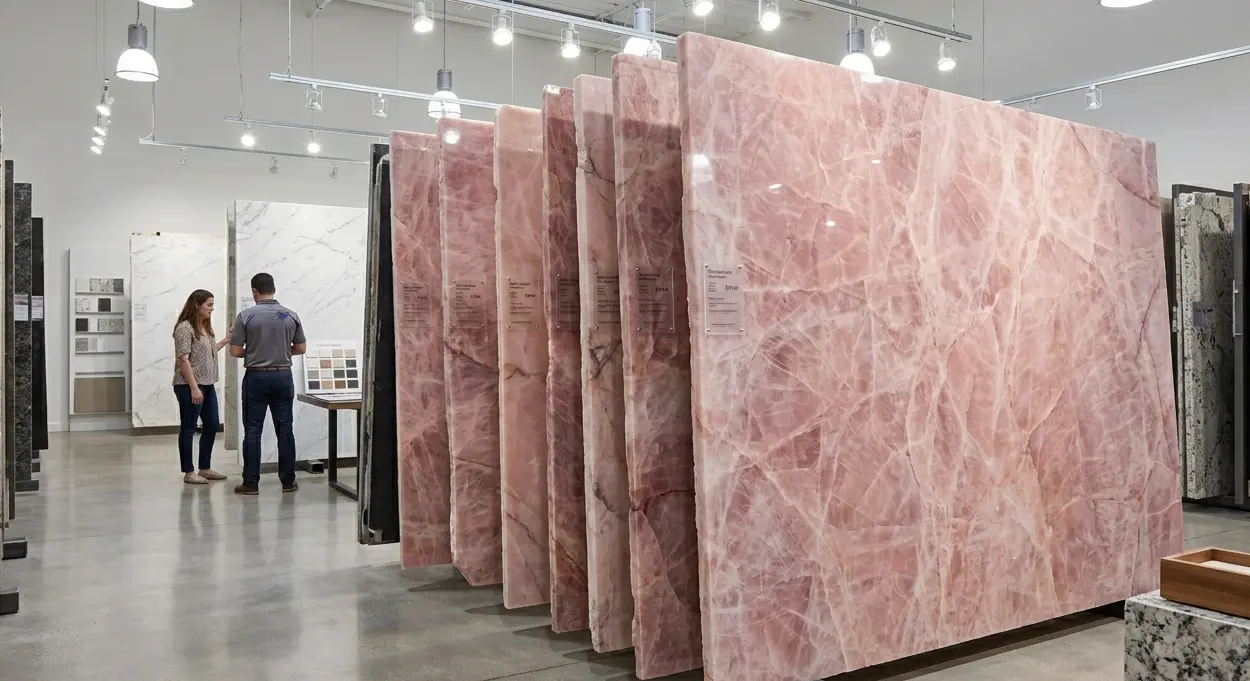
Visiting Our Minden Showroom
Seeing quartz and quartzite slabs in person starts with a visit to the Minden showroom, located at 2548 Business Pkwy, Minden, NV 89423. The showroom can be reached at (775) 783-4970 for questions about current inventory or scheduling.
Natural lighting is often the best way to judge veining, color, and finish before committing to a project, and free tile samples are available to take home so a specific color or finish can be compared in your own space and lighting before finalizing a decision. Pull up directions to the showroom ahead of time to plan the visit.
Conclusion
Quartz and quartzite each bring distinct advantages depending on where and how they will be used, and neither is a universal answer for every room. Quartz's non-porous, low-maintenance surface suits a kitchen that gets used every day, while quartzite's natural variation and outdoor tolerance make it a strong fit for a fireplace, vanity, or exterior feature.
Weighing these differences against your specific project, whether that's a kitchen island, a vanity refresh, or an outdoor stone feature, can help ensure the material holds up the way you expect for years to come. Both options are available locally for anyone in the Minden area, along with guidance to help make that decision easier.
Frequently Asked Questions
Quartz is an engineered stone made by blending crushed quartz crystals with resins and pigments, which is why its color and pattern stay consistent across a slab. Quartzite is a natural stone that forms from sandstone under intense heat and pressure below the earth's surface, so its veining and color vary from one slab to the next.
Yes. Quartzite holds up well outdoors and resists fading over time, though sun exposure and local climate are worth considering for any exterior project. This makes it a suitable option for outdoor fireplaces, patios, and accent walls.
Yes. Quartz's non-porous surface keeps liquids and bacteria from soaking in, making it a suitable material for food preparation areas. A cutting board is still recommended to guard against scratches from knives.
Quartzite works well in kitchen spaces for backsplashes, accent walls, and flooring, adding natural texture and veining to the design. Because it is a natural stone, periodic sealing is recommended to help it resist moisture and staining.
Quartz is non-porous and does not require sealing, so daily care is usually limited to wiping the surface with mild soap and water. Quartzite is a natural stone that benefits from periodic sealing to help maintain its resistance to moisture and staining over time.