Quartz and sintered stone are both durable, non-porous countertop materials, but the better choice for a Carson City home usually comes down to sun exposure and location. Quartz suits indoor kitchens that stay out of direct sunlight, while sintered stone's resistance to UV rays and temperature swings makes it the stronger option for anything near large windows, outdoor kitchens, or covered patios in this high-desert climate. Homeowners planning a kitchen or bath remodel in Carson City often narrow their search down to these two finalists, since both resist stains without sealing and can look nearly identical sitting side by side in a showroom. The real differences show up once you factor in how each material is made and how it performs against Carson City's intense sun, dry air, and real winter cold.
What Quartz Countertops Are Made Of
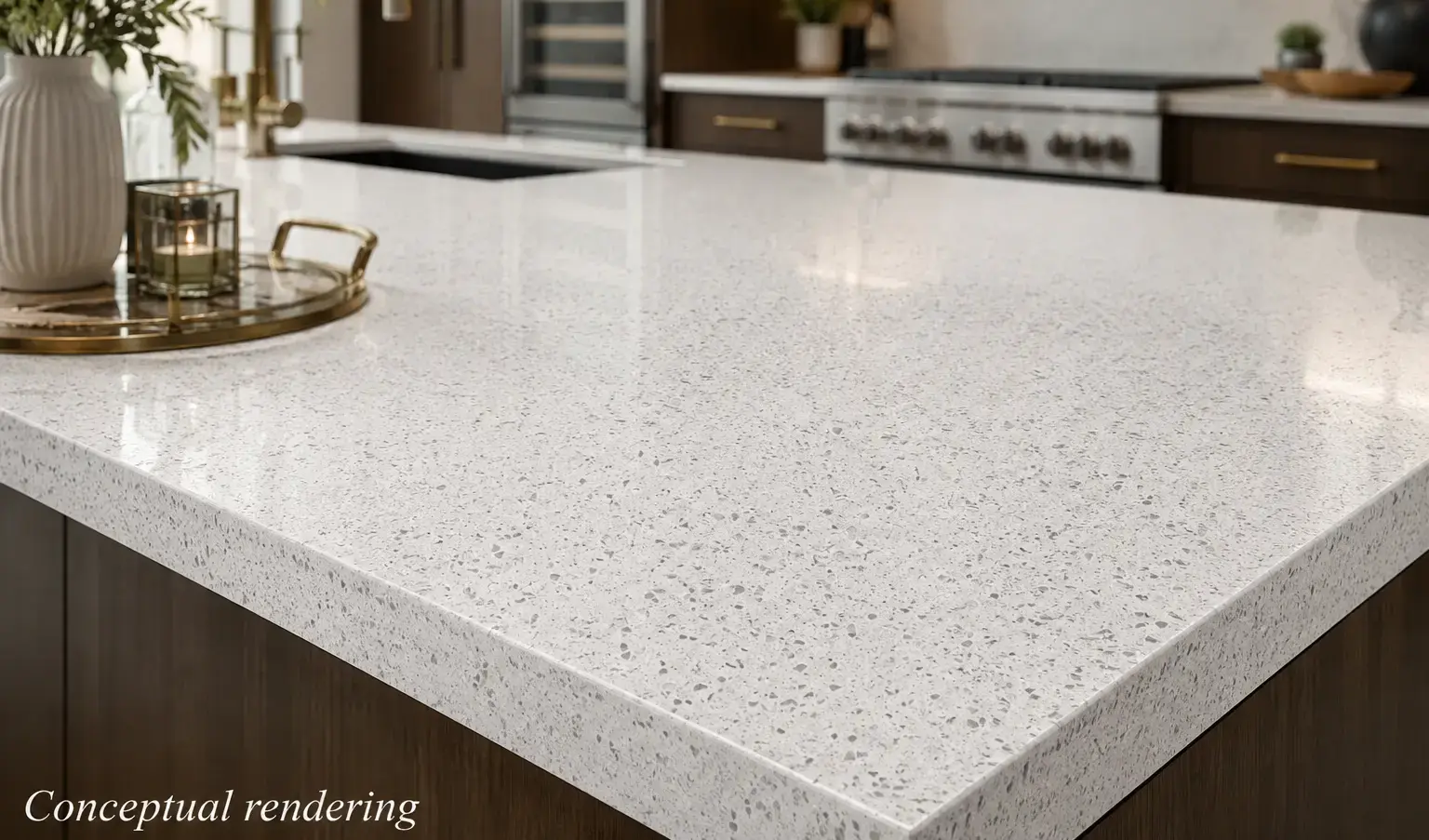
Quartz countertops are engineered from roughly 90 percent ground natural quartz combined with resins, polymers, and pigments that bind everything into a solid slab. That resin content is what gives quartz its wide range. of colors and patterns, including finishes that closely mimic marble or granite, and it also produces a very uniform, consistent look from slab to slab. For homeowners who want a predictable pattern and a broad palette of design options, quartz remains one of the more flexible choices on the market.
The resin binder is also the material's main limitation. Quartz handles everyday kitchen heat fine, but direct or prolonged contact with very hot cookware can scorch or discolor the surface, and extended exposure to direct sunlight can cause the color to fade or shift over time, a limitation covered in This Old House's quartz countertop buying guide. That makes quartz a strong fit for most indoor kitchens, but not the first choice for a countertop that will sit in a sunroom with south-facing glass or anywhere outdoors.
What Sets Sintered Stone Apart
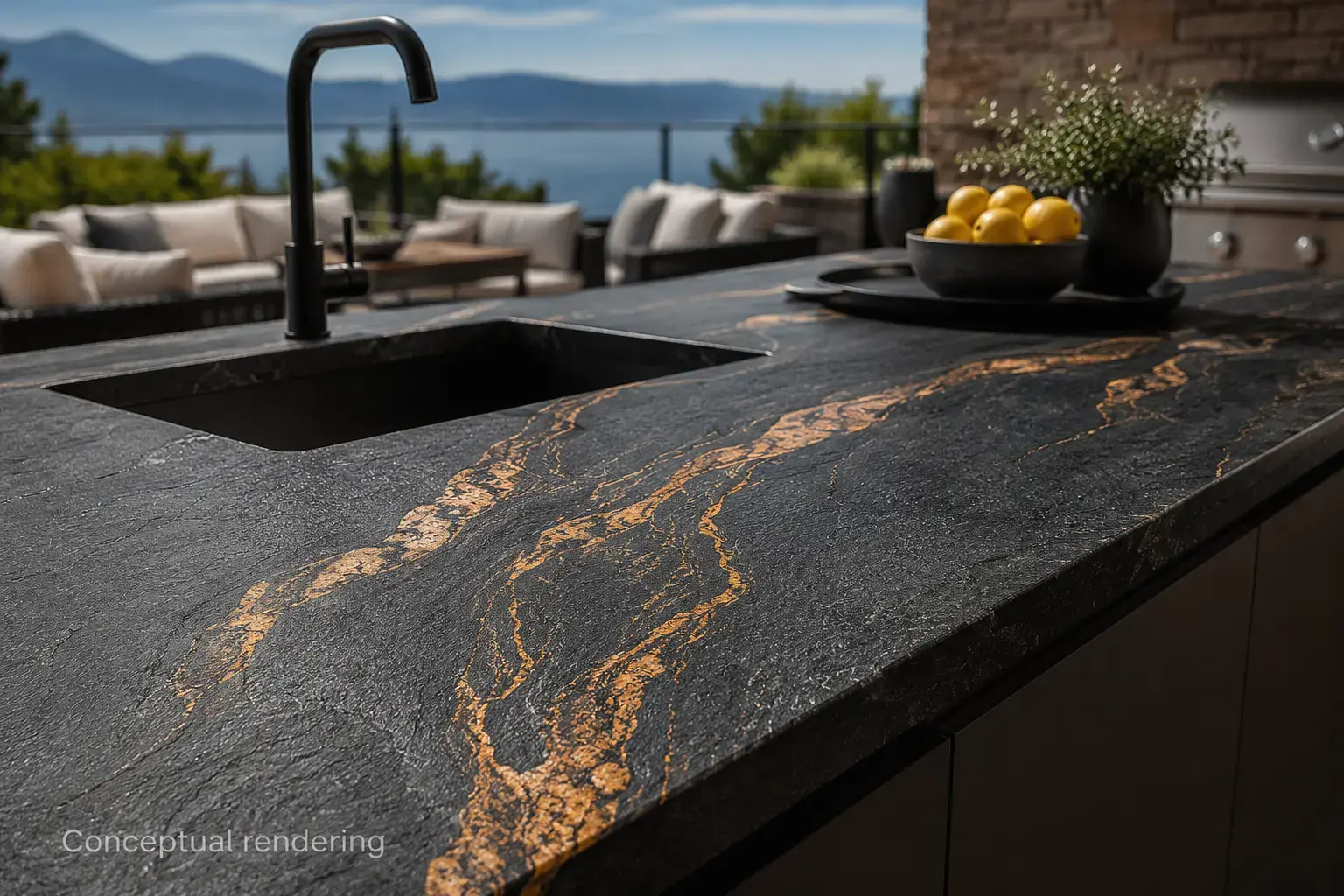
Sintered stone is produced differently. Natural minerals, including quartz and feldspar, are compressed under extreme heat and pressure in a process that mimics how stone forms naturally over geologic time, without any resin binder. The result is a fully mineral slab that holds up to high heat without scorching and resists fading from UV exposure, which makes it a common choice for outdoor kitchens, covered patio counters, and fireplace surrounds in addition to indoor use.
Because it's produced in large-format slabs, kitchens with big islands or long runs of counter can often be finished with fewer seams than quartz allows. As Angi's overview of sintered stone notes, the tradeoff is that sintered stone can be more brittle under a sharp, direct impact compared to quartz, and it typically costs more due to the manufacturing process involved.
How Carson City's Climate Factors Into the Decision
Where each of these strengths actually matters most in a Carson City home comes down to the local climate. Carson City sits in a high desert valley against the eastern slope of the Sierra Nevada, and that setting shapes the practical side of this decision more than most people expect. The city sees well over 250 sunny days a year, and UV intensity increases with elevation, so a kitchen with large south- or west-facing windows here will expose a countertop to more direct sun over time than a comparable kitchen at lower elevation or in a cloudier climate. That is worth factoring in if your kitchen layout puts quartz in a sunny sightline for hours a day.
Winters in the valley bring genuine freeze-thaw cycles, with regular snowfall and hard overnight lows even though daytime temperatures can rebound quickly. That swing matters most for anyone planning an exterior installation rather than a strictly indoor countertop. Sintered stone's resistance to both UV and temperature extremes is what makes it the more common recommendation outdoors in this kind of climate, while an indoor kitchen away from direct sun exposure gives you a genuinely open choice between the two materials.
If you're comparing slabs for a Carson City project, you can request a personalized slab quote through the slab quote request form to explore available options and pricing. If you'd rather view full slabs in person before deciding, you can also visit the Reno showroom, which serves Carson City homeowners.
Matching the Material to Your Home
Climate aside, the age and layout of your home play into this choice too. Carson City's housing stock ranges from historic Victorian-era homes near downtown, many dating back to the city's Comstock-era mining boom, to mid-century ranch houses and newer construction spreading toward the valley's edges. Older homes with smaller, more compartmentalized kitchens often work well with either material, since the counter runs tend to be shorter and seams are less of a visual concern. Newer builds with large open-concept kitchens and oversized islands are where sintered stone's bigger slab sizes tend to pay off, since fewer seams keep a long island run looking clean.
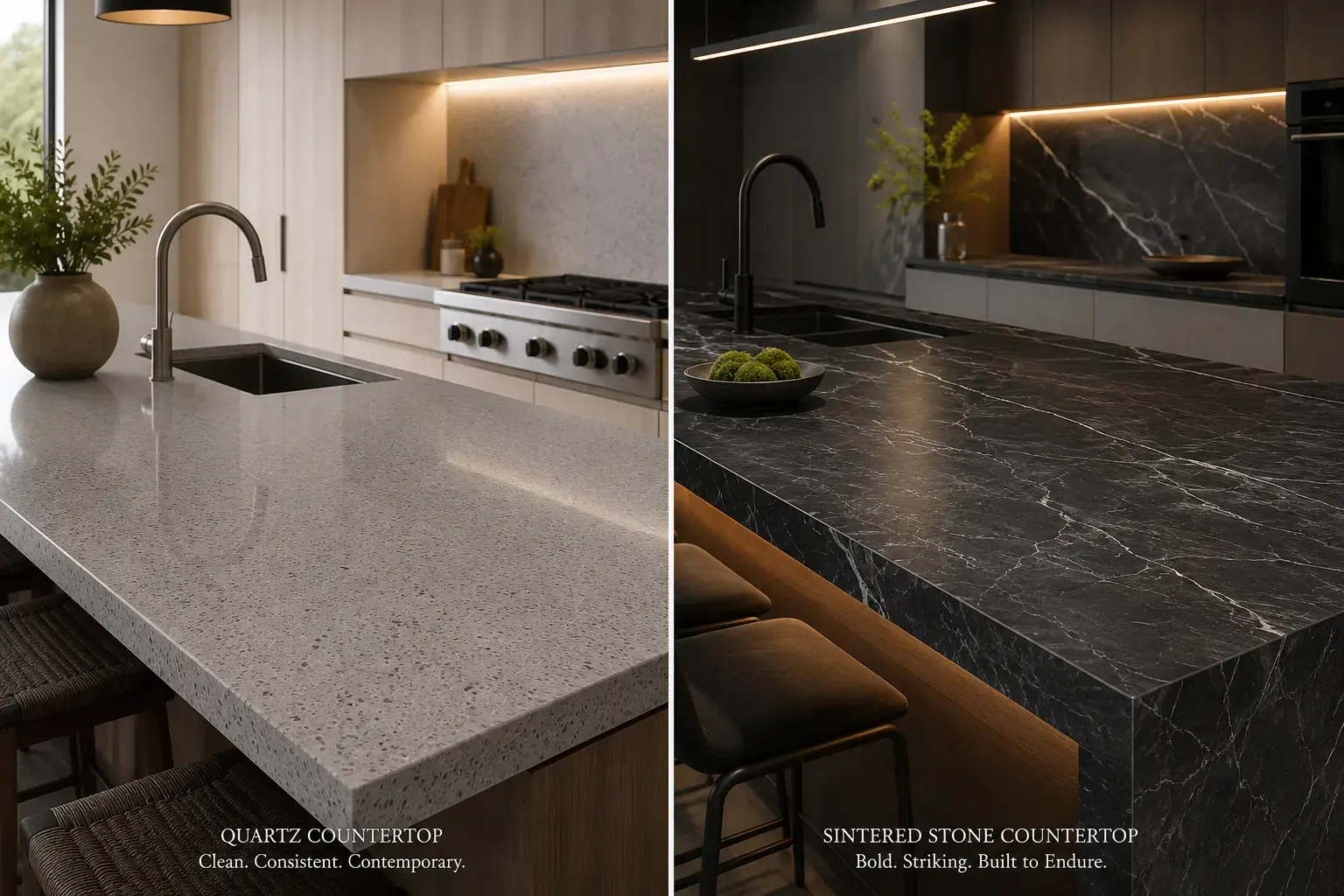
Style preference plays a role too. If you're after a very uniform, repeatable pattern with a wide color selection, quartz gives you more design flexibility. If you want a slab with more natural, continuous veining that runs through the full thickness of the material, sintered stone tends to deliver a look closer to natural stone.
Conclusion
Quartz and sintered stone both hold up well in a Carson City home, but they earn their place in different spots. Quartz gives you a wider range of colors and a consistent, repeatable pattern, which makes it a solid pick for an indoor kitchen that isn't sitting in direct, prolonged sun. Sintered stone's mineral-only composition makes it the sturdier choice for anything exposed to Carson City's intense high-desert sun or its winter temperature swings, whether that's an exterior installation or a kitchen with a wall of west-facing glass. The right call really depends on where the counter will sit in your home, how it will be used day to day, and the look you're after, not on one material being universally better than the other.
Nova Tile and Stone's Reno showroom serves Carson City and the surrounding area as a direct stone importer, and our design team offers free consultations to walk through slab options in person and help match a material to your specific kitchen or bath layout. You can find the showroom at 12835 Old Virginia Rd, Suite 24, Reno, NV 89521, or reach the team directly at (775) 331-6682.
Frequently Asked Questions
Yes, more than in a lot of other climates. UV intensity increases with elevation, and Carson City sits at roughly 4,700 feet with very little cloud cover most of the year. A countertop that sits directly in a sunny window line for several hours a day will experience more UV exposure here than the same layout would in a lower or cloudier location, which is a real consideration if quartz is being installed near south- or west-facing glass.
Sintered stone is generally well suited to it. Since it contains no resin binder, it isn't vulnerable to the freeze-thaw cracking or UV fading that can affect resin-based materials over repeated winter and summer cycles. Proper installation and support underneath the slab still matter for any exterior application, regardless of material.
Both are non-porous and don't require sealing, so daily cleaning is similar for either one. The practical difference shows up around heat: a sintered stone counter tolerates a hot pan set directly on it far better than quartz, which is a meaningful factor for households that cook often and want one less thing to think about near the stove.
Not necessarily. Even in a smaller kitchen, fewer seams still mean a cleaner look and one less place for grime to collect over time. The larger slab size matters most on long runs or big islands, but a smaller kitchen can still be cut from a single slab with no seams at all, which is an option worth asking about regardless of square footage.
A couple of quick checks help. Quartz tends to repeat its pattern at fairly regular intervals since it's manufactured that way, while sintered stone's veining often runs more continuously and varies more from one section of the slab to the next. Looking at a cut edge is another giveaway: quartz shows a uniform composite interior all the way through, while sintered stone can show slight natural variation in texture and color through the full thickness of the slab, closer to how real stone looks when cut.
Note: Some images on this page may be conceptual renderings created to illustrate design possibilities and may not depict actual installations.