Porcelain tile absorbs 0.5% or less water due to its denser, higher-fired clay body, while ceramic tile absorbs 3% to 7% or more, making porcelain the more durable, moisture-resistant choice and ceramic the more affordable option for lower-exposure spaces. That absorption gap is the root cause of nearly every practical difference between the two, from how they hold up to moisture and foot traffic to how well they handle cold weather.
In Virginia City Highlands, NV, where homes sit at roughly 6,000 feet with real freeze-thaw winters, that absorption difference has a direct effect on how each tile performs in mudrooms, patios, and entryways exposed to snow, mud, and gravel from acreage driveways. Choosing correctly between the two up front can mean the difference between a floor that holds up for decades and one that shows cracking or wear within just a few winters.
This guide breaks down what separates porcelain from ceramic, where each one holds up best, and how to choose between them for a high-elevation, rural property.
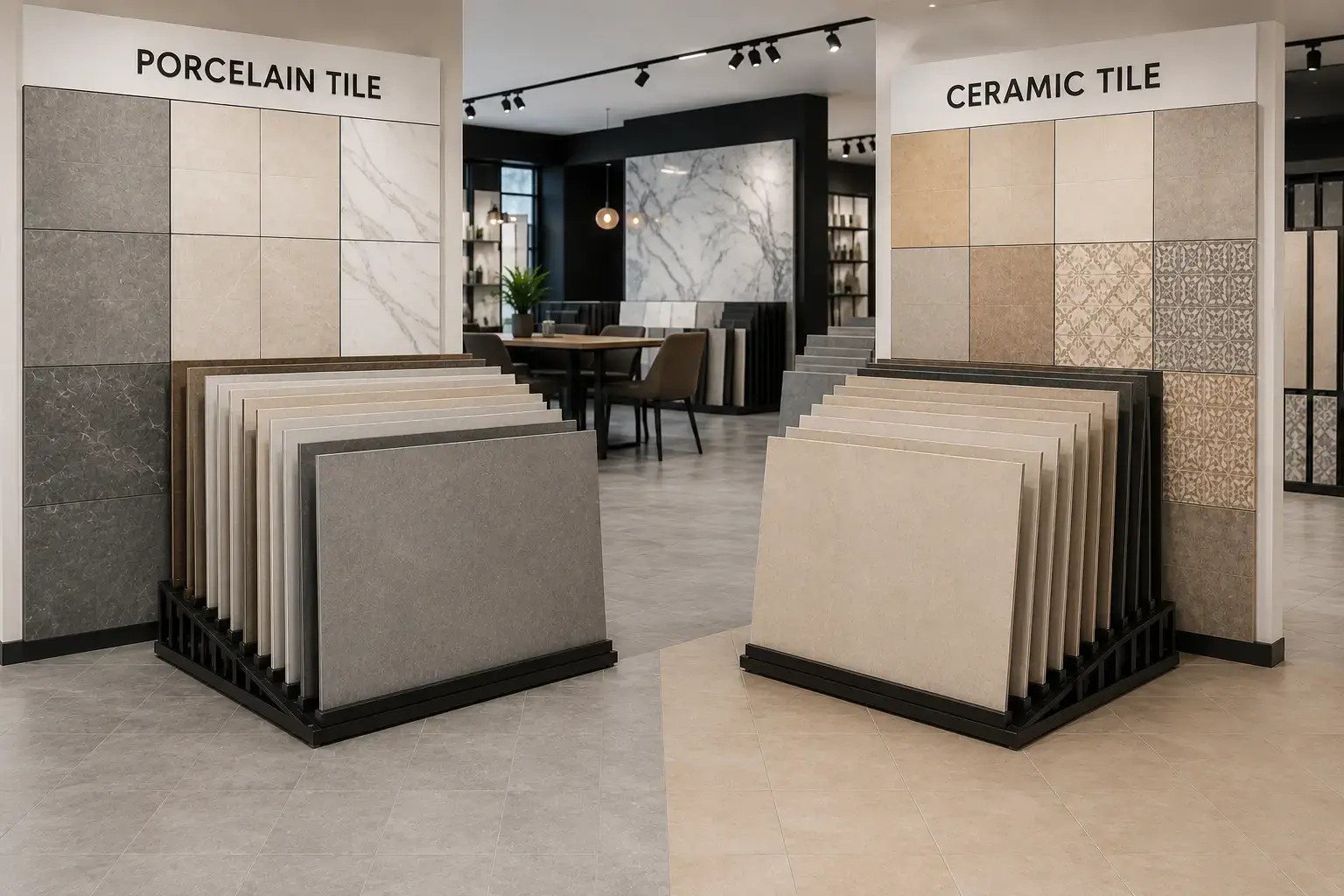
What Actually Makes Porcelain and Ceramic Different?
Both porcelain and ceramic are kiln-fired clay tile, and porcelain is technically a subset of the broader ceramic tile family. The difference comes down to the clay itself and how it's fired. Ceramic tile is made from coarser, more natural clay and fired at lower temperatures, generally in the range of 1,800°F to 2,000°F. Porcelain uses a finer, more refined clay, typically kaolin, blended with feldspar, quartz, and silica, and fired at higher temperatures, usually between 2,200°F and 2,500°F.
That higher firing temperature and finer clay produce a denser, more tightly formed tile body. It's worth remembering that all porcelain is ceramic, but not all ceramic is porcelain, since "ceramic" is the umbrella category and "porcelain" describes a specific, denser type within it.
Manufacturing also varies within the ceramic category itself. Most ceramic tile is fired twice, a process sometimes called bicottura, though some manufacturers have developed single-fire methods that still produce a dense, low-porosity tile. Because firing method affects density and durability within ceramic tile as a category, checking whether a specific product is single-fired or double-fired can be just as useful as comparing it against porcelain broadly.
Water Absorption and Why It Matters at Elevation
Water absorption is the technical measurement that defines the difference between the two categories. Under industry standards maintained by the Tile Council of North America, porcelain tile must absorb 0.5% or less of its weight in water to be classified as porcelain, while ceramic tile typically falls in the 3% to 7% range depending on the specific product.
That gap matters directly for a property at Virginia City Highlands' elevation. Denser, lower-absorption porcelain resists the freeze-thaw cycle better, since less moisture penetrates the tile body to begin with, which means less internal expansion when temperatures drop below freezing. Ceramic tile, with its higher absorption rate, is more prone to surface damage or cracking over time in spaces that see repeated freezing and thawing, such as unheated mudrooms, covered patios, or entryways exposed to snow melt and mud tracked in from a gravel driveway.
This doesn't mean ceramic tile is a poor choice everywhere. In consistently heated interior spaces with limited moisture exposure, like a dry hallway or an interior accent wall, the absorption difference has little practical effect.
Durability and Hardness: Is Porcelain Really Tougher?
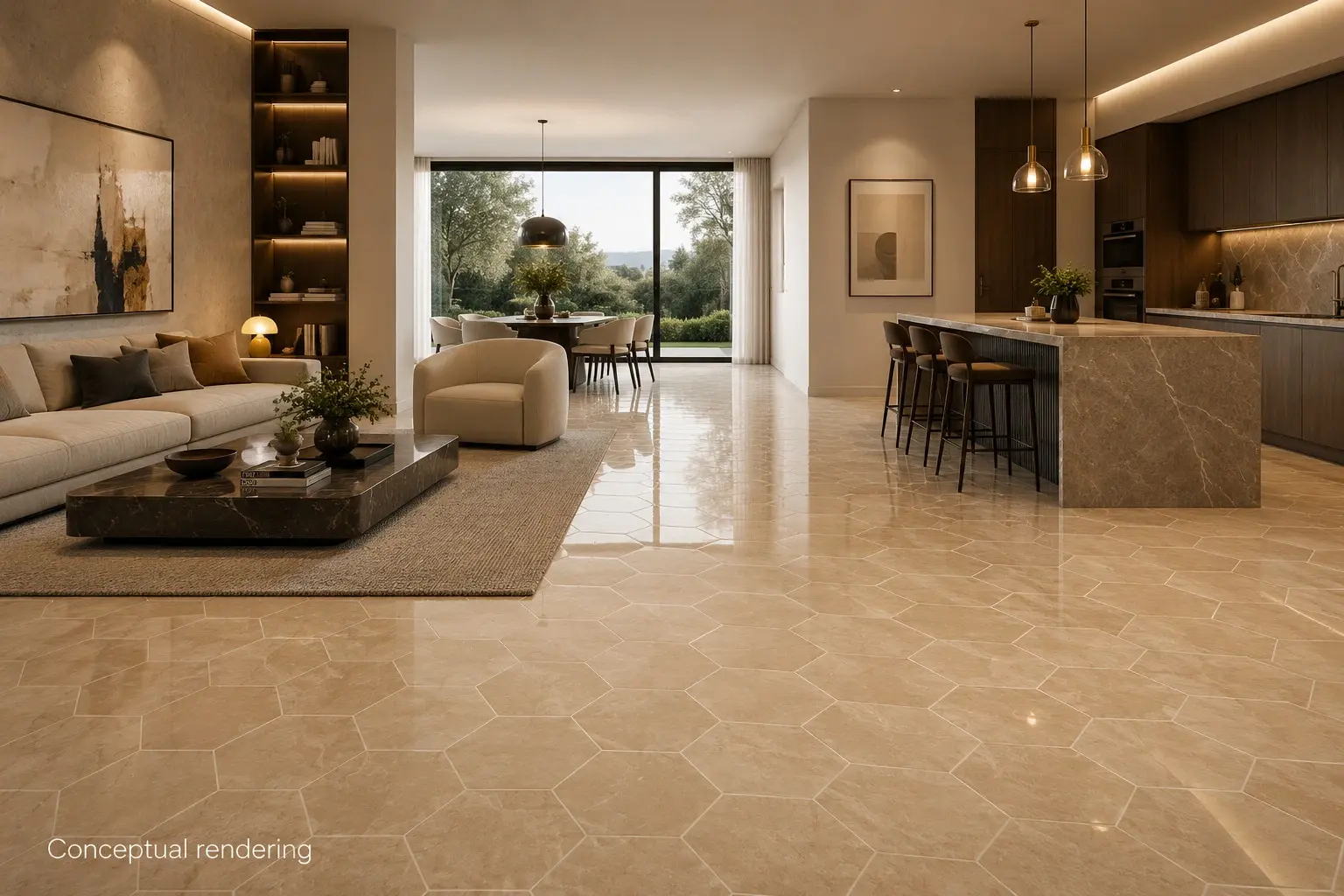
Both tile types are commonly rated using the Porcelain Enamel Institute (PEI) rating, which measures how well a tile's surface resists wear from foot traffic. The scale ranges from 0 (not suitable for floors) to 5 (designed for heavy commercial traffic). Although the wear test is based on the ASTM C1027 standard, "PEI rating" remains the term most commonly used throughout the tile industry. Most ceramic tile falls in the PEI 0 to 3 range, while most porcelain tile is rated PEI 4 or 5, meaning porcelain generally withstands heavier foot traffic and takes longer to show signs of wear.
It's worth being precise here about what "harder" actually means. Porcelain's density gives it greater resistance to scratching, chipping, and surface wear, which is a hardness property. That's a separate question from heat resistance or thermal performance, since both porcelain and ceramic conduct and hold heat reasonably well, and neither expands or contracts enough from normal temperature swings to crack on its own. Hardness affects how a tile handles impact and abrasion over time; it doesn't tell you how the tile behaves under heat, and the two shouldn't be treated as the same property when comparing options.
Which Is Better for Outdoor and Entryway Use on Acreage Properties?
For acreage properties in Virginia City Highlands, the practical decision usually comes down to which specific space is being tiled and how much abuse it takes day to day. Beyond the moisture and freeze concerns already covered, the hardness difference discussed above plays out directly in high-traffic zones near barns, stables, or long driveways, where constant grit, sand, and small stones underfoot wear down a softer tile faster. Porcelain's denser body holds up better against that kind of abrasive wear over years of use.
Ceramic tile remains a solid, cost-effective option for interior walls, backsplashes, and decorative accents where foot traffic and abrasive debris aren't a factor. It's also generally easier to cut for detailed or custom layouts, since the softer clay body is less demanding on cutting tools.
Cost Differences Between Porcelain and Ceramic
Cost differences become easier to evaluate when you can compare materials in person. Visiting the Reno showroom allows you to see how different porcelain and ceramic collections compare in finish, color, and overall value before making a decision.
Ceramic tile is generally less expensive than porcelain, largely because it requires a shorter firing process and simpler raw materials. Porcelain's higher firing temperature, denser composition, and additional manufacturing steps typically place it at a higher price point for comparable size and finish. That said, price varies significantly by brand, finish, and design within both categories, so it's common to find a premium ceramic tile that costs more than an entry-level porcelain option. Application and expected wear matter more than defaulting to one category based on price alone.
It's also worth factoring in the full project cost rather than just the per-square-foot tile price. Porcelain's density can make it slightly more demanding to cut and install, particularly in large-format sizes, which sometimes shows up in labor costs even when the material price difference between the two options is modest. If you'd like help comparing options for your project, you can schedule a design consultation to discuss different tile collections and find the best fit for your space and budget.
Choosing Between Porcelain and Ceramic for Your Project
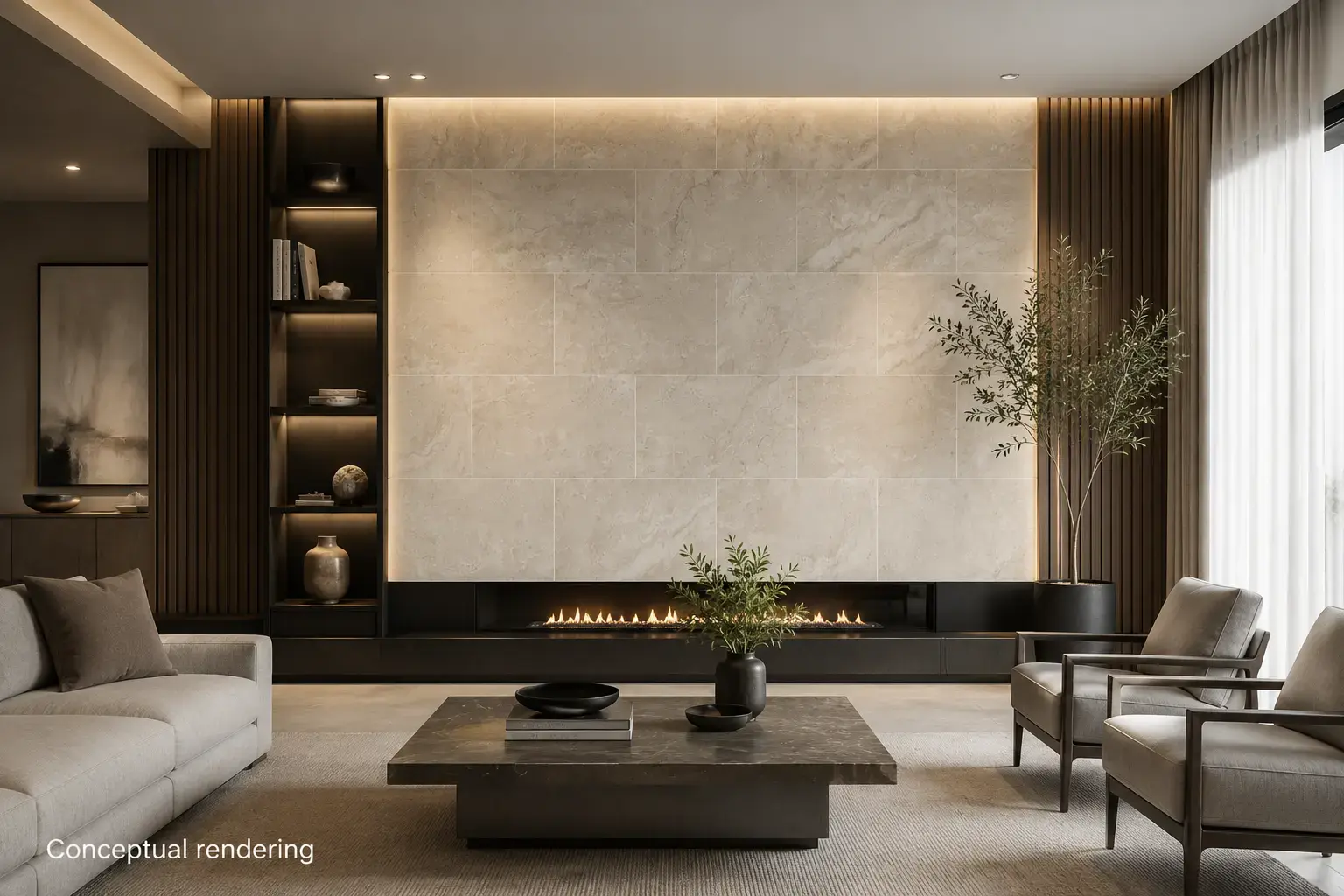
A general starting point for deciding between the two:
- Patios, entryways, and mudrooms: porcelain's low water absorption and higher PEI ratings make it the more durable choice for these high-exposure areas.
- Bathrooms and kitchens: porcelain typically performs better around moisture, though a quality glazed ceramic can work in kitchens with limited water exposure.
- Interior walls, backsplashes, and accents: ceramic is a practical, cost-effective option where moisture and foot traffic aren't concerns.
- Unheated or exterior-adjacent spaces at elevation: porcelain's frost resistance makes it the more reliable option for anywhere freeze-thaw cycles are a factor.
Nova Tile and Stone's Reno showroom, located at 12835 Old Virginia Rd, Suite 24, Reno, NV 89521, (775) 331-6682, carries both porcelain and ceramic tile in a range of finishes suited to Virginia City Highlands homes. Tile samples are available to take home for $1 each, which makes it possible to compare how each option looks and feels in your own space before deciding. Free design consultations are also available for anyone working through a full remodel or new build.
Conclusion
The difference between porcelain and ceramic tile comes down to density and water absorption, and that single factor drives most of the practical distinctions in durability, frost resistance, and cost. For a Virginia City Highlands property dealing with elevation, freeze-thaw winters, and acreage living, porcelain generally holds up better in exposed and high-traffic areas, while ceramic remains a reasonable choice for interior walls and lower-exposure spaces. Exploring Nova Tile and Stone's complete offerings makes it easier to compare both materials side by side, helping you choose the option that best fits your home's performance needs, design preferences, and budget.
Frequently Asked Questions
Yes, mixing the two is common and often practical, using porcelain in wet or high-traffic zones like entryways and bathrooms while using ceramic for interior walls, backsplashes, or lower-traffic rooms where its lower cost and easier cutting are an advantage.
Most glazed porcelain and ceramic tile don't require sealing, since the glaze itself provides the protective, water-resistant surface. Unglazed porcelain, sometimes used for its slip resistance outdoors, can benefit from a penetrating sealer depending on the specific product.
Ceramic is generally easier to cut because of its softer clay body, which makes it more forgiving for detailed patterns or custom layouts. Porcelain's density requires sharper tools and more precise cutting technique, particularly for large-format pieces.
Both can be replaced individually if a spare tile from the same batch is available, though color consistency can be a challenge with either type if replacement tile comes from a different production run. Porcelain's color often runs through the full body of the tile, which can make minor chips less visible than on a ceramic tile with a glazed surface over a different-colored body.
Slip resistance depends more on the tile's finish than whether it's porcelain or ceramic. A textured or matte unglazed porcelain tends to offer better traction in wet or snowy entryways, while a highly polished tile of either type can become slippery when wet. For outdoor or entryway applications, checking the tile's slip-resistance rating (often listed as a coefficient of friction) is a better indicator than the porcelain-versus-ceramic distinction alone.
Note: Some images on this page may be conceptual renderings created to illustrate design possibilities and may not depict actual installations.