For a patio, pool deck, or outdoor kitchen in Woodland, California, porcelain pavers, natural stone such as travertine or granite, and concrete pavers are the most commonly used outdoor surface options, and each responds differently to the region's long, hot, dry summers. The right choice depends on heat absorption, UV resistance, and how a material handles moisture cycling between Woodland's dry summers and wetter winters.
Woodland sits in the heart of California's Sacramento Valley, where summers run long, hot, and dry, often reaching well past 90 degrees for extended stretches with minimal humidity. A surface that looks a certain way in a showroom or online photo can behave differently after a full Central Valley summer of direct sun, heat, and dry air followed by the occasional heavy winter rain. In this article, we look at how different tile, stone, and paver materials respond to Woodland's conditions, what to consider when choosing surfaces for outdoor living spaces, and how to think about comfort and durability before selecting a material.
Why Climate Matters for Outdoor Surface Selection
Outdoor surfaces in Woodland face a different set of demands than indoor flooring. They are exposed to direct sun for much of the year, temperature swings between summer heat and winter cold, occasional heavy rain, and ongoing UV exposure. A few climate factors are relevant when choosing a material.
Heat absorption. Darker, denser materials tend to absorb and hold more heat than lighter ones. On a patio or pool deck, that can result in a surface that feels hot underfoot during summer afternoons, particularly in areas without shade.
UV exposure. Some materials and finishes are more prone to fading or color change with prolonged sun exposure. Others are manufactured specifically to resist it.
Moisture cycling. While Woodland summers are dry, the region sees rain in winter and early spring. Materials that handle repeated wet-to-dry cycles without absorbing excess moisture tend to retain their original appearance for longer periods.
Ground movement. The clay-heavy soils common throughout the Sacramento Valley can shift with seasonal moisture changes. Surface materials and their underlying base each respond differently to this kind of movement, which is a factor to account for when planning a larger patio area.
Consistency across seasons. Woodland's winters are mild, with lows typically in the high 30s to low 40s and freezing temperatures fairly infrequent, so outdoor surfaces here deal with less freeze-thaw stress than in colder regions. Even so, materials with lower moisture absorption tend to hold their appearance more consistently across the year's range of conditions, since less retained moisture means less potential for changes in surface texture or color over time.
With those factors in mind, here is how some common outdoor surface options compare.
Porcelain Pavers
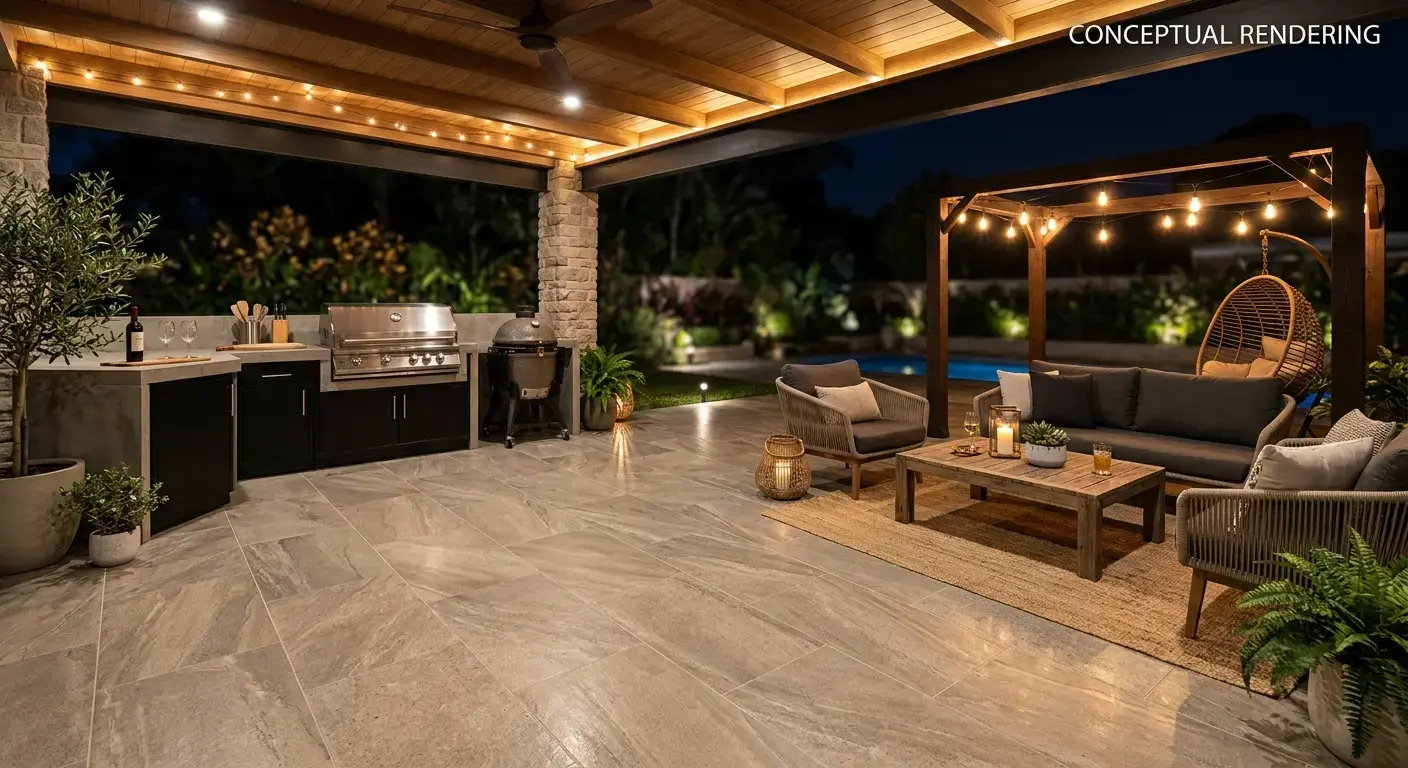
Porcelain pavers are used for Central Valley patios in part because of how they perform in heat and sun. Porcelain is a dense, low-absorption material, meeting the industry-defined standard of 0.5% water absorption or less that distinguishes true certified porcelain tile from other materials sometimes marketed under the same name. This low absorption means it does not draw in moisture the way some natural stones can, and it retains its color over time since the pigment is fired throughout the material rather than applied only to the surface.
Many porcelain paver lines are available in lighter, warm-neutral tones that reflect more heat than darker options, which can affect comfort on a patio that receives direct afternoon sun. Textured, matte finishes are common in porcelain paver collections and provide slip resistance for pool decks and walkways, a relevant factor for bare feet around water in summer months. Porcelain is also available in large-format sizes, as well as thinner tile formats for raised platforms and thicker two-centimeter pavers manufactured for exterior installation over sand, gravel, or pedestal systems. Homeowners can browse our current porcelain and tile selection to compare colors and formats.
Natural Stone Options
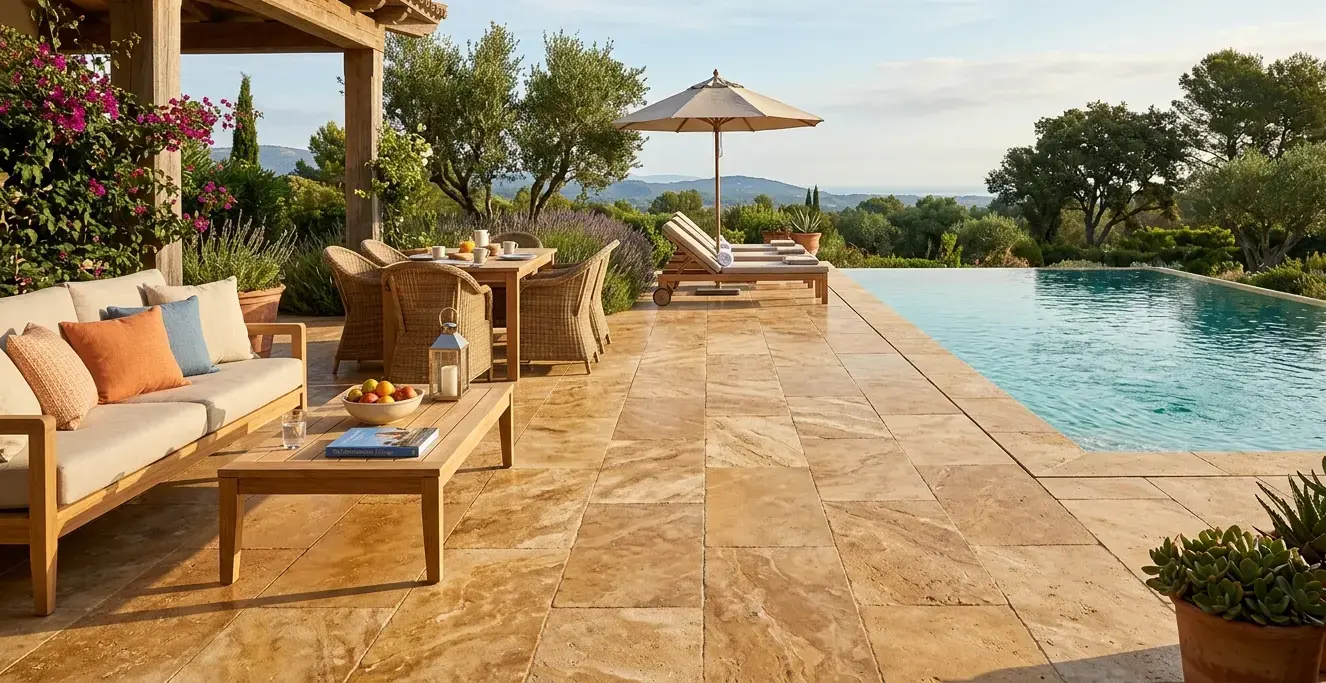
Natural stone is used for outdoor living areas for its texture and color range, and several types are suited to Woodland's climate.
Travertine is used around pools and patios in hot, dry climates because it tends to stay cooler underfoot than denser materials. Its natural texture also provides traction, a factor near water.
Flagstone, often used for patios and pathways, has a varied, irregular look and holds up to sun exposure since its color comes from the mineral composition of the stone rather than a surface treatment.
Granite is a dense, durable option for outdoor use, though its darker color varieties can retain more heat in direct sun. Lighter granite tones are worth considering for surfaces that see foot traffic during the hottest parts of the day, including around a pool or spa.
Limestone is another natural option some homeowners consider for patios, with soft, even coloring, though it tends to be more porous than granite or travertine and calls for consistent sealing in an outdoor setting.
Natural stone requires periodic sealing to manage moisture and staining, a factor to account for in long-term care regardless of which stone type is chosen. Natural variation in tone and texture from piece to piece is also characteristic of stone, giving an outdoor space a less uniform look than manufactured materials. For homeowners considering a larger patio or pool surround, it's possible to browse our live natural stone slab inventory to see current bundles, or request a quote on specific slabs that catch your eye.
Concrete Pavers
Concrete pavers are used for patios, walkways, and driveways throughout the Sacramento Valley. Concrete paver lines come in a range of colors, textures, and shapes, including options made to resemble natural stone or wood. Lighter color-through pavers tend to retain their appearance with sun exposure, while some coated or stained finishes may show more fading over time compared to color-through options. Concrete pavers are also often used for larger areas such as driveways or extended patios, where their range of sizes and interlocking patterns can be applied across a bigger footprint.
Thinking About Heat and Slip Resistance Underfoot
One detail that can get overlooked until after a patio is finished is how hot the surface feels in bare feet during summer afternoons. In general, lighter colors and matte or textured finishes stay cooler than dark, smooth, glossy surfaces. For a patio used frequently around midday in summer, particularly near a pool, a lighter tone in porcelain, travertine, or color-through concrete can affect everyday comfort.
Slip resistance is a related consideration around wet areas. The tile industry measures this using the dynamic coefficient of friction, tested under the ANSI A326.3 standard, which gives a consistent way to compare how different finishes perform when wet. Shade structures such as pergolas, patio covers, or trees can also reduce the amount of direct sun a surface receives throughout the day, which affects how warm it gets regardless of material choice.
Matching Surface to Space
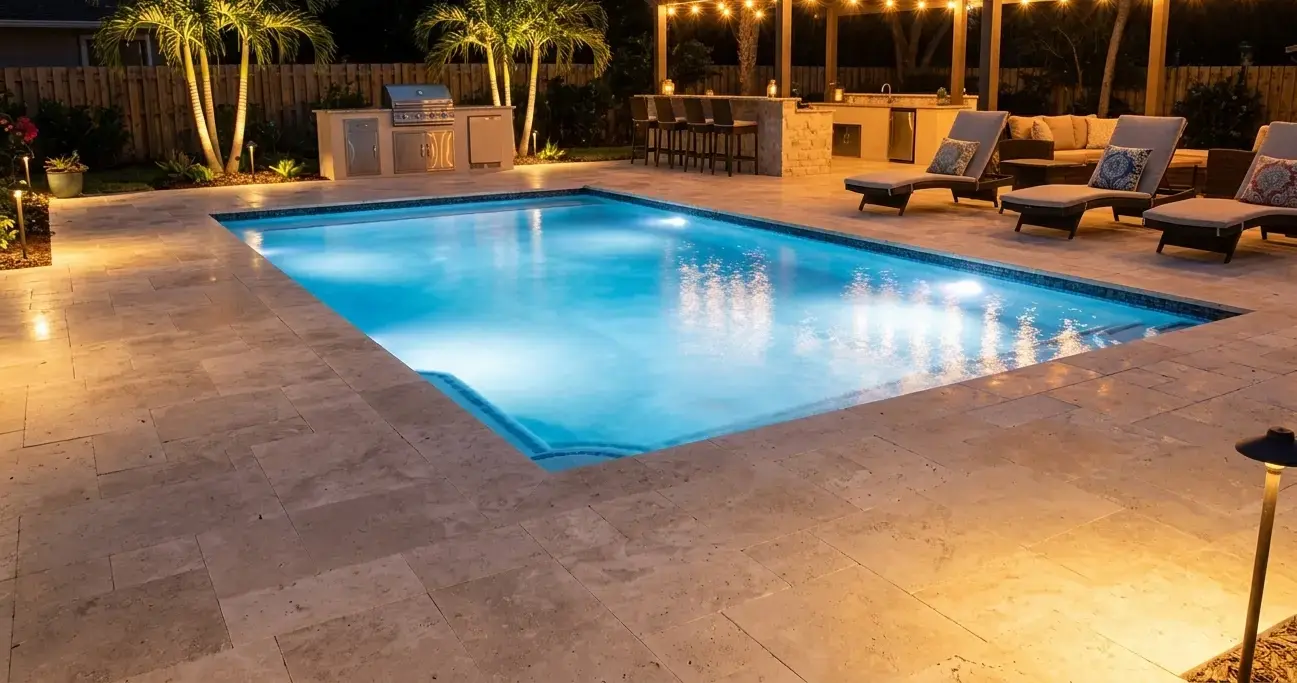
Not every part of an outdoor living area receives the same amount of sun or use, and it can help to consider each zone separately rather than choosing one material for the entire space by default.
Pool decks and spa surrounds call for textured, slip-resistant finishes in lighter tones, since these areas combine ongoing moisture exposure with bare feet and direct sun.
Outdoor kitchens and dining areas are often partially shaded by a covered patio structure, which allows for darker tones or natural stone without the same heat considerations as a fully exposed pool deck.
Walkways and garden paths see less direct foot traffic and can accommodate more textured or irregular materials like flagstone, where slip resistance is less of a factor than it is near water.
Driveways and larger hardscape areas typically call for durable, dimensionally consistent materials like concrete or porcelain pavers that can handle vehicle weight and ongoing use over time.
Connecting Indoor and Outdoor Spaces
Many Woodland homeowners look for ways to visually connect an indoor kitchen or living area with an adjoining patio or outdoor kitchen. Porcelain works for this purpose, since matching or coordinating porcelain tile is often available in both interior and exterior-rated formats within the same collection. This allows a similar color palette to carry from an indoor floor out through a slider or French door onto the patio, without requiring identical materials rated for identical uses. This approach comes up in newer Woodland neighborhoods, where open floor plans already connect indoor and outdoor living for much of the year. Homeowners planning a whole-home project can see how tile, stone, and flooring work together by looking through our full range of surfaces.
Visiting Our Sacramento Showroom
For homeowners in Woodland planning a patio or outdoor living project, we welcome visits to our showroom at 6100 Warehouse Way, Sacramento, CA 95826, where porcelain pavers, natural stone, and paver samples are available to view in person. Viewing color and texture in natural light can affect the outcome when choosing a material for use under direct sun. You can find current hours and additional details on our Sacramento showroom page, get directions from Woodland, or book a free design consultation ahead of your visit. Our showroom team can also be reached at (916) 913-6682 to discuss current samples and options on hand.
Conclusion
Woodland's hot, dry summers place demands on outdoor surfaces, from heat retention and UV exposure to seasonal ground movement in the region's clay soils. Porcelain pavers, travertine, flagstone, granite, limestone, and concrete pavers each offer a different combination of appearance, comfort, and performance over time. Accounting for the local climate, how a space will be used throughout the year, and how much shade it receives can help narrow down which material will hold up over time for a patio, pool deck, or outdoor kitchen. Our team has been helping homeowners work through these choices as a family-owned business since 2005, and we're glad to help with your project as well.
Frequently Asked Questions
Yes, darker and denser materials absorb and retain more heat than lighter-colored ones. Lighter tones in porcelain, stone, or concrete pavers reduce surface temperature during peak summer hours, particularly in fully exposed areas without shade.
Yes, porcelain is a common choice for pool decks in hot, dry climates because of its low moisture absorption, color stability under UV exposure, and availability in textured, slip-resistant finishes.
Natural stone patios require periodic sealing to manage moisture absorption and staining, regardless of climate. In a hot, dry environment such as Woodland's, sealing frequency depends on the stone type and the amount of direct sun and foot traffic the surface receives.
No, not all tile is rated for exterior use. Tile intended for outdoor applications is manufactured to handle UV exposure, temperature swings, and slip resistance requirements that most interior tile is not designed for, so confirming a product's rated use before installing it outdoors is recommended.
Yes, the expansive clay soils common throughout the Sacramento Valley can shift with seasonal moisture changes, which affects patio surfaces over time. This is a factor to discuss with a qualified professional when planning the base and layout for a larger patio area.