Granite, quartzite, and porcelain slab are the three most recommended stone materials for outdoor kitchens in Folsom, CA, and each performs differently against sun, heat, and moisture. Granite offers natural heat resistance and the widest range of colors at the most approachable price point. Quartzite is the hardest of the three, rating 7 to 8 on the Mohs scale, and resists acidic stains from citrus, wine, and vinegar better than most granite. Porcelain slab is the only nonporous option of the three, so it never needs sealing and resists UV fading the longest in direct sun. The right choice for a Folsom outdoor kitchen depends on how much sealing maintenance you want to take on, how often hot cookware will touch the surface, and whether you prefer natural stone variation or a more uniform manufactured look.
Why Material Choice Matters More Outdoors
An outdoor kitchen countertop faces a different set of demands than one indoors. Folsom summers regularly push past 95 degrees, and a dark stone surface in direct sun can get hot enough to affect certain finishes. Winter brings occasional overnight frost, which means any stone with a porous surface needs to handle moisture without cracking. Add in UV exposure, pollen, irrigation overspray, and the heat radiating off a built-in grill, and it becomes clear why not every material sold for kitchens indoors performs the same way outside. For a broader look at how different stones compare in general kitchen use, This Old House's guide to stone countertops covers pros, cons, and maintenance across several materials.
Granite, quartzite, and porcelain slab are the three materials most commonly recommended for outdoor use because each one, in different ways, resists the specific stresses an outdoor kitchen creates. You can browse our live slab inventory to see current granite, quartzite, and porcelain options on hand.
Granite for Folsom Outdoor Kitchens
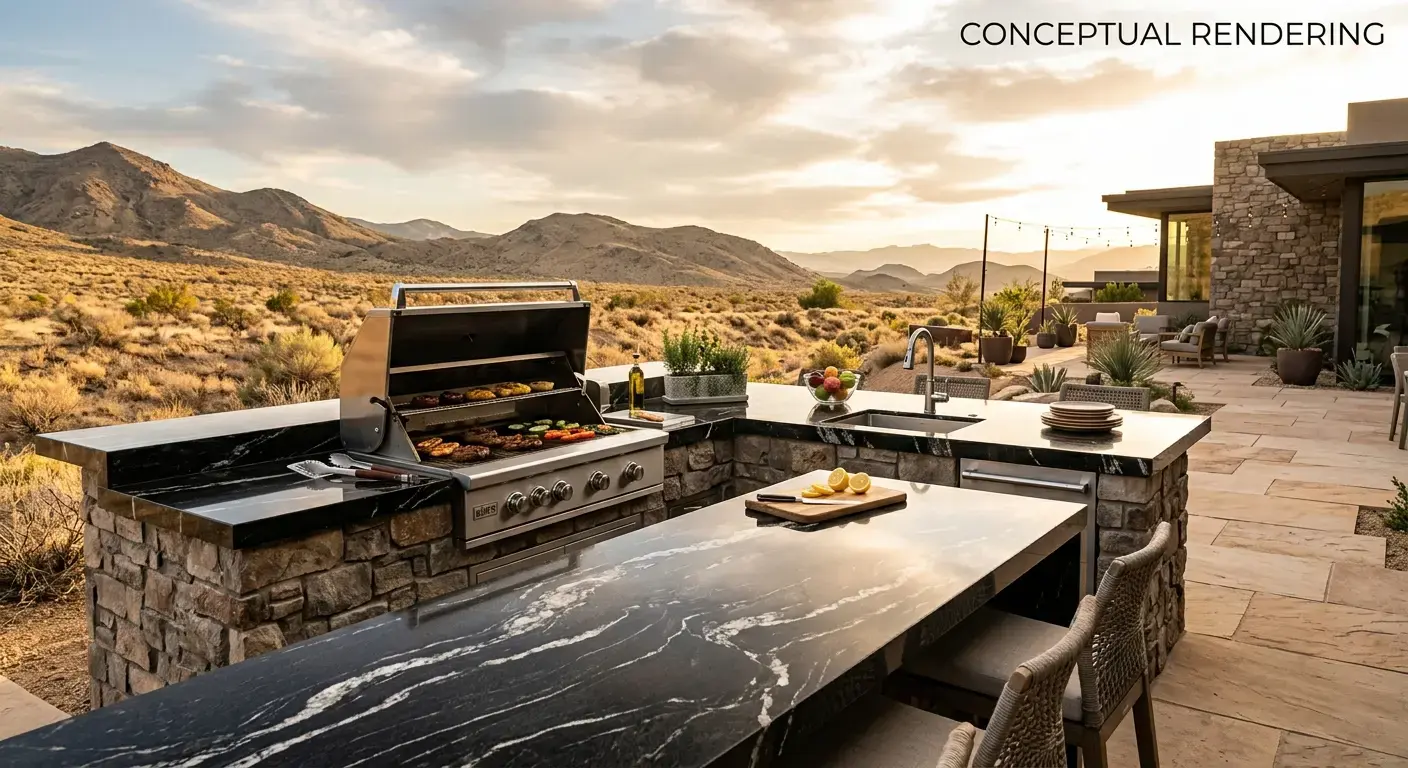
Granite is one of the most widely used materials for outdoor kitchens because it is a naturally dense, heat resistant stone formed under intense pressure. It handles direct sun exposure well, and its mineral composition means it does not fade or discolor the way some engineered surfaces can over years outdoors.
Strengths for outdoor use:
- Naturally heat resistant, which suits areas near grills and pizza ovens
- Wide range of colors and patterns, from uniform grays to heavily veined golds and blacks
- Holds up to Folsom's freeze-thaw cycles better than softer stones like limestone or travertine
- Resists scratching from everyday outdoor kitchen tools, measuring around 6 to 7 on the Mohs hardness scale
Considerations:
- Granite is porous and needs periodic sealing to resist staining from wine, oil, or irrigation minerals
- Darker granite colors absorb more heat in direct sun, which can make the surface warm to the touch on hot afternoons
- Edges and seams should be planned carefully since granite slabs come in fixed dimensions
Granite works particularly well for Folsom homeowners who want a natural stone look with a lower price point than quartzite, and who don't mind a maintenance routine that includes occasional resealing.
Quartzite for Folsom Outdoor Kitchens
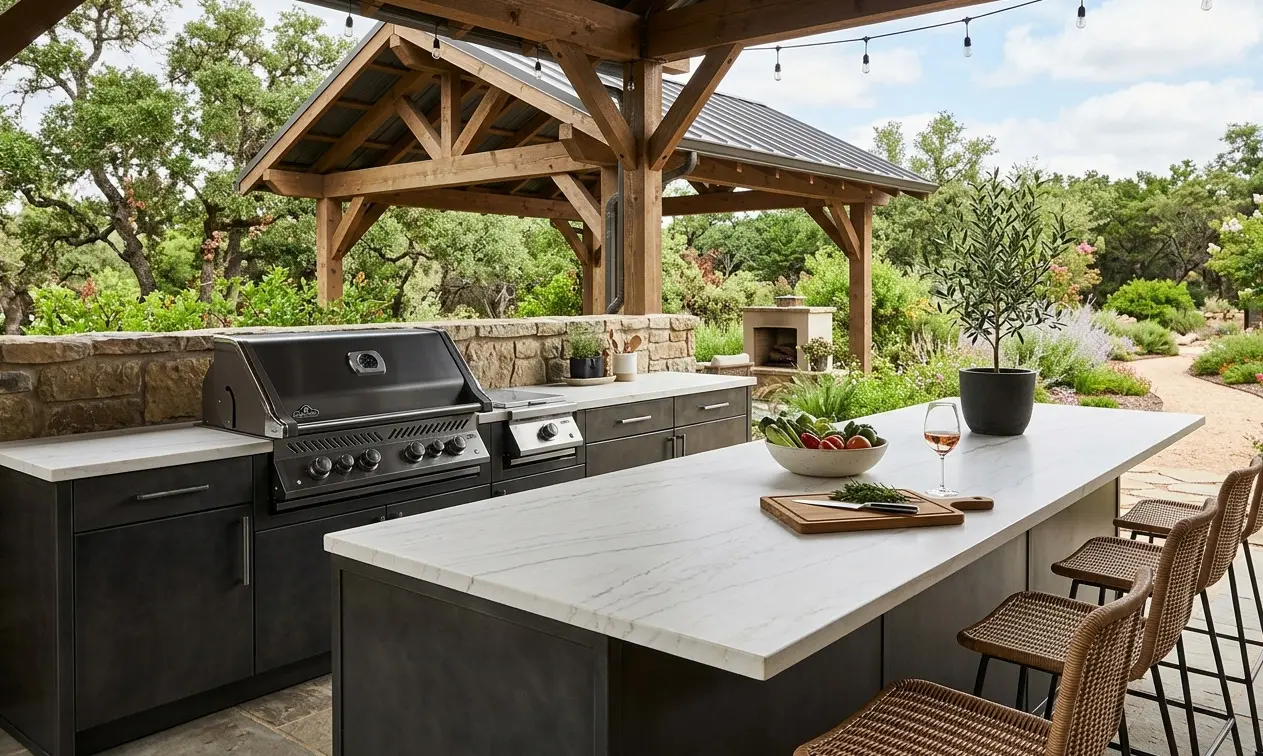
Quartzite is a natural stone that started as sandstone and was transformed by heat and pressure into a much harder material, chemically similar to quartz but occurring naturally rather than engineered. This gives true quartzite notable hardness, typically rating 7 to 8 on the Mohs scale compared to granite's 6 to 7, and strong heat resistance, which makes it a strong candidate for outdoor kitchens where hot cookware often lands directly on the surface. Fine Homebuilding's natural stone guide goes into more detail on why quartzite labeling varies so widely across suppliers.
Strengths for outdoor use:
- Extremely hard and scratch resistant, often harder than granite
- High heat tolerance, useful directly adjacent to grills or side burners
- Stronger resistance to acidic spills like citrus, wine, and vinegar compared to most granite, which is often the more noticeable day-to-day advantage over its hardness rating
- Shows natural veining and movement not found in manufactured surfaces
- Performs well in Folsom's temperature swings between hot days and cool nights
Considerations:
- Quartzite is still a natural, porous stone and requires sealing to prevent staining
- Not all stone sold as "quartzite" is true quartzite; some marble is mislabeled and sold under the name, so verifying with a hardness test or reputable supplier matters
- Tends to cost more than granite due to sourcing and fabrication difficulty
- Color and pattern options are more limited than granite, since true quartzite is rarer
For homeowners who cook often and want a natural stone that can take direct heat and acidic spills without much worry, quartzite is frequently the material of choice, provided the slab is verified as genuine.
Porcelain Slab for Folsom Outdoor Kitchens
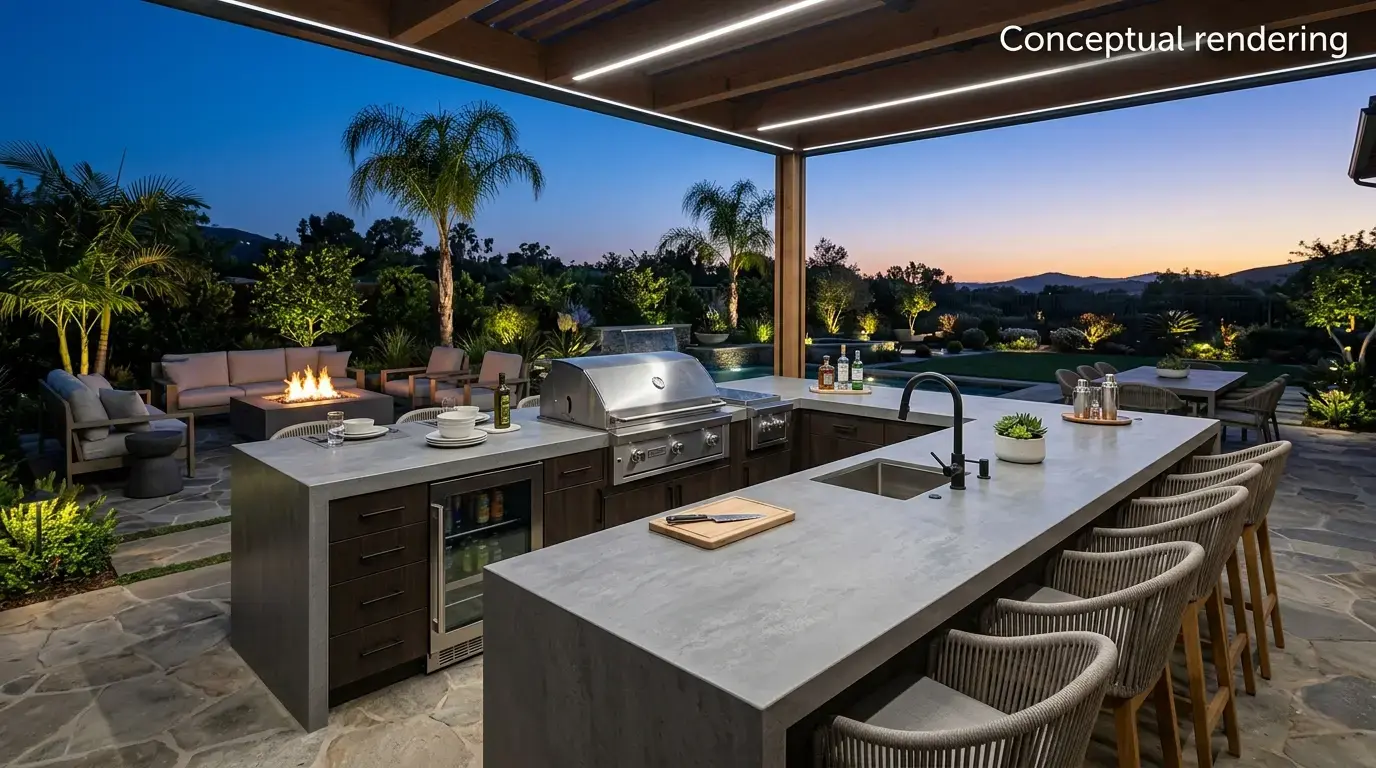
Porcelain slab is a manufactured material made by compressing and firing clay and mineral compounds at extremely high temperatures, resulting in a dense, nonporous surface. Because it is engineered rather than quarried, porcelain slab offers outdoor kitchen advantages that natural stone cannot always match.
Strengths for outdoor use:
- Nonporous, so it does not require sealing and resists staining from food, wine, and outdoor debris
- Highly resistant to UV fading, which matters for countertops in full Folsom sun
- Can be manufactured in large formats with minimal seams
- Wide range of finishes, including patterns that mimic marble, concrete, or natural stone
Considerations:
- Porcelain can be brittle at the edges if not fabricated and supported correctly
- Repairing a chip or crack in porcelain is more difficult than with natural stone
- Some finishes can look noticeably manufactured up close compared to natural veining
- Fewer fabricators in the region specialize in porcelain compared to granite and quartzite, which can affect lead times
Porcelain slab tends to appeal to Folsom homeowners who want the lowest maintenance option and are comfortable with a more contemporary or uniform appearance rather than the organic variation of natural stone.
Comparing the Three Side by Side
| Feature | Granite | Quartzite | Porcelain Slab |
| Mohs hardness | 6 to 7 | 7 to 8 | Not rated on Mohs scale, but highly scratch resistant |
| Heat resistance | High | Very high | High |
| Scratch resistance | High | Very high | High |
| Acid/stain resistance | Good with sealing | Very good | Excellent |
| Sealing required | Yes, periodically | Yes, periodically | No |
| UV fade resistance | High | High | Very high |
| Typical cost | Lower to mid range | Mid to high range | Mid to high range |
| Natural variation | High | High | Low to moderate |
| Repair difficulty | Moderate | Moderate | Higher |
What to Consider Before Choosing
Folsom's outdoor kitchens vary widely, from a simple built-in grill station to a full outdoor living space with a pizza oven, refrigerator, and bar seating. A few questions can help narrow down which of these three materials fits best:
How often will you cook directly on the counter's edge near heat sources? Quartzite's exceptional heat tolerance makes it a strong fit for spaces where hot pans or cast iron regularly touch the surface near the grill.
How much maintenance are you willing to do? Granite and quartzite both need periodic sealing to stay stain resistant, while porcelain slab skips that step entirely.
What look are you going for? Homeowners drawn to natural veining and mineral variation usually lean toward granite or quartzite, while those who want a clean, consistent surface with more finish options often prefer porcelain.
What's the budget for the project? Granite generally offers the most natural stone character per dollar, while quartzite and porcelain sit at a higher price point due to material sourcing or manufacturing complexity. A slab quote request is a straightforward way to compare pricing across specific bundles.
How exposed is the space to direct sun and rain? All three materials handle Folsom's climate reasonably well, but porcelain's nonporous surface gives it an edge in fully exposed, uncovered outdoor kitchens.
Contractors and designers managing multiple Folsom outdoor kitchen projects may also want to look into a trade account for contractors and designers, which includes job-site delivery and dedicated support.
Conclusion
There is no single right answer for every Folsom outdoor kitchen. Granite offers a natural stone look with proven heat resistance at a more approachable price. Quartzite steps up the hardness, heat tolerance, and acid resistance for households that cook often and want the closest thing to indestructible natural stone. Porcelain slab trades some of that natural variation for a nonporous, low maintenance surface that holds its color under the Sacramento sun for years to come.
Seeing and touching sample pieces side by side, in natural light, is often the best way to compare how each material actually looks and feels before committing to a full slab. We welcome Folsom homeowners to explore granite, quartzite, and porcelain slabs in person at our Sacramento showroom, located at 6100 Warehouse Way, Sacramento, CA 95826 (get directions), or reach out to our team at (916) 913-6682. You can also explore our full showroom catalog online or book a design consultation to talk through which material fits your project best.
Note: Some images on this page may be conceptual renderings created to illustrate design possibilities and may not depict actual installations.
Frequently Asked Questions
Both handle Folsom's heat and sun well, but quartzite is generally harder and more heat tolerant, making it a better fit for surfaces near grills. Granite offers a wider range of colors at a more approachable price point.
No. Porcelain slab is manufactured to be nonporous, so it does not require sealing to resist stains or moisture, unlike granite and quartzite.
Most granite used indoors can also perform well outdoors since it is naturally heat and weather resistant. The main consideration is ensuring the specific slab is properly sealed and suited to freeze-thaw exposure.
True quartzite is rarer than granite and more difficult to quarry and fabricate due to its hardness, which typically places it at a higher price point.
Porcelain slab typically offers the highest resistance to UV fading since it is a manufactured, fired material, though granite and quartzite also hold their color well over time due to their natural mineral composition.