Granite, quartzite, thick porcelain slab, and sintered stone are the countertop materials best suited to an outdoor kitchen in Reno, since all four resist the intense high-elevation sun and the real winter freeze-thaw cycles the region sees in the same twelve months. Standard engineered quartz and marble, both common indoors, are generally not recommended for this application outdoors.
The right choice depends on more than color or finish. It comes down to how a material performs next to grill heat and daily use, how much weight the base underneath needs to carry, how the kitchen's layout, covered or open, changes what actually holds up over time, and how much upkeep it needs season to season. An outdoor kitchen is also a more permanent build than a countertop swap indoors, typically left in place for the life of the home, so the decisions made at the outset are harder to revisit later.
What an Outdoor Kitchen Countertop Has to Handle That a Patio Surface Doesn't
A patio surface deals with weather. An outdoor kitchen countertop deals with weather plus a heat source parked a few inches away, food prep several times a week, and spills from marinades, oil, and sauces that a walkway or pool deck never sees. That combination changes the priority list. Weather resistance still matters, but so does how a material responds to direct or radiant heat from a grill, how easily it wipes clean after cooking, and how well it resists chipping at an edge that gets bumped by trays, tools, and coolers all season long.
Reno's climate adds its own layer to that list. Winters bring genuine hard freezes, and summers bring long stretches of strong, high-elevation UV exposure. A material that only handles one of those conditions well is a gamble outdoors here. That is why the shortlist below focuses on materials that perform under both stressors at once, not just one or the other.
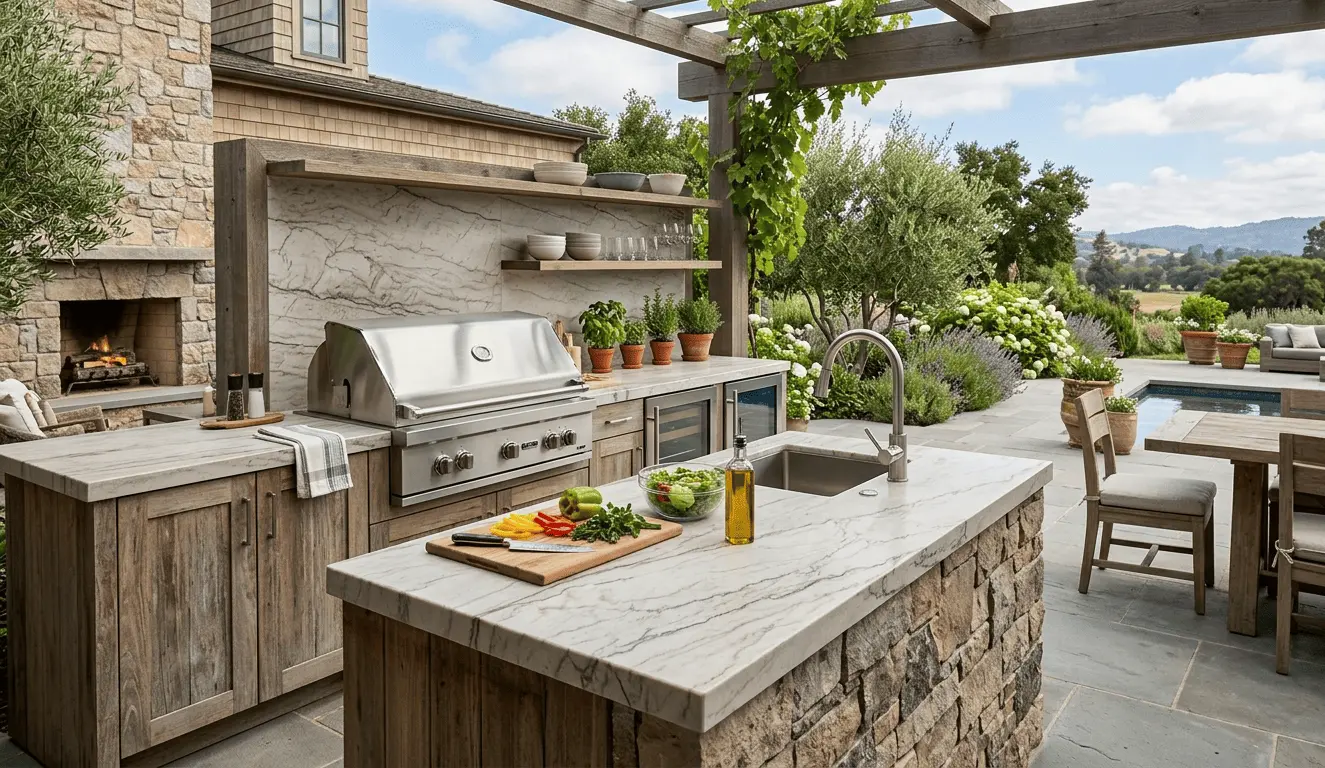
Material Options That Hold Up for a Reno Outdoor Kitchen
Granite. Granite has long been the standard recommendation for outdoor kitchens because it handles heat, sun, and freezing temperatures without breaking down structurally. According to the Natural Stone Institute, most granite is dense enough that it does not strictly require sealing, though many fabricators apply a sealer anyway as an added layer of protection against moisture and staining from grease and marinades, particularly outdoors where exposure is more constant than an indoor counter sees.
Quartzite. Quartzite offers similar outdoor performance to granite with a different look, often featuring marble-like veining in a stone that is harder and less prone to etching from acidic foods. It is a strong choice for anyone who wants that softer, natural-stone appearance without the maintenance concerns that come with actual marble outdoors.
Porcelain slab. Porcelain is classified as impervious under ANSI A137.1, the industry standard requiring a water absorption rate of 0.5 percent or less, which means it does not absorb water the way natural stone can, so freeze-thaw cycles pose little risk to the slab itself. For outdoor kitchen applications specifically, a thicker slab profile holds up better against the impact and edge chipping that comes with daily outdoor cooking use than the thinner slabs typically chosen for indoor counters.
Sintered stone. Sintered stone is manufactured under intense heat and pressure, which gives it very low water absorption and strong resistance to both UV exposure and direct heat from a grill surface. It shares many of porcelain's outdoor advantages, with the added benefit of never needing to be resealed.
Two common indoor materials are worth ruling out here rather than exploring further: standard engineered quartz and marble. This Old House notes that quartz is not outdoor-friendly since UV exposure can cause fading or damage to the resin binders over time, and marble's porosity and sensitivity to freeze-thaw cycles make it a poor match for an exposed Reno patio. Both remain excellent choices indoors, just not for this particular project.
Building the Base: Why Support Structure Matters as Much as the Slab
The countertop material gets most of the attention, but what sits underneath it determines whether the installation lasts. Outdoor kitchen islands are typically built on masonry block or a steel stud frame rather than the wood cabinet boxes used indoors, since the structure has to tolerate moisture and temperature swings without warping the way untreated wood framing can.
Weight is part of that equation. Natural stone slabs like granite and quartzite are considerably heavier per square foot than porcelain or sintered stone at comparable thickness, which means a heavier stone choice calls for a correspondingly robust base, particularly across any unsupported span such as a bar overhang. Porcelain and sintered stone reduce that structural demand simply by weighing less, which can simplify the build if the outdoor kitchen includes a seating overhang or sits atop an existing deck structure rather than a poured slab.
Bar seating built into an outdoor kitchen island is a common request, and it is also where support planning matters most. An overhang meant for stools needs bracket or corbel support beneath it once it extends much past roughly a foot, regardless of material, since an unsupported edge is more likely to crack under the everyday weight of someone leaning on it. A qualified fabricator or contractor should evaluate the specific base design, span, and material combination before installation rather than assuming any given base will work with any given slab.
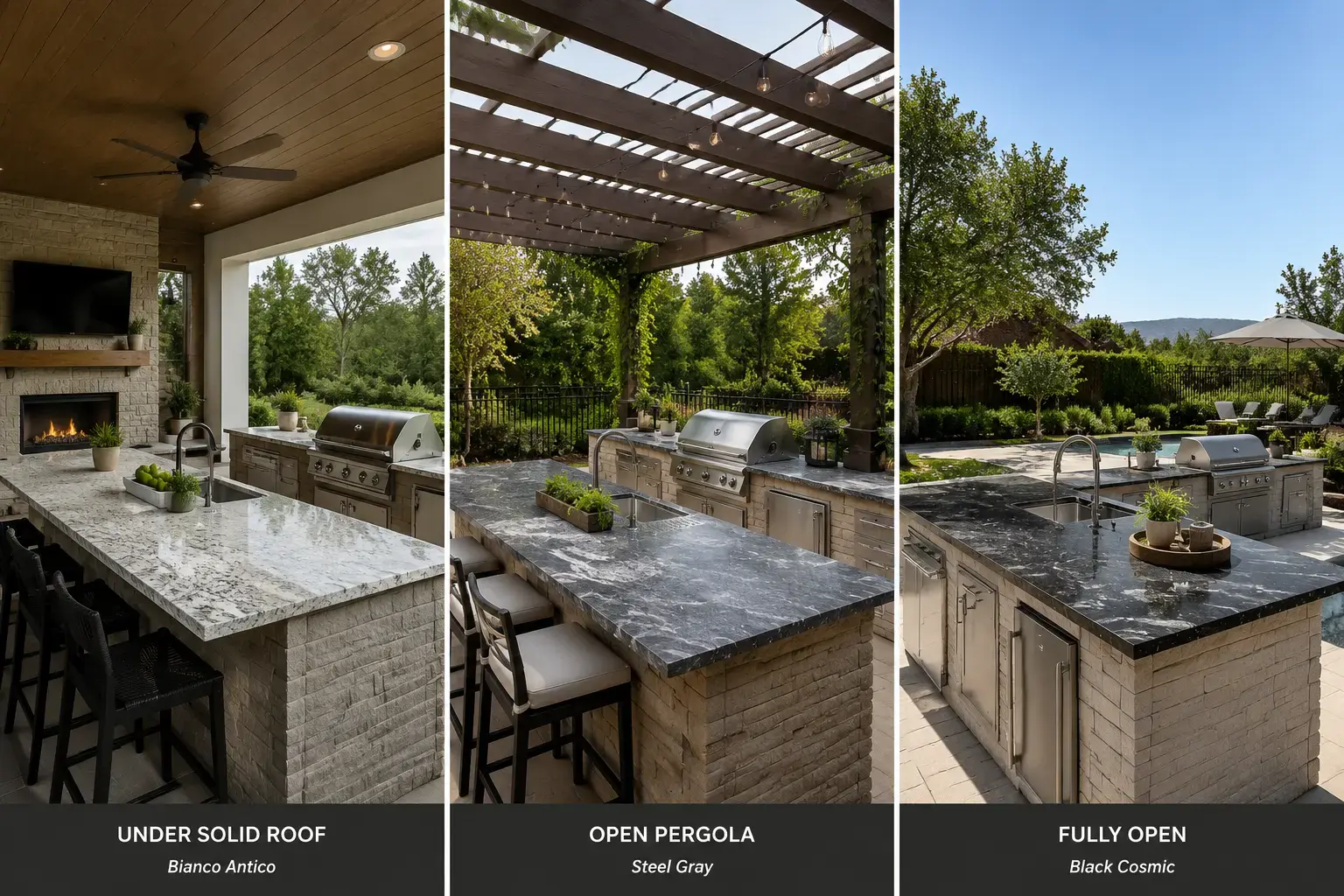
Covered vs. Open-Air Kitchens: How Your Layout Changes the Decision
The base is only half of what the layout determines. Whether the outdoor kitchen sits under a solid roof, an open pergola, or fully in the open changes a few practical decisions beyond the countertop material itself. The National Fire Protection Association advises keeping anything that can burn well clear of a hot grill, and a covered structure built directly over a built-in grill needs enough clearance and ventilation to avoid trapping heat and smoke against the roof. Because clearance requirements vary by grill type, fuel source, and local building code, it is worth checking with the local building department or a licensed contractor before finalizing the layout, particularly for a gas or built-in unit.
The material choice interacts with this too. A fully open kitchen gets more direct, unfiltered sun exposure across the entire countertop surface throughout the day, which is where UV-stable materials like granite, quartzite, porcelain, and sintered stone earn their keep. A covered kitchen sees less direct sun but often traps more heat and humidity near the grill itself, making heat resistance and easy cleanup the higher priority in that specific zone of the counter. To compare full-size slab options and discuss which materials best suit your outdoor kitchen layout, schedule a design consultation with us.
Keeping a Northern Nevada Outdoor Kitchen Countertop in Shape Season to Season
Maintenance needs differ by material, and outdoor use adds a seasonal rhythm to that upkeep. Granite and quartzite benefit from periodic resealing, and a build-up of grease, ash, or sediment left to sit against a porous surface over time can affect how well the sealer performs, so a thorough cleaning before winter and again in spring helps the sealer do its job. Porcelain and sintered stone do not require sealing at all, which simplifies year-round care considerably.
Reno's winter freeze-thaw cycle is the other seasonal factor. Standing water left on any countertop surface before a hard freeze can be a problem if it finds its way into a seam, crack, or unsealed edge, so covering the kitchen or at minimum clearing standing water and food debris before the first freeze of the season is a reasonable habit regardless of material.
Conclusion
Choosing a countertop for a Reno outdoor kitchen comes down to matching the material to conditions most patio surfaces never face: direct grill heat, daily food prep, and a climate that swings between intense sun and hard winter freezes in the same year. Granite, quartzite, porcelain slab, and sintered stone all hold up under that combination, so the deciding factors are usually practical ones instead, like how much weight the base can support, whether the kitchen sits under cover or in the open, and how much upkeep feels reasonable season to season. Getting the base and layout right alongside the material is what makes the difference between a countertop that lasts and one that needs revisiting sooner than expected.
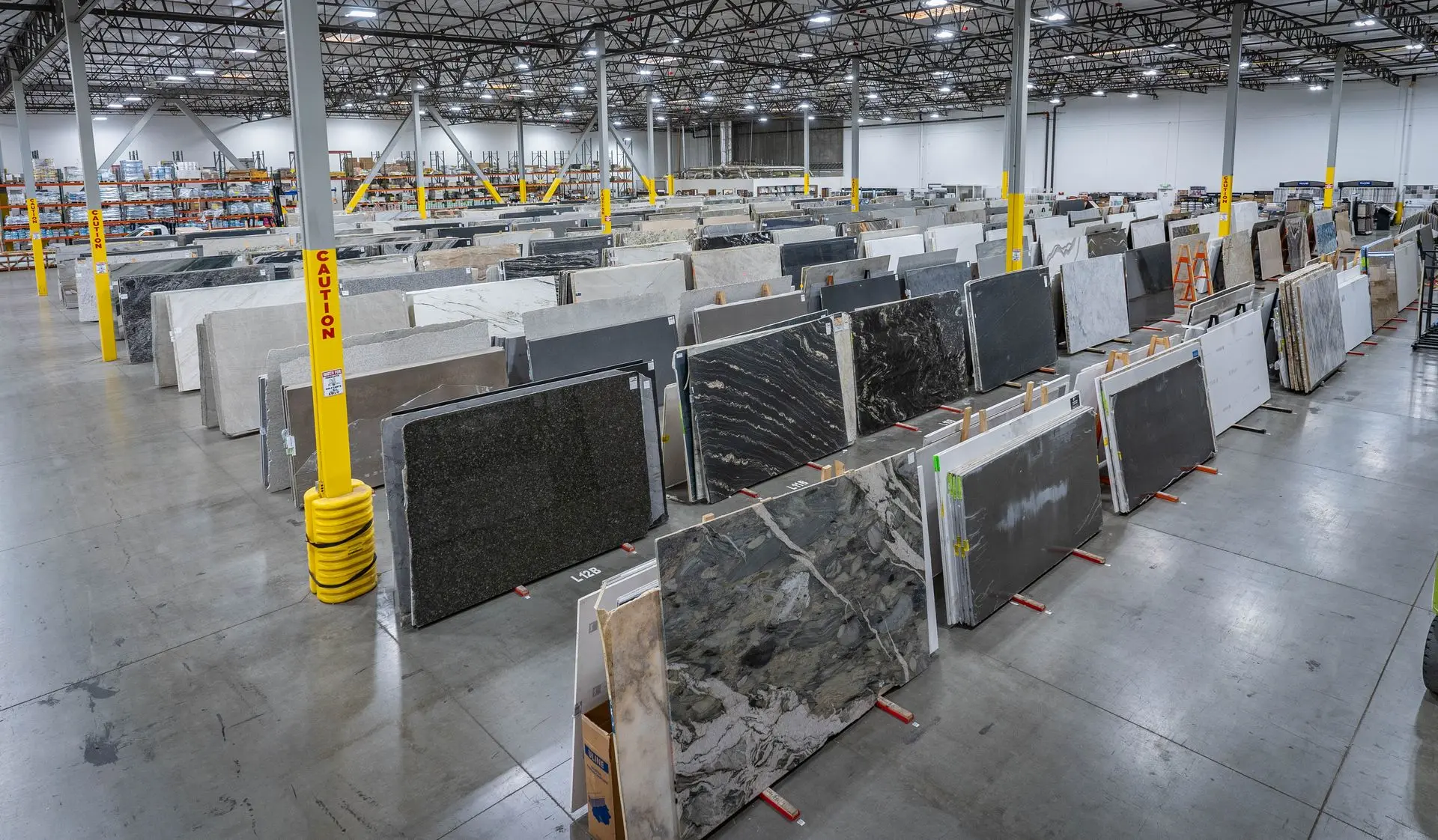
Nova Tile and Stone's Reno showroom, located at 12835 Old Virginia Road, Reno, NV 89521, carries all four of these outdoor-suited materials, and design consultations are available at no charge to help match one to a specific layout. The showroom serves Reno and the surrounding Washoe County communities, including Sparks, Spanish Springs, Washoe Valley, Verdi, and Incline Village. It can be reached at (775) 331-6682, or you can visit our website for more details on the Reno location at Nova Tile and Stone's Reno showroom page.
Frequently Asked Questions
The same granite can generally work in both settings, though outdoor installations benefit from a sealer rated for exterior exposure and more frequent resealing than an indoor counter would need.
Thickness is only part of it. An eased or beveled edge profile also reduces chipping risk compared to a sharp square edge, since it removes the thin, vulnerable corner that takes the brunt of impact from trays, tools, and coolers.
If you do use a cover, a breathable, fitted one is a better choice than a plastic tarp, since trapped moisture underneath a non-breathable cover can be more of a problem over a Reno winter than leaving the surface exposed.
The countertop materials covered here are all non-combustible, so the bigger clearance concern is usually the grill's distance from the roof, walls, or any wood framing nearby rather than from the stone or slab surface itself.
Porcelain slab and sintered stone need no sealing and clean up easily, making them the lowest-maintenance options among the materials covered here.
Note: Some images on this page may be conceptual renderings created to illustrate design possibilities and may not depict actual installations.