Granite, quartzite, and porcelain slabs are the outdoor countertop materials best suited to New Washoe City, NV, since each one is built to hold up against the valley's freeze-thaw winters and high altitude summer sun better than softer or resin-based options like marble or traditional quartz.
New Washoe City's mountain valley setting brings cold, snowy winters and sunny, dry summers within the same year, which puts real demands on any surface left outdoors. At Nova Tile and Stone, we help residents match countertop materials to those conditions so the investment holds up season after season. This guide breaks down why granite, quartzite, and porcelain slabs perform well here, how finish choice affects outdoor use, and which materials are better reserved for interior kitchens. Anyone curious about everything else we carry can start with our full catalog of tile, stone, and flooring.
Understanding the New Washoe City Climate and What It Means for Outdoor Surfaces
New Washoe City sits in a high desert valley at an elevation of roughly 5,100 feet, which shapes how outdoor materials perform throughout the year. Winters bring repeated freeze and thaw cycles, with overnight lows commonly dropping into the twenties and periodic snowfall settling on exposed surfaces. Summers swing in the opposite direction, with afternoon highs typically climbing into the low eighties under strong, high altitude sunlight. Dry valley air adds another factor, since low humidity can affect how sealants and finishes hold up over time compared to a more humid climate. That combination, cold moisture in winter paired with intense solar exposure and dry air in summer, is the kind of range that can cause a poorly matched material to fade, crack, or lose its finish outdoors over time, while a well suited material holds up better. With that pattern in mind, a few material categories tend to perform well for exterior countertop applications in this area. Readers who want a broader primer on how different stone types are quarried, finished, and cared for can start with this general guide to stone countertops.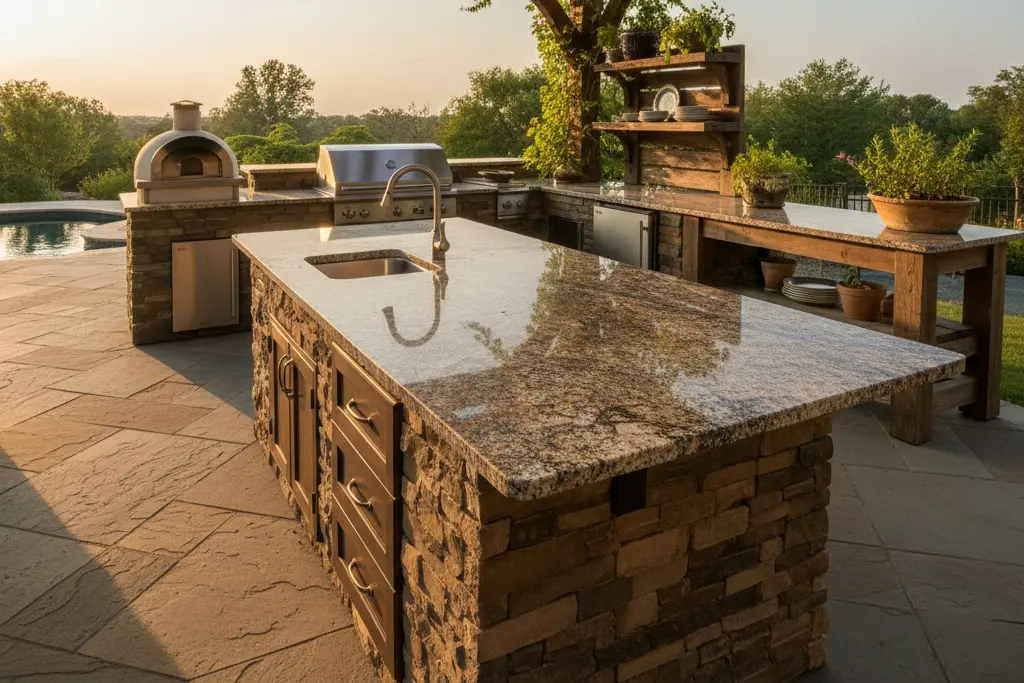
Granite Countertops for Outdoor Kitchens and Living Spaces
Granite is a widely used material for exterior kitchens and bar areas because it forms under natural heat and pressure, giving it a dense structure that stands up well outdoors. The slab holds up to daily use well, and proper care over the years helps preserve its appearance, particularly in a climate with repeated freezing and thawing. Granite resists fading better than many surfaces left in direct sun; prolonged exposure is still worth factoring in when picking a lighter or darker tone. Near a built-in grill station, normal outdoor cooking heat isn't a concern, though setting very hot pans or cookware directly on the surface is still worth avoiding to protect the finish. Each slab has natural variation in tone and pattern, giving every outdoor kitchen its own distinct look.
Our page on granite outdoor kitchen countertops includes more photos and detail for anyone still comparing options.
Since every bundle looks a little different, checking current slab availability before finalizing a layout is generally worth the extra step.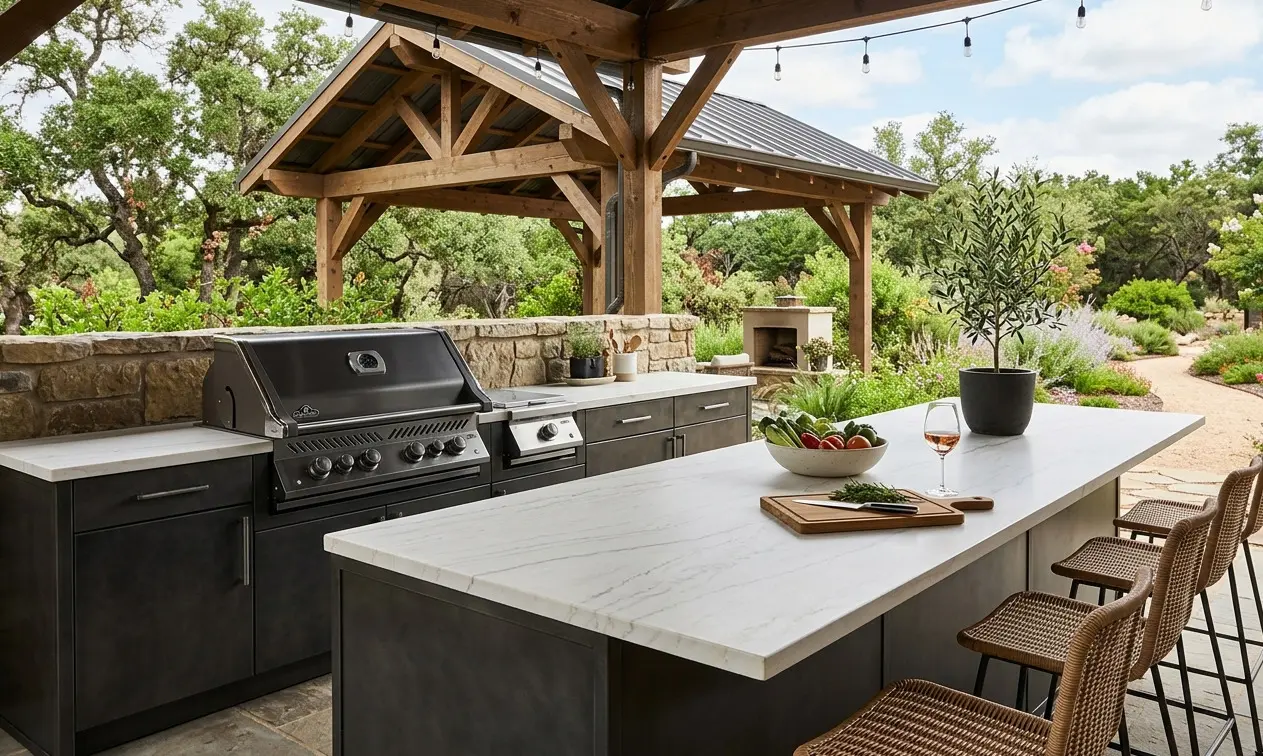
Quartzite: A Trusted Choice for Northern Nevada Exteriors
Quartzite is a metamorphic stone that starts as sandstone and is transformed under extreme heat and pressure, which leaves it notably hard and naturally suited to demanding outdoor conditions. It has low absorption when properly selected, sealed, and maintained, which matters in a climate where snowmelt and spring runoff sit against exterior surfaces for stretches at a time. The surface holds up better against etching than softer stones do, although spills from acidic beverages or citrus are still best cleaned up promptly to keep the finish looking its best. Quartzite is often selected for bar tops, fireplace surrounds, pool decks, and built-in grilling stations because of its natural mineral character and the way it can hold up through wide temperature swings. Moisture resistance is one of quartzite's strengths; even so, standing water shouldn't sit on any stone surface for long periods.
Photos of finished quartzite outdoor kitchen countertops show how different veining and tones read once installed outside.
Homeowners willing to make the roughly 35 minute drive from Washoe Valley are welcome to stop by our Minden design center to see quartzite slabs firsthand.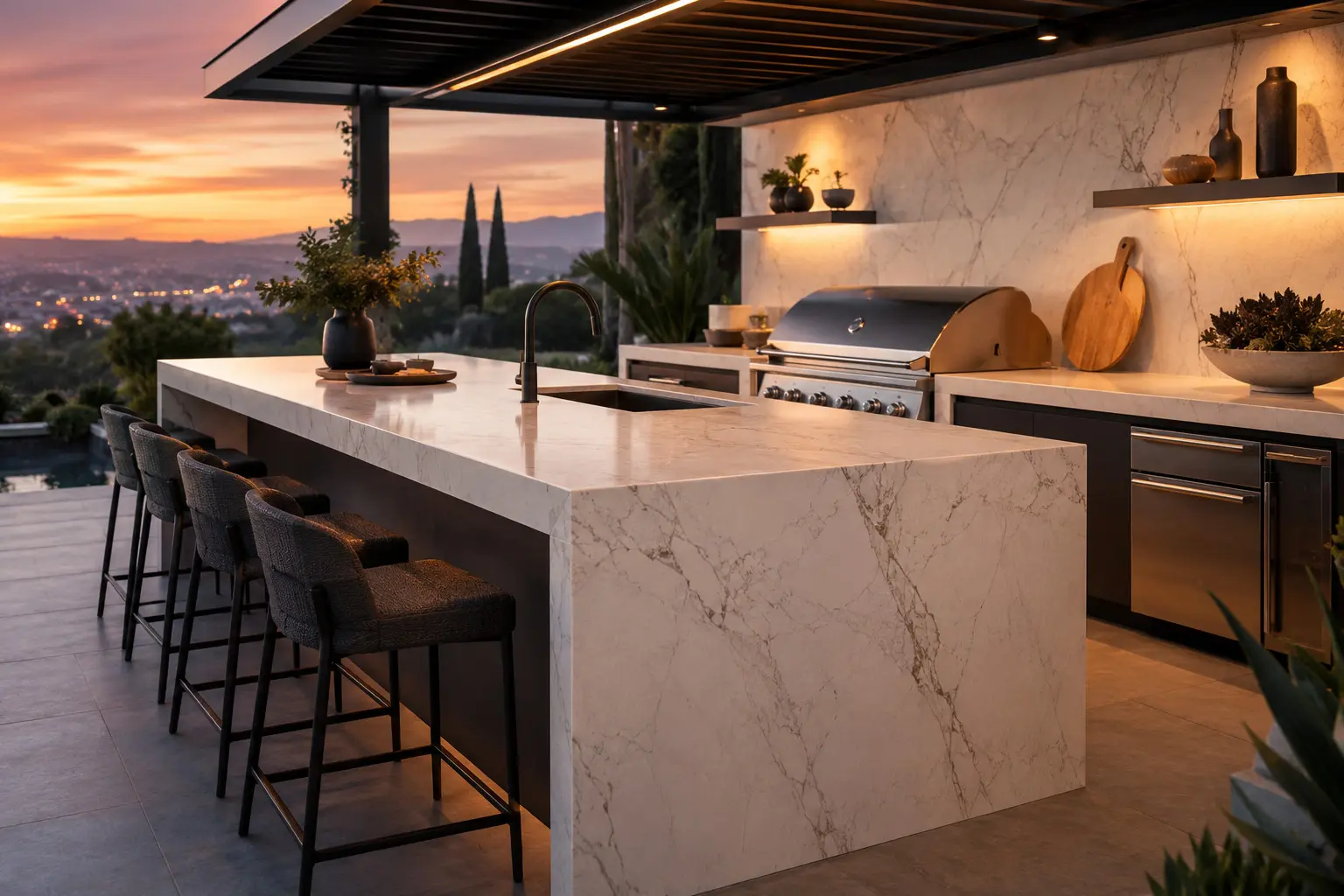
Porcelain Slab Countertops for a Modern Exterior Look
Porcelain slabs are an alternative to natural stone for outdoor kitchens because they are manufactured to a consistent density and finish. UV resistance is a strong point for porcelain, with performance varying somewhat by color and finish, which is why viewing a sample outside before finalizing a selection tends to help. Being non-porous helps porcelain resist staining, and regular cleaning still keeps grilling stations and bar surfaces looking fresh through the seasons. Because it is produced rather than quarried, porcelain offers a wider range of colors and patterns, including looks that resemble concrete, wood, or natural stone, giving homeowners more flexibility when matching an exterior design theme. Large format porcelain slabs can also cover bar tops and counter runs with fewer seams than smaller tile, which appeals to homeowners aiming for a clean, modern exterior aesthetic.
More detail on porcelain outdoor kitchen countertops covers how the material holds up in this kind of climate.
Once a color and finish stand out, the next step is usually to request a quote for that specific slab.
Quick Comparison: Outdoor Countertop Materials
Material | Cold & Freeze-Thaw | Sun & UV Exposure | Maintenance |
Granite | Holds up well when properly sealed | Resists fading better than many surfaces | Occasional resealing, avoid very hot cookware directly on the surface |
Quartzite | Low absorption when sealed and maintained | Naturally stable in direct, high altitude sun | Wipe up acidic spills promptly, don't let water pool |
Porcelain | Manufactured for consistent exterior performance | UV resistant, though results vary by color and finish | Non-porous, regular cleaning keeps it looking fresh |
Materials Better Suited for Interior Kitchens
Not every countertop material is a strong match for New Washoe City's outdoor conditions. Marble, long used for interior kitchens and bathrooms, is a softer calcium based stone that tends to react more readily to acidic spills and prolonged moisture, which makes it a better fit for climate controlled indoor spaces. Traditional quartz surfaces, which rely on resin binders, can also shift in tone or develop surface changes when exposed to constant direct sunlight over time. Neither material is a poor choice indoors; exterior patios and bar areas in a high desert valley simply call for the denser, more UV stable options covered above.
For homeowners still drawn to marble's look, additional considerations for marble outdoor kitchen countertops are covered in more detail on our site.
A wider side by side look at countertop materials in general, including how they compare on hardness and upkeep, is available in this roundup of countertop material options.
Matching Finish to How the Space Will Be Used
Finish choice affects outdoor performance just as much as the base material. A polished finish shows off color and veining but can reflect more glare on a bright summer afternoon, while a honed or leathered finish offers a softer sheen and a bit more grip underfoot near a pool deck or bar area. Darker, glossier finishes also tend to absorb more heat under direct sun compared to lighter or textured options, which is worth factoring in for surfaces near seating areas where guests may rest a hand or forearm. None of these finishes is inherently better across every application, since the right pick depends on how sunny, high traffic, or moisture exposed a given space tends to be throughout the year. For more layout ideas beyond stone and porcelain, this look at outdoor kitchen countertop layouts covers a range of looks.
Choosing the Right Surface for Your Outdoor Living Space
Beyond durability, the right countertop choice depends on how a space will actually be used. A bar top that sees frequent glassware and citrus garnishes calls for a different finish than a grilling station positioned near an open flame, and a fireplace surround has its own set of considerations. Elevation also plays a role in material selection, since UV exposure increases at higher altitudes, which is worth keeping in mind for any surface that sits in direct sun most of the day. Color and pattern preferences matter too, since a busy outdoor entertaining space may call for a calmer surface while a simple grilling nook can support a bolder pattern. Rather than guessing, booking a free design consultation ahead of a visit is an easy way to walk through color options, finishes, and layout ideas suited to a specific outdoor project.
Conclusion
New Washoe City's mix of cold, snowy winters and intensely sunny summers puts real demands on any surface left outdoors, but granite, quartzite, and porcelain slabs are each built to handle that range when the right material is matched to the right application. Whether the goal is a full outdoor kitchen, a simple bar top, or a fireplace surround, taking the local climate, finish, and daily use into account before choosing a slab helps the finished space perform well for years to come. The team at Nova Tile and Stone is glad to help homeowners work through those choices. For anyone planning the drive down, finding directions to the Minden showroom online is a good first step.
Frequently Asked Questions
Granite tends to do well here because it doesn't rely on any resin or adhesive layer that could be affected by repeated freezing, unlike some manufactured surfaces. How a specific slab performs still comes down to the stone selected and how it's installed.
Quartzite starts out as sandstone that's already been heat treated by natural geological processes, which gives it some built-in tolerance for temperature swings before it's ever installed outdoors. Selection and sealing still play a role in how it performs on a specific project.
Yes, and one advantage is that porcelain doesn't require the periodic resealing that natural stone can need. Because it's manufactured rather than quarried, color also tends to stay more consistent across multiple slabs on a larger bar top.
Marble's classic veined look comes from the same calcium carbonate composition that makes it react to freeze-thaw cycling and acidic exposure more than a harder mineral like quartz or feldspar does, which is why it's typically reserved for spaces protected from the weather.
A free design consultation is a useful way to compare samples side by side and talk through how a specific setup, such as a grill station versus a shaded bar top, might change which material makes the most sense.