Nature-inspired stone colors are warm, earth-toned slab colors that mimic natural landscapes instead of stark white or cool gray. Common examples include soft sand, warm clay, muted sage, and weathered limestone tones, available in granite, quartzite, engineered quartz, and porcelain. This palette is a leading kitchen design direction in 2026, shifting away from high-contrast black-and-white countertops toward softer, organic color schemes. Sacramento homeowners are choosing these tones to pair with warm wood cabinetry, natural light, and wood-look flooring throughout Central Valley and foothill homes.
What Nature-Inspired Stone Colors Actually Look Like
The term covers a range of tones rather than a single color family. Instead of stark white counters or uniform gray fields, nature-inspired stone leans into variation that mimics what you would see outdoors: the layered tones of a riverbed, the soft gradient of sun-bleached sand, or the subtle mineral streaks in a canyon wall. In practice, this shows up as:
- Warm, muted neutrals with soft undertones rather than flat, single-tone surfaces
- Organic movement and veining that feels irregular and natural instead of engineered or repetitive
- Finishes that soften shine, including honed and matte surfaces that read closer to natural rock than polished glass
- Color palettes that shift subtly across the slab rather than repeating in a fixed pattern
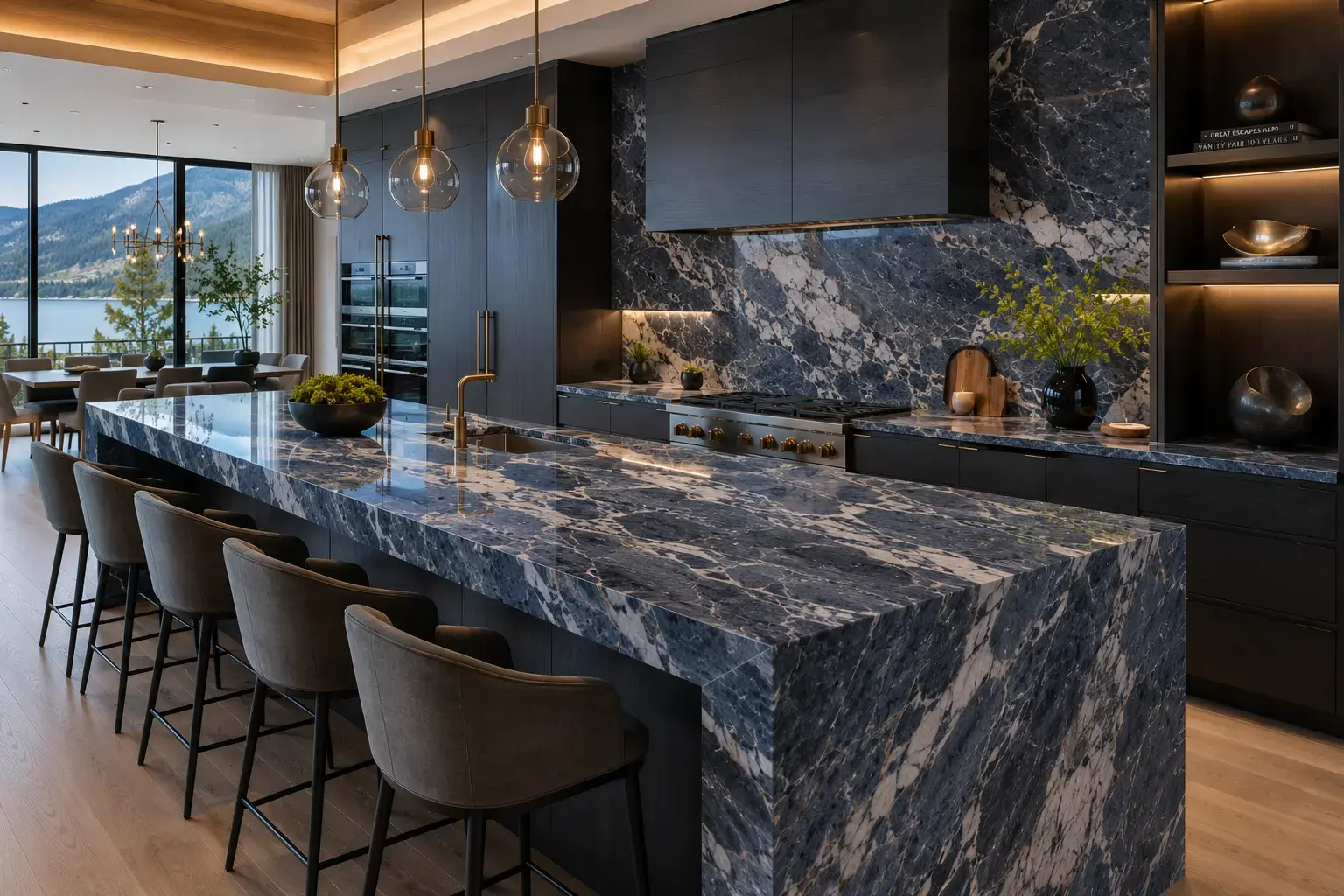
This is a departure from the crisp, high-contrast look that dominated kitchen design for much of the last decade. Where that style relied on sharp black-and-white contrast or bold, dramatic veining as a centerpiece, nature-inspired stone works more quietly. It sets a tone for the room rather than demanding attention on its own. Broader guides to stone countertop materials cover this same shift toward softer, more organic surface choices across the industry.
Why This Shift Is Happening Now
A few practical and aesthetic forces are driving the move toward organic, earth-based stone palettes.
Cabinetry trends have shifted toward warm wood tones. White oak, walnut, and other natural wood finishes have become common choices for kitchen cabinetry. Cool gray or stark white stone can feel disconnected next to warm wood, while nature-inspired tones bridge the two materials more naturally.
Homeowners want kitchens that feel calm rather than clinical. After years of high-contrast, showroom-style kitchens, many people are looking for a softer, more livable aesthetic. Earth tones and organic patterns tend to feel more relaxed day to day, particularly in a kitchen used constantly for cooking, gathering, and daily routines.
These colors are less tied to a single design era. Because natural and organic color palettes draw from the landscape rather than a specific decade's aesthetic, homeowners often find them easier to live with for years without feeling the need to update. A muted, earthy stone slab is less likely to feel dated in ten years than a color chosen purely because it was popular in a given year.
Material innovation has expanded the options. Quartz manufacturers, quartzite quarries, and porcelain producers have all responded to this demand by developing more products in warm, organic colorways. This means homeowners now have far more nature-inspired choices across our live slab inventory than they did even a few years ago.
Where These Tones Show Up Across Different Materials
One advantage of the nature-inspired trend is that it is not limited to a single stone type. We see it appearing across the full range of materials on display at our Sacramento showroom.
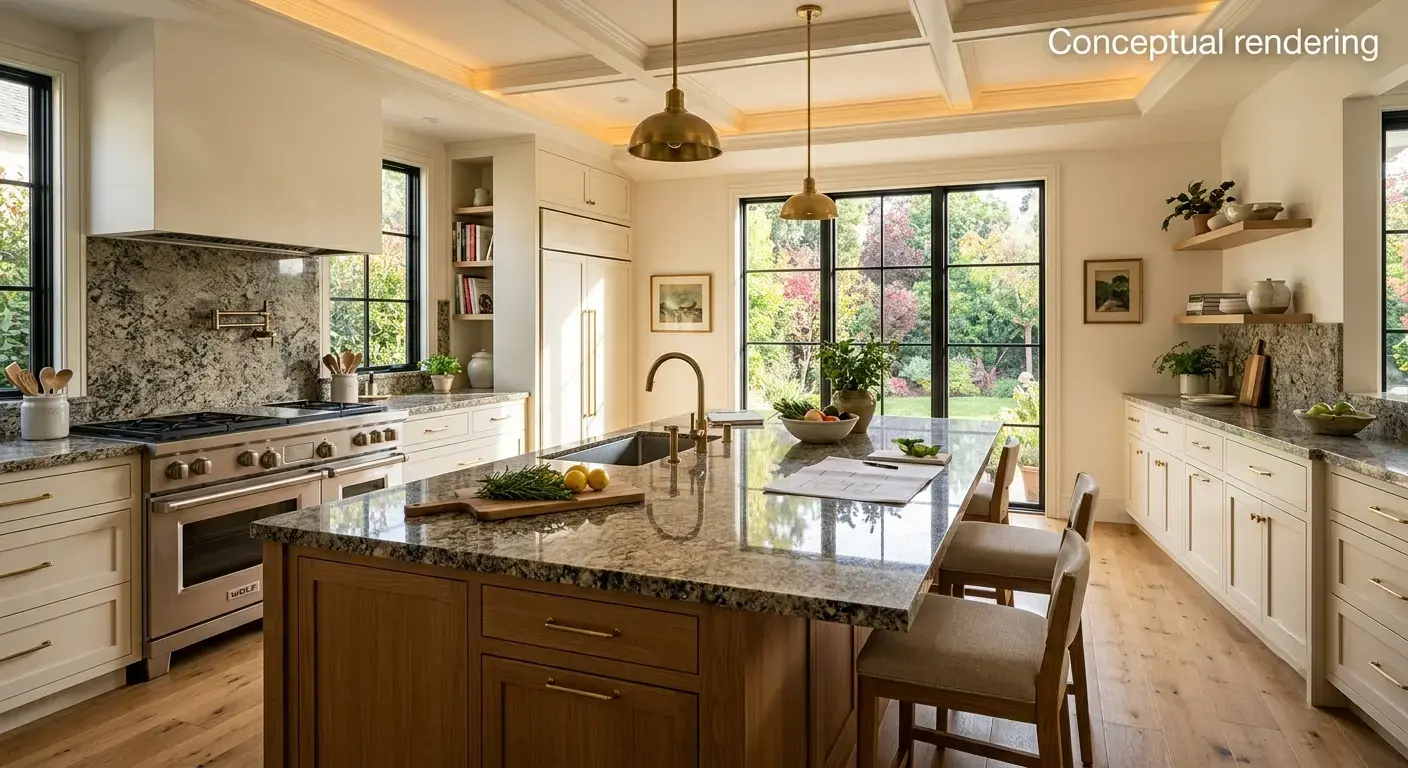
Engineered quartz has moved noticeably toward softer, nature-inspired colorways. Rather than the uniform, flat colors quartz was once known for, newer collections include subtle movement and warm undertones designed to resemble natural stone. This gives homeowners the consistency and low maintenance of quartz with a look that feels closer to something quarried from the earth.
Natural quartzite reflects this trend closely simply because it is unprocessed stone. Quartzite slabs with soft, warm background tones and gentle veining fit naturally into the nature-inspired category without any manufacturing intervention. Because quartzite is a natural material, each slab has its own unique pattern, so viewing the actual slab in person remains an important step before finalizing a selection.
Granite continues to offer earth-toned options that fit this aesthetic, particularly in the cream, warm gray, and soft brown mineral families. Granite's natural variation and mineral flecking often align closely with the organic look homeowners are seeking.
Porcelain slabs have expanded their color libraries significantly, and many newer porcelain lines are designed specifically to replicate the look of natural stone in warm, muted tones. This gives homeowners another path to the nature-inspired aesthetic, often with different performance characteristics than natural stone.
How Sacramento's Light Affects These Colors
Sacramento's abundant natural light plays a real role in how nature-inspired stone colors read in a finished kitchen. Homes throughout the Sacramento area, from established neighborhoods with large windows to newer builds designed around open floor plans, often receive strong, consistent daylight for much of the year. This kind of bright, warm light tends to bring out the depth in earth-toned stone, highlighting subtle variations that might look flatter under cooler or dimmer lighting.
Because natural light shifts throughout the day, we always recommend viewing a slab in person under a few different lighting conditions before making a final decision, and scheduling a design consultation is an easy way to get that dedicated time. A warm neutral tone that looks soft and inviting under midday sun may take on a slightly different character under evening light or artificial fixtures. Seeing the actual slab in our showroom, rather than relying solely on a photo or small sample, gives a clearer sense of how the color will behave in your specific kitchen.
Pairing Nature-Inspired Stone With Cabinetry and Flooring
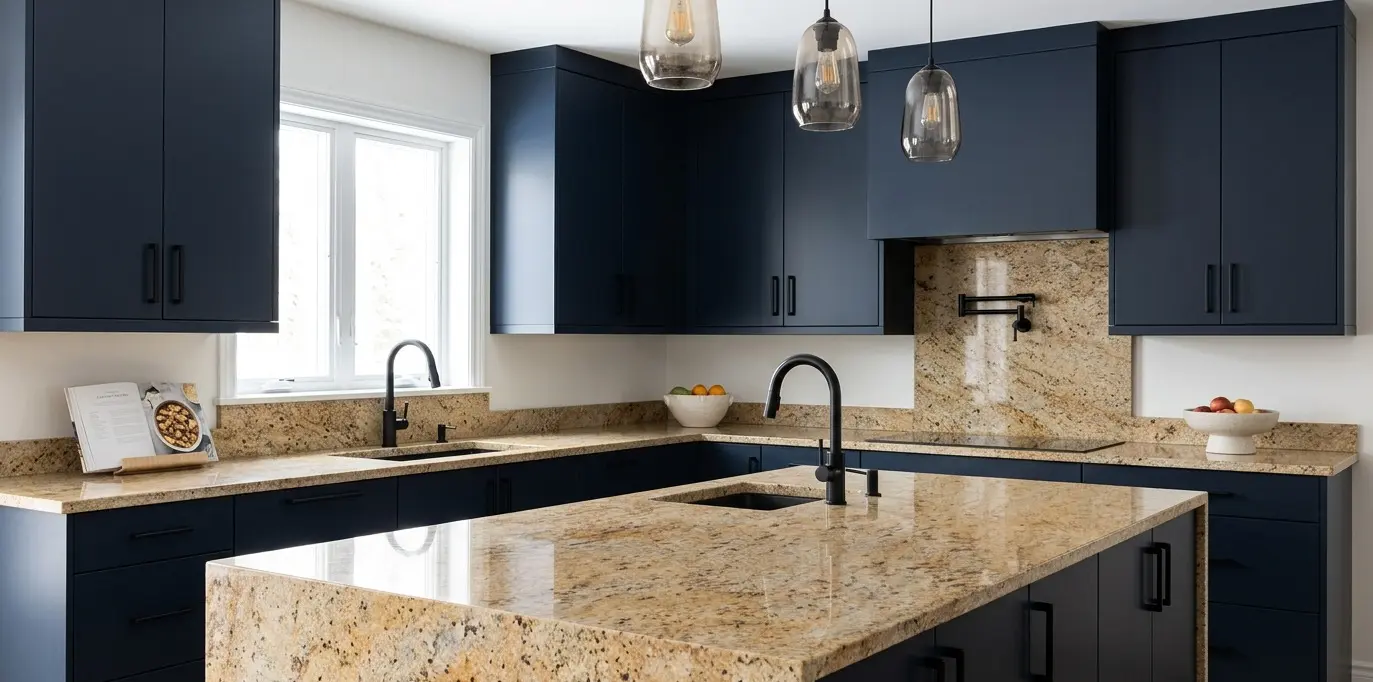
Nature-inspired stone tends to work well with a wide range of cabinetry and flooring choices, which is part of its appeal. A few general pairing principles can help guide the decision:
- Warm wood cabinetry, including white oak and walnut, pairs naturally with soft, earth-toned stone, since both materials draw from similar organic color families.
- Painted cabinetry in muted greens, warm whites, or soft clay tones can complement nature-inspired stone without creating too much contrast or too little definition.
- Wood-look flooring, whether hardwood, engineered hardwood, or luxury vinyl plank, tends to harmonize well with organic stone tones, reinforcing a cohesive, grounded feel throughout the space.
- Metal fixtures in warm tones, such as brushed brass or matte bronze, often complement nature-inspired stone more naturally than cool chrome or stark black finishes, though this comes down to personal preference.
The goal with this style is generally cohesion rather than contrast. Instead of choosing a stone color that stands apart from the rest of the kitchen, nature-inspired palettes are meant to feel like part of a unified, calming whole.
Choosing the Right Nature-Inspired Slab for Your Project
A few practical steps can help when selecting a nature-inspired stone color for a kitchen project.
Start by considering the full room, not just the counter. Cabinetry color, flooring, wall color, and even the direction your kitchen windows face all influence how a given stone color will look in the finished space. Bringing samples of your cabinetry or flooring when viewing slabs can make the comparison much more accurate than trying to remember colors from memory. Independent natural stone buying guides can also help frame what questions to ask before you commit to a slab.
Pay attention to finish as well as color. A honed or matte finish will soften a nature-inspired palette further, while a polished finish will add more shine and reflect more light. Both can work well within this trend, but they create noticeably different moods in a finished kitchen.
Take time with natural materials in particular. Because quartzite and granite are natural stone, color and pattern can vary between slabs even within the same color name. Viewing the specific slab you plan to purchase, rather than a small sample chip, gives a clearer sense of exactly what will end up in your home, and you can request a quote on specific slabs once you find one you like. Contractors and designers sourcing nature-inspired stone across multiple projects can also apply for a trade account for access to our full inventory.
Conclusion
Nature-inspired stone colors offer Sacramento homeowners a way to bring warmth, texture, and a sense of calm into the kitchen without following a narrow, short-lived trend. Whether you are drawn to a soft quartzite, a warm granite, an updated quartz colorway, or a nature-inspired porcelain slab, the shared thread is a palette that feels organic, livable, and connected to the natural world rather than sharply manufactured. You are welcome to browse our full product lineup online before your visit, then stop by our showroom at 6100 Warehouse Way in Sacramento to see these stone colors in person under real lighting conditions, compare them against cabinetry and flooring samples, and talk through which option fits your kitchen best. You can also reach our team directly at (916) 913-6682 with any questions before your visit.
Note: Some images on this page may be conceptual renderings created to illustrate design possibilities and may not depict actual installations.
Frequently Asked Questions
Nature-inspired stone colors are defined by organic variation and warm undertones drawn from natural landscapes, rather than flat, uniform neutrals. The emphasis is on subtle movement, soft gradients, and mineral-like texture that mimic what you would see in natural rock, sand, or foliage, rather than a single, unchanging shade.
These tones tend to pair especially well with warm wood cabinetry and muted painted finishes, since both draw from similar organic color families. That said, the range within this trend is broad enough to work with many cabinet styles, from traditional to more contemporary designs.
It applies across materials. Natural quartzite and granite reflect this trend closely simply because they are unprocessed stone, but quartz manufacturers and porcelain producers have both expanded their offerings in warm, organic colorways to meet this demand.
Sacramento's strong natural light can bring out depth and subtle variation in earth-toned stone that might look flatter under dimmer or cooler lighting. Because light shifts throughout the day, viewing a slab under a few different lighting conditions before deciding is generally more reliable than judging from a photo alone.
Either can work well within this trend, but they create different moods. A honed or matte finish softens the palette further and feels closer to natural, unpolished rock, while a polished finish adds shine and reflects more light. The right choice depends on the overall feel you want in the finished kitchen.