Homeowners in Rancho Cordova, CA typically ask about the differences between granite, marble, and quartzite, how slab pricing works, and how to properly care for natural stone before choosing a material for their kitchen or bathroom project. Because a natural stone slab is a long-term investment in the home, most buyers want clear answers on these points before visiting a showroom to view granite, marble, or quartzite slabs in person. For a broader look at how these materials compare across projects, This Old House's guide to stone countertops is a helpful starting point.
Below, we answer the questions we hear often from Rancho Cordova homeowners, covering stone types, pricing, care, and how to choose the right slab for a space. We carry tile, hardwood, LVP, and more beyond natural stone, but this guide focuses specifically on slabs.
What Natural Stone Slab Options Are Available?
Homeowners in Rancho Cordova typically choose between a few well-known natural stone categories, each with its own character:
- Granite: A widely used option known for its varied patterns and range of colors, from subtle grays to bold blues and reds.
- Marble: Prized for its soft veining and classic look, often chosen for bathrooms, fireplace surrounds, and lower-traffic surfaces.
- Quartzite: A harder natural stone that can resemble marble in appearance while offering different performance characteristics.
- Travertine: A textured, earth-toned stone often used for flooring, backsplashes, and outdoor applications.
- Onyx: A translucent stone valued for dramatic backlit installations, feature walls, and accent pieces.
- Dolomite: Sometimes grouped with marble for its light background and veining, though it has its own mineral composition.
Each of these materials comes in a range of slab sizes, thicknesses, and finishes, so the right choice usually comes down to the look a homeowner wants paired with how the space will be used. Homeowners can browse our live slab inventory to see current stock before visiting in person.
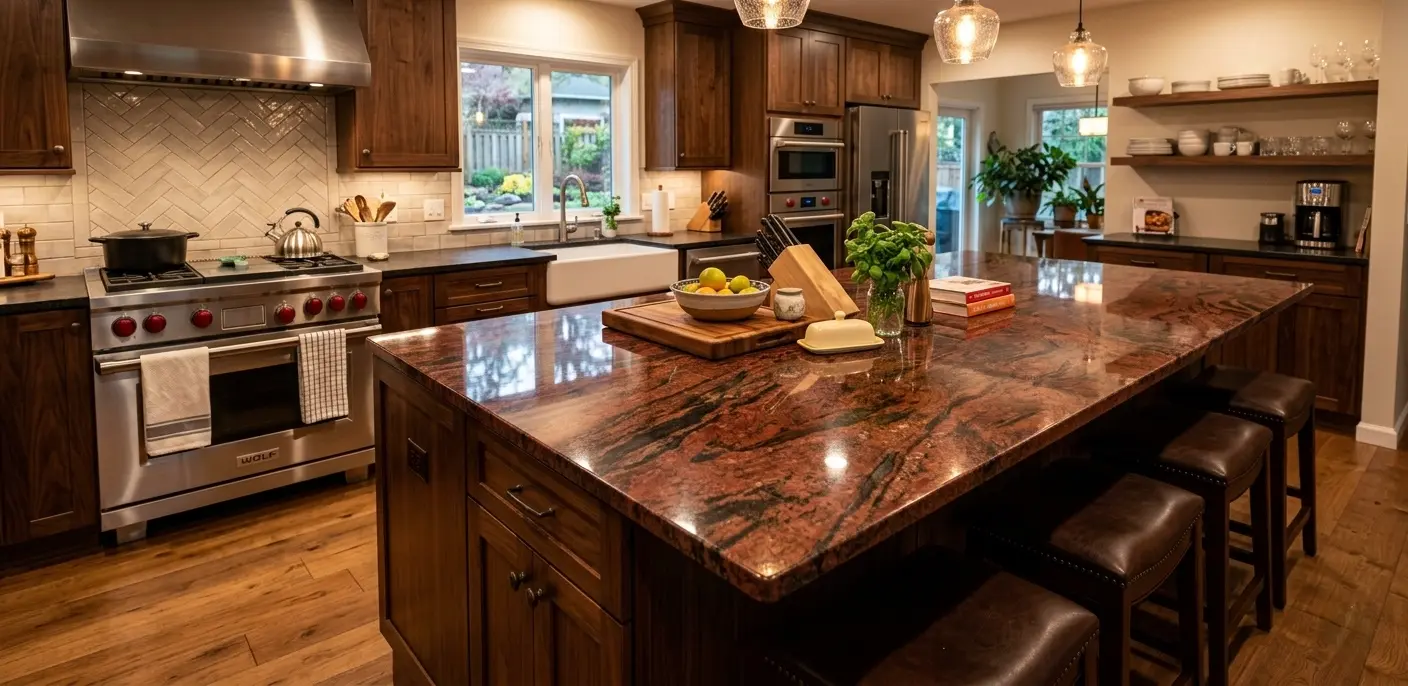
What's the Difference Between Granite, Quartzite, and Marble?
This is a common question we hear, since these three stones can look similar at first glance but behave differently in a home.
Granite is an igneous stone formed from cooled magma, which gives it a naturally speckled or granular appearance. It has been a popular kitchen and bathroom material for decades.
Marble is a metamorphic stone known for its flowing veining and soft, often lighter background color. It has a classic, elegant appearance that continues to draw homeowners toward traditional and formal design styles.
Quartzite is also a metamorphic stone, formed from sandstone under heat and pressure. It can visually resemble marble, with soft veining and pale backgrounds, but its mineral makeup is different from true marble.
Homeowners who like the marble look but want to explore other natural stone options often ask to see quartzite slabs side by side with marble to compare veining, color, and overall feel in person. Fine Homebuilding's natural stone guide offers additional detail on how these stones perform over time.
How Much Do Natural Stone Slabs Cost in Rancho Cordova?
Pricing for natural stone slabs varies widely based on the type of stone, where it was quarried, slab thickness, and current availability. Granite tends to sit at a more accessible price point due to wider availability, while rarer marble, quartzite, or onyx varieties can carry a higher price simply because of how the stone forms and how much usable material comes from each block.
Because pricing shifts slab to slab, most homeowners get the clearest answer by requesting a slab quote based on the specific stone they're considering, along with the square footage needed for their project. Viewing slabs in person also helps homeowners understand why pricing can differ even within the same stone category, since veining, color saturation, and overall yield all play a role.
A few additional factors tend to influence the final price. Thickness is one, since a thicker slab uses more raw material. Where the stone was quarried is another, as stone sourced from more remote regions or in limited supply often carries a higher price than more commonly quarried varieties. The complexity of a project, including the number of seams, edge profiles, and cutouts needed for sinks or cooktops, is also worth factoring in, since these considerations affect overall project cost even though they relate to fabrication rather than the raw material price of the slab itself. Homeowners planning a project often find it helpful to bring rough measurements when requesting a quote, since square footage has a direct effect on how many slabs a project will require.
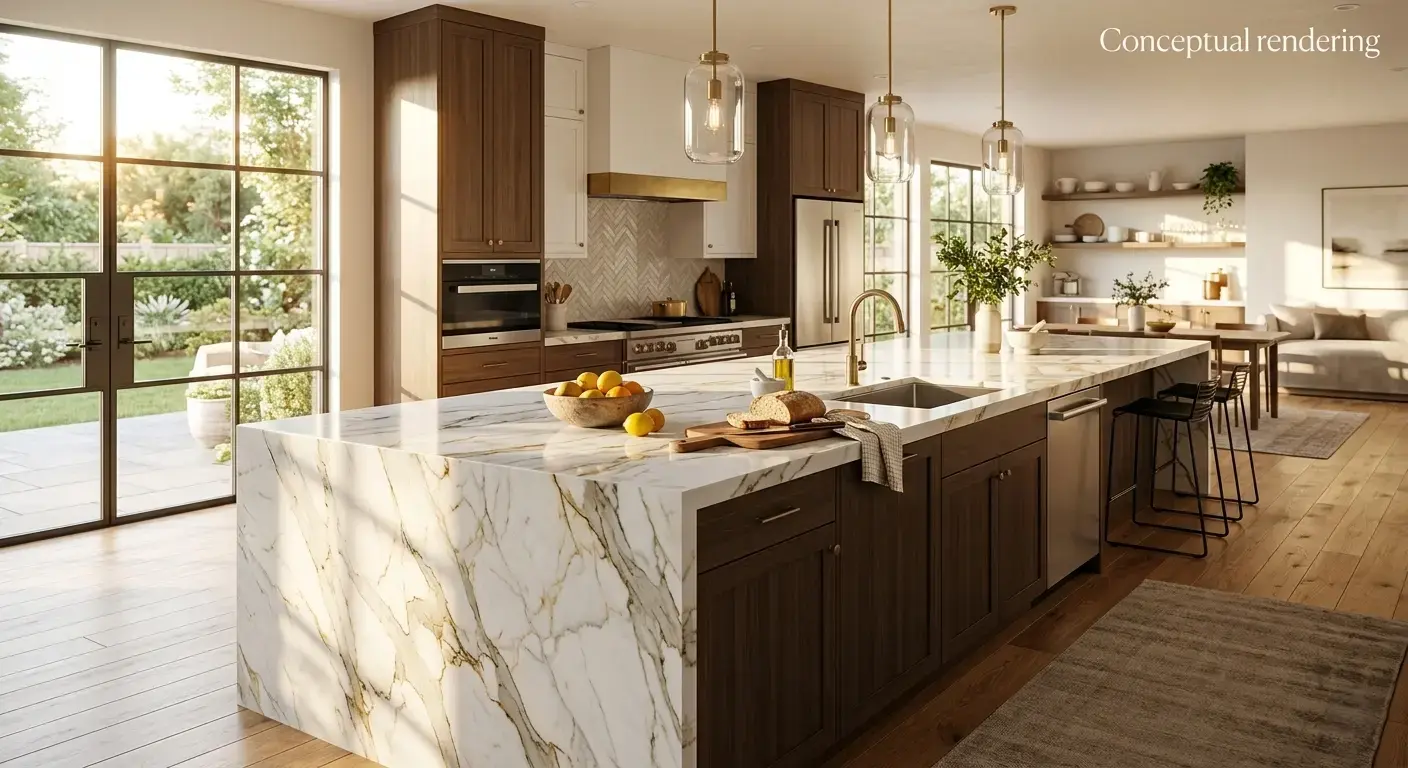
How Do I Choose the Right Slab for My Home?
Choosing a slab usually comes down to three factors: the design style of the home, how the surface will be used day to day, and personal preference for color and veining.
For kitchens that see heavy daily use, homeowners often think through how much veining movement they want, whether they prefer a light or dark background, and how the slab will pair with cabinetry and flooring already in the home. For bathrooms, fireplace surrounds, and accent walls, there's often more flexibility to choose a dramatic or unique slab since the surface isn't handling daily food prep or heavy traffic.
Pairing the slab with the rest of the room also matters. Cabinetry color is often the starting point, since a light slab can help balance darker cabinets, while a bolder, more dramatic slab can stand out against simple, neutral cabinetry. Flooring and wall color come into play as well, particularly in open-concept layouts where the kitchen or bathroom surface is visible from adjoining rooms. Homeowners working with a designer or contractor often bring paint swatches, cabinet finishes, or flooring pieces along when comparing slabs, since seeing the materials together makes it easier to picture the finished space. Contractors and designers working on behalf of a homeowner can also apply for a trade account for ongoing projects.
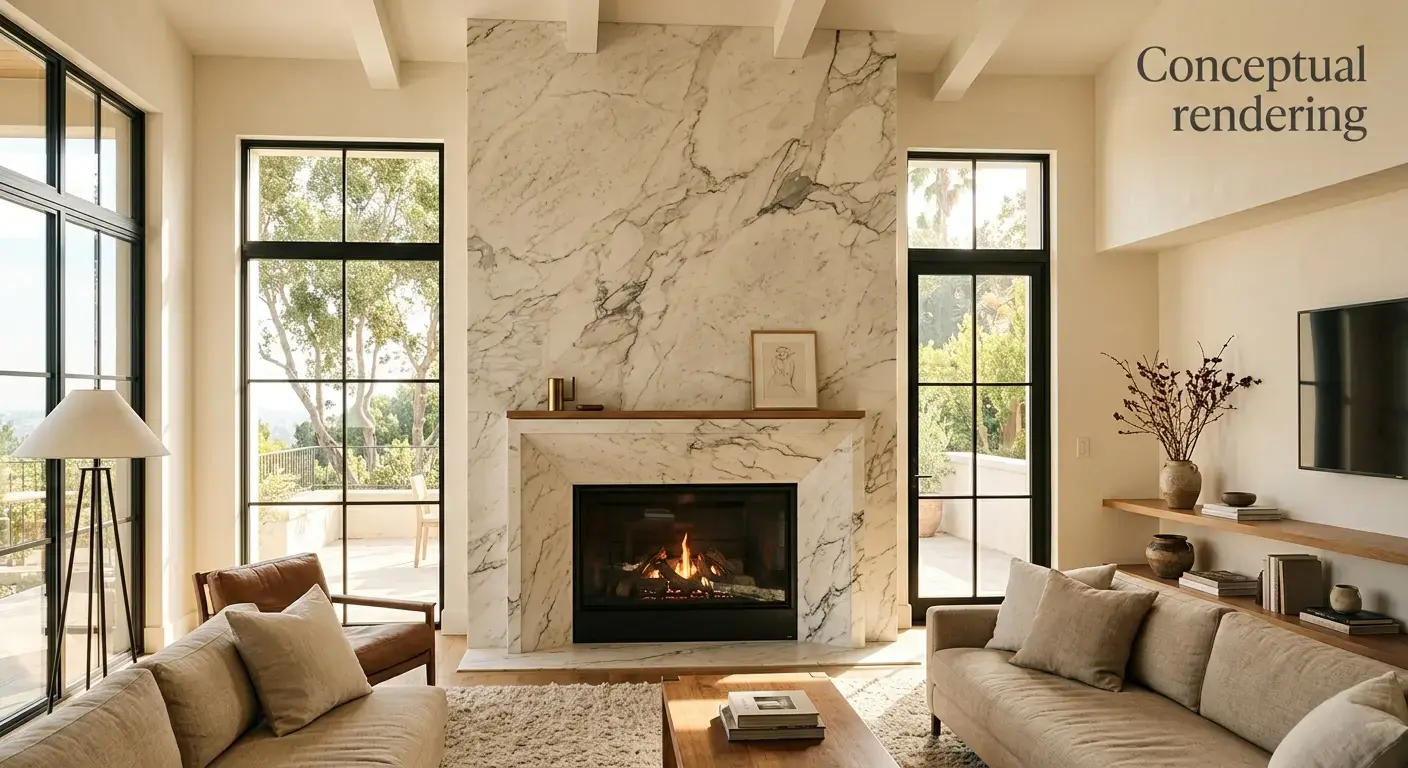
What's the Best Way to Evaluate a Slab Before Buying?
Because each slab varies in veining, color, and pattern, photos alone rarely tell the full story. The most reliable way to evaluate a specific piece is to view the actual slab in person at our Sacramento showroom, where natural stone can be seen under real lighting rather than through a screen. Seeing the full slab lets homeowners check how the veining flows across the surface, how the color reads in the room's actual light, and whether the piece works with the rest of the space's design. Homeowners can also book a design consultation so our team can walk through available options and help narrow down choices based on the look and use they have in mind.
What Should Homeowners Know About Caring for Natural Stone?
Care requirements differ by stone type, but in general, natural stone benefits from routine cleaning with a pH-neutral cleaner, prompt cleanup of spills, and the use of cutting boards, trivets, and coasters to protect the surface from scratches and heat. Many natural stones, particularly more porous options like marble and travertine, can also benefit from periodic sealing, which helps reduce the chance of staining from everyday spills.
Homeowners considering a specific stone for their project can ask about care recommendations for that particular material, since a stone chosen for a busy kitchen may call for a different care routine than one used in a low-traffic accent wall.
It also helps to think about care requirements before finalizing a stone choice rather than after. A homeowner who wants a lower-maintenance surface for a busy family kitchen, for example, might weigh that priority against the look of a softer, more porous stone that requires more frequent attention. There's no single right answer here, since some homeowners are happy to follow a more involved care routine in exchange for a specific look, while others prioritize ease of upkeep above all else.
Conclusion
Choosing a natural stone slab is a decision that shapes the look of a home for years to come, and it makes sense that Rancho Cordova homeowners want clear answers before moving forward. From understanding the differences between granite, marble, and quartzite to getting a sense of pricing and care, having the right information up front makes the selection process much smoother.
We invite Rancho Cordova homeowners to visit our Sacramento showroom at 6100 Warehouse Way, Sacramento, CA 95826 (get directions on Google Maps) to see our full selection of natural stone slabs in person, or to call us at (916) 913-6682 with any questions about a specific project.
Note: Some images on this page may be conceptual renderings created to illustrate design possibilities and may not depict actual installations.
Frequently Asked Questions
Granite is a commonly chosen stone for kitchens due to its wide color range and broad availability, though quartzite has also grown in popularity among homeowners looking for a marble-like appearance.
Quartzite is often priced higher than granite because it's less widely available and the quarrying and cutting process can be more involved, though exact pricing depends on the specific slab..
Not all stones require sealing at the same frequency. More porous stones like marble and travertine generally benefit from periodic sealing, while denser stones may need it less often.
Yes, many homeowners use marble in kitchens, though it's worth understanding that marble is softer and more prone to etching from acidic substances compared to some other natural stones.
Slab size needs depend on the square footage of the countertop, island, or surface being covered, along with the layout of seams. Bringing measurements or working from a project plan helps determine how many slabs are needed.