A natural stone fireplace surround facing a firebox in slate, travertine, or limestone gives Tahoe City cabins and lake homes a fire-safe, mountain-ready finish that matches the timber-frame and log-cabin architecture common throughout the basin. Each of the three stones is quarried rather than manufactured, so the surface carries natural veining, cleft texture, or fossil detail that porcelain, drywall, or engineered panels can't reproduce. Because these stones tolerate the repeated heat cycling of daily wood-burning or gas fireplace use, they hold up better over a Tahoe winter than manufactured alternatives.
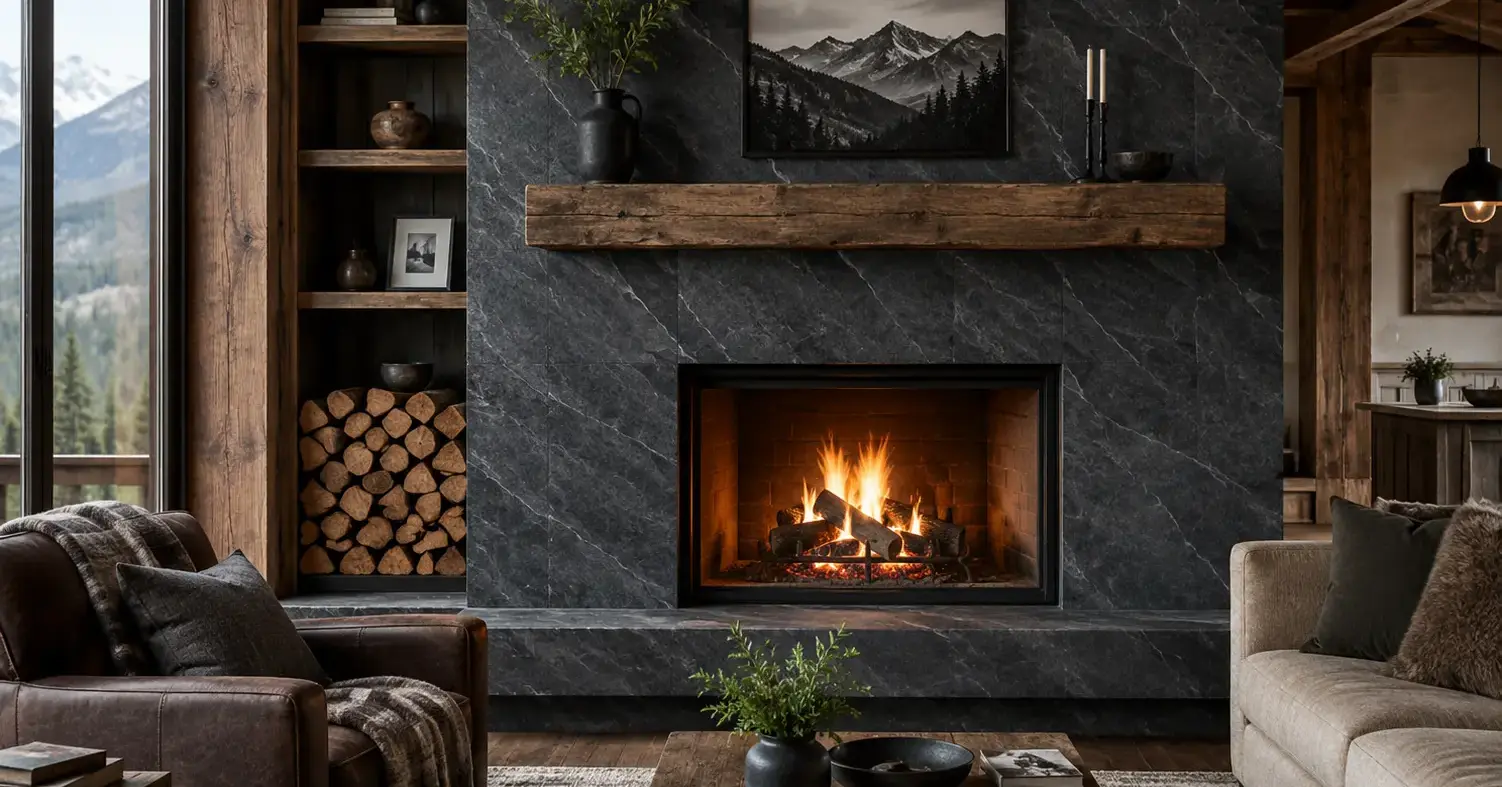
Match Your Stone to Tahoe City's Alpine Climate and Cabin Architecture
Tahoe City sits at roughly 6,200 to 6,500 feet on the lake, and that elevation drives long, snow-heavy winters. Freel Peak, the tallest point in the Tahoe Basin, tops out at 10,891 feet, and only two Basin ski resorts reach above 9,000 feet. Fireplaces at this elevation run through four or five months of daily use each winter, far more than a valley home typically sees, and painted drywall, laminate, and thin manufactured panels wear out fast under that kind of continuous exposure. Specify slate, travertine, or limestone whenever a fireplace sees heavy seasonal use, which is common in cabins and lake homes from Tahoe City through Sunnyside and out toward Homewood, rather than saving real stone only for fireplaces used a few nights a year.
Pick Slate for Rustic Texture in Timber-Frame Great Rooms
Reach for slate when you want the most rugged texture of the three and the closest match to the exposed-beam, A-frame, and log-cabin interiors common in Tahoe City's older housing stock. Its natural cleft face carries a slightly irregular, split-stone surface that plays with firelight and shadow in a way flat materials never will, while a honed finish tailors that same stone for newer builds. Pair dark charcoal or deep gray-green slate with knotty pine paneling and exposed timber trusses for the strongest visual match. Slate's dense, fine-grained metamorphic structure gives it durability and water resistance that holds up over decades of exposure, which is exactly why it handles the humidity swings that come with living near the lake.
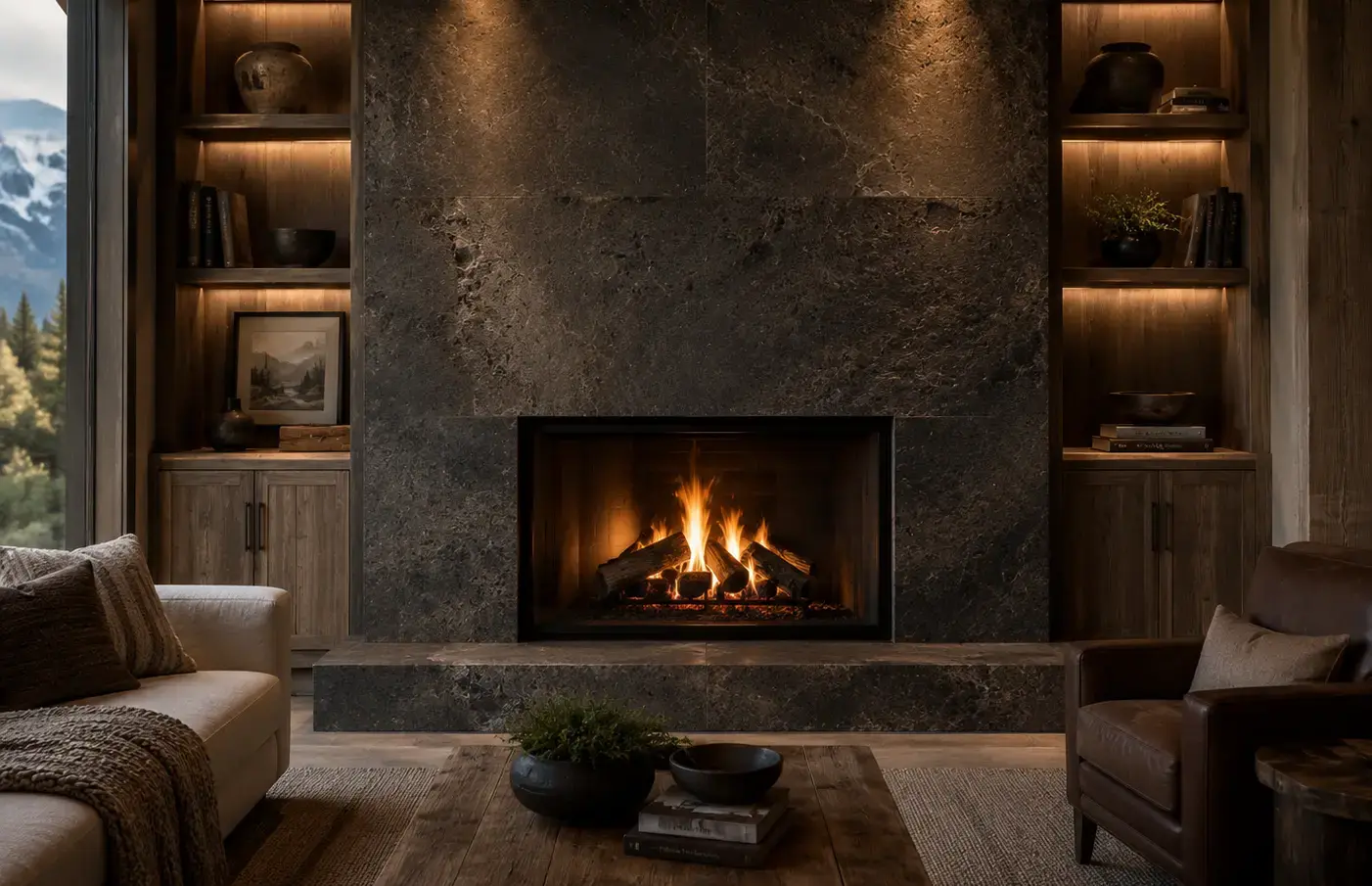
Choose Travertine for Warm, Old-World Character
Bring in travertine when slate feels too cool or too stark for the space. Its pitted, fossil-flecked surface delivers creams, tans, and soft golds that slate can't match. Go with filled and honed travertine for a smoother, more refined surround in contemporary mountain homes, or select unfilled, tumbled travertine to lean fully into the rustic, lived-in character that draws people to lake-town cabins in the first place. Travertine and limestone share a calcium carbonate base and can have absorption rates ranging from slight to high depending on the specific stone, so budget for periodic sealing as part of ongoing upkeep rather than a one-time installation step. If you'd like to see how different travertine slabs look in person, visit our Reno showroom or schedule a design consultation to compare finishes, textures, and color variations before making your selection.
Select Limestone for Clean Lines in Modern Mountain Builds
Turn to limestone when you want the most uniform, understated look of the three, with a soft, consistent color field running from pale gray to warm buff. Specify it for the newer, more architecturally modern homes going up around the North Shore, where the goal is the durability and heat resistance of natural stone without the heavy rustic texture of slate or travertine. Set a honed limestone surround against black steel fireboxes and minimalist mantels for a clean, contemporary result, while still getting the subtle fossil inclusions and color variation that separate real stone from an engineered look-alike.
Match Wood-Burning vs. Gas Installations to the Right Stone Thickness
Know this before you install: all three stones qualify as non-combustible facing material, but the installation details shift depending on fireplace type. NFPA 211 sets the National Fire Protection Association's standard for the design, installation, and inspection of chimneys, fireplaces, vents, and solid fuel-burning appliances, and most Placer County building departments reference it when permitting a wood-burning masonry fireplace or insert. Specify thicker slab stone and a more generous hearth extension for wood-burning units, since sustained radiant heat and ember exposure run higher there. Gas fireplaces run cooler, giving you more flexibility on stone thickness and setback, which explains why gas conversions have become so common in older Tahoe City cabins getting updated for easier day-to-day use. Either route you take, pull a required building permit before any fireplace or structure is erected, altered, or repaired and get local building department sign-off before installation starts.
Maintain Your Stone Surround for a Mountain Climate
Once a surround is installed and the permit is closed out, ongoing care is what keeps it looking right for years. Reseal travertine and limestone every one to two years, especially on surfaces closest to the firebox where soot settles fastest. Skip sealing slate altogether under normal use, since it typically doesn't need it. Keep maintenance simple: brush or vacuum ash dust regularly, and reach for a stone-safe cleaner rather than anything acidic, which can etch limestone and travertine over time. Wipe down the surround before reopening a cabin that's sat closed for the off-season, catching any dust or moisture buildup before it becomes a bigger job. A few minutes of seasonal care is a small price for a surround that's built to outlast the cabin's other finishes.

Conclusion
Slate, travertine, and limestone each hold up to Tahoe City's long winters and heavy fireplace use, with the right choice coming down to the look a cabin is going for and whether the fireplace runs on wood or gas. Slate suits rustic, timber-frame interiors, travertine brings warmth to more traditional spaces, and limestone fits the cleaner lines of newer North Shore builds.
Nova Tile and Stone carries all three, along with quartz, porcelain, and hardwood, and serves homeowners throughout the Tahoe City, Truckee, and North Shore area from its Reno showroom. Free design consultations are available to help match stone selection to a fireplace type and a cabin's existing finishes. Nova Tile and Stone is located at 12835 Old Virginia Rd, Suite 24, Reno, NV 89521, (775) 331-6682. Learn more about us.
Frequently Asked Questions
Plan for a few days to a week for most fireplace surround installations, depending on stone type, slab size, and whether the existing fireplace needs demolition first. Slab installations generally move faster than intricate tile patterns, since fewer pieces mean less cutting and setting time.
Choose slab stone for a seamless look with minimal grout lines, since large-format pieces cover more surface area in fewer joints. Choose tile instead for tighter budgets or more intricate patterns, since smaller pieces are easier to cut around firebox openings and mantel edges.
Yes. Fit stone surrounds to either setup, but check the insert manufacturer's clearance specifications first, since inserts often have different heat output and clearance requirements than an open masonry firebox.
No, expect the stone's natural color to hold steady over years of use. Watch instead for soot discoloration directly around the firebox opening, which cleans off with a stone-safe cleaner rather than fading into the material itself.
Coordinate tones and finishes across rooms if you want a unified look, but don't feel locked into using the identical stone everywhere. Pull a shared color palette or finish style (honed, tumbled, polished) across your fireplace, kitchen, and bath instead, and let each space use the stone type that best fits its function.
Note: Some images on this page may be conceptual renderings created to illustrate design possibilities and may not depict actual installations.