A Fresh Take on Stone Surface and Materials for 2026
Natural Stone Countertops are defining bathroom renovations across Stagecoach this year, as homeowners move toward warm marble veining, textured quartzite, and honed granite finishes. These stone surface and materials choices bring long-lasting appeal to vanities and shower surrounds, though each material carries distinct care requirements. This guide walks through current design trends, popular material choices, and practical factors to weigh before selecting a slab for a bathroom space.
Across Stagecoach, Fernley, and neighboring Nevada communities, bathroom updates increasingly favor soft, organic stone patterns over uniform manufactured surfaces. Designers report growing interest in leathered textures that soften light reflection near mirrors and fixtures. Homeowners also gravitate toward larger slab pieces that minimize visible seams on vanity tops, creating a cleaner, more continuous appearance throughout the room.
The high desert climate around Stagecoach brings dry air and wide temperature swings between seasons, factors worth considering when selecting an indoor bathroom surface. Natural stone generally handles typical indoor climate shifts well, though every material still benefits from a consistent care routine regardless of regional weather patterns.
Why Natural Stone Countertops Elevate Bathroom Design
Selecting the right slab material shapes both the appearance and the daily function of a bathroom for years to come. Natural stone brings a range of practical and visual advantages, though every benefit comes with a realistic expectation attached.
Benefits and Trade-Offs at a Glance
- Distinct veining and mineral patterns mean no two vanity tops look identical, though slight variation between slabs should be expected and embraced.
- Granite and quartzite resist scratching from everyday grooming tools, but cutting boards and trivets are still recommended for shared vanity spaces.
- Honed and leathered finishes soften glare under bathroom lighting, though they may show water spots more readily than polished surfaces.
- Sealed stone surfaces resist staining from cosmetics and toiletries, though prompt cleanup of spills helps preserve long-term appearance.
- A wide palette of stone surface and materials options allows coordination with cabinetry, tile, and fixture finishes throughout the room.
Marble and dolomite bring soft, romantic veining well suited to powder rooms and primary bathrooms with moderate daily use. Both materials perform best in dry, climate-controlled indoor settings rather than areas with heavy moisture exposure.
Quartzite and granite tend to suit busier family bathrooms, offering additional durability against daily wear. Quartz remains a popular indoor-only alternative for homeowners who prefer a more uniform, low-variation surface pattern.
Color trends for 2026 lean toward warm neutrals, soft greiges, and earthy taupe tones rather than the stark white-and-gray palettes popular in prior years. This shift reflects a broader design movement toward organic, nature-inspired stone surface and materials throughout residential interiors.
Dolomite has also gained attention as a marble alternative, offering comparable veining with somewhat different mineral composition. Homeowners drawn to soft, pale backgrounds with subtle gray or gold veining often find dolomite worth comparing directly against traditional marble options.
Bathroom Shower Designs and Vanity Applications
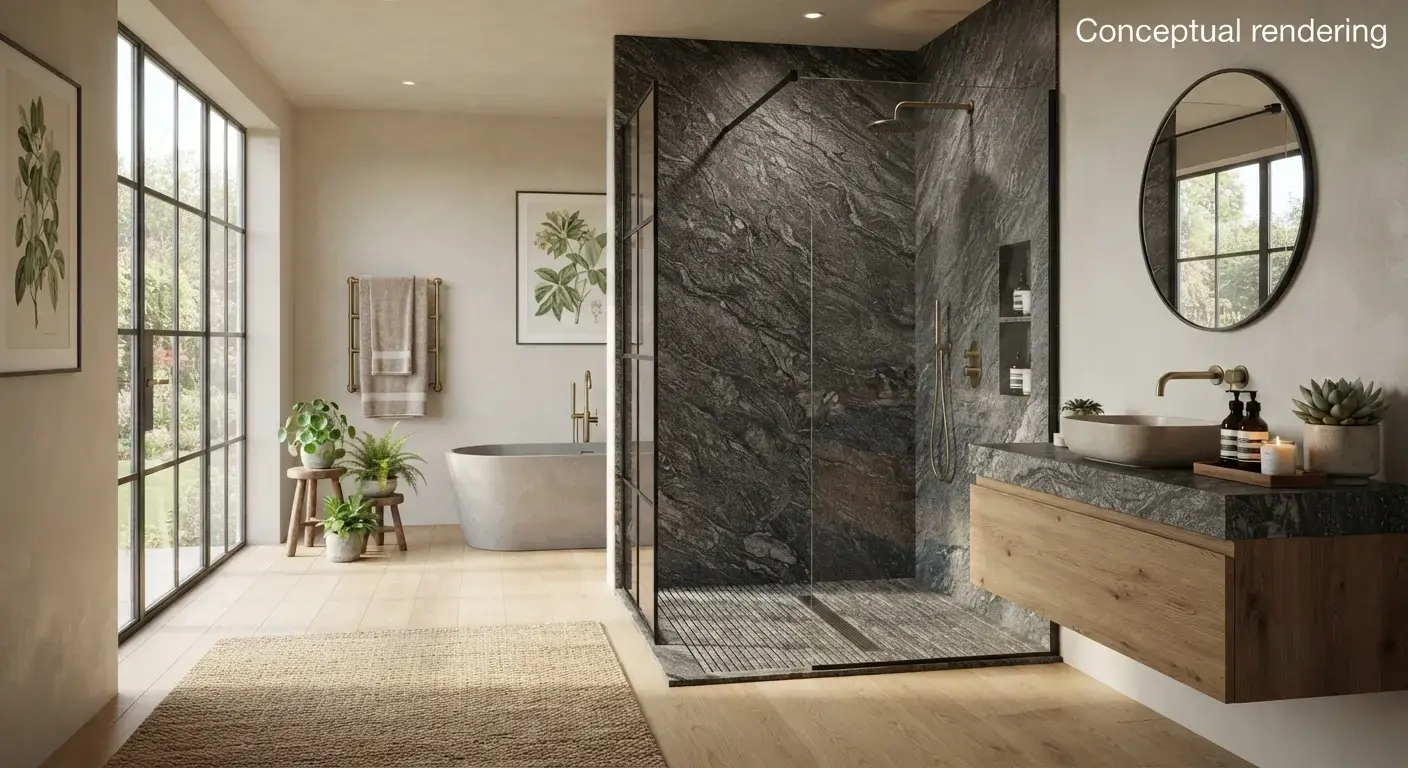
Bathroom shower designs increasingly incorporate natural stone slab walls alongside coordinating vanity tops for a cohesive look. Matching or complementary stone across multiple surfaces has become one of the defining trends of 2026 bathroom projects.
Vanity Tops and Powder Room Accents
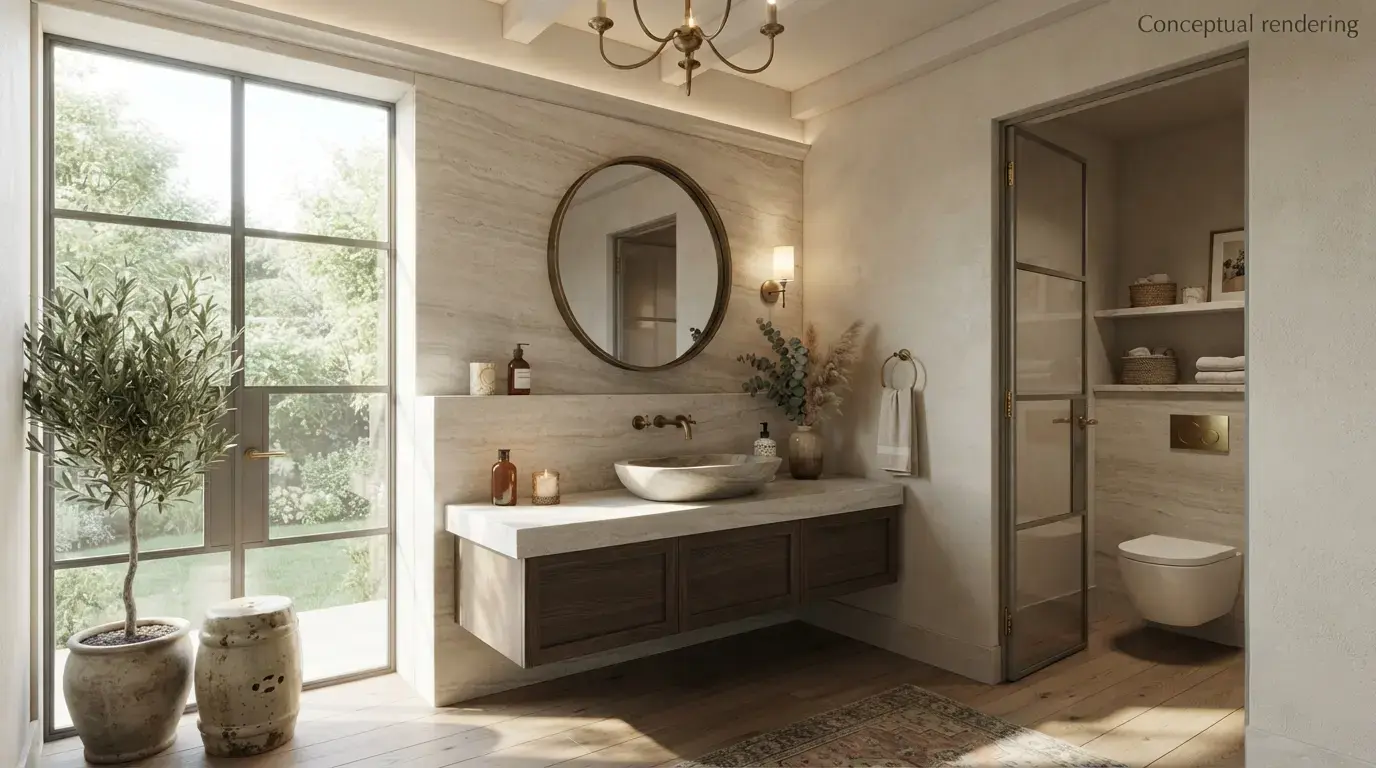
Vanity tops remain the most requested application for natural stone countertops in Stagecoach bathrooms. Honed marble and leathered granite are popular for their soft texture and reduced glare near mirrors and lighting fixtures.
Powder rooms often showcase bolder veining or dramatic color contrast, since these smaller spaces see lighter daily use. Dolomite and quartzite both offer striking patterns suited to accent vanities in guest bathrooms.
Double vanities present an opportunity for a single continuous slab spanning both sinks, avoiding a visible seam across the counter surface. This layout works especially well with quartzite and granite, which handle wider spans without compromising structural stability across the vanity run.
Undermount sink cutouts pair naturally with a honed or leathered finish, since the softer texture helps disguise minor water spotting around the basin edge. Homeowners favoring a brighter, more reflective look may still prefer polished stone, provided daily wipe-downs stay part of the routine.
Shower Walls and Wet Area Surfaces
Shower walls call for careful finish selection, since polished surfaces become notably slipperier when wet compared to honed or leathered textures. Matte and textured finishes are generally better suited to floor and shower base applications.
Granite and quartzite slabs hold up well in consistently damp shower environments when properly sealed. Marble and travertine can also work in showers, though they require more frequent sealing and gentler cleaning products.
Grout-free slab shower walls have grown popular for their clean, uninterrupted appearance compared to smaller tile layouts. Fewer seams also mean fewer places for soap residue or hard water deposits to accumulate over time, though regular cleaning still keeps the surface looking its best.
Steam shower environments introduce sustained moisture and warmth, conditions that make sealing quality especially important for any natural stone surface. Homeowners considering a steam feature should confirm sealing recommendations specific to the chosen stone type before finalizing a design.
Stone Finish Comparison for Bathroom Applications
Finish | Light Reflection | Wet-Area Suitability | Maintenance Note |
Polished | High shine, mirror-like | Slipperier when wet; use caution | Shows water spots readily |
Honed | Soft, matte glow | Better traction than polished | Periodic resealing recommended |
Leathered | Textured, subtle sheen | Good for shower walls | Hides fingerprints and spots well |
Specialty | Varies by treatment | Depends on texture | Confirm care needs per material |
Backsplash and Wall Coordination
Coordinating a vanity top with a matching or complementary backsplash has become a defining feature of 2026 bathroom projects. A continuous stone run from countertop to backsplash creates a seamless visual line throughout the vanity area.
Some homeowners extend coordinating stone further up the wall as a full accent panel behind the mirror. This approach works particularly well with quartzite and granite, both of which tolerate frequent cleaning without the added moisture concerns of a full shower application.
Freestanding Tub Surrounds
Freestanding tub surrounds benefit from bookmatched slab panels, a trend gaining popularity for its dramatic mirrored veining effect. This technique works particularly well with marble, dolomite, and quartzite materials cut from the same block.
According to the Tile Contractors' Association of America, industry standards guide proper stone selection and long-term surface care across residential and commercial projects. Following recognized material guidance helps homeowners set realistic expectations for a chosen stone type.
Choosing a Bathroom Stone Finish
- Identify which surfaces will see regular moisture, such as shower walls or tub decks.
- Compare polished, honed, and leathered samples in a showroom setting under lighting similar to the bathroom.
- Weigh maintenance commitment against desired texture and glare reduction.
- Review available slab options to compare veining, color, and finish side by side.
- Confirm sealing recommendations for the specific stone type selected.
Nova Tile and Stone: Guidance for Your Stagecoach Project
Choosing among dozens of natural stone options can feel overwhelming without an experienced point of contact. Nova Tile and Stone offers knowledgeable staff who help homeowners compare veining, finish, and application suitability before committing to a slab.
Design trends continue evolving each year, with recent showcases at the International Surface Event highlighting renewed interest in textured, tactile stone finishes. Coverage from Dezeen's design events guide points to similar movement toward organic, nature-inspired materials across residential interiors.
Homeowners in the region can visit showroom locations for hands-on slab viewing. The Fernley showroom serves Stagecoach and surrounding communities directly. The Reno location offers an expanded slab selection for comparison. A Minden showroom location provides additional inventory to explore in person.
Homeowners farther from Nevada can also explore the Sacramento location for similar guidance and slab inventory. Every showroom team member can speak to finish suitability, care requirements, and design coordination across a full bathroom project.
Learn more about the company background and design philosophy on the company background page. Staff can help match slab options to Stagecoach bathroom projects, climate, and design goals in a no-pressure showroom visit.
A typical showroom conversation covers slab inventory, finish availability, and how a given stone type performs in vanity, shower, or tub surround applications. Bringing photos of the bathroom layout and cabinetry color helps staff narrow down suitable options.
Homeowners planning a full remodel often benefit from viewing multiple finish samples side by side rather than relying on small digital images alone. Lighting, veining direction, and slab thickness can all look different in person compared to online photography.
Conclusion
Natural Stone Countertops continue shaping bathroom design trends across Stagecoach, offering distinctive veining, varied finishes, and long-term durability when properly maintained. From vanity tops to shower walls, stone surface and materials selection shapes both function and style throughout a bathroom. The full slab collection showcases the breadth of available materials for vanity, shower, and tub surround projects alike. Homeowners weighing marble, granite, quartzite, or dolomite benefit from viewing finish samples in person before making a final decision for a Stagecoach bathroom remodel.
Frequently Asked Questions
Yes, many homeowners choose natural stone for bathroom vanities because of its distinctive veining and durability, though proper sealing and gentle cleaning help preserve its appearance over time.
Honed and leathered finishes are generally better suited to wet areas than polished surfaces, since polished stone becomes noticeably slipperier when exposed to water.
Marble can be used in showers, though it requires more frequent sealing and gentler cleaning products compared to more moisture-resistant materials like granite or quartzite.
Resealing frequency depends on the specific stone type and daily use, so homeowners should follow the sealing schedule recommended for their chosen material.
Polished finishes offer a glossy, reflective surface, while leathered finishes have a textured, matte appearance that reduces glare and can feel less slippery underfoot.
Note: Some images on this page may be conceptual renderings created to illustrate design possibilities and may not depict actual installations.