Reno sits at roughly 4,400 feet above sea level, wedged between the Sierra Nevada and the open expanse of the Great Basin. The light here is bright and high-altitude. The air is dry. Summer afternoons regularly reach the low-to-mid 90s, and winter nights regularly drop into the twenties. The Washoe Zephyr, a seasonal afternoon wind that develops along the eastern slopes of the Sierra each summer, lifts fine alkaline dust off the valley floor and carries it eastward across the Truckee Meadows.
These are not just atmospheric details. They are the actual conditions your floors, countertops, and wall surfaces will live in for decades. In Reno, the climate adds a third variable to material selection, beyond aesthetics and cost, that is worth understanding before you commit to anything.
The best flooring and surface materials for high desert homes in Reno, NV are those suited to the region's specific climate: low indoor humidity in winter, day-to-night temperature swings exceeding 40°F, more than 300 days of annual sunshine, and fine alkaline dust carried by seasonal winds. Natural stone including quartzite, travertine, and marble performs well here, as does porcelain tile, which requires no sealing and is unaffected by humidity. Engineered hardwood and LVP are more stable in Reno's dry climate than solid hardwood. Carpet suits bedrooms but is not recommended for high-traffic main floors where grit accumulates.
What Reno's Climate Actually Does to Surfaces
The most significant factor is low indoor humidity. Outdoors, Reno's winter is actually its most humid season, but once a furnace heats that cold air indoors, relative humidity can drop sharply, often below 30%. Wood responds by releasing moisture: the gaps that open between solid hardwood planks in January are not a defect, they are what wood does in a dry climate. Engineered hardwood, with its dimensionally stable plywood core, handles this significantly better. Tile and natural stone do not respond to humidity at all.
Temperature swings, dust, and UV exposure round out the picture. Day-to-night swings exceeding 40°F put stress on materials that expand and contract: dense, low-porosity surfaces handle thermal cycling better than softer ones. Fine alkaline grit is abrasive, which is why matte and honed finishes dominate Reno interiors: they hide micro-scratching far better than polished surfaces. And with more than 300 days of sunshine and large south-facing windows, UV stability matters: most tile and natural stone are stable; some carpet fibers and vinyl finishes are not, which is worth confirming before purchasing.
Natural Stone Options for Reno Homes
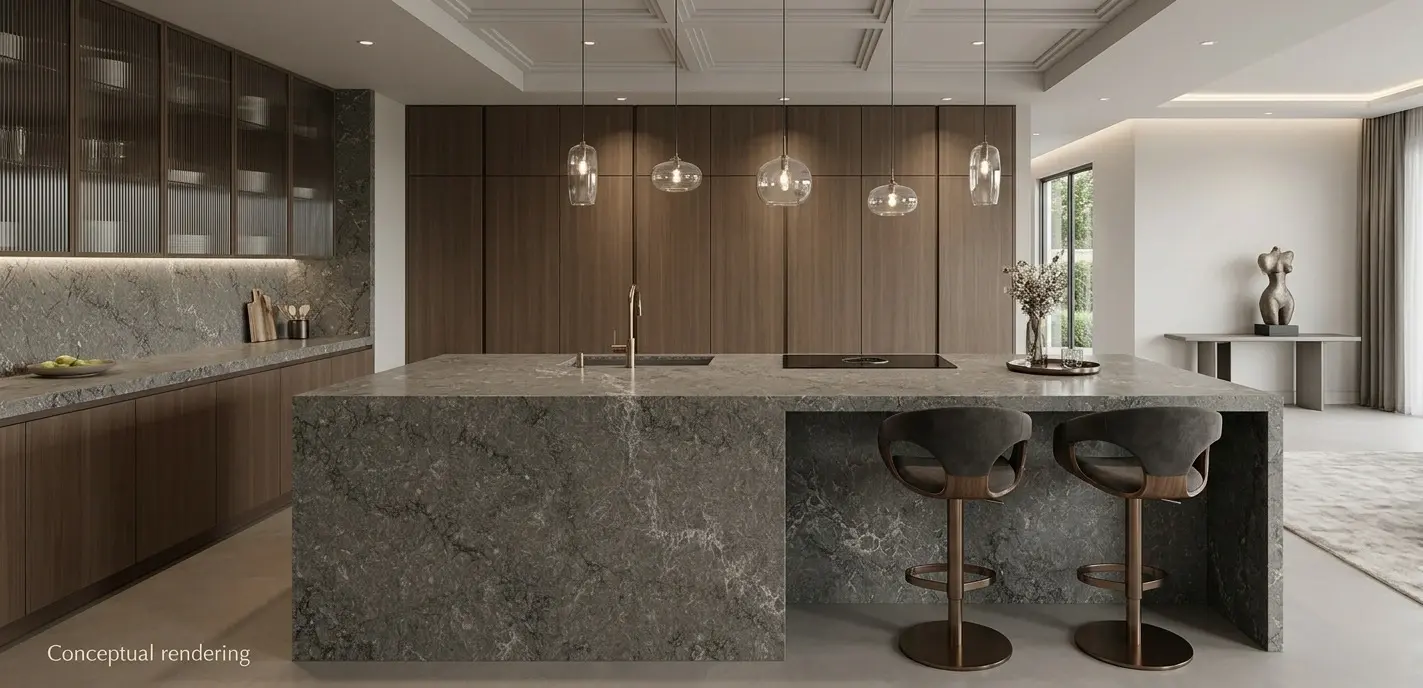
Quartzite is one of the most practical natural stones for Reno. It forms under extreme heat and pressure, producing a crystal structure harder than granite that handles thermal stress and dry conditions well, requiring sealing less frequently than softer stones. The warm-toned varieties, including honey quartzite, golden quartzite, and the greens and taupes that echo the foothills above South Reno, have become particularly popular as the regional palette shifts away from cool grays. A honed or leathered finish suits Reno's dusty environment better than polished: less upkeep, more in keeping with High Sierra interiors.
Marble is calcium carbonate and reacts with acids: coffee, citrus, and most cleaners will etch a polished surface. It works best in lower-traffic spaces: a primary bathroom vanity, a fireplace surround, a powder room. In those settings, a honed white marble with strong morning light is genuinely difficult to replicate. Honed finishes reduce glare in sunny rooms and feel more appropriate to the environment than high-polish, which tends to read as more urban.
Travertine is a sedimentary stone deposited by mineral springs, used in hot, dry climates for centuries. Its warm cream and russet tones sit naturally in the Nevada palette, and on a living room floor in a large format it creates an earthy, grounded quality that connects the interior to the landscape outside. Filled and honed travertine is the standard approach for residential floors; unfilled versions collect the fine desert dust that finds its way into every Reno home.
Porcelain Tile for Kitchens, Bathrooms, and Living Areas
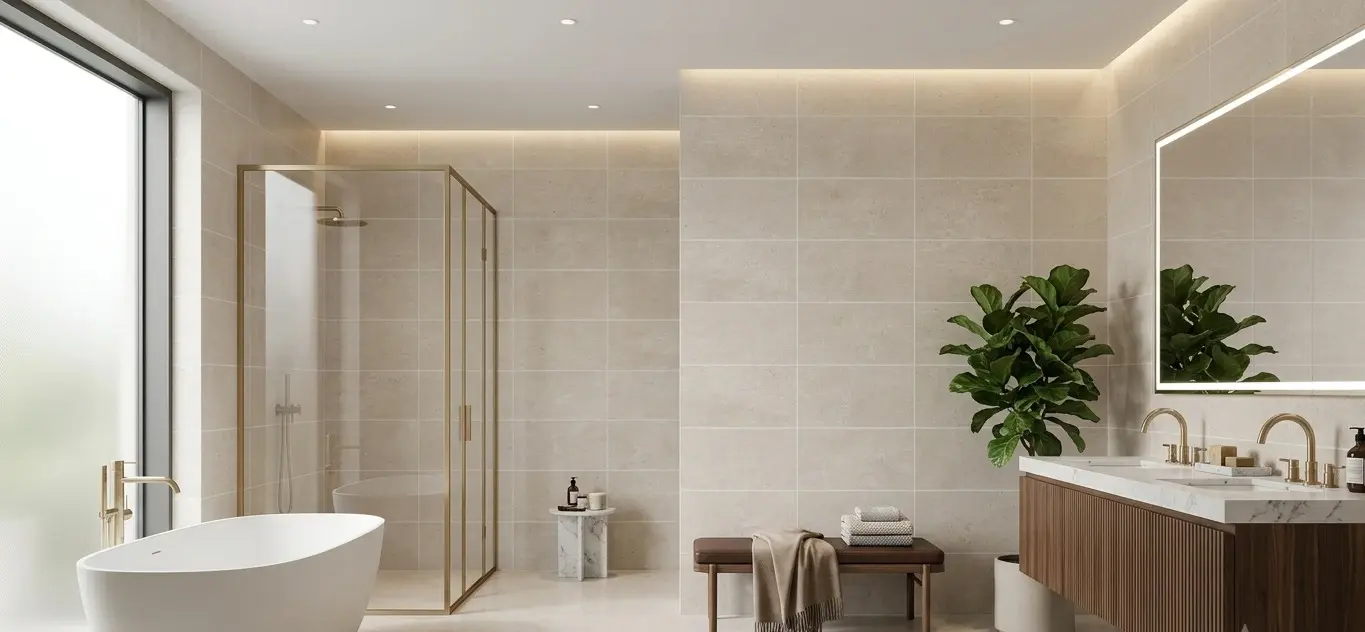
Porcelain is fired at 1,200–1,300°C, producing a tile dense enough that water absorption is typically below 0.5% per ASTM C373. It does not respond to humidity, does not fade under UV, and requires no sealing, properties that follow directly from the manufacturing process, not from marketing. For Reno homeowners who want the look of stone without the maintenance commitment, large-format porcelain in stone or wood looks is a well-suited option for floors, showers, and living areas. Wood-look porcelain has improved to the point that the visual difference from real timber is not immediately obvious, making it a strong choice for entryways and kitchens that connect to outdoor living spaces. For countertops and focal surfaces, many still find the character of real stone worth the additional care.
Not Every Room Needs Stone or Tile
Beyond natural stone and tile, Nova Tile and Stone's Reno showroom also carries hardwood, LVP, and carpet for rooms where hard stone surfaces are not the right fit. Reno homeowners working on a whole-home project can find everything in one place.
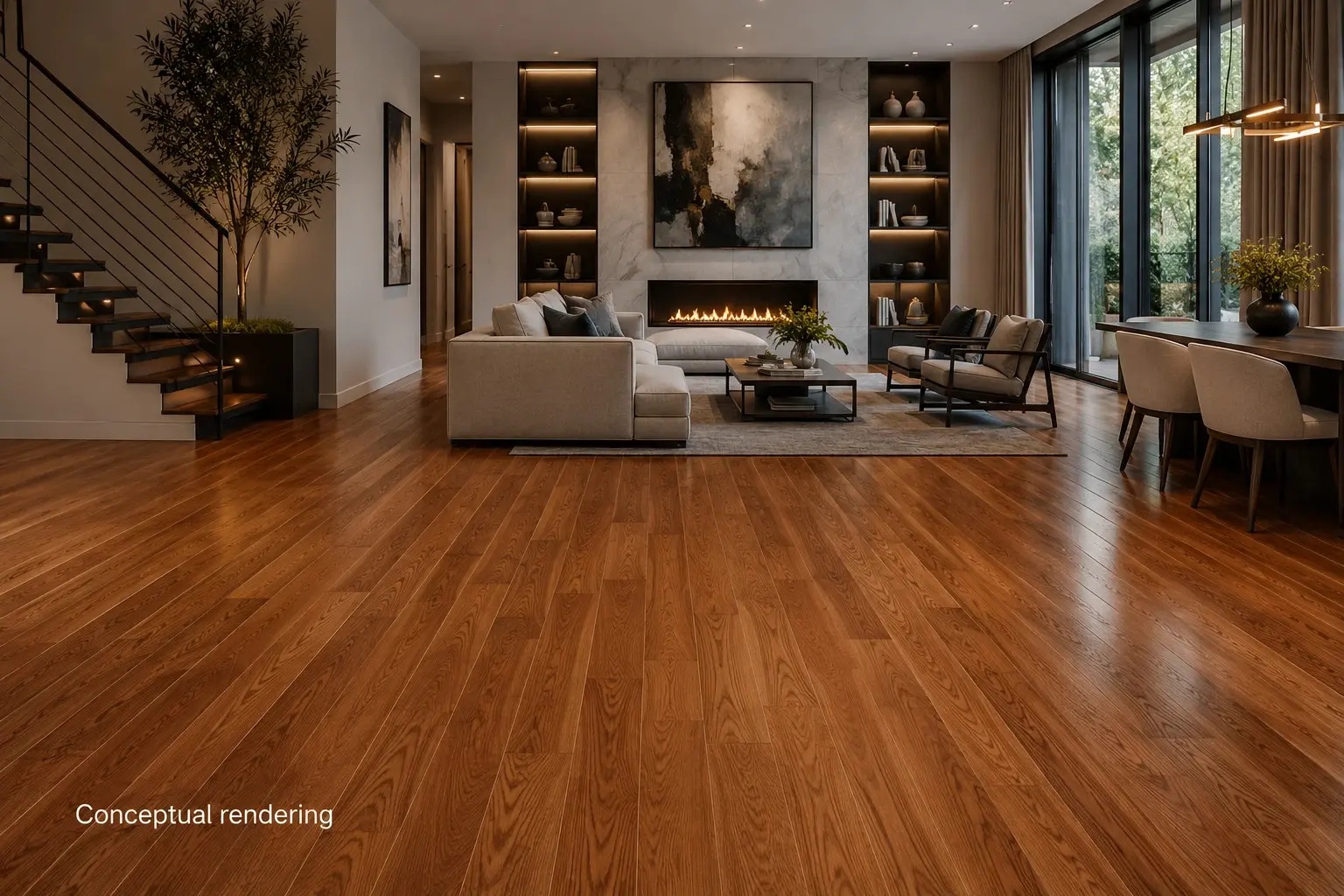
Engineered hardwood is the wood floor that makes sense in Reno. Its plywood core resists the dimensional movement that dry winter air causes in solid timber; wide-plank white oak and walnut in warm neutral tones work well against Reno's earthy design palette.
LVP is waterproof, scratch-resistant, and completely unaffected by humidity. For households with dogs, children, or high foot traffic, it handles real daily life without the wear that natural materials accumulate. Modern LVP in warm wood and stone looks reads convincingly, making it a practical choice for kitchens, laundry rooms, and any space where moisture or heavy use is a factor. It is not the same experience underfoot as real hardwood, but for many spaces and households the trade-off is straightforward.
Carpet is best reserved for bedrooms and media rooms. Grit and dust make it difficult to maintain in high-traffic zones, but in a sleeping space it delivers warmth and acoustic softness on cold desert nights that hard surfaces simply cannot match. Low-pile, high-twist constructions clean most thoroughly, hold up best in Reno's dry air, and are less prone to the static charge that very low indoor humidity generates in winter.
Color and Finish Trends
Reno interiors have been shifting away from cool grays toward warmer tones: creams, taupes, soft sage greens, and sandy ochres that echo the Nevada landscape. This is visible across all material categories: in the stone choices, the wood species and stain tones, and the LVP finishes that designers and homeowners are gravitating toward. Matte and honed finishes suit this direction better than high-polish, and they are more practical: they show less dust, reduce glare in sun-filled rooms, and develop the lived-in quality that natural materials are supposed to have.
Conclusion
Reno is an unusual place to design a home, in the best sense. The landscape is strong enough that the interior has something to respond to. The high desert light, the Sierra views, the wide temperature range, the dry air, the dust that finds its way into every room: these are not obstacles to good design. They are the context for it. The materials that perform well here are largely the same ones that look like they belong , dense stone, textured finishes, warm wood tones, surfaces that develop character rather than fighting wear. That alignment between performance and aesthetics is not a coincidence. It is what happens when materials are chosen for the place they will actually live in.
Frequently Asked Questions
Tile, natural stone, and LVP are the most stable because none of them respond to indoor humidity changes. If a wood floor is the goal, engineered hardwood is the right choice over solid planks in this climate.
Frequency depends on the stone: quartzite needs sealing only every few years, while travertine and marble need it more regularly, especially in wet areas. Test annually by placing a few drops of water on the surface; if the water soaks in rather than beading, it is time to reseal.
For floors and large wall areas, yes: porcelain eliminates sealing and etching concerns entirely. For countertops and focal surfaces seen up close, many homeowners prefer the natural variation of real stone despite the added maintenance.
In bedrooms and media rooms, yes. In entryways, mudrooms, and main corridors, tracked-in grit makes carpet difficult to maintain thoroughly; a hard surface is the better choice in those zones.
Warm, earthy tones and matte or honed finishes: they align with the regional design direction and hold up better in Reno's dusty, high-UV environment than cool grays and polished surfaces.
Curious About Something Else?
Nova Tile and Stone's Reno showroom on Old Virginia Road carries tile, natural stone slabs, hardwood, LVP, laminate, and carpet. The design team works without commission and offers a free sample program: take home any material and see how it reads under Reno's particular high-altitude afternoon light before committing. Whether the project is a kitchen remodel in Spanish Springs, a bathroom in Northwest Reno, or a whole-home flooring decision in a new South Reno build, the showroom serves homeowners and contractors throughout Sparks, Incline Village, Washoe Valley, Verdi, and greater Washoe County.
Nova Tile and Stone's Offerings Book a Free Design Consultation
Note: Some images on this page may be conceptual renderings created to illustrate design possibilities and may not depict actual installations.