Quartzite is the most durable natural stone for countertops, rating a 7 on the Mohs hardness scale with a dense, low-porosity structure that resists moisture absorption and freeze-thaw cracking better than granite, marble, or soapstone. Granite ranks close behind as a slightly softer but more widely available option, while marble and soapstone trade some hardness for other benefits like easier carving or acid resistance.
That distinction carries extra weight for homeowners in Stateline, NV. Sitting at roughly 6,300 feet on the southern shore of Lake Tahoe, Stateline gets a real winter, with snow settling in from November through April and low temperatures regularly dropping into the twenties. A kitchen countertop here does not just need to look good under casino lights or lakefront windows. It needs to hold up in a home that goes through genuine freeze and thaw cycles year after year, whether that home is a condo near the South Shore casino corridor or a cabin tucked up along Kingsbury Grade.
Why Durability Means More Than One Thing
When people ask about the most durable stone, they are usually asking about two different properties at once: hardness and porosity. Hardness is measured on the Mohs scale, a ranking geologists have used for over two centuries to describe how resistant a mineral is to being scratched. Porosity is a separate matter entirely. It describes how much a stone absorbs moisture, which matters enormously in a place where water can work its way into tiny pores, freeze, and expand enough to crack the surface from the inside. A stone can be hard and still struggle with porosity, or the reverse, so the best choice for a Stateline home usually comes down to a balance of both.
Quartzite Is the Toughest All-Around Choice
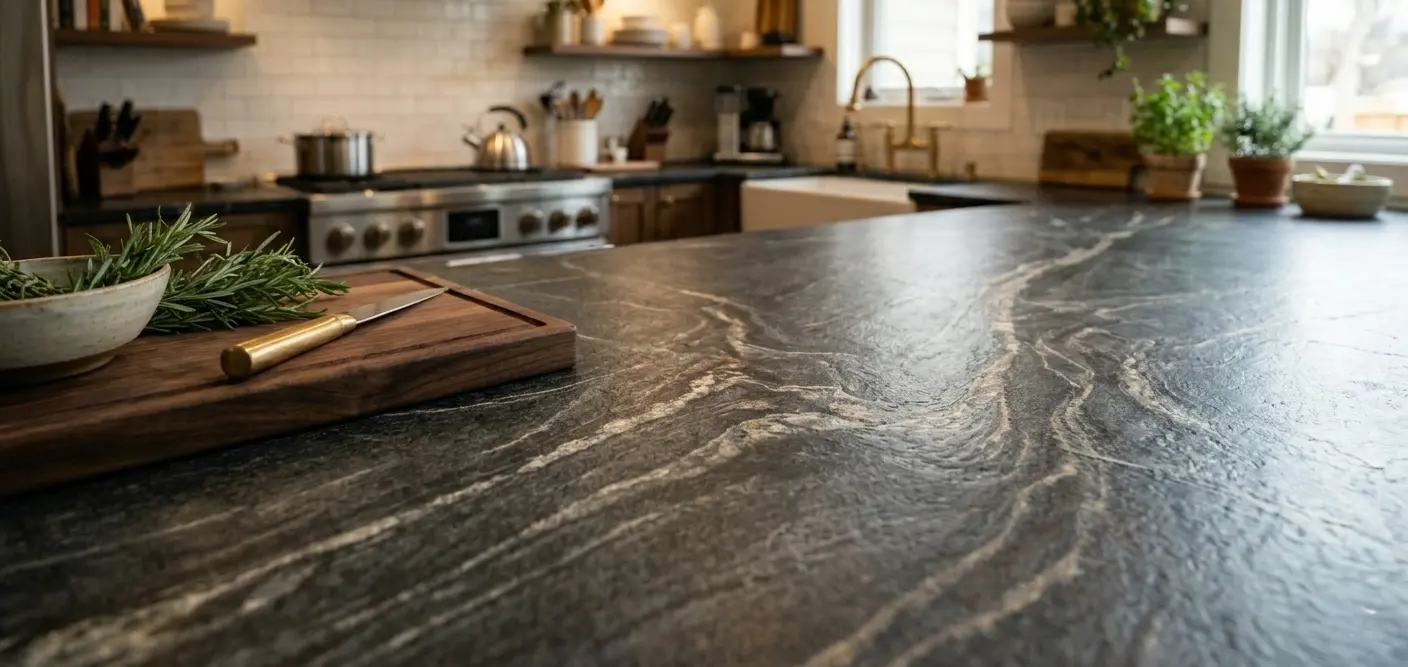
Quartzite starts out as ordinary sandstone, buried deep in the earth and subjected to enormous heat and pressure over time. That process fuses the individual quartz grains into a single, tightly interlocked structure, hard enough to scratch glass and resist most kitchen knives and cookware. That same density leaves little room for moisture to work its way in, which is what gives quartzite its edge in a climate that spends several months a year below freezing. Once properly sealed, quartzite holds up to daily kitchen use, hot pans, and citrus or wine spills without much drama, and its natural veining tends to run deeper into the stone than in softer materials, so it keeps its character even as the surface sees years of wear.
Granite Remains the Practical Everyday Pick
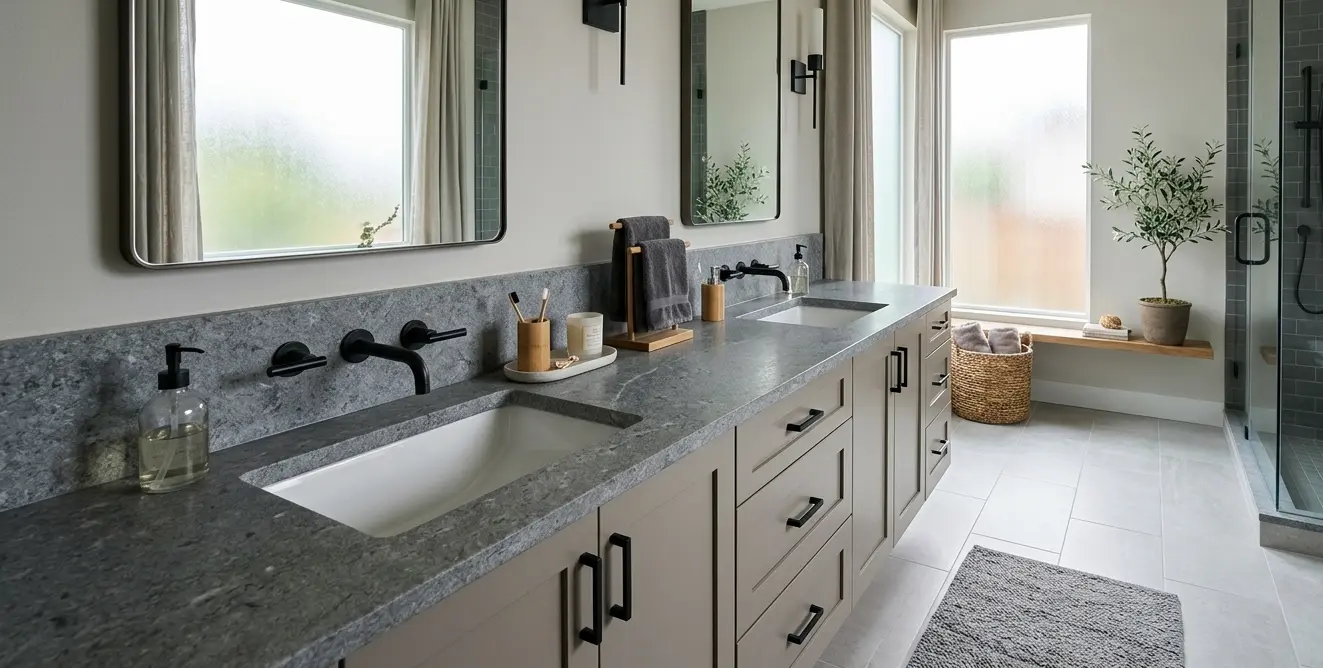
Granite sits just behind quartzite on the hardness scale, generally in the 6 to 7 range, and it has a long track record in cold, snowy climates across the country. It is an igneous rock formed from cooled magma, made up of interlocking crystals of quartz, feldspar, and mica, and that crystalline structure gives it strong resistance to both scratching and moisture absorption once sealed. Granite is also more consistently available than quartzite in a wider range of colors and price points, and it tends to be a bit more forgiving during fabrication and installation. For a lot of Stateline homeowners, especially those furnishing a full kitchen or a set of bathroom vanities, granite ends up being the more practical daily driver even if quartzite edges it out slightly on paper.
Marble Looks Beautiful but Asks for More Care
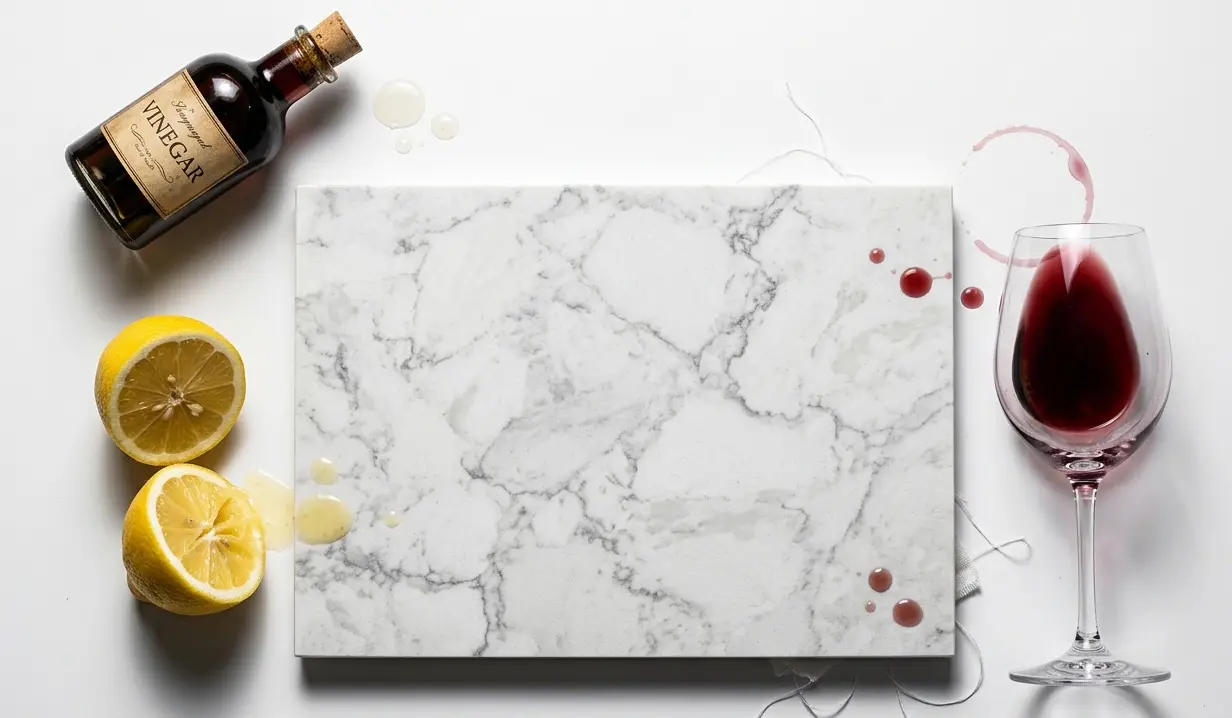
Marble is a metamorphic rock formed from limestone, and it typically rates only 3 to 4 on the Mohs scale, softer than either quartzite or granite. It is also more porous, which means it absorbs moisture more readily and is more prone to etching from acidic foods and drinks. In a climate like Stateline's, where entryways and mudrooms deal with tracked-in snow, salt, and moisture for months at a time, marble is better suited to lower-traffic indoor surfaces such as a bathroom vanity or a fireplace surround than to a hardworking kitchen island or an exterior application.
A Note on Soapstone
Soapstone comes up occasionally in durability conversations because it is genuinely non-porous, so it does not absorb water the way granite, marble, or even sealed quartzite can, and it will not crack from freeze-thaw exposure. The trade-off is hardness. Soapstone used in countertops commonly rates between 2.5 and 3.5 on the Mohs scale, so it scratches and dents more easily and needs periodic mineral oil treatments to maintain its look. It tends to show up more in rustic or farmhouse-style kitchens than in the resort-modern look common around the South Shore, so it is worth asking about availability before building a project around it.
What This Means for a Stateline Home
Stateline's mix of high-rise condos near the casino strip and mountain homes climbing toward Kingsbury Grade means durability questions show up differently depending on the property. A condo owner might be thinking mainly about a kitchen island or bathroom vanity that sees daily use. A homeowner further up the grade is often also thinking about a mudroom counter, a wet bar, or a fireplace surround that has to shrug off snow boots, salt, and months of cold. Those secondary surfaces are worth the same scrutiny as the kitchen island, since an entry or mudroom counter often sees more direct exposure to winter conditions than any other stone surface in the house. If you'd like to compare full slabs that fit your home's needs, you can visit our Reno showroom or request a slab quote for pricing and availability.
Conclusion
The right choice usually comes down to where the stone will sit. A kitchen island, an entry, or anything exposed to tracked-in snow and salt calls for quartzite or well-sealed granite, since both hold up to moisture and heavy use with the least maintenance. A vanity, a fireplace surround, or another lower-traffic indoor surface has more room for marble or soapstone, where appearance or feel can take priority over raw hardness. Whichever stone ends up on the counter, resealing it before the first hard freeze each year does more to prevent winter cracking than the choice of stone itself.
Seeing a full slab in person, under real lighting, is still the best way to judge how a stone's veining and color will actually read in a specific kitchen or bath, since photos rarely capture the depth and variation that shows up at full scale. Nova Tile and Stone offers free design consultations for homeowners working through exactly this kind of decision, matching stone selection to the way a space is actually used day to day.
Nova Tile and Stone is located at 12835 Old Virginia Rd, Suite 24, Reno, NV 89521, and can be reached at (775) 331-6682 for questions or to schedule a consultation.
Frequently Asked Questions
In terms of raw hardness, quartzite and granite are close enough that the difference rarely matters day to day. Where quartzite tends to pull ahead is in chemical resistance, since it is almost entirely quartz and does not react with acids at all. Granite is also highly resistant to etching, since true granite contains little to no calcite, but its natural pits and fissures can still trap acidic residue like lemon juice or wine over time if the sealant has worn down.
Cracking from cold itself is rare. The real risk comes from moisture that has already worked into an unsealed or worn seal, then expands as it freezes. A quick way to check a seal's condition is the water test: sprinkle a few drops on the counter, and if they bead up instead of soaking in within a few minutes, the seal is still doing its job.
Yes, particularly indoors and away from heavy moisture exposure. A marble vanity top or a hearth surround can work well, though marble is more porous than granite or quartzite, so it typically needs resealing more often, generally once or twice a year rather than the annual schedule other stones can usually get by on.
A simple scratch test helps. Genuine quartzite is dense enough to resist a steel knife blade and will scratch glass on its own. Stone that scratches easily under a blade is more likely a dolomitic marble mislabeled as quartzite, a mix-up that happens often enough in the stone trade that it is worth asking about directly.
Quartzite is a natural stone, quarried and cut from the earth, with each slab carrying its own unique veining. Quartz countertops are engineered, made from crushed quartz mixed with resin binders, which gives a more uniform, predictable pattern. Both perform well in cold climates, but they come from very different processes and have a different look and feel as a result.
Note: Some images on this page may be conceptual renderings created to illustrate design possibilities and may not depict actual installations.