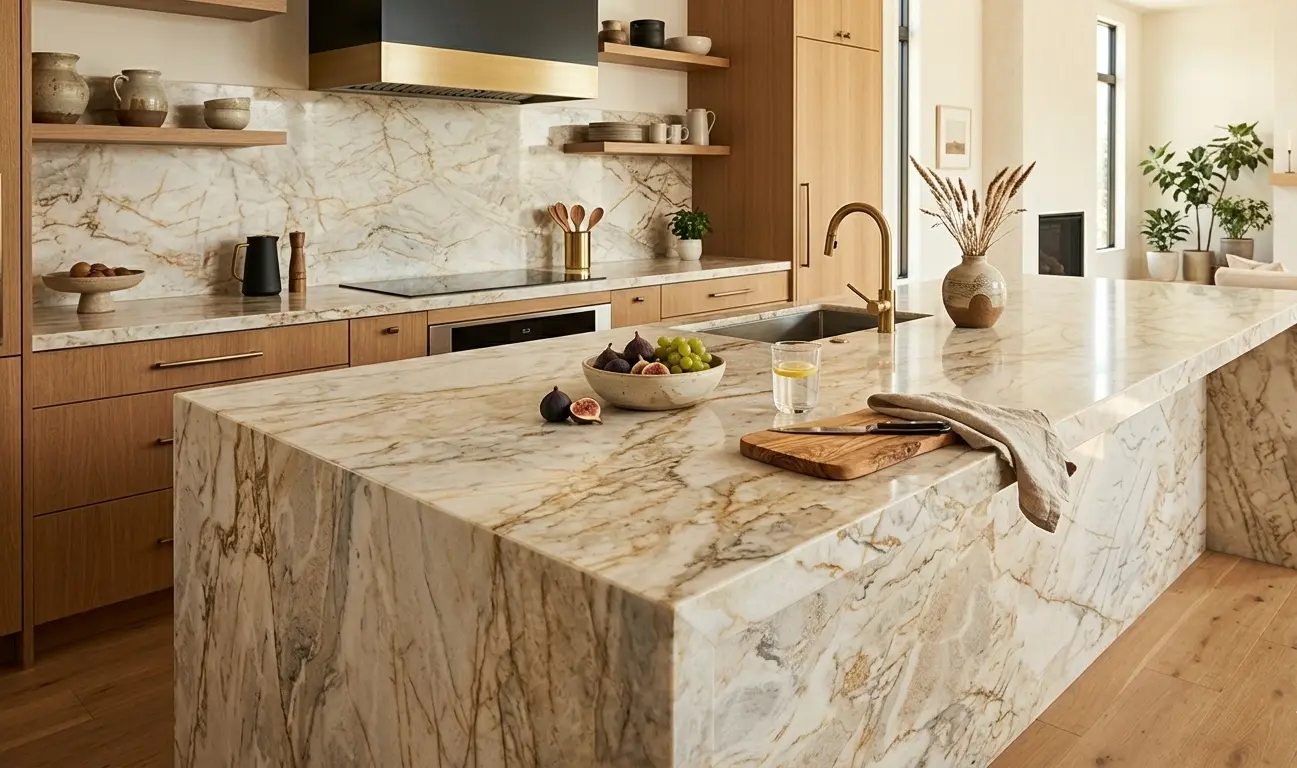
Mont Blanc quartzite is a natural stone countertop material quarried in Brazil, recognized for its soft white to light gray background with gray, taupe, and occasional gold veining. It ranks 7 to 7.5 on the Mohs hardness scale, making it harder than granite (6 to 6.5) and significantly more resistant to scratching and etching than marble (3 to 4). For homeowners in Reno, where hot dry summers meet cold winters and daily temperature swings are common, that combination of durability and marble-like appearance makes Mont Blanc a practical option for kitchens, bathrooms, and other high-use surfaces.
What Is Mont Blanc Quartzite
Mont Blanc forms when sandstone is transformed under intense heat and pressure over long geological periods, which is what gives natural quartzite its density and hardness. The stone takes its name from the Mont Blanc mountain range, a nod to the soft, snow-like white tones that dominate most slabs. It's worth noting that natural quartzite is a different material from engineered quartz, even though the names sound similar. Quartzite is a metamorphic rock formed underground over long periods of time, while quartz countertops are manufactured surfaces made from ground quartz crystals bound together with resin. The two can look similar at a glance, but they perform differently over time, particularly when it comes to sealing and long-term care.
No two slabs of Mont Blanc read the same way. Some show quiet, feathery movement, while others carry bolder, more dramatic veining, so it's worth walking the slab yard in person before settling on a piece. Because natural stone varies from block to block and even slab to slab within the same block, seeing the actual piece that will become a countertop, gives a much clearer sense of how the finished surface will look in a specific kitchen or bathroom.
Why It Suits Reno Homes
That same density matters in Reno, where daily temperature swings and strong summer sun put real demands on interior surfaces. Quartzite is also generally considered more resistant to sun fading than granite, which is a practical advantage in a region that gets a lot of clear, high-altitude daylight throughout the year.
The neutral palette also works with the mountain modern, transitional, and farmhouse styles that show up often in homes around Reno, Sparks, and the surrounding foothill communities, since the soft white and gray tones pair easily with wood cabinetry, black hardware, or warmer earth tone finishes. Many homes in the area lean into natural materials and a connection to the surrounding high desert and mountain landscape, and a quiet, organic stone like Mont Blanc tends to fit that aesthetic without feeling out of place in either an older ranch style home or a newer build.
How Mont Blanc Compares to Other Popular Countertop Materials
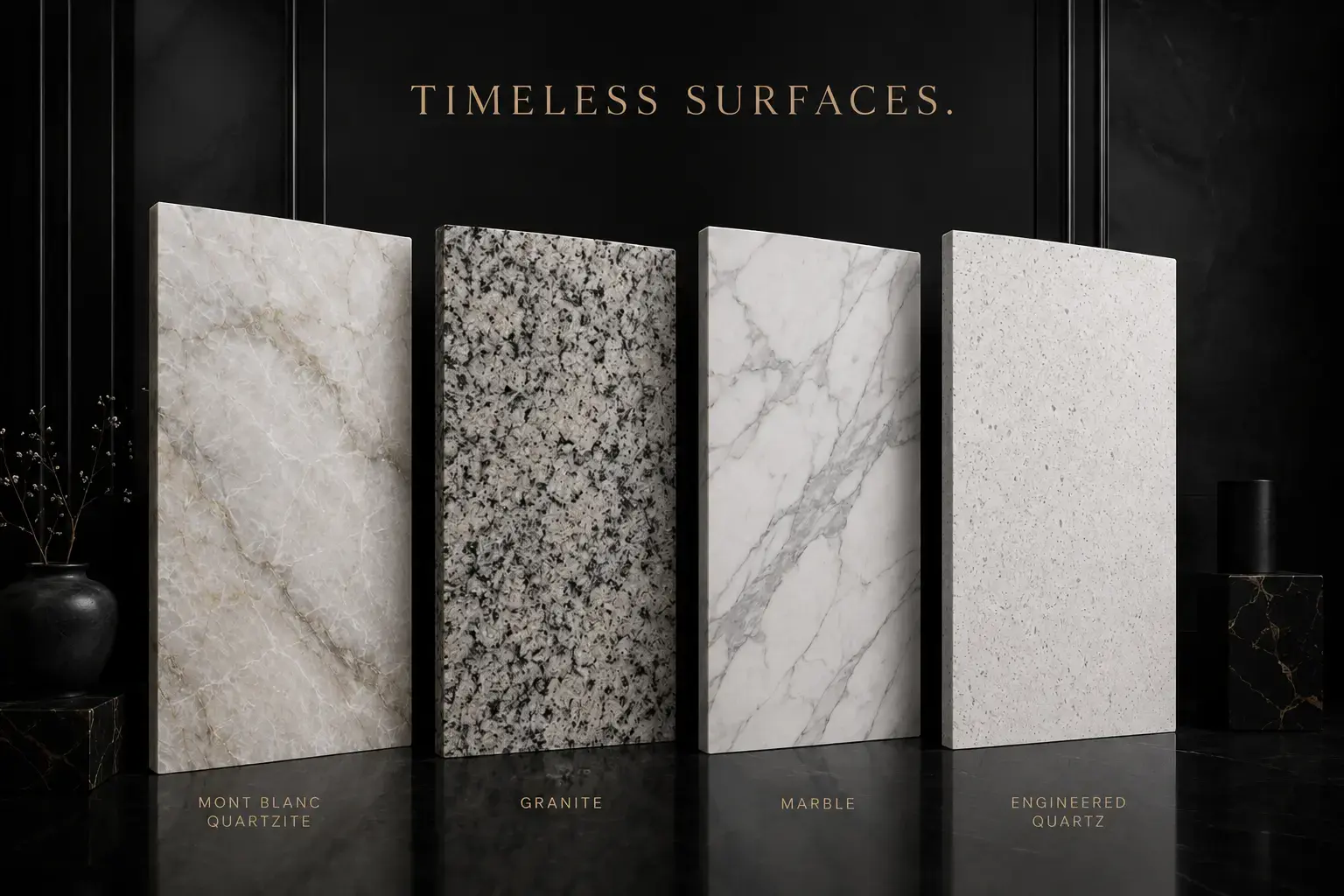
Homeowners weighing Mont Blanc against other options are usually comparing it to granite, marble, or engineered quartz. Each material has its own tradeoffs.
- Granite ranks 6 to 6.5 on the Mohs hardness scale. It's a durable, widely available option, but Mont Blanc's slightly higher hardness gives it a modest edge in scratch resistance, along with the softer, more marble-like veining that granite typically doesn't offer.
- Marble ranks 3 to 4 on the Mohs scale, considerably softer than quartzite. Marble is prized for its classic look, but it etches easily when it comes into contact with acidic foods like lemon juice or wine, something Mont Blanc resists far better thanks to its higher hardness and denser structure.
- Engineered quartz is manufactured rather than quarried, so it doesn't require sealing and offers highly consistent coloring from slab to slab. What it doesn't offer is the one-of-a-kind natural veining that draws many homeowners to quartzite in the first place.
None of these materials is universally better than the others. The right choice usually comes down to how much natural variation a homeowner wants, how much maintenance they're willing to take on, and which look fits the rest of the space.
Choosing the Right Slab
Because Mont Blanc is quarried stone, fabricators typically recommend viewing the actual slab or slabs that will be used for a project before finalizing an order. This matters most for larger islands or countertop runs that require book matching, which is the process of cutting two slabs from the same block and installing them side by side so the veining mirrors across the seam. Book matching creates a more seamless, continuous look, particularly on a large island or a waterfall edge where the stone wraps down the side of the cabinetry.
Edge profile is another decision worth making early, since it affects both the look and the cost of the final installation. A simple eased or beveled edge tends to keep the visual focus on the stone's natural veining, while a bullnose or ogee edge adds more traditional detailing. Homeowners working with the design team at Nova Tile and Stone can view a selection of edge samples in person before making a final decision. For more information about Nova Tile and Stone's complete offerings, homeowners can also request a slab quote to explore available options for their project.
Design Pairings to Consider
Mont Blanc's quiet backdrop makes it a flexible partner rather than the loudest element in the room. A few combinations that tend to work well:
- White or light oak cabinetry, for a bright kitchen that still feels grounded
- Matte black or aged brass fixtures, which stand out nicely against the pale veining
- Natural stone or wood-look flooring, to keep the palette cohesive from counter to floor
- A full-height slab backsplash, which extends the same veining up the wall for a more dramatic, continuous look behind a range or cooktop
Homeowners often use Mont Blanc as an island centerpiece with a simpler quartz or painted perimeter, letting the natural stone carry the visual weight of the space. Under cabinet lighting is another detail worth considering, since it helps show off the subtle depth and movement in the veining once the sun goes down.
Where You Might Use Mont Blanc Beyond the Kitchen
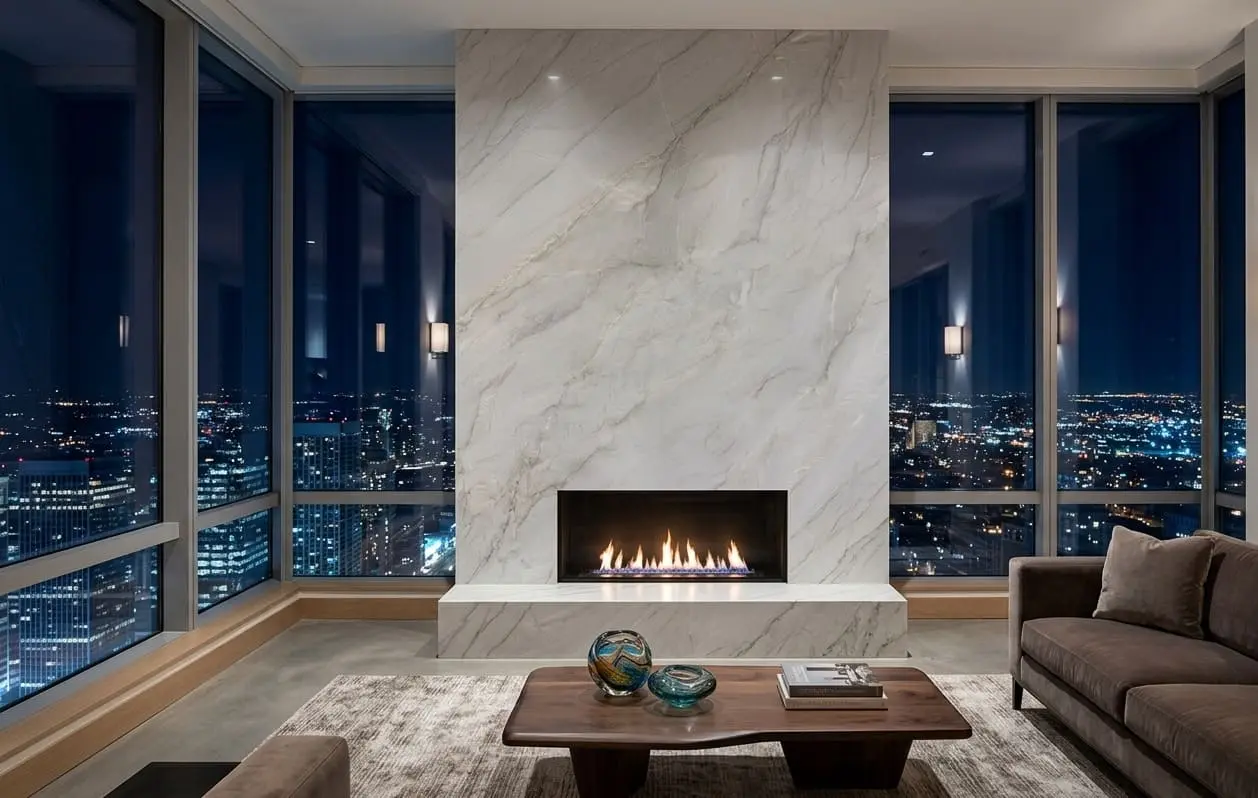
While kitchen countertops are the most common application, Mont Blanc's hardness and heat resistance also make it a practical option for other parts of the home. Bathroom vanities are a natural fit, since the stone holds up well to daily exposure to water, soap, and grooming products. It also shows up on wet bar tops, fireplace surrounds, and in some cases outdoor kitchen counters, where its durability against heat, sun, and moisture continues to hold up.
Caring for Mont Blanc Quartzite
Like most natural stone, Mont Blanc benefits from routine sealing to guard against staining, along with everyday cleaning with a mild, pH-neutral solution rather than harsh or acidic products. A soft cloth and warm water is usually enough for daily wiping, and spills, especially from wine, coffee, or acidic foods, should be cleaned up promptly rather than left to sit.
Resealing frequency depends on the specific slab and how it's used, but checking the surface once or twice a year is a reasonable habit for most households. A simple way to test whether a countertop needs resealing is to place a few drops of water on the surface and see how quickly they absorb; if the water beads up rather than soaking in, the existing seal is still doing its job. For homeowners who want a closer look at the day-to-day habits that keep natural stone counters looking their best over time, a bit of upfront reading can go a long way toward avoiding common care mistakes.
Where the Trend Is Heading
Natural quartzite has been steadily gaining ground against both granite and engineered quartz in recent kitchen design surveys, prized for the organic, one-of-a-kind character that manufactured materials can't fully replicate. Industry research on where kitchen materials and styles are trending points to more homeowners choosing natural, textured surfaces over uniform ones, with quartzite now trailing engineered quartz by only a few percentage points as a preferred countertop and backsplash material. Neutral tones also continue to dominate homeowner preferences overall, which lines up with why stones like Mont Blanc continue to hold their appeal even as broader design trends shift from year to year.
Conclusion
For homeowners weighing natural stone options, Mont Blanc quartzite offers a middle ground between the soft elegance of marble and the low-fuss durability of granite. It suits a range of design styles, works in both kitchens and bathrooms, and only asks for routine sealing in return for decades of use. As with any natural stone, viewing slabs in person and asking about sealing needs upfront will help set realistic expectations for long-term care.
Nova Tile and Stone's Reno showroom is located at 12835 Old Virginia Rd, Suite 24, Reno, NV 89521. Homeowners and contractors throughout Reno, Sparks, Incline Village, Spanish Springs, and the surrounding area are welcome to stop by to see Mont Blanc quartzite slabs in person, and the design team offers free consultations for anyone planning a project. Questions can also be directed to (775) 331-6682.
Frequently Asked Questions
No. Mont Blanc marble is a true marble, softer and more prone to etching and staining. Mont Blanc quartzite is a metamorphic rock that is significantly harder and more resistant to daily wear, even though the two share a similar color palette.
Yes. Like most natural stone, it benefits from periodic sealing to help resist staining, particularly around sinks and cooking areas where spills happen most often.
Yes. It's a common choice for bathroom vanities, backsplashes, and other surfaces where a durable, neutral stone is needed.
Its neutral white and gray tones tend to work with a wide range of cabinet colors, from white and light oak to darker wood tones, which is part of why it remains a popular choice across different design styles.
Mont Blanc quartzite generally ranks slightly higher than granite on the Mohs hardness scale, giving it added resistance to scratching and etching. Granite remains a durable option as well, so the choice often comes down to the softer, marble-like appearance homeowners are looking for rather than a meaningful difference in day-to-day durability.
Note: Some images on this page may be conceptual renderings created to illustrate design possibilities and may not depict actual installations.