Marble countertops are natural stone surfaces made mostly of calcium carbonate, valued for their veining and cool, polished look, but softer and more porous than granite or quartz, which means they need more regular sealing and more careful cleaning. In Reno, where kitchen and bathroom remodels range from mid-century homes near downtown to newer builds in South Reno and Damonte Ranch, marble remains a popular choice for homeowners who want that classic look. This guide covers why marble appeals to so many homeowners, how it compares to granite and quartz, how to care for it day to day, and where it tends to work best in a home.
Why Reno Homeowners Are Drawn to Marble
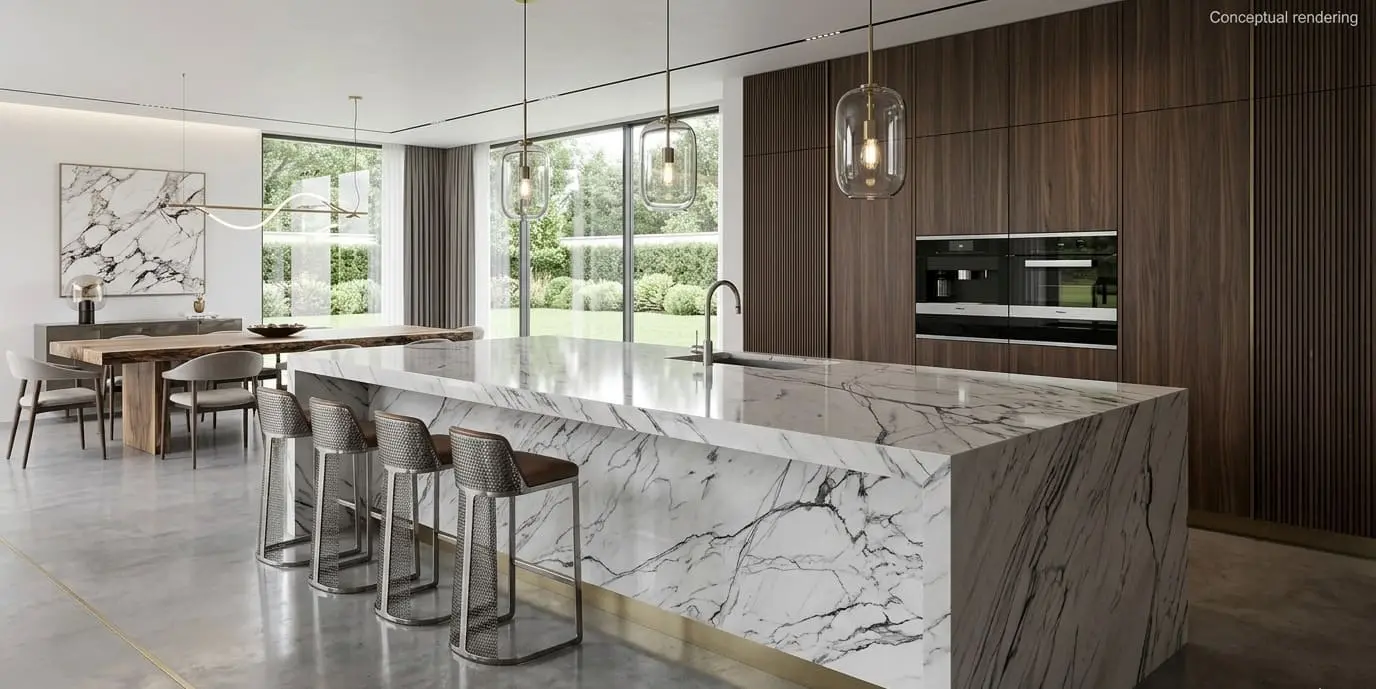
Marble's appeal starts with its veining. No two slabs look exactly alike, and the natural movement of color through the stone gives a kitchen or bathroom a character that manufactured materials generally try to imitate rather than match. It's a material people associate with a finished, higher-end feel, whether it's used across a full kitchen island, a bathroom vanity, or a fireplace surround.
It also tends to fit a wide range of home styles found around the Truckee Meadows. In older Reno neighborhoods, marble can complement a more traditional kitchen layout. In newer construction, it often pairs with simpler cabinetry and a more contemporary palette. Because it works in both settings, it's a material that comes up often during design consultations, regardless of whether the home is a remodel or a new build.
What Makes Marble Different From Granite or Quartz
Marble belongs to the same general family as limestone and travertine, since all three form primarily from calcium carbonate. Granite, by contrast, is an igneous rock made mostly of quartz and feldspar, and engineered quartz is manufactured from crushed quartz bound with resin. That difference in makeup is the main reason marble behaves differently at the countertop than either of those materials.
A few points of comparison make the differences clear:
Hardness. Marble typically ranks around 3 on the Mohs hardness scale. Granite generally falls between 6 and 7, and engineered quartz sits close to 7 as well, both considerably harder than marble. In practical terms, granite and quartz resist scratching and chipping from everyday kitchen use more effectively than marble does.
Porosity. Marble is generally more porous than granite, and granite in turn is more porous than engineered quartz, which is manufactured to be close to non-porous. That difference is why marble typically calls for sealing about twice a year, granite is usually resealed on a longer cycle of one to three years, and quartz generally doesn't need sealing at all.
Etching. Marble reacts to acidic substances like lemon juice, vinegar, and wine because of its calcium carbonate content, a reaction called etching. Granite and quartz are built from silicate minerals, quartz and feldspar, that generally don't react to the same mild acids, so both typically resist etching in a way marble does not. Etching dulls the polished surface where the acid made contact, it isn't the same as a stain, and it generally can't be wiped away or cleaned off. According to the Natural Stone Institute, sealing a marble countertop with a quality, oil- and water-resistant sealer can make the surface more resistant to staining, though sealing doesn't prevent etching from acidic contact.
None of this makes marble a worse choice than granite or quartz, it simply means the three materials ask for different care routines, and homeowners are usually happiest with marble when they know that going in.

Caring for Marble Countertops in a Reno Home
Marble doesn't require complicated maintenance, but a few habits go a long way toward keeping it looking good for years.
Seal it, and reseal it periodically. Most marble countertops benefit from an impregnating sealer, and kitchen surfaces in particular are generally resealed every six to twelve months depending on use. A simple water test, letting a few drops sit on the surface for a couple of minutes, can show whether it's time. If the water darkens the stone, resealing is likely due. If it beads up, the seal is still holding.
Clean with pH-neutral products. Everyday cleaning should stick to mild dish soap and water or a cleaner formulated specifically for natural stone. Vinegar, bleach, ammonia-based cleaners, and anything acidic should be avoided, since they can etch the surface over time.
Wipe up spills, especially acidic ones. Wine, coffee, citrus juice, and tomato-based sauces are the most common culprits behind both staining and etching. A quick wipe after cooking or entertaining prevents most issues before they start.
Use cutting boards and trivets. Because marble is softer and more heat-sensitive than granite or quartz, cutting directly on the surface or setting down hot cookware can leave marks that aren't easy to reverse.
Reno's dry climate doesn't have much direct effect on marble care one way or the other, since the material's main sensitivities are chemical rather than climate-driven. Regular dusting and periodic sealing matter more than anything related to humidity or temperature.
Where Marble Works Best (and Where to Think Twice)
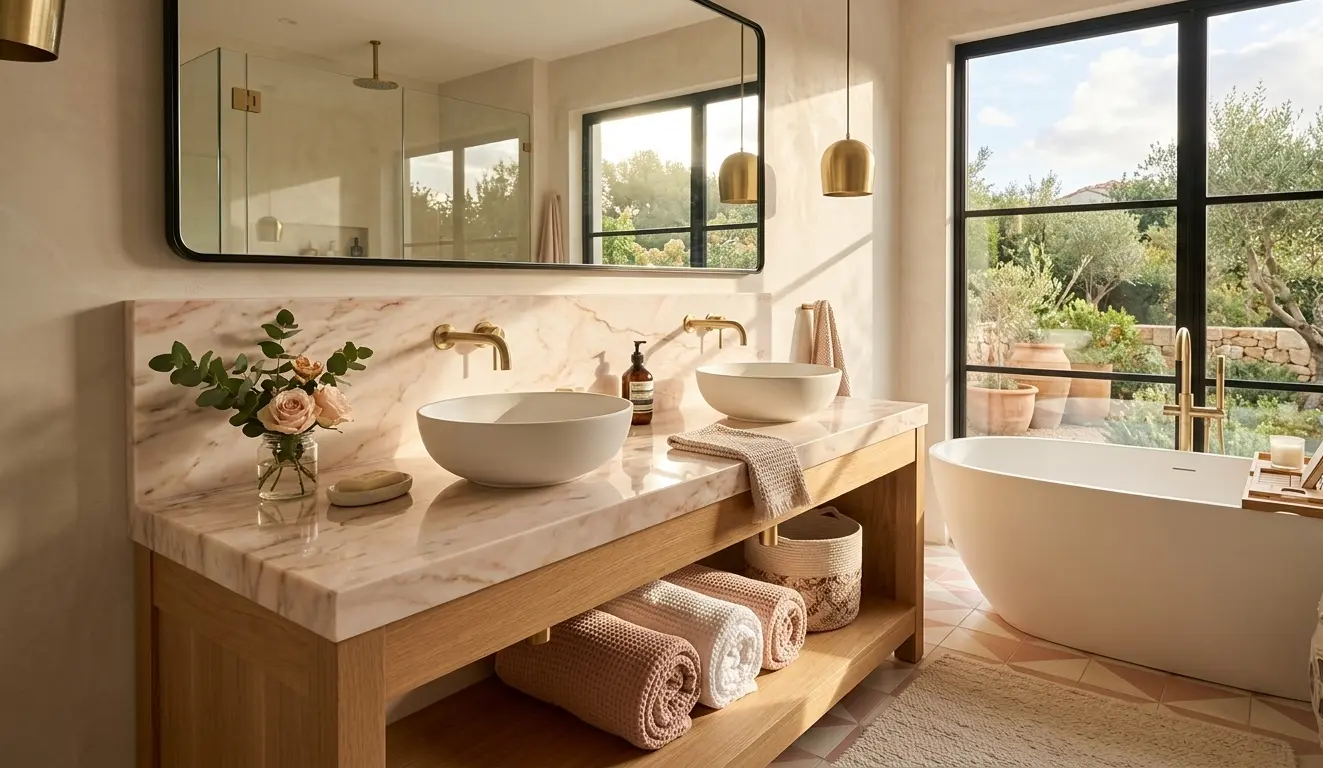
With that care routine in mind, the next question is simply where in the home it makes the most sense. Marble tends to perform well in spaces with lighter, more occasional use. Bathroom vanities, powder rooms, and fireplace surrounds are common applications where the risk of acidic spills is low and the material's look can take center stage. It's also a frequent choice for kitchen islands or backsplashes used more for display than heavy prep work.
In a high-use kitchen where cooking happens daily, marble can still work well, but it generally asks for more attentiveness than granite or quartz. Some homeowners choose a honed finish rather than a polished one for kitchen counters, since a honed surface shows etching less noticeably than a glossy polished one. Others reserve marble for an island or bar area and pair it with a more durable material at the main prep zone.
There isn't a universally right answer here. It comes down to how a household actually uses its kitchen, and how much upkeep a homeowner wants to take on for the look they want. If you're comparing marble slabs for a residential or commercial project, you can request a slab quote to explore available options and pricing before making a decision. Design professionals, builders, and contractors managing multiple projects can also apply for a trade account to access trade-focused services and support.
Conclusion
Marble remains one of the more distinctive countertop materials available, and for many Reno homeowners, the character it brings to a kitchen or bathroom is worth the extra care it requires. Understanding how it differs from granite and quartz, and having a realistic sense of the maintenance involved, makes it much easier to decide whether it's the right fit for a specific space.
Nova Tile and Stone's Reno showroom, located at 12835 Old Virginia Road, Reno, NV 89521, carries a range of natural stone options, including marble, and offers free design consultations for homeowners weighing their countertop choices. The showroom can be reached at (775) 331-6682. Anyone working through a kitchen or bathroom remodel in the Truckee Meadows area can visit the Reno showroom page for hours, directions, and more information.
Frequently Asked Questions
It can be, particularly for homeowners drawn to its look who don't mind staying on top of sealing and using stone-safe cleaners. If daily cooking and heavy prep work are the priority, granite or quartz will generally hold up with less upkeep, though plenty of homeowners decide the aesthetic is worth the tradeoff.
Most kitchen marble needs resealing about once or twice a year, while bathroom vanities and other lower-traffic surfaces can often go longer between applications. Watching whether water still beads on the surface, rather than working off a fixed calendar date, is generally the more reliable way to know when it's due.
A stain sits on top of or soaks into the stone and shows up as discoloration, which regular sealing helps guard against. Etching is a chemical reaction, not a stain, caused by acidic contact, and it dulls the polish rather than discoloring the surface. Sealing doesn't prevent it, and correcting it typically calls for repolishing rather than simple cleaning.
No. Vinegar, lemon, and other acidic cleaners can etch marble's surface. A pH-neutral, stone-safe cleaner is generally the better choice for everyday cleaning.
Pricing varies by slab, quarry origin, and finish, so it isn't accurate to say marble is always more or less expensive than granite or quartz. A design consultation is generally the best way to compare options and pricing for a specific project.
Note: Some images on this page may be conceptual renderings created to illustrate design possibilities and may not depict actual installations.