LVP, short for luxury vinyl plank, and laminate flooring both replicate the look of hardwood, but the core material is what sets them apart. LVP uses a synthetic, water-resistant core, while laminate uses a fiberboard core that performs best in drier, lower-humidity rooms. For Minden, NV homeowners weighing the two, the right pick generally comes down to where the flooring goes and how much moisture or temperature change that space sees. This guide compares LVP and laminate flooring on durability, moisture resistance, Carson Valley climate fit, and design options, so you can walk into a showroom already knowing which material suits your space.
What Sets LVP And Laminate Apart?
Luxury vinyl plank, often shortened to LVP, is built from layers of synthetic material topped with a printed design layer and a protective wear coating. Because the core is plastic-based, LVP tends to handle shifts in humidity with more flexibility than wood-based products, as the construction layers explain in detail.
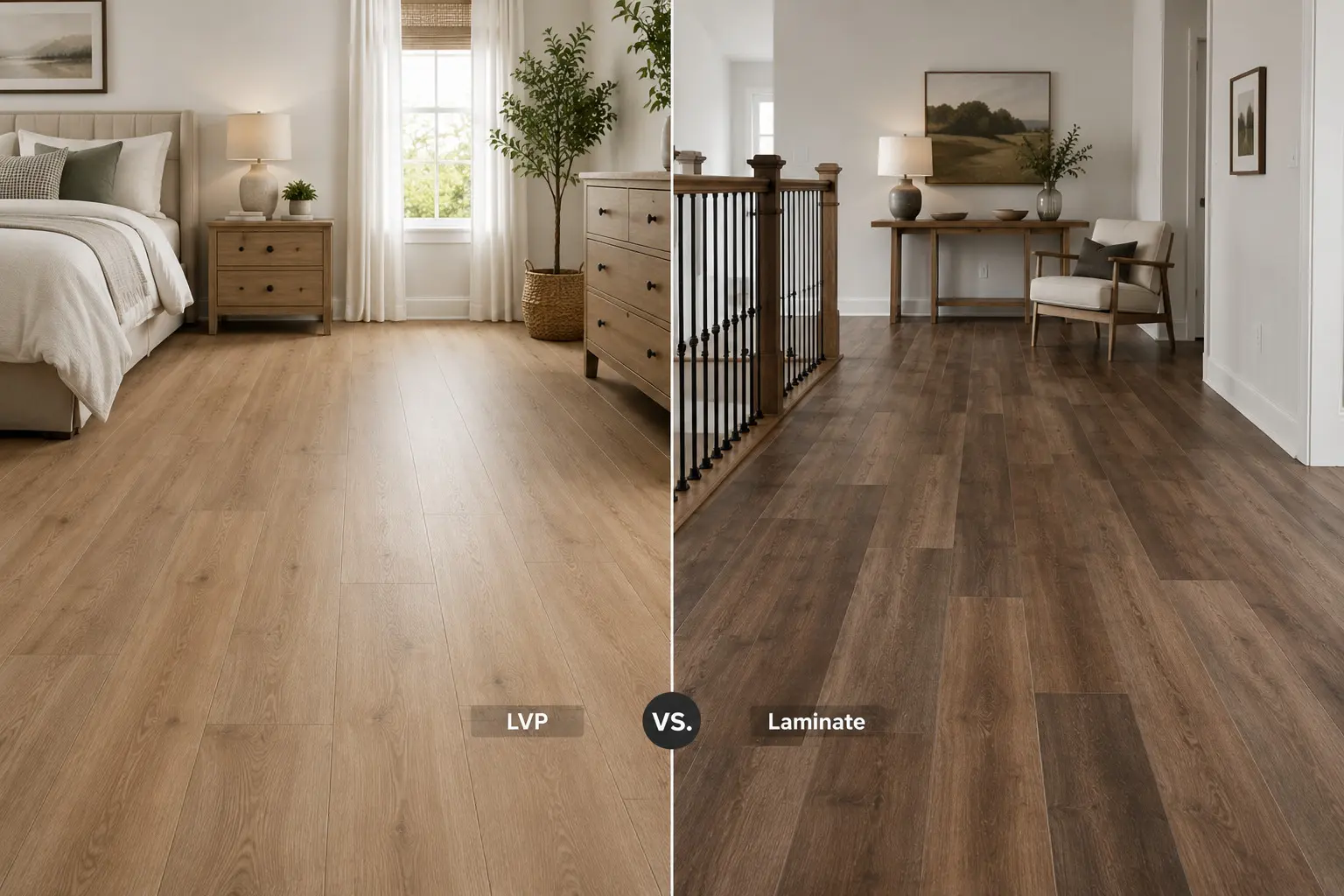
Laminate, on the other hand, uses a dense fiberboard core topped with a photographic image sealed under a clear protective layer, which gives it a firmer, more substantial feel underfoot, though moisture management deserves closer attention as a result. Both materials are manufactured to replicate the grain, knots, and tonal variation found in natural wood, and modern printing has narrowed the visual gap between both flooring types and real hardwood, with the biggest difference showing up in how each layer responds to the conditions of everyday household life.
 Conceptual rendering
How Do The Two Compare On Durability?
Both flooring types are engineered for active households, but how each one holds up depends on the specific product line, the finish selected, and how the room is used day to day, a point echoed in this independent flooring buying guide. LVP generally features a wear layer measured in mils, with thicker layers offering more resistance to scuffing in busy hallways and entryways, while laminate relies on an AC rating system instead, with higher-rated lines built to withstand heavier foot traffic.
Pets, furniture movement, and grit tracked in from outside all influence how either surface performs over time, and many lines in both categories hold up well against everyday scratching and scuffing. The way each surface transmits sound underfoot can also differ slightly between collections, which is worth asking about in homes with more than one story.
Which Holds Up Better Around Moisture?
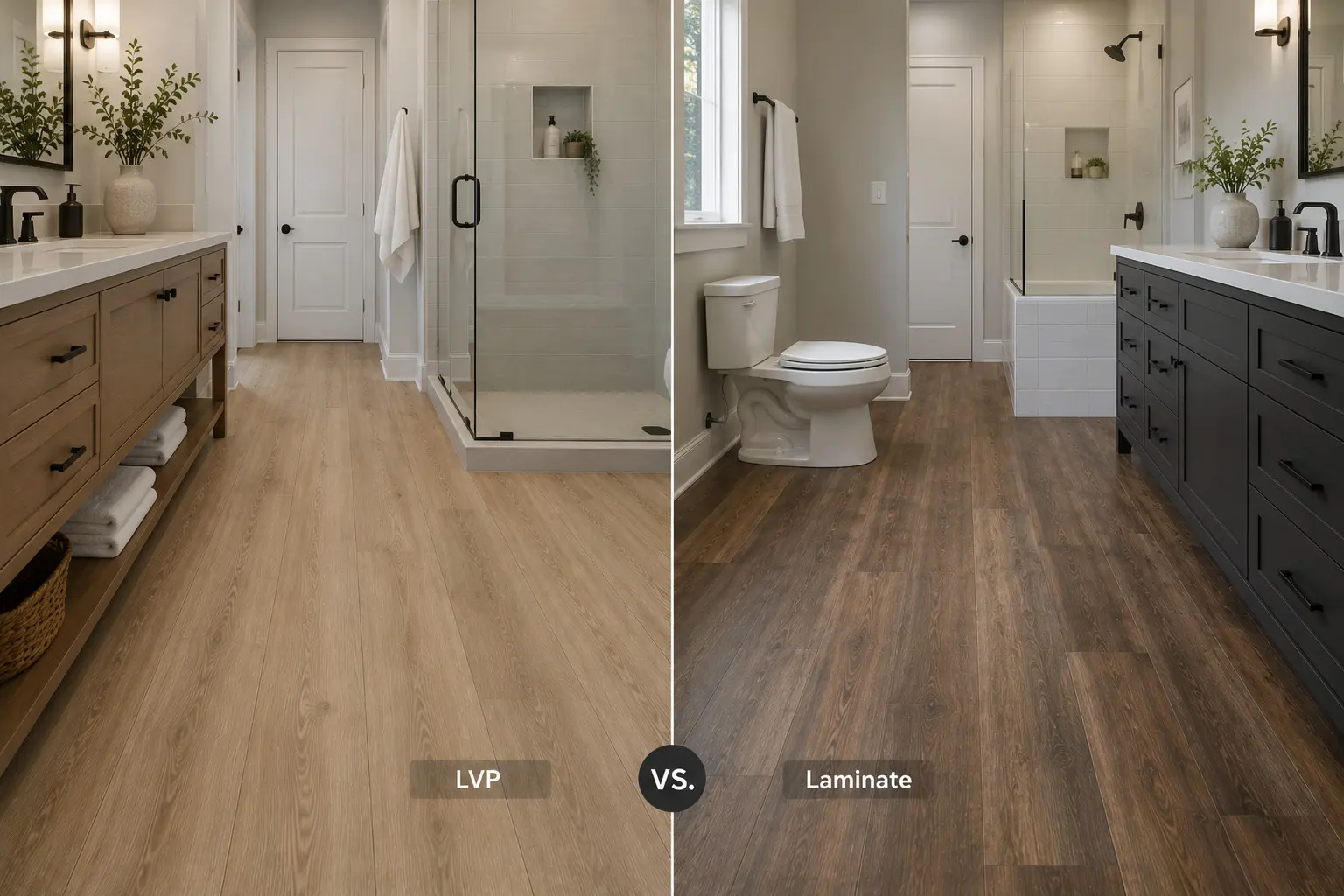
This is often the deciding factor for homeowners weighing the two options. LVP is generally formulated to resist surface-level water absorption, which makes it a frequent pick for kitchens, bathrooms, mudrooms, and lower-level living areas, though standing water left on any flooring surface for long periods can eventually affect seams or edges regardless of which material is installed.
Laminate's fiberboard core is more sensitive to sustained moisture, so it tends to suit bedrooms, living rooms, hallways, and other areas with lower humidity and limited spill risk. Some laminate collections are formulated with added water-resistant cores, so checking the specifications of a particular line matters more than relying on general assumptions about the category as a whole.
 Conceptual rendering
How Does Carson Valley's Climate Factor In?
Minden sits in a high-desert climate with low humidity for much of the year, along with noticeable temperature swings between summer afternoons and winter mornings, and that combination affects wood-based flooring differently than synthetic flooring. Laminate's fiberboard core can respond to seasonal shifts in indoor humidity with slight expansion or contraction, which is one reason checking a specific line's documented stability ratings matters for homes throughout Douglas County, while LVP's plastic-based core tends to be less reactive to these swings, which can make it a steadier option in rooms with large west-facing windows or homes that experience big day-to-night temperature changes.
Sun exposure is worth factoring in as well, since color retention in direct sunlight can vary by tone and finish, with darker planks generally showing more visible change over time than lighter ones. Homes near Lake Tahoe or at higher elevations around Genoa may also experience drier winter air from heating systems, which is worth bringing up when comparing specific product lines.
How Do The Design Options Compare?
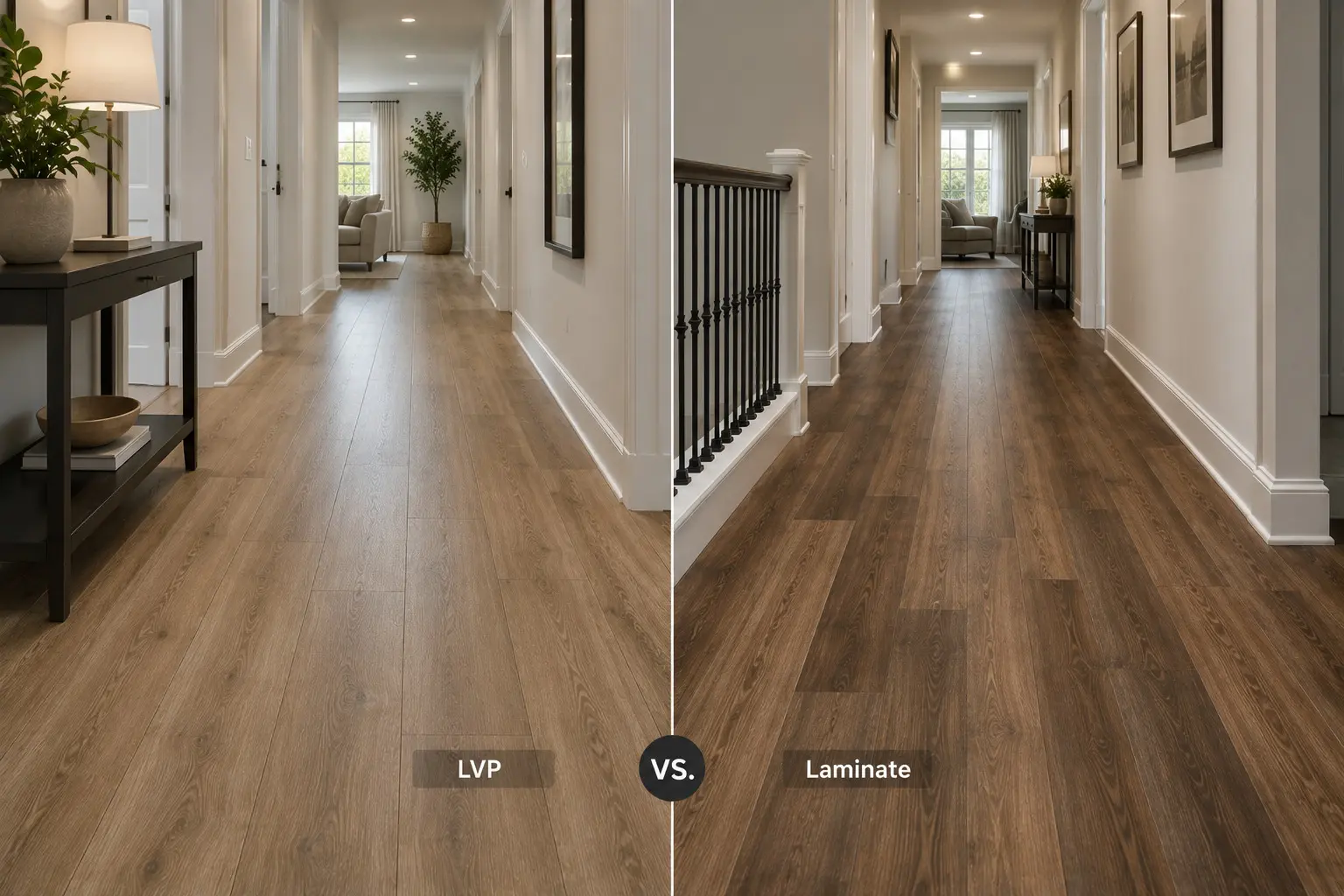
Both materials are available in an extensive range of finishes, from classic oak and walnut tones to whitewashed and gray-toned looks suited to contemporary interiors, and either can pair well with existing cabinetry or trim depending on the undertone chosen. Plank widths and lengths vary by product line, which affects the overall visual scale of a room, with wider, longer planks tending to read as more contemporary and narrower planks leaning toward a traditional look.
Texture is another point worth comparing, since LVP often includes embossed surface texture that mimics the feel of real wood grain underfoot, while laminate surfaces range from smooth to deeply textured depending on the collection, and this comparison of wear resistance across flooring categories can offer useful context when narrowing down a finish.
Lighting changes how either material reads in a room as well: cooler LED lighting can pull gray undertones forward in both LVP and laminate planks, while warmer or natural daylight tends to bring out the amber and honey tones in oak-style finishes, and pairing either material with area rugs, runners, or furniture in complementary tones is one more way to tie a space together once a finish has been chosen.
Which Rooms Suit Each Material Best?
Because LVP handles moisture with more confidence, it tends to work well in kitchens, bathrooms, laundry rooms, and basements where spills and humidity are common, while laminate remains a strong option for bedrooms, home offices, living rooms, and other areas where moisture exposure stays limited. Many Carson Valley homes end up using a combination of both, matching each material to the specific demands of a given room rather than applying one flooring type throughout the entire house.
Open-concept layouts add another layer to the decision, since sightlines often run from a kitchen straight through to a dining or living area: some homeowners carry one material across the whole open floor plan for visual continuity, while others use the spot where a kitchen meets a hallway or entry as a natural break between a wetter zone and a drier one.
Rental properties and multi-generational households often lean toward LVP throughout shared common areas simply because it tends to tolerate a wider range of daily wear from different household members and pets, though either flooring type can handle daily household use well overall, and the better long-term outcome usually comes down to matching the material to the room's layout and habits before a final decision gets made.
 Conceptual rendering
 Why Compare Both In Person At Our Minden Showroom?
Photos and online listings only go so far when judging color undertones, plank texture, and how a finish will actually look against the natural light in a Carson Valley home, which is why visiting our Minden showroom in person lets you compare LVP and laminate samples side by side under real lighting and get a feel for the texture underfoot before committing to either option.
Nova Tile and Stone carries a complete selection of LVP and laminate styles at the Minden location, and our design team offers a free consultation to walk through finish options, color coordination, and which material fits the rooms in your specific project, all without any sales pressure attached. Homeowners ready to see samples in person can schedule a showroom visit at a time that works for their schedule, and those watching their budget may also want to check our current overstock selection for discontinued or limited-quantity flooring lots. Contractors and builders working in the area can also look into our trade professional program for ongoing project needs, and homeowners throughout Gardnerville, Genoa, Carson City, and the wider Douglas County area are welcome to bring measurements or photos of the space to make the visit as useful as possible.
Conclusion
Choosing between LVP and laminate flooring comes down to where the material will live in your home, how much moisture exposure that space typically sees, and how the room responds to Carson Valley's drier, sun-heavy climate. LVP's synthetic core gives it an edge in kitchens, bathrooms, and other spill-prone areas, while laminate's firmer fiberboard core remains a popular option for bedrooms and living spaces with lower moisture demands. Both materials offer a convincing wood-look finish, a wide range of styles, and the kind of everyday durability that fits an active household. Seeing both side by side, under the same lighting your home actually has, remains the clearest way to make a confident final decision. You can also browse our full flooring selection to see how either material might coordinate with the rest of your home.
Curious About Something Else?
Frequently Asked Questions
LVP uses a synthetic, plastic-based core, while laminate uses a dense fiberboard core. That difference in core material is the main reason the two behave differently around moisture and humidity.
Durability for both depends more on the specific product line than on the category as a whole. LVP is typically rated by wear layer thickness in mils, while laminate uses an AC rating scale, and higher numbers in either system generally point to stronger resistance to everyday wear.
LVP is generally the stronger choice for kitchens, bathrooms, and other moisture-prone rooms because of its synthetic core. Laminate performs best in drier spaces like bedrooms and living rooms unless a specific line is built with added water resistance.
Minden's high-desert climate and day-to-night temperature swings can cause laminate's fiberboard core to expand or contract more than LVP's synthetic core, which is worth factoring in for homes throughout Carson Valley and Douglas County.
LVP tends to suit kitchens, bathrooms, laundry rooms, and basements, while laminate works well in bedrooms, home offices, and living rooms. Many homes end up mixing both based on each room's moisture exposure.