LVP (luxury vinyl plank) has a waterproof vinyl core, while laminate flooring has a wood fiber (HDF) core that is water resistant but not waterproof. This difference in core material is why LVP holds up better against snowmelt, wet boots, and moisture at entryways, while laminate performs better in dry, sun-exposed rooms thanks to its harder, more scratch-resistant wear layer. In a snow-heavy mountain climate like South Lake Tahoe, where winter runs from November through April and homes see roughly 142 inches of snow a year, that core difference has a real impact on which rooms each material is suited for.
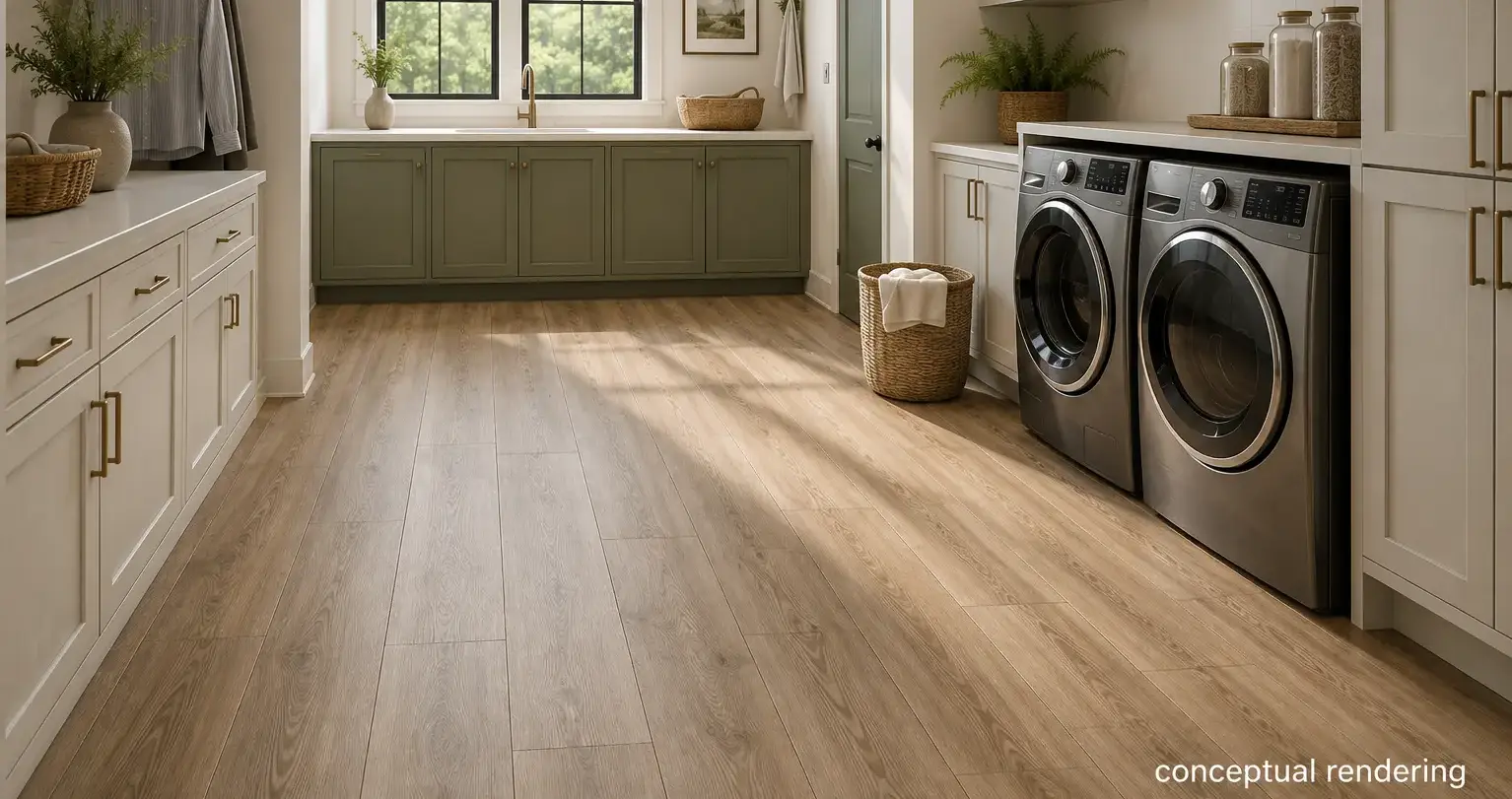
What Is LVP Flooring?
LVP is built from multiple layers of vinyl, including a rigid or flexible core, a printed layer that replicates wood grain, and a protective wear layer on top. The core itself typically comes in one of two forms: WPC (wood plastic composite), which tends to be thicker and more cushioned underfoot, or SPC (stone plastic composite), which is denser and more rigid. Both are waterproof, which means standing moisture does not cause the plank itself to swell or break down, unlike materials built around a wood based core.
The wear layer on top of the plank is what determines how well the floor resists scratches and everyday wear, and thicker wear layers generally hold up better in high traffic areas. LVP also uses a click-lock installation system, so it can be installed as a floating floor over most existing subfloors without needing adhesive. Many LVP products include an attached underlayment layer as well, which helps with sound dampening and adds a bit of cushioning compared to a bare subfloor.
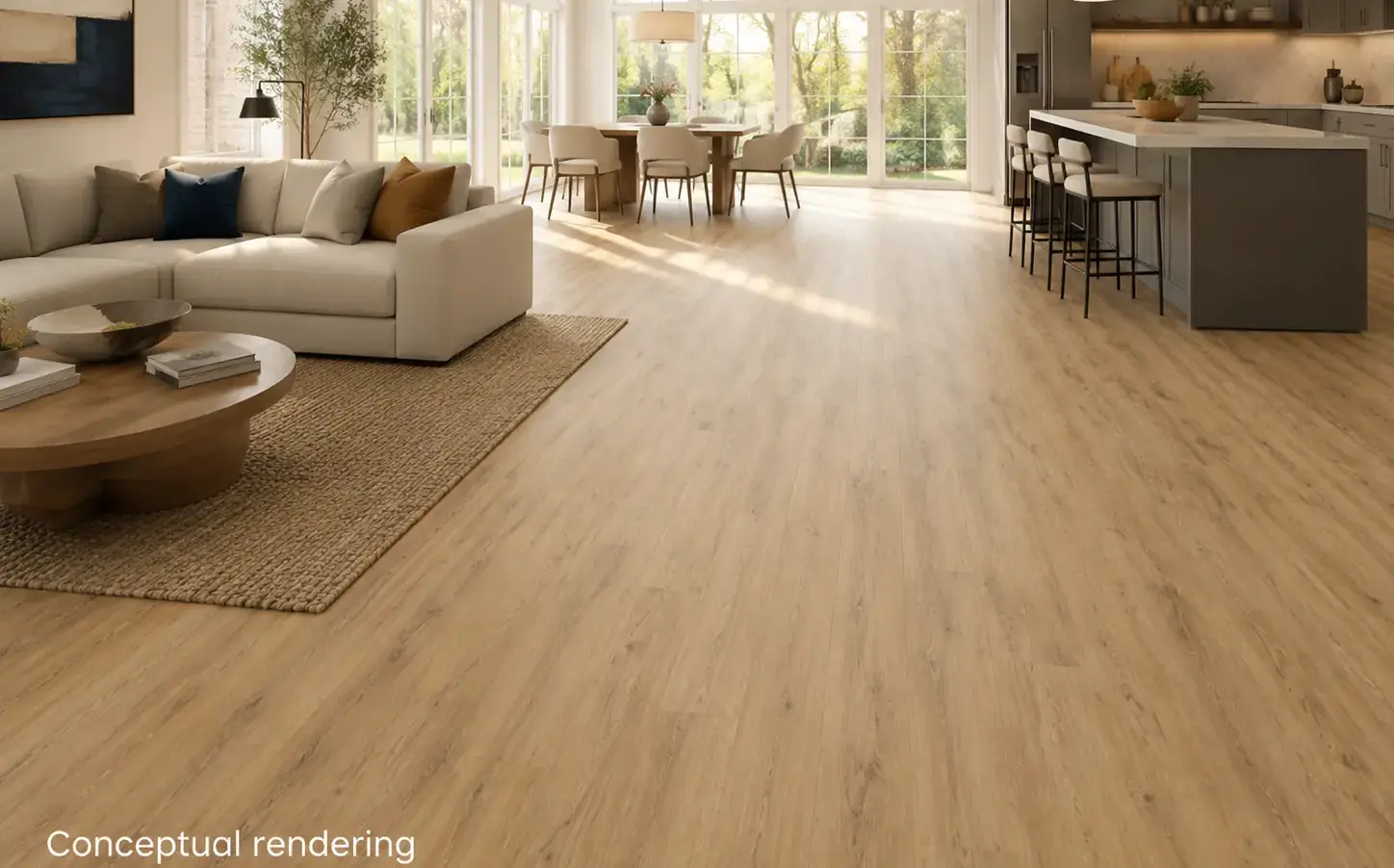
What Is Laminate Flooring?
Laminate is made from high-density fiberboard (HDF), a compressed wood product, topped with a photographic layer that replicates the look of wood grain or stone, and finished with a clear wear coat on top. A backing layer underneath provides structural balance and helps the plank resist minor moisture from below. Because the core is wood based, laminate is only water resistant, not waterproof, and its performance depends heavily on how well the seams are sealed during installation.
Prolonged exposure to standing water, whether from a spill or melting snow tracked in at the door, can cause the boards to swell, warp, or separate at the seams. Once that kind of damage happens, the affected planks typically need to be replaced rather than repaired, since the wood fiber core does not return to its original shape after swelling. Laminate does share the same click-lock installation approach as LVP, which makes it a comparable option in terms of installation time and labor cost.
Why the Difference Matters in South Lake Tahoe
South Lake Tahoe sits at an elevation of 6,237 feet, on the California side of the state line along the southern edge of the lake. Winters here are long and cold, while summers stay mild and dry, a swing that shapes how flooring performs from one season to the next.
Frequent snowmelt at entries plus strong sun exposure in south-facing and west-facing rooms is exactly where the differences between LVP and laminate show up in daily use. A home that gets both conditions often benefits from using each material where it performs best rather than choosing one floor for the whole house.
Moisture and Snowmelt Performance
Entries, mudrooms, and ski or boot rooms are the areas most affected by South Lake Tahoe's climate. December and January highs sit in the low to mid 40s, with lows dropping into the high teens and 20s, so melting snow, slush, and any rock salt or ice melt tracked in on boots create repeated moisture exposure that laminate is not built to handle long term. LVP's waterproof core means it can be wiped down or wet mopped without the swelling risk that comes with laminate.
For vacation rental properties, which account for a substantial share of housing in South Lake Tahoe, this matters even more. Rentals see frequent guest turnover, less consistent cleanup of wet boots and gear, and higher day-to-day traffic than a typical single-family home, all of which favor LVP in entry and living areas.
Durability, Sun Exposure, and Comfort Underfoot
Laminate generally has a harder wear layer than LVP, which gives it a slight edge against scratches in high-traffic areas away from moisture. Laminate also tends to resist UV fading somewhat better than standard LVP, which is worth considering given that South Lake Tahoe sees well over 200 sunny days a year. LVP, in turn, feels softer and warmer underfoot, which is a comfort advantage during a winter season this long.
Neither material is the automatic right answer for every room. A sunroom or great room with large west-facing windows and little moisture exposure can be a reasonable fit for laminate, while an entry, mudroom, kitchen, or basement is better suited to LVP.
Cost Considerations
LVP and laminate are priced similarly at the mid-range of the market, though exact cost depends on the specific product line, thickness, and wear layer quality, details that are easiest to sort out during a free design consultation. Installation costs are comparable as well, since both typically use a floating click-lock system. The bigger cost consideration for a South Lake Tahoe home is long term: laminate that fails from moisture exposure at an entry will likely need replacement sooner than a comparable LVP product in the same location.
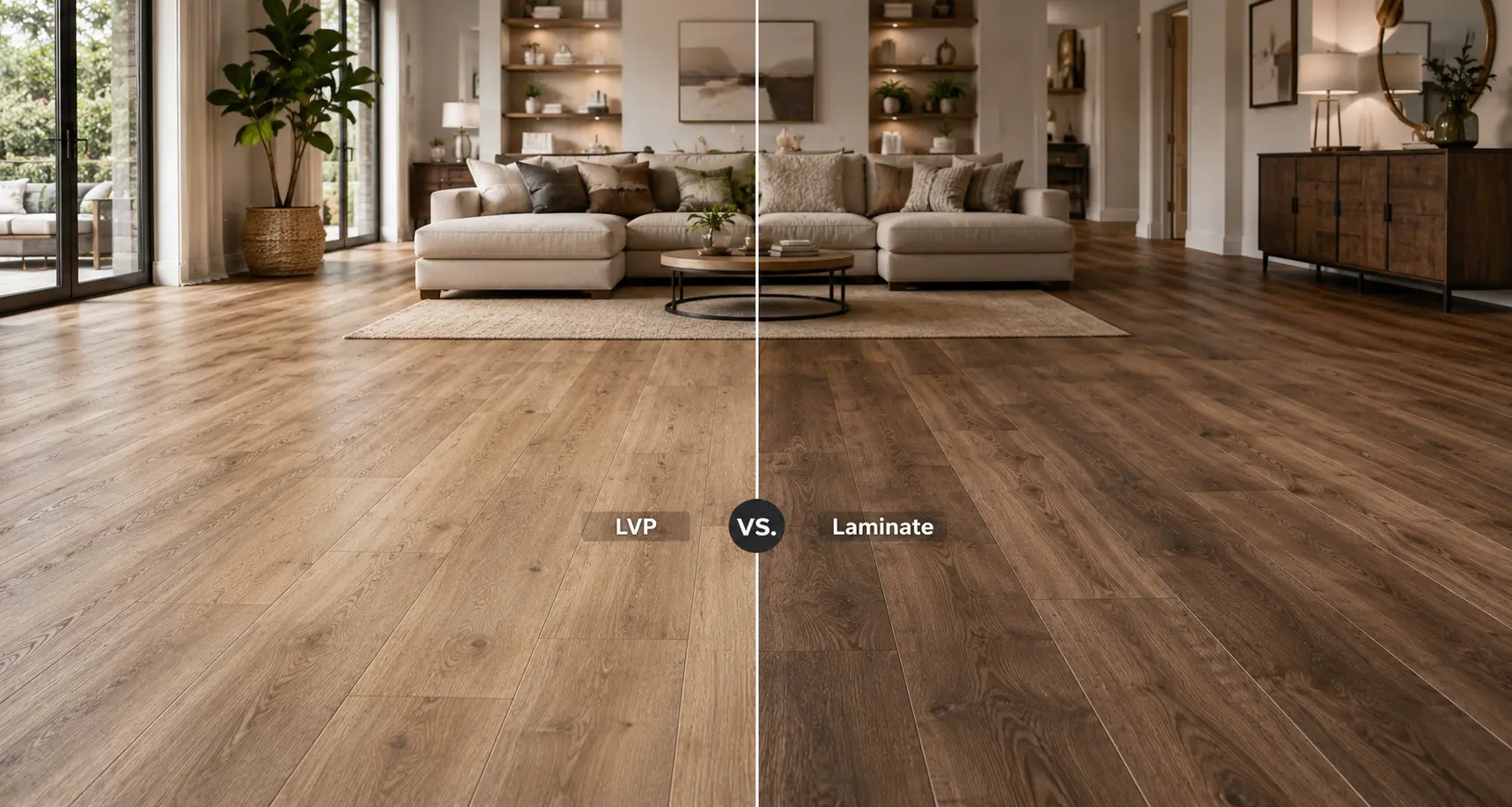
Which Is Right for Your South Lake Tahoe Home
Once cost is factored in, the more useful question is usually which rooms in your specific home need which material.
- Entries, mudrooms, and ski rooms: LVP, due to snowmelt and boot traffic
- Kitchens and bathrooms: LVP, due to routine moisture exposure
- Vacation rental living areas: LVP, for its higher tolerance of guest traffic and turnover
- Sun-facing rooms with minimal moisture exposure: Laminate is a reasonable option if scratch resistance and UV stability are the priority
Seeing both materials in person often makes the room-by-room decision easier, and directions to the showroom are available on the website.
Conclusion
LVP and laminate can both work well in a South Lake Tahoe home, but the right choice usually comes down to where the flooring goes rather than picking one material for the entire house. Areas exposed to snowmelt, wet boots, and heavy traffic call for LVP's waterproof core, while quieter, sun-facing rooms with little moisture exposure can make good use of laminate's harder wear layer. Matching each material to the conditions it actually has to handle, rather than defaulting to one flooring type throughout, is what makes a floor hold up through a long Tahoe winter and into the next one. For homeowners weighing these options for a South Lake Tahoe property, Nova Tile and Stone's Reno showroom at 12835 Old Virginia Rd, Suite 24, Reno, NV 89521 serves the South Lake Tahoe area and can be reached at (775) 331-6682.
Frequently Asked Questions
LVP (luxury vinyl plank) is made from multiple layers of vinyl with a waterproof core, while laminate is made from compressed wood fiber (HDF) topped with a photographic image layer. Because of this, LVP holds up well against melting snow and moisture at entryways, while laminate is only water resistant and better suited to drier, sun-exposed rooms with its harder, more scratch-resistant wear layer.
LVP performs better in entries and mudrooms where snow and slush are tracked in regularly. Its waterproof core does not swell or warp from standing moisture the way laminate's wood-fiber core can.
Standard laminate is water resistant, not waterproof, so repeated exposure to melting snow at an entry can eventually cause swelling or warping at the seams. Waterproof laminate products exist, but even those still rely on properly sealed seams to keep moisture out.
LVP generally feels softer and warmer underfoot than laminate, which tends to feel harder and cooler due to its dense HDF core. This is a relevant comfort factor during a winter season that runs from November through April in South Lake Tahoe.
LVP is generally the better fit for vacation rental properties, since damaged laminate typically needs full plank replacement while LVP can often be spot-repaired in a single area without redoing the whole floor. That difference matters for rental owners who need to turn a property around quickly between guest stays.
Note: Some images on this page may be conceptual renderings created to illustrate design possibilities and may not depict actual installations.