Luxury Bathroom Inspiration for Fernley Homes
Luxury Bathroom Inspiration often starts with the right surface pairing, and marble and onyx remain two of the most requested materials for elevated bathroom design. Each brings a distinct veining pattern and a light-reflective quality that turns a functional room into a visual centerpiece. Homeowners near the Fernley showroom frequently pair polished marble flooring with a backlit onyx accent wall for a layered, high-end look without overcomplicating the palette.
This guide walks through practical ways to use marble and onyx across a bathroom floor, wall, and vanity, along with a tile surface option for a lower-profile accent. Whether the goal is a full remodel or a single statement wall, matching finish and application to the room helps the design hold up over years of daily use.
Northern Nevada bathrooms often deal with dry winter air and hard water, both of which can affect how a natural stone surface ages over time. Choosing the right finish for each surface, rather than defaulting to a single polished look throughout, tends to produce a room that photographs well and functions comfortably for years.
Distinctive Veining
Marble and onyx display unique natural patterns, though color and veining vary by slab and cannot be guaranteed to match a photo exactly.
Light Interaction
Onyx is translucent enough to be backlit for a glowing accent wall, though wiring and venting details should be confirmed with a qualified professional.
Long-term Value
Natural stone surfaces are durable, but proper sealing and routine care are what preserve their appearance over time.
Design Versatility
Marble suits floors, walls, and vanity tops, while onyx is best reserved for wall applications given its structural profile.
Benefits of Marble and Onyx Bathroom Surfaces
Marble and onyx each support a genuine luxury bathroom inspiration board, provided the finish and application are matched correctly to the space. Reviewing these benefits alongside the material comparison table below can help narrow a shortlist before visiting a showroom.
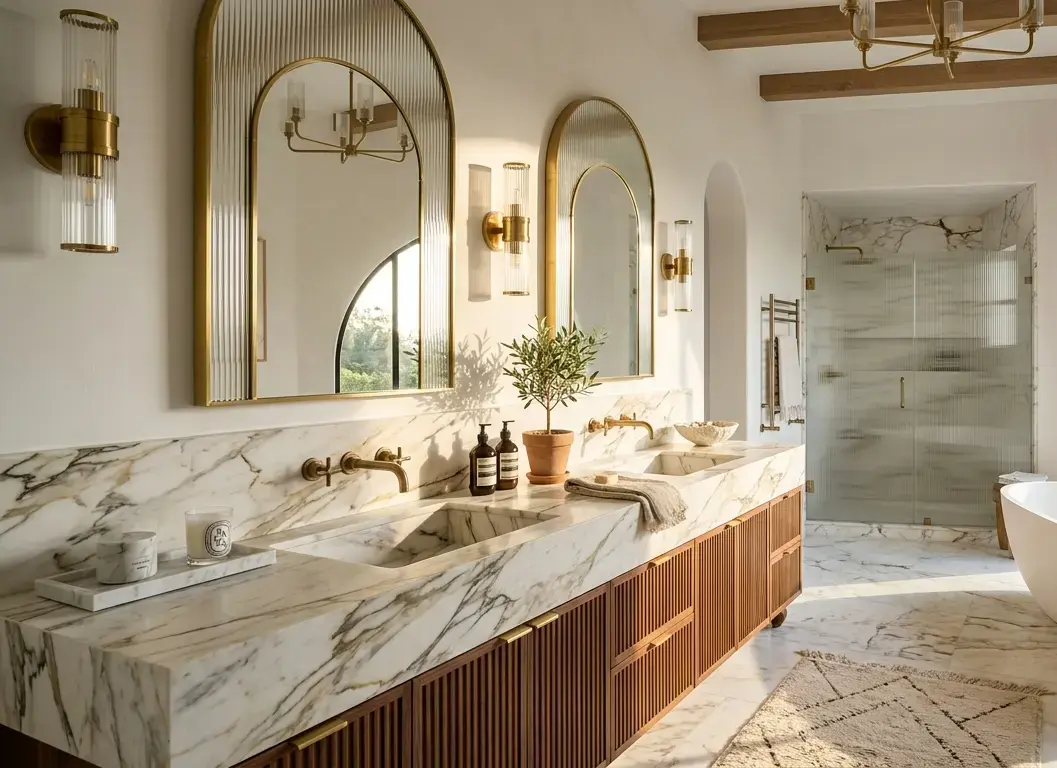
Bathroom Floor, Wall and Vanity Design Ideas
Marble, onyx, and a porcelain tile surface each play a different role in a bathroom design. The full range of slab material options is worth reviewing before narrowing down a combination for a specific layout.
Marble Bathroom Floor Inspiration
A honed or leathered marble finish is generally preferred over a high polish for a bathroom floor, since polished stone becomes slipperier when wet. A textured finish adds traction underfoot while still delivering the soft, veined look associated with luxury bathroom inspiration. Homeowners working with the Reno showroom often pair a honed marble floor with a monochrome tile surface on the walls to keep the palette cohesive without competing patterns.
Because marble is a porous natural stone, spills should be wiped up promptly and abrasive cleaners avoided entirely. A quality sealant helps resist staining, though resealing on a regular schedule is still recommended for any surface exposed to daily moisture.
A cooler-toned marble tends to suit north-facing bathrooms with limited natural light, while a warmer-veined slab can balance a room that gets strong afternoon sun. Pairing the floor with a matching tile surface baseboard is a simple way to tie the room together without adding another dominant pattern.
Onyx Accent Walls and Backlit Features
Onyx belongs on bathroom walls rather than floors or countertops, since its recommended use is limited to vertical, indoor applications. A backlit onyx panel behind a soaking tub or along a shower wall creates a soft glow that few other materials can replicate. Visitors to the Minden showroom can see full onyx panels in person before choosing a slab for a feature wall.
Because onyx is a specialty-finish material, it pairs best with simpler surrounding surfaces rather than competing patterns. A neutral tile surface on the floor or an adjacent wall lets the onyx panel remain the visual anchor of the room.
Onyx slabs vary widely in translucency, so viewing a sample under both natural and backlit conditions is worthwhile before committing to a full wall. A smaller onyx niche or shower shelf is a lower-commitment way to introduce the material if a full accent wall feels like too much.
Vanity Tops and Tile Surface Pairings
A marble vanity top pairs naturally with the same stone used on the floor, though a honed finish resists water spotting better than a full polish around sinks. Heavy scrubbing and abrasive cleaners are best avoided at the vanity, and coasters for toiletry bottles help prevent ring marks over time.
For a more budget-flexible approach, a porcelain tile surface can stand in for a stone backsplash while still echoing the room's marble or onyx tones. The Sacramento showroom displays several tile surface options alongside marble and onyx slabs for a side-by-side comparison. Classic neutral pairings are outlined in this color scheme guide, a helpful reference for narrowing a bathroom palette before ordering samples.
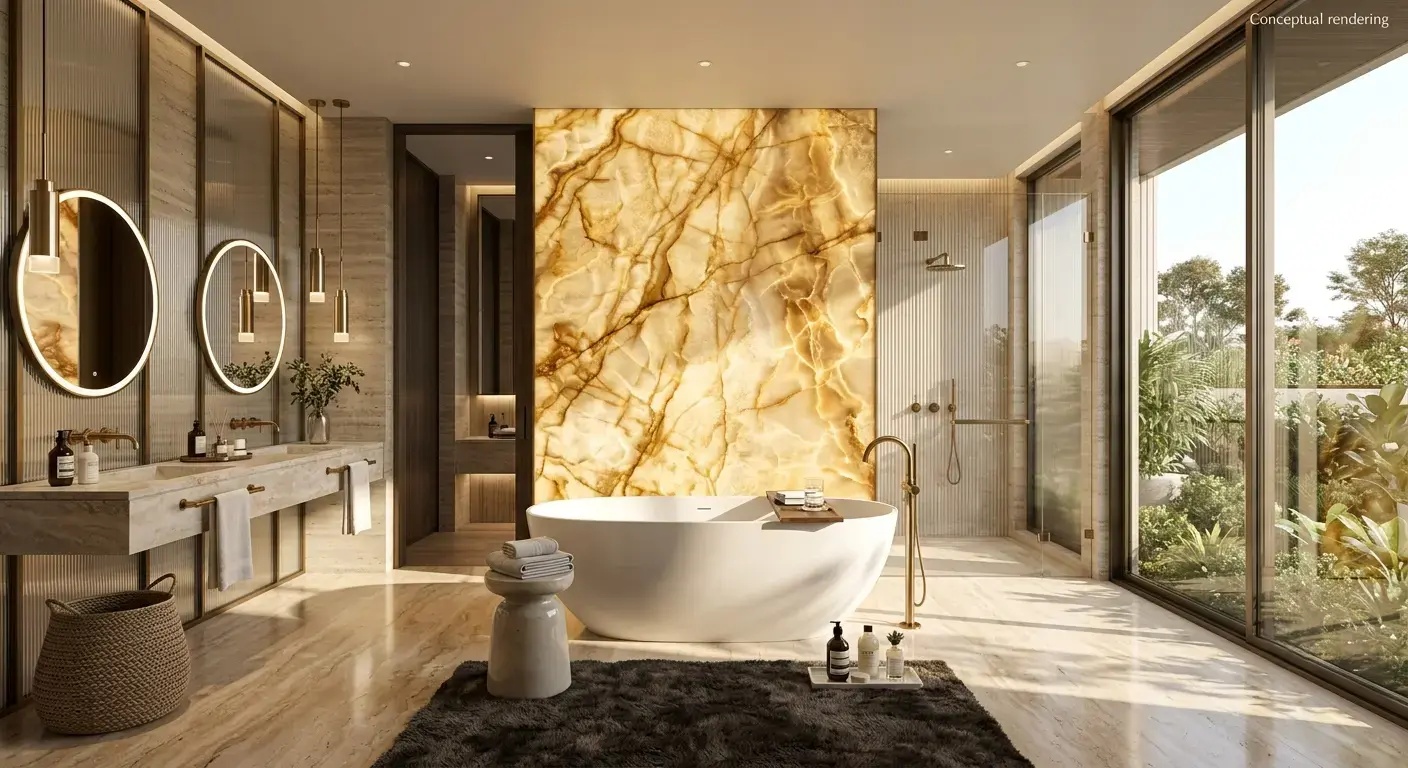
Marble vs. Onyx vs. Tile Surface at a Glance
Feature | Marble | Onyx | Porcelain Tile Surface |
Recommended Areas | Floor, wall, vanity top | Wall only | Floor, wall, vanity backsplash |
Available Finishes | Polished, honed, leathered, specialty | Specialty only | Polished, honed, specialty |
Light Behavior | Reflective, not translucent | Can be backlit for a glow | Reflective, not translucent |
Maintenance Note | Reseal periodically, avoid abrasive cleaners | Reseal periodically, avoid abrasive cleaners | Wipe clean, avoid abrasive cleaners |
Pairs Well With | Onyx accents or a tile surface floor | Marble or a tile surface floor | Marble or onyx feature walls |
Pros and Cons of Marble and Onyx Bathroom Surfaces
Pros
- Natural veining creates a one-of-a-kind look for any luxury bathroom inspiration project.
- Onyx can be backlit for dramatic ambient lighting along a single feature wall.
- Marble adapts to a bathroom floor, wall, and vanity top in one cohesive palette.
Cons
- Both materials require periodic sealing and are not maintenance-free surfaces.
- Onyx is limited to wall applications and is not suited to flooring or countertops.
- Polished finishes can be slipperier when wet, so finish selection matters most for floors.
5 Steps to Plan a Bathroom Surface Palette
- Choose a floor finish first. Decide between honed or leathered marble and a tile surface based on comfort underfoot and how much light the room gets.
- Select one accent material. Reserve onyx for a single wall or shower surround rather than spreading it across multiple surfaces.
- Coordinate the vanity top. Match the vanity to the floor material, or use a tile surface for a lower-profile look.
- Confirm finish compatibility. Check that polished, honed, or specialty finishes work together visually before finalizing a slab choice.
- Review real samples. Compare tile samples or in-showroom slabs side by side, since screen colors rarely match natural stone exactly.
Bring Your Luxury Bathroom Inspiration to Nova
Choosing between marble, onyx, and a tile surface accent is easier with guidance close by. A design consultant can help match veining, finish, and application to a specific bathroom layout before any slab leaves the showroom floor, which reduces the chance of a mismatched pairing once the room comes together.
Nova serves Fernley, Fallon, Silver Springs, Wadsworth, and Stagecoach homeowners directly, along with showroom visitors from across the wider Northern Nevada and Northern California region. The shop local page lists current showroom hours and locations for anyone planning an in-person visit.
For homeowners who prefer to start at home, free shipping on all tile samples makes it simple to compare color and texture before committing to a marble or onyx feature. Nova's background spans decades of sourcing experience across granite, quartzite, marble, and specialty stone. For fresh design ideas beyond the showroom, this design events roundup highlights current trends worth watching. This paint trend overview is also a useful reference for pairing wall color with natural stone.
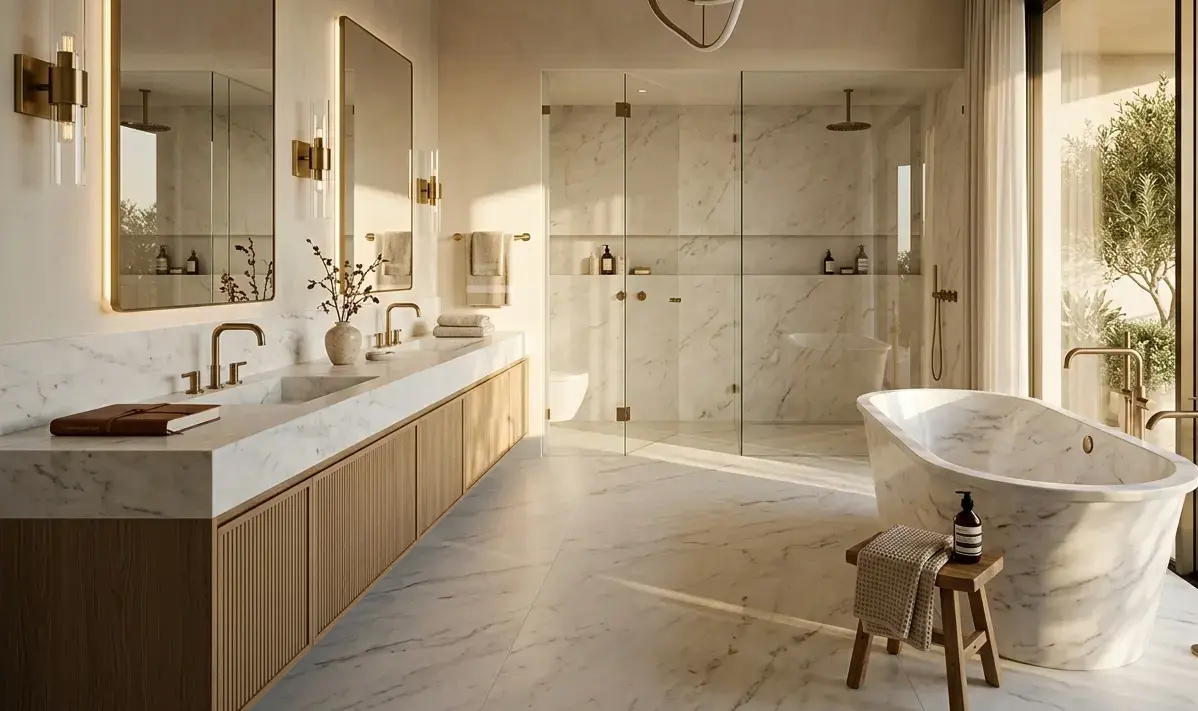 Conceptual rendering
Conclusion
Marble, onyx, and tile surface accents each bring unique character to bathroom floors, walls, and vanity designs, offering a balance of elegance, texture, and durability. The ideal combination depends on finish, application, and how bold of a feature statement the space requires. Whether you prefer subtle sophistication or dramatic luxury, the right pairing elevates both function and style. Explore the Nova product catalog for more bathroom inspiration, then connect with design experts for guidance on matching materials to your specific layout.
Free shipping on all tile samples!
Frequently Asked Questions
Marble can work well on a bathroom floor, though a honed or leathered finish is generally recommended over a full polish, since polished stone becomes slipperier when wet.
Onyx is best reserved for bathroom walls rather than floors, since its structural profile and specialty finish are suited to vertical, indoor applications like a backlit accent wall.
A honed or leathered finish is often preferred for luxury bathroom inspiration projects, since it offers more traction underfoot while still showing natural veining and texture.
A tile surface, such as porcelain, offers a lower profile alternative to marble or onyx while still complementing their tones on a floor, wall, or vanity backsplash.
Free shipping is available on all tile samples, which makes it easier to compare color and texture before choosing a marble or onyx feature for a bathroom.