Tile and Stone Surface Lighting Starts With the Basics
Lighting for stone countertops determines whether a slab's veining, color, and texture read true or fall flat during everyday use. A well-lit kitchen or bathroom countertop shows the depth of a polished quartzite or the soft texture of a leathered granite, while poor lighting can flatten even premium tile and stone surface materials. For homeowners in Fallon, NV planning a remodel, lighting is often the most overlooked part of a countertop project.
Fixtures, bulb temperature, and placement all shape how a surface appears from morning coffee to evening entertaining. This guide walks through how layered lighting supports kitchen and bathroom countertop designs, what to consider for different stone and tile finishes, and how Fallon-area homeowners can plan a project that looks intentional in every light.
A tile and stone surface rarely gets the same attention as cabinetry or paint color when a remodel budget is set, yet it sits under some of the brightest task lighting in the home. Reviewing lighting alongside material choice early in a project, rather than after fixtures are already chosen, helps a kitchen or bathroom countertop design hold up under everyday conditions.
Benefits of Layered Lighting for Stone Countertops
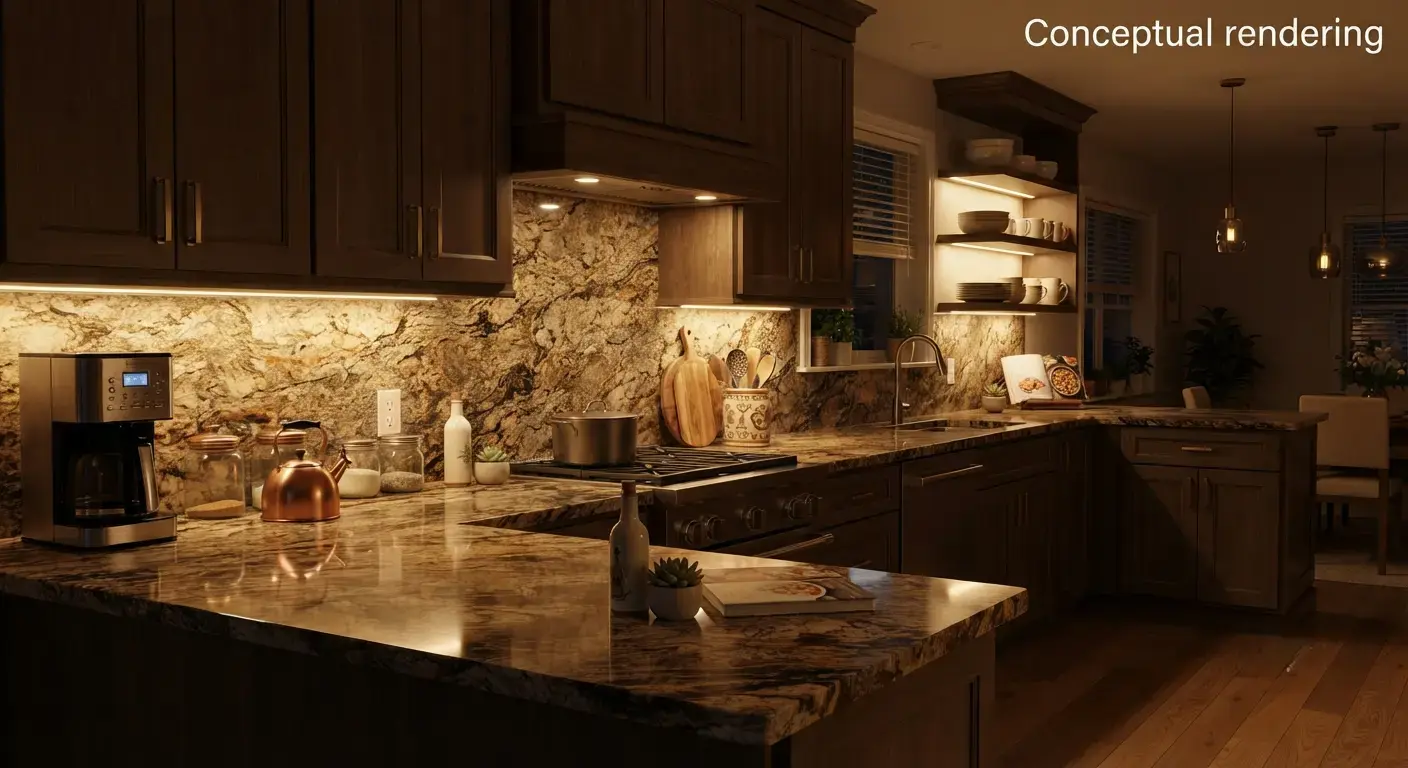
A layered approach to lighting for stone countertops combines ambient, task, and accent sources so a surface reads well from multiple angles and times of day. Under-cabinet strips highlight veining and grout lines up close, while ambient fixtures fill in shadows that can otherwise dull a honed or leathered finish.
Accent lighting, such as a picture light angled across a backsplash, adds dimension to tile and stone surface combinations without relying on a single overhead source. Warmer bulbs tend to flatter beige and taupe stone tones, while cooler bulbs can sharpen contrast in gray or charcoal veining, though the effect still varies by material and sealing.
Prep zones near a range or sink often benefit from a dedicated task light angled to reduce glare on polished granite or quartz, since a single overhead fixture can create harsh reflections on a glossy surface. Honed and leathered finishes scatter light more evenly, so they tend to tolerate a wider range of fixture angles without the same glare concerns. Open-concept kitchens that flow into a dining or living area often benefit from a shared color temperature across rooms, which keeps a tile and stone surface from appearing to shift tone as someone walks from one space to the next.
Key benefits of a layered lighting plan include:
- Reveals natural veining and texture in polished and honed stone, though direct sunlight and bulb angle still affect the final look.
- Reduces shadows on task areas like prep counters, helpful for daily use though task lights alone will not replace ambient room lighting.
- Supports consistent color rendering across large kitchen and bathroom countertop designs, though undertones can still shift slightly between fixtures.
- Extends usable evening hours at an island or vanity, though bulb color temperature should be tested before a full room is wired.
Applications and Design Ideas for Kitchen and Bathroom Countertop Designs
Kitchen and bathroom countertop designs each call for a different lighting approach depending on the stone or tile finish, the room's natural light, and how the space gets used day to day. Homeowners near the Fernley showroom can view tile finish samples under several bulb types before choosing fixtures. Industry trends in stone and tile presentation are also on display each year at the International Surface Event.
Kitchen Islands and Waterfall Edges
A waterfall-edge island in polished granite or quartzite benefits from a mix of pendant fixtures overhead and a lower accent light along the vertical edge, which helps veining carry from countertop to floor. Full-sun-tolerant materials like granite, quartzite, and porcelain can extend this same design language to an outdoor kitchen counter, where fixtures rated for exterior use highlight the surface after dark. Quartz surfaces work well for interior islands but are best kept to indoor lighting plans, since quartz is intended for indoor use only.
Pendant height matters as much as bulb choice, since fixtures hung too low can cast shadows across a waterfall edge rather than highlighting it. Spacing two or three smaller pendants along an island tends to even out coverage better than one oversized fixture, especially over longer kitchen and bathroom countertop designs. A dimmer switch lets the same island surface transition from bright task lighting during meal prep to a softer glow for evening entertaining without changing bulbs.
Bathroom Vanities and Wet Areas
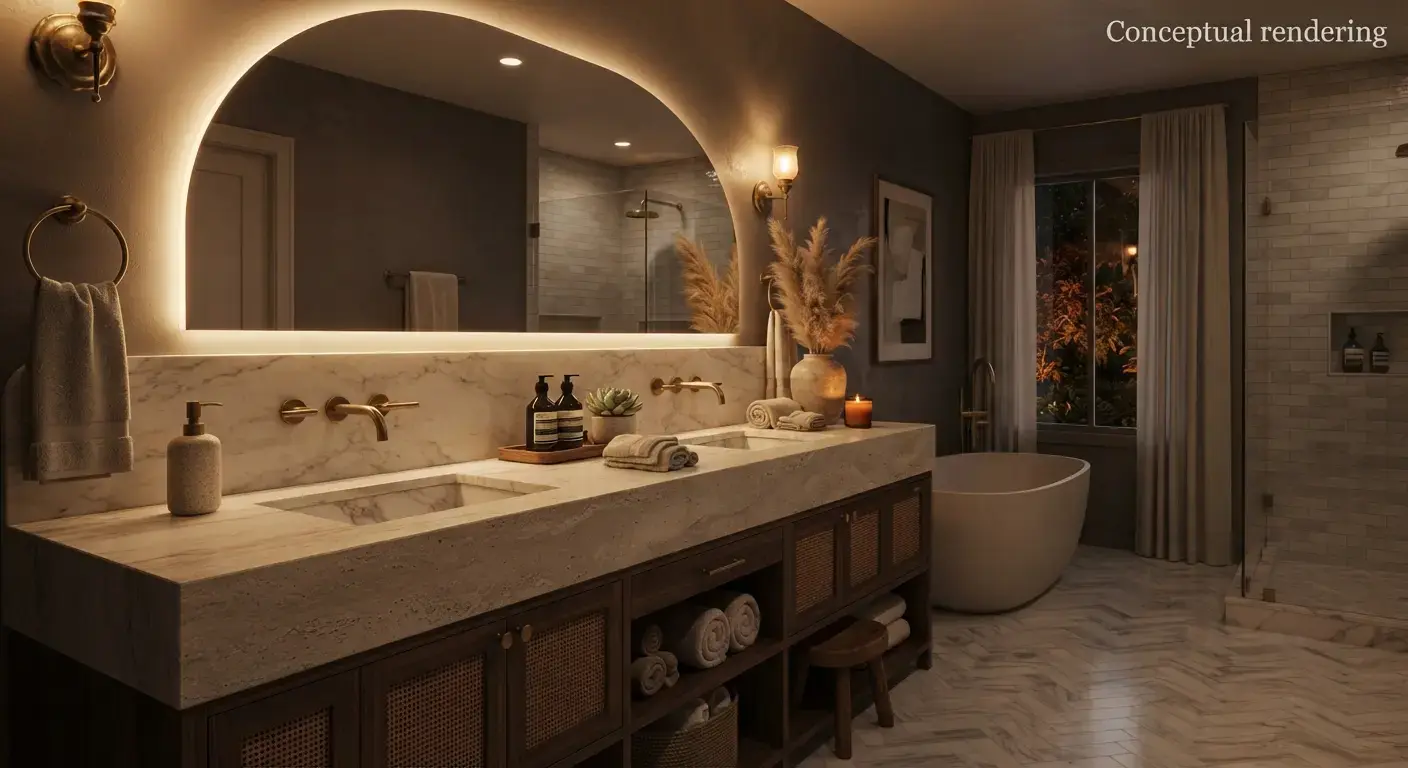
Bathroom vanities call for softer, diffused light near mirrors to avoid harsh shadows, along with damp-rated fixtures near sinks and tub surrounds. Polished finishes can feel more slippery when wet, so many homeowners pair a polished vanity top with textured or honed tile flooring nearby. Marble and dolomite vanity tops read beautifully under warm light but are best suited to indoor placement rather than direct outdoor exposure.
Sconces mounted at eye level on either side of a mirror tend to light a face more evenly than a single fixture centered above it, which also helps a honed marble or dolomite vanity top read consistently during morning routines. Smaller powder rooms with limited natural light often benefit from a slightly warmer bulb, since cooler tones can make a compact tile and stone surface feel clinical rather than inviting.
Choosing Color Temperature for Natural Stone and Porcelain
Color temperature, measured in Kelvin, shifts how a tile and stone surface reads under artificial light. Warmer bulbs in the lower Kelvin range tend to bring out beige, cream, and taupe undertones common in travertine and many porcelain tile lines, while bulbs in the higher Kelvin range can make gray or charcoal veining in granite and quartzite feel crisper. Porcelain tile's consistent, repeatable coloring can make it easier to color-match trim and cabinetry to a bulb choice than a natural stone slab with more variation. The table below compares common fixture types and how they typically interact with stone and tile countertop surfaces.
Fixture Type | Typical Placement | Best Suited Stone/Tile Traits |
Under-cabinet LED strip | Beneath upper cabinets | Highlights veining and grout lines up close |
| Recessed can lighting | Ceiling, general room | Even ambient coverage for large tile and stone surface areas |
Pendant fixtures | Above islands and peninsulas | Adds warmth and focal point over waterfall-edge slabs |
Finish Options | Angled toward backsplash | Draws out texture in leathered or honed finishes |
Advantages and Considerations for Layered Lighting
- Advantage: A layered plan lets homeowners adjust brightness by task, from meal prep to evening entertaining, though switches and dimmers should be planned before fixtures go in.
- Advantage: Accent lighting can make smaller kitchen and bathroom countertop designs feel more expansive, though results depend on ceiling height and existing windows.
- Consideration: Too many bulb temperatures in one room can make the material tones look inconsistent, so testing tile samples under planned bulbs first helps avoid mismatched results.
- Consideration: Outdoor-rated fixtures matter for full-sun materials like granite, quartzite, and porcelain, since standard indoor fixtures are not built for exterior exposure.
A Simple Path to Planning Lighting for a Stone or Tile Countertop
- Assess how much natural light the kitchen or bathroom already receives at different times of day.
- Bring tile samples into the room and view them under the existing bulbs.
- Layer ambient, task, and accent sources rather than relying on one ceiling fixture.
- Match bulb color temperature to the stone's undertones, testing warm and cool options side by side.
- Walk through the space at night before finalizing fixture placement, since daytime light alone will not tell the full story.
How Nova Tile and Stone Supports Fallon Design Projects
Fallon homeowners planning a kitchen or bathroom remodel can find expert guidance on pairing lighting plans with the right tile and stone surface at a nearby Nova showroom. Staff can walk through how polished, honed, and leathered finishes respond to different bulb types before a single fixture is chosen.
Free shipping is available on tile samples, so homeowners can view actual grout lines and finish under their own kitchen or bathroom lighting before deciding. Slab remain available for in-showroom viewing, where natural and artificial light can be compared side by side.
Beyond Fallon, the service area includes Silver Springs, Wadsworth, and Stagecoach, NV, giving homeowners several nearby options for viewing kitchen and bathroom countertop designs in person. The Reno showroom carries an expanded slab selection. The Minden showroom offers the same guidance on finish and lighting pairing.
Homeowners farther from Nevada can also reach the Sacramento showroom for the same guidance on lighting and finish selection.
To see the full range of options, browse the slab collection. Homeowners can also meet the Nova team before a showroom visit.
Fallon homeowners can also review a classic color scheme guide for pairing wall colors with lit stone surfaces. For a broader look at material trends, browse Dezeen's 2026 design guide.
A showroom visit remains the clearest way to test lighting for stone countertops before committing to a full design plan.
Our latest content
Check out what's new in our company !
Conclusion
Lighting for stone countertops shapes how every polished, honed, or leathered surface reads from morning through evening. Fallon homeowners planning a kitchen or bathroom remodel benefit from testing tile samples under real bulbs, layering ambient, task, and accent sources, and matching color temperature to the stone's undertones before any fixture is finalized. Visit the Nova homepage to explore the full catalog of tile and stone surface options available across the service area. Book a free consultation to start planning a lighting and countertop design that looks intentional in any light.
Frequently Asked Questions
Layered lighting that combines ambient, task, and accent sources typically shows the most detail in polished, honed, or leathered stone and tile countertops, though the ideal mix depends on the room and finish.
Yes, bulb color temperature and fixture placement change how veining and texture read, with warmer bulbs often flattering beige tones and cooler bulbs sharpening gray or charcoal veining.
Granite, quartzite, and porcelain are suited to full-sun outdoor use, so outdoor-rated fixtures can be added to highlight these surfaces after dark, while quartz is intended for indoor lighting plans only.
Polished finishes can be more slippery when wet, so many homeowners pair a polished countertop with a honed or textured tile floor nearby for added footing near sinks and tubs.
Bringing stone and tile samples into the room under existing bulbs, then layering ambient, task, and accent fixtures, helps homeowners confirm color and texture before finalizing a kitchen or bathroom countertop design.
Visit Our Fernley Showroom – Nova Tile and Stone
1855 US Highway 95A North, Fernley, NV 89408
Store hours this week:
- Mon. - Fri.: 7:30 am - 4:00 pm
- Sat. - Sun.: Closed