Large-format tile (any tile with one side 15 inches or longer) works best on shower walls, where it creates a continuous appearance with fewer grout lines, but is generally not recommended for shower floors, where tile professionals typically recommend staying at 6 inches or smaller for slope, drainage, and traction. Buying large-format tile for a shower also requires a flatter substrate than standard tile, a medium-bed mortar instead of a standard thin-set, and a waterproofing membrane behind and beneath the tile regardless of size. At our Sacramento showroom, we carry large-format porcelain tile in sizes including 12x24, 24x24, and 24x48, along with $1 samples so a size and finish can be viewed at home before a final decision is made.
What Counts as Large-Format Tile
In the tile industry, large-format tile generally refers to any tile with at least one side measuring 15 inches or longer. Common shower sizes include 12x24, 24x24, 24x48, and increasingly, oversized porcelain panels meeting porcelain tile certification standards that can span an entire shower wall in a single piece. As a family-owned direct importer, we carry large-format porcelain tile across several of these sizes in our Sacramento showroom, and $1 samples are available so homeowners can see how a specific size and finish looks before committing to a full order. These larger dimensions reduce the number of grout lines in a shower, which is a major part of their appeal, but they also come with stricter preparation requirements than standard-size tile.
Sacramento homeowners renovating bathrooms in both older neighborhoods and newer construction have been drawn to large-format tile for its contemporary, low-maintenance look. Whether it makes sense for a specific shower depends on the layout, the substrate, and whether it is being used on walls, floors, or both.
Walls vs. Floors: Where Large-Format Tile Performs Well
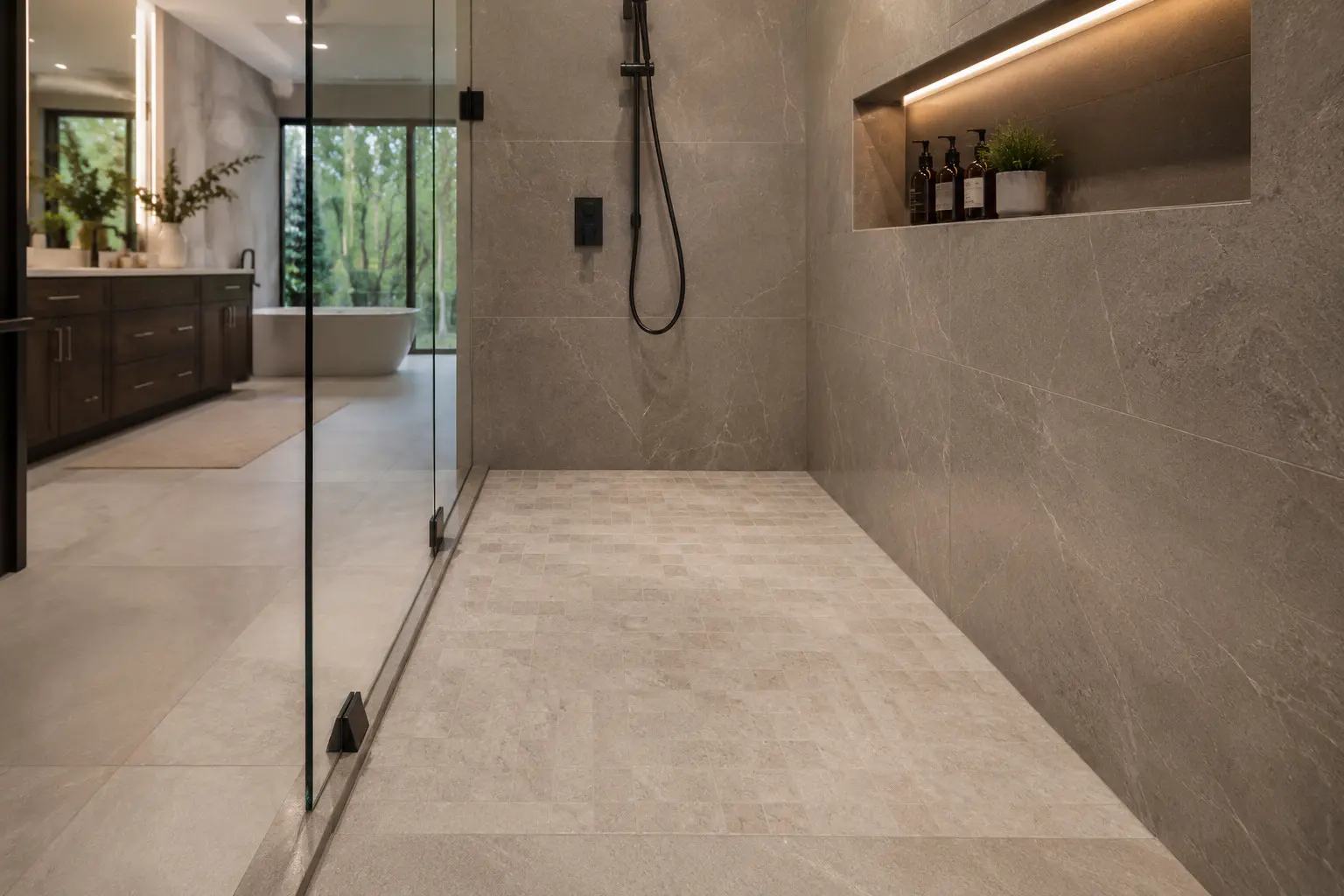
Large-format tile is generally better suited to shower walls than shower floors. On vertical surfaces, large tile creates a continuous appearance with fewer visible joints and reduces the number of joints that need to be sealed and maintained over time. Because walls do not need to manage water drainage the way floors do, large tile on walls carries less risk overall.
Shower floors are a different story. Floors must slope toward the drain, typically about one-quarter inch per foot, and that slope has to be built into a substrate that is also extremely flat. Large tile makes both requirements harder to achieve, since fewer grout lines mean fewer chances to break up a sloped surface into smaller, manageable sections. For this reason, many tile professionals recommend keeping shower floor tile at 6 inches or smaller, even when the walls feature large-format tile, so the floor has enough grout lines for slope, traction, and drainage. Homeowners who want a coordinated look often pair large-format wall tile with a smaller-format floor tile in a matching or complementary finish.
Substrate Flatness Requirements
Substrate preparation is one of the most important factors in a successful large-format tile installation, and it is often underestimated. ANSI installation standards call for substrate flatness within about one-eighth inch over a 10-foot span, and no more than one-sixteenth inch of variation within any 24-inch span, measured from the surface's high points. This is a noticeably tighter tolerance than what is typically acceptable for standard-size tile.
Any high or low spots in the substrate become far more visible with large tile because there are fewer grout lines to interrupt sightlines. Uneven substrates can cause lippage, where one tile's edge sits higher than its neighbor, creating a visual flaw and a safety concern in a wet shower. Correcting an out-of-tolerance substrate typically requires self-leveling underlayment or a properly built mortar bed before installation can begin.
Waterproofing Considerations
Because showers are classified as wet areas, waterproofing is required behind and beneath all shower tile, regardless of size. Large-format tile does not change this requirement, but it raises the stakes if waterproofing is done incorrectly, since repairs behind large tile panels are more disruptive and costly than repairs behind smaller tile.
Common waterproofing approaches include sheet membranes, liquid-applied membranes, and pre-formed shower pan systems, each paired with a substrate meeting the flatness standards above. The membrane must also tie properly into the drain assembly to create a fully sealed system. Homeowners selecting large-format tile should confirm with their installer which waterproofing method will be used and how it accounts for the tile size and layout.
Mortar and Grout Considerations
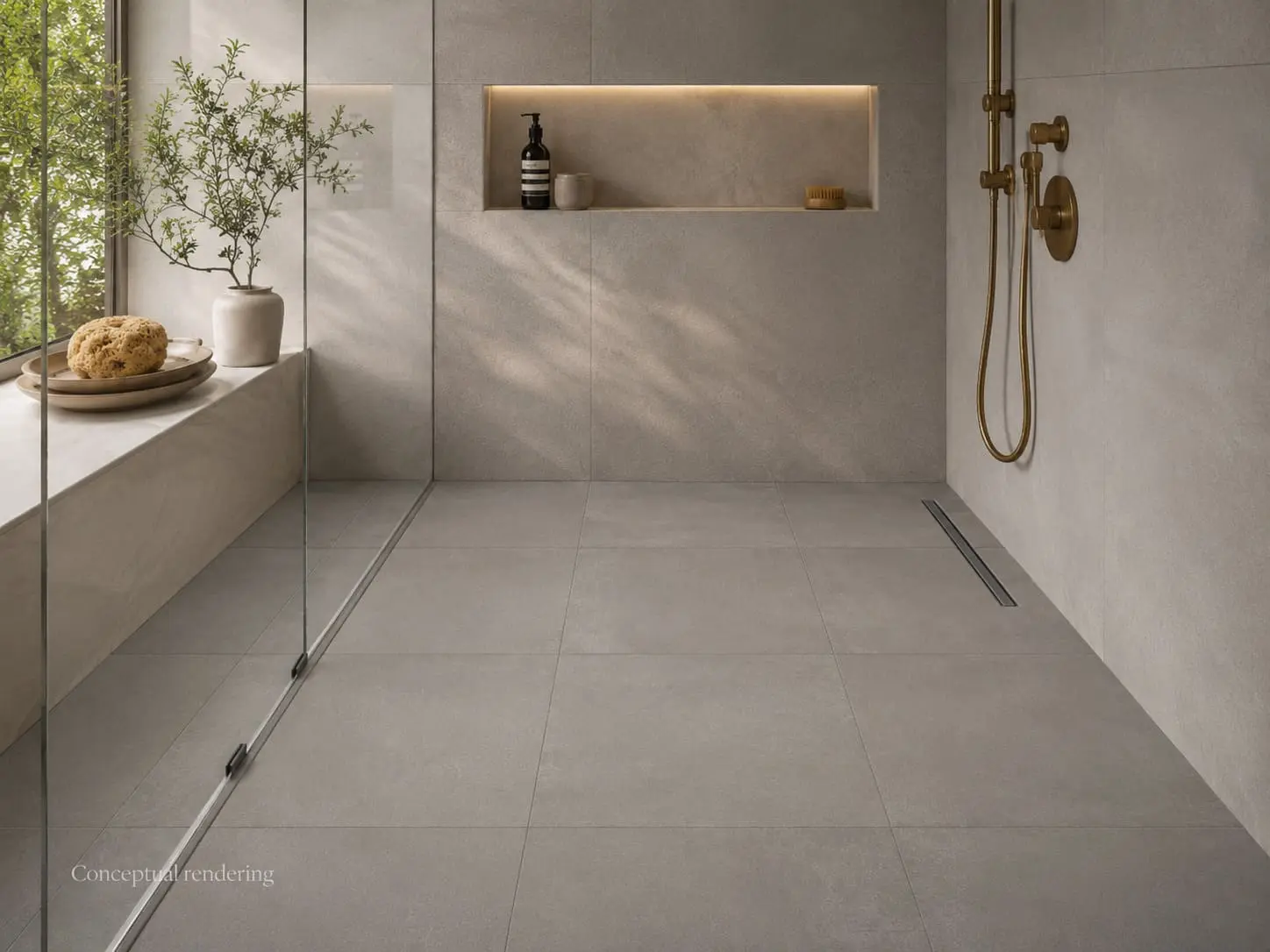
Large-format tile typically requires medium-bed mortar rather than standard thin-set, since medium-bed products are formulated to support the weight and coverage needs of larger, heavier tile without slumping. Full mortar coverage is also more critical with large tile, since voids behind the tile can create hollow spots prone to cracking under weight or thermal movement.
Grout joint width is another consideration. While large-format tile is often installed with narrower grout joints for a more continuous appearance, joints still need to be wide enough to accommodate the tile's manufactured edge variation, known as warpage. Tile that is cut too tight without accounting for this variation is more likely to experience lippage or cracking at the edges.
Slip Resistance and Texture
Shower floors call for a different texture profile than shower walls. Because large-format tile is often manufactured with a polished or semi-polished finish, it can be more slippery when wet compared to smaller, more textured tile. Homeowners who do choose large-format tile for a shower floor should look for a tile rated with a higher coefficient of friction or a textured option such as a 24x24 matte finish porcelain tile designed for wet areas, particularly near the drain where water pools briefly before draining.
Wall tile does not carry the same slip-resistance concerns, giving homeowners more flexibility to choose a polished or glossy large-format tile for shower walls even if the floor uses a smaller, textured material.
Weight and Structural Considerations
Large-format tile is heavier per square foot than standard tile, and sometimes requires evaluation of the wall or floor structure, particularly in older Sacramento homes where original framing may not account for heavier finish materials. This is less of a concern for most bathroom remodels but becomes more relevant for oversized porcelain panels on shower walls or ceilings.
Considerations for Sacramento's Older and Newer Homes
Sacramento's housing stock spans everything from early twentieth-century bungalows in Land Park and East Sacramento to newer construction in Natomas, Elk Grove, and Folsom, and a home's age can influence how well it accommodates large-format tile. Older homes often have smaller bathroom footprints, framing not built with heavier finish materials in mind, and subfloors or walls that have shifted slightly over decades. In these homes, achieving the tight substrate flatness large-format tile requires may involve extensive prep work, such as additional leveling compound or reinforcement, before tile installation can begin.
Newer construction homes typically offer more consistent, code-current framing and larger bathroom layouts, making large-format tile easier to accommodate structurally. Larger walk-in showers common in newer floor plans also tend to suit large-format tile visually, since reduced grout lines read as more continuous across a bigger surface area. Regardless of a home's age, a contractor should always verify substrate condition before large-format tile is selected, rather than assuming age alone determines feasibility.
Common Mistakes to Avoid
A few recurring issues come up when large-format tile does not perform as expected in a shower. One common issue is skipping or shortening substrate leveling to save time, which almost always results in visible lippage once installed. Another is using standard thin-set instead of medium-bed mortar, leading to inadequate support and cracking under normal use. Grout joints cut too narrow for the tile's edge tolerance are another frequent problem, since they leave little room to absorb natural variation in manufactured dimensions.
Choosing a shower floor tile based purely on appearance, without considering slip resistance, is also a common misstep. A glossy, polished large-format tile may look appealing in a showroom display but may not provide adequate traction once wet and installed at a slope. Reviewing a tile's slip-resistance rating, and asking about texture options within the same line, can help avoid this issue before purchase.
How to Compare Large-Format Tile Options
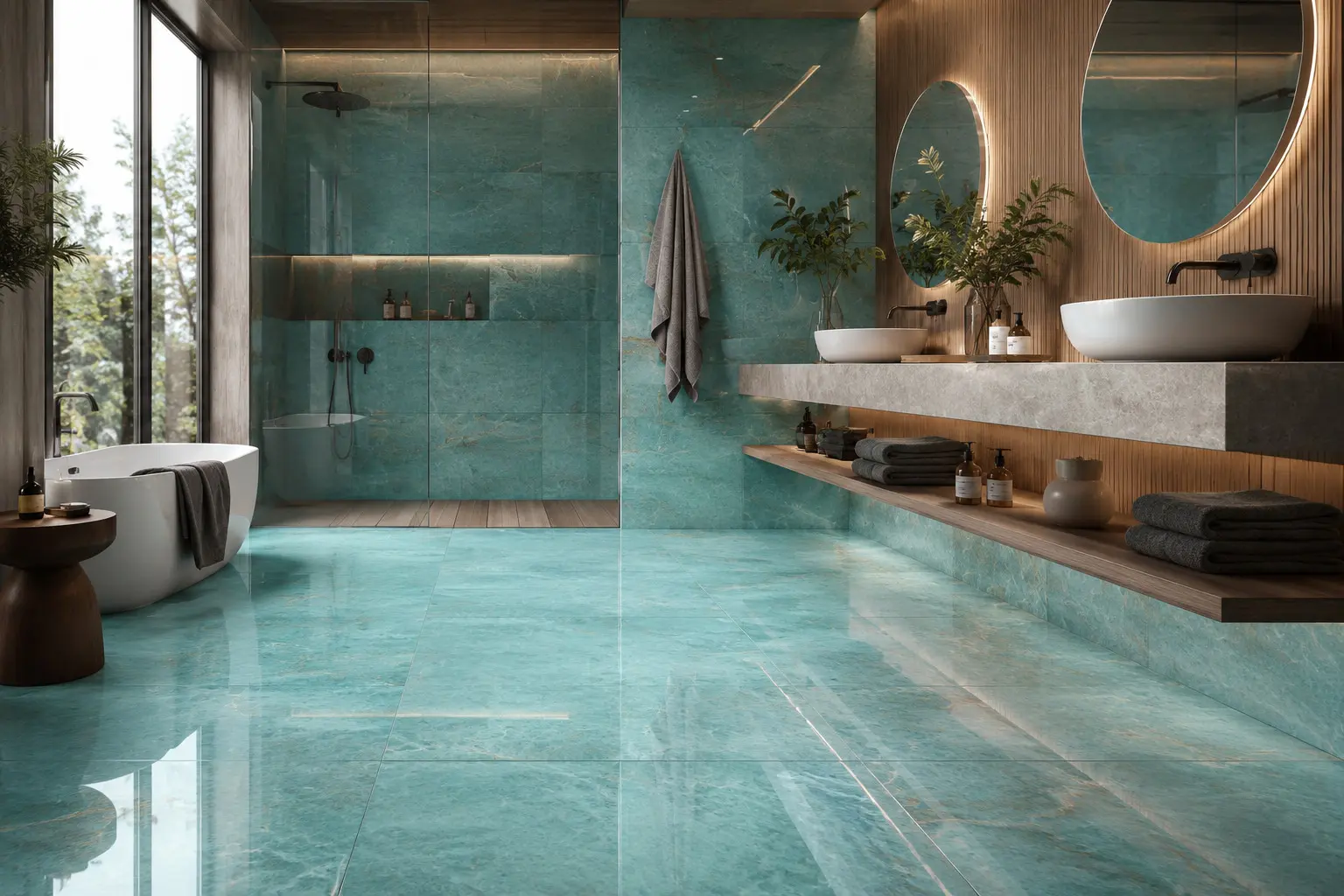
When comparing large-format tile for a shower project, it helps to look beyond size alone. Thickness, edge finish, and rectification all affect how consistently a tile will lay flat once installed. Rectified tiles, precisely cut after firing to create uniform edges, generally allow for narrower grout joints and a more continuous finished look compared to non-rectified tile of the same size.
It is also worth comparing finish options within the same tile collection. Many manufacturers now offer matching large-format tile in both polished and textured finishes, which allows a single visual style to be used consistently on both walls and floors while still meeting slip-resistance needs on the floor. We carry several collections built this way, and you can browse our tile selection online or view full-size samples in person, which gives a much clearer sense of how veining, color variation, and finish will read once the tile is installed across a full shower wall.
Bringing It All Together at Our Showroom
Because large-format tile has more specific installation requirements than standard tile, it helps to see and compare sizes, finishes, and textures in person before making a final decision. Our full range of tile, stone, and flooring is on display alongside smaller companion tiles so homeowners can visualize how a wall-and-floor pairing will look in a finished shower, and our design team can walk through which sizes and finishes fit a specific layout. You can visit one of our showrooms or get directions to our Sacramento location to see large-format tile in person. We also offer $1 samples so a size and finish can be viewed at home under actual lighting conditions before a final decision is made.
Conclusion
Large-format tile offers a clean, modern look for Sacramento showers, but it comes with more specific requirements than standard tile, particularly around substrate flatness, waterproofing, and slope. Wall applications are generally more forgiving than floor applications, and pairing large-format walls with a smaller, textured floor tile is a common way to balance style with safety and drainage needs. Understanding these factors ahead of time helps homeowners choose a tile size and finish that will perform well in their specific shower for years to come. Feel free to reach out to our design team with any questions before you buy.
Note: Some images on this page may be conceptual renderings created to illustrate design possibilities and may not depict actual installations.
Frequently Asked Questions
Tile is generally considered large-format when at least one side measures 15 inches or longer, though many shower applications use sizes such as 12x24, 24x24, or 24x48.
It can, but it requires precise substrate flatness and slope work, and many tile professionals recommend keeping shower floor tile smaller than 6 inches for better traction and easier drainage, even when large-format tile is used on the walls.
Yes. Large-format tile typically requires a medium-bed mortar designed to support its weight and provide full coverage, rather than a standard thin-set used for smaller tile.
It can be, especially with polished or semi-polished finishes. A textured or matte finish with a higher slip-resistance rating is generally recommended for shower floors.
Larger tiles have fewer grout lines to break up an uneven surface, so any high or low spots in the substrate are more visible and more likely to cause lippage or cracking if not corrected before installation.