Large-format tile is any tile with at least one edge measuring 15 inches or longer, and it has become one of the most common choices for Reno remodels involving floors, showers, and feature walls. The larger size creates a cleaner look with fewer grout lines, but it also requires a flatter substrate and more precise installation than standard-size tile. Here is what to know before choosing it for a specific space in a Reno home.
What Counts as Large-Format Tile?
In the tile industry, large-format tile (often shortened to LFT) generally refers to any tile with at least one edge measuring 15 inches or longer. That covers popular sizes like 12x24, 24x24, and 24x48, as well as the oversized porcelain panels now used to mimic slab stone on walls and floors. The distinction matters beyond aesthetics: once a tile crosses that 15-inch threshold, industry installation standards require substrate flatness within about 1/8 inch over a 10-foot span, compared with a looser 1/4 inch over 10 feet for standard-size tile. That tighter tolerance is the thread running through everything else on this page.
Porcelain vs. Ceramic for Large-Format Tile
Most large-format tile on the market today is porcelain rather than ceramic, and there's a manufacturing reason for it. Porcelain is fired at higher temperatures and pressed under greater pressure, producing a denser body that holds up better in larger, thinner sheets during firing than standard ceramic clay does. Porcelain is also classified under ANSI A137.1 as having water absorption of 0.5 percent or less, compared to standard ceramic tile, which typically absorbs more moisture. That lower absorption matters most in showers, entryways, and any surface exposed to moisture or temperature swings, both relevant in Reno, where materials near exterior walls or unheated spaces see wider seasonal temperature changes than they would in a milder climate.
Durability for foot traffic is a separate measurement, expressed as a PEI rating derived from ASTM C1027 testing. This rating reflects the glaze's resistance to surface abrasion, not the hardness of the tile itself, so it's useful for comparing how a specific glaze will hold up to foot traffic over time, but it isn't a substitute for checking water absorption or breaking strength when evaluating a tile for a particular application.
Choosing the Right Size for the Room
Large-format tile comes in a range of sizes, and bigger isn't automatically the right call for every room. A 24x48 tile can look striking across an open living area, but the same tile in a small powder room often means more of it gets cut to fit around fixtures than gets installed whole, which increases both waste and labor. As a general rule, rooms with fewer obstructions, like an open living room floor or a straightforward shower wall, suit the largest formats well, while rooms with more corners, niches, or fixtures often work better with a mid-size large-format option like 12x24 or 24x24. Laying a specific tile size against a room's actual dimensions before purchase, whether on paper or with sample boards in a showroom, shows how many full tiles will fit and where cuts will fall, which is worth doing before committing to a size.
Large-Format Tile for Reno Floors
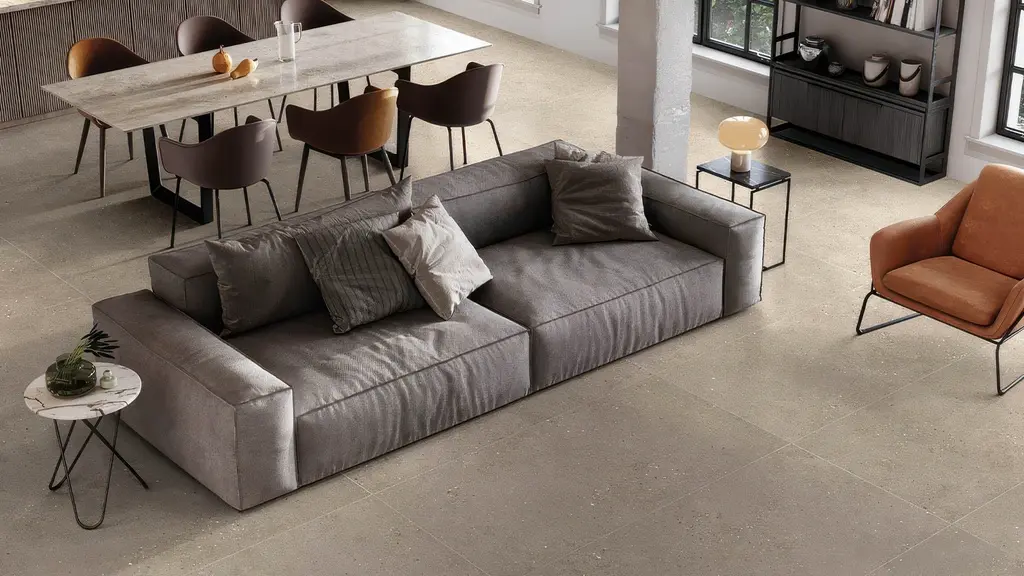
On floors, the larger format reads as one continuous surface, which suits the open-concept layouts common in newer Reno subdivisions like South Reno and Damonte Ranch. Running the same large tile across adjoining rooms also means fewer transition strips or thresholds breaking up the sightline, which is part of the appeal for open floor plans specifically. The substrate flatness requirement covered above is especially relevant here, since lippage on a floor is something you feel underfoot with every step rather than something you only notice by looking.
It also holds up well over time, since there's simply less grout to clean or regrout across a large floor area.
Large-Format Tile in Reno Showers
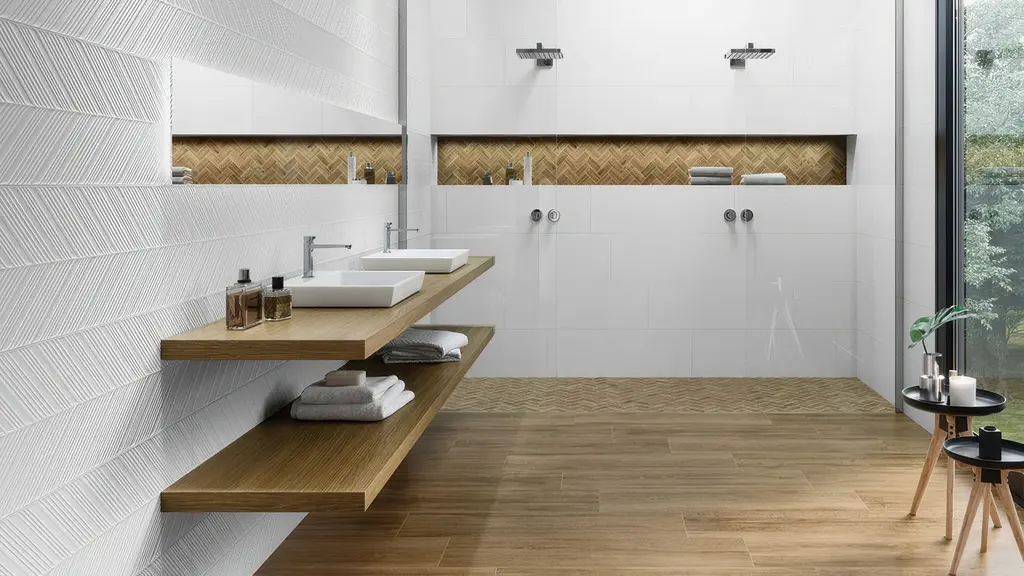
In wet areas, fewer grout joints mean fewer places for moisture and soap scum to collect, which is the main reason large panels have become popular on shower walls specifically.
The bigger technical difference in showers is mortar coverage, not flatness. Wet installations require a higher percentage of mortar coverage behind the tile than dry floor applications do, since any gap becomes a path for moisture to reach the substrate. Grout joint width and pattern also matter more here: a heavily staggered brick layout is more prone to visible lippage on large tile than a straight or lightly offset one.
Large-Format Tile for Reno Feature Walls
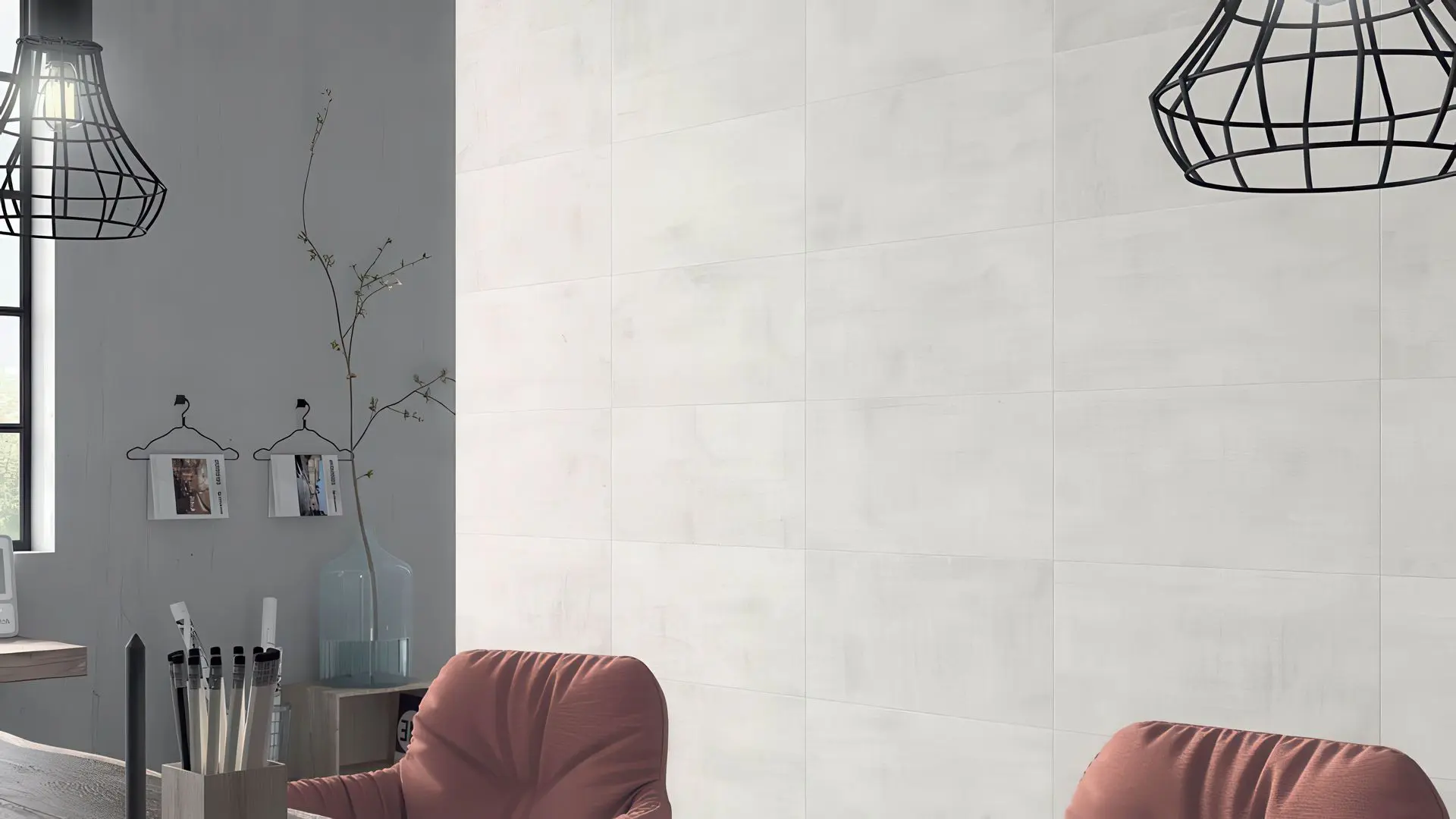
For fireplace surrounds, tub surrounds, or an entryway accent, a single large panel can replace what would otherwise take several smaller tiles, giving the finished wall fewer visual breaks. It can also convincingly mimic natural stone or concrete at a lighter weight and lower cost than an actual stone slab.
Because these panels are larger and heavier than standard tile, wall installations need adhesive and anchoring suited to that weight, not just a flat surface.
What Installation Actually Involves
Getting a substrate to that 1/8-inch-in-10-feet tolerance usually means self-leveling underlayment, patch compound, or grinding down high spots before any tile is set. Reno's mixed housing stock makes this relevant on a case-by-case basis: homes with original wood subfloors typically need more of this leveling work than a new slab-on-grade build, where the concrete may already be closer to flat.
Handling the tile itself is also a bigger job than it is with standard sizes. Large panels, particularly 24x48 and up, are heavy and more prone to cracking if flexed during a one-person carry, so installers typically handle them with two people or with suction-cup lifting tools designed for oversized tile. This doesn't change the finished result, but it does affect how a job is staffed and how long installation realistically takes compared with a standard tile job. Getting a clear answer from the contractor on prep, handling, and cost before the project starts avoids surprises partway through.
Maintenance and Cleaning
One practical advantage of large-format tile is lower long-term maintenance, mainly because there's less grout to clean. Grout is more porous than the tile itself and is usually where staining and mildew develop first, so a floor or shower with fewer grout lines has fewer places for that to start. Day-to-day care is similar to any porcelain or ceramic tile: regular sweeping or vacuuming to keep grit from scratching the surface, and a pH-neutral cleaner for mopping, since harsh acidic or alkaline products can wear down grout and, over time, certain glazes. Sealing is generally only needed for the grout joints, not the tile itself. Porcelain in particular is dense enough that it doesn't require sealing the way natural stone does.
Conclusion
Large-format tile delivers a cleaner, more modern look wherever it's used, but it asks more of the surface underneath it, the materials chosen, and the installation process than standard tile does. Getting the substrate assessed, choosing a size that fits the room, and confirming what the installation involves up front are the details that make the difference between a smooth project and a frustrating one.
Large-format tile is one of many flooring and wall options available at Nova Tile and Stone, alongside natural stone, quartz, sintered stone, hardwood, LVP, laminate, and carpet. Visit the Reno showroom at 12835 Old Virginia Road, Reno, NV 89521, to see large-format tile samples in person and compare sizes side by side, or browse the full selection on our website to start narrowing down options beforehand.
Frequently Asked Questions
Tile with at least one edge measuring 15 inches or longer is generally classified as large-format, including common sizes like 12x24, 24x24, and 24x48.
Larger tile makes surface irregularities more visible and more likely to result in lippage, so industry standards set a tighter flatness tolerance for it than for standard-size tile.
Yes. Porcelain and ceramic tile are commonly installed over radiant floor systems, which is a practical pairing for Reno's cold winters, as long as the installer follows the radiant manufacturer's mortar and sequencing specifications.
Often, yes. Fewer grout lines can make a small space feel less busy and larger. The main challenge is that cutting large tile around fixtures in a tight layout takes more careful planning than it does with smaller tile.
It can, particularly in homes with less-flat starting surfaces. A contractor should assess the specific floor or wall and provide an estimate before quoting the job.
Note: Some images on this page may be conceptual renderings created to illustrate design possibilities and may not depict actual installations.