Large-Format Shower Panels for Stagecoach Bathrooms
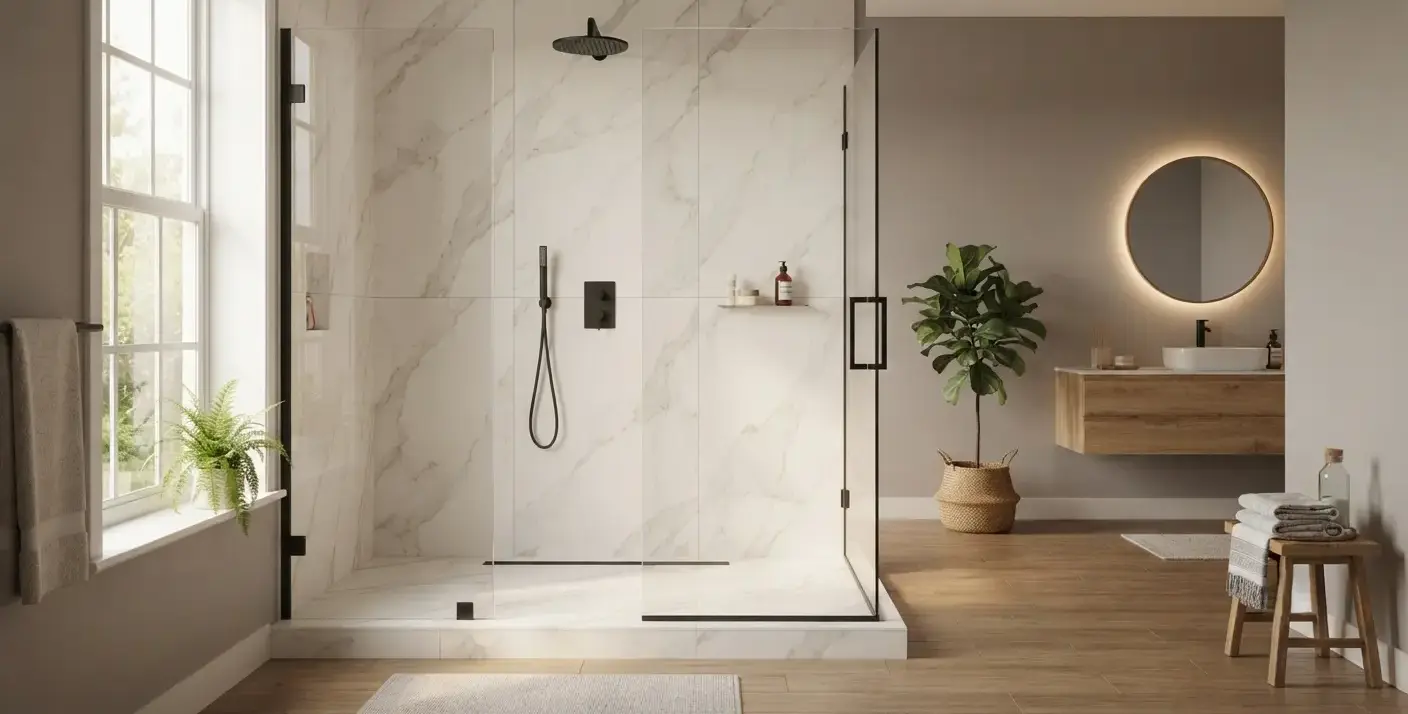
Large-format shower panels are reshaping bathroom design across Stagecoach and the surrounding Fernley market. These oversized slabs of stone or porcelain reduce visible grout lines, create a seamless surface, and give a shower enclosure a clean, spa-inspired appearance. Homeowners moving away from small tile mosaics increasingly request panel-style layouts for their simplified visual flow and easier surface care.
Selecting the right slab for a wet environment requires attention to material properties and finish. Granite, quartzite, and porcelain generally perform well in shower applications, while marble, travertine, and dolomite can also work indoors when sealed and maintained appropriately. Matte or textured finishes reduce slipperiness compared to polished surfaces, an important consideration for any wet floor area. Homeowners can compare options through the full slab collection before narrowing a final material choice for a Stagecoach bathroom project.
Stagecoach bathroom shower designs increasingly favor large panels over smaller tile, since a reduced seam count keeps a compact shower stall from feeling visually busy. A single continuous slab wall can also make a modest bathroom footprint read as larger and more open, an approach that suits many local floor plans.
This guide covers the core benefits of large-format shower panels, material and finish considerations for stone surface and materials selection, and how Nova Tile and Stone supports bathroom shower designs throughout the region.
Key Benefits of Large-Format Shower Panels
Fewer grout lines mean less routine cleaning and a more uniform look across a shower wall or floor. Panels sized well beyond standard tile dimensions cover more surface area per piece, reducing the number of joints where soap residue and mineral deposits typically collect.
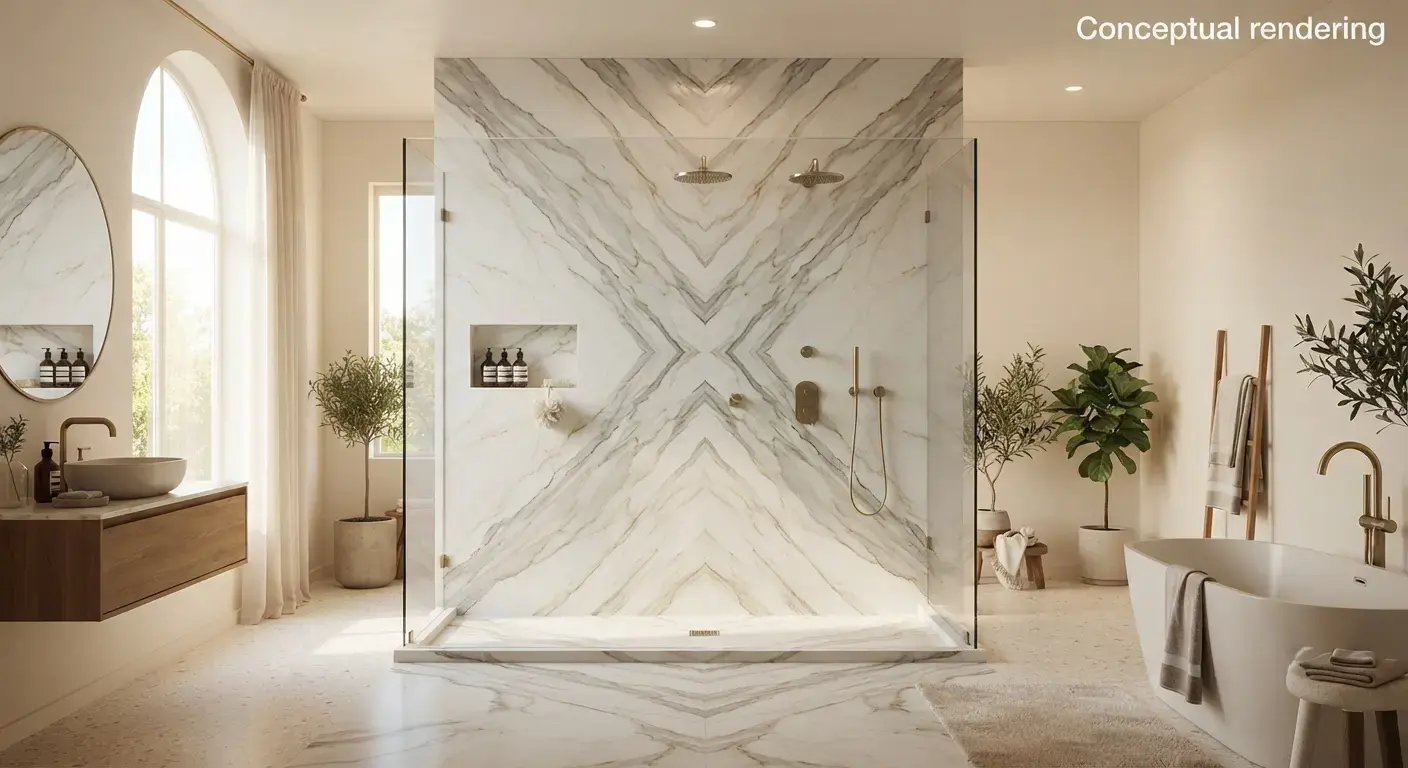
Large-format panels also offer design flexibility. Slabs can be book-matched for a mirrored veining effect, or cut to wrap a niche or bench without breaking the pattern. Durable, but proper sealing and routine care preserve appearance over time across most natural stone options.
- Reduced grout lines lower long-term cleaning effort, though periodic maintenance is still required
- Seamless visual flow suits contemporary bathroom shower designs
- Book-matched veining creates a distinctive wall feature in a primary bath or guest shower
- Fewer seams limit locations where moisture can collect, though sealing remains necessary for porous stone
- Available across granite, quartzite, porcelain, marble, travertine, dolomite, and quartz, each with different care needs
- Panels pair well with niches, benches, and accent walls when planned around slab dimensions
 Conceptual rendering
Industry benchmarks published through TCNA ANSI standards help manufacturers evaluate surface performance across different applications. Reviewing recognized standards can give homeowners a general sense of how various materials are typically classified for wear and moisture exposure.
Long-term value depends on ongoing care. Sealing schedules, prompt attention to spills, and gentle cleaning products all contribute to how well a shower panel holds its finish over time.
Applications and Design Options for Stone Surface and Materials
Material Options for Wet Areas
Granite and quartzite are well suited to shower floors and walls, offering solid performance in consistently wet conditions when properly sealed. Porcelain slabs are also a strong option, since the material does not require sealing and resists moisture absorption effectively.
Marble, travertine, and dolomite bring a softer, more traditional veining pattern and work well on shower walls indoors. These materials are more porous than granite or porcelain, so proper sealing and prompt attention to spills help preserve appearance over time. Quartz is another indoor option, suited to shower floors and walls, though it is best kept away from open flame and other direct heat sources.
Designers attending the International Surface Event frequently showcase large-format panels as a leading direction in bathroom shower designs, reflecting a growing preference for fewer seams and larger visual planes.
Combining materials within a single shower is common, such as pairing a porcelain floor with a marble or quartzite accent wall. This approach balances the slip considerations of a wet floor with the veining appeal often desired on a vertical surface.
Material | Wet Area Suitability | Recommended Finish | Maintenance Note |
Granite | Shower floors and walls | Honed or leathered | Periodic sealing recommended |
Quartzite | Shower floors and walls | Honed or leathered | Periodic sealing recommended |
Porcelain | Shower floors and walls | Matte or textured | No sealing required |
Marble, Travertine, Dolomite | Shower walls, use caution on floors | Honed over polished | Regular sealing, avoid acidic cleaners |
Quartz | Shower floors and walls, indoor only | Polished or honed | No sealing, keep away from open flame |
Finish Considerations for Shower Panels
Polished finishes create an elegant sheen but become notably slipperier when wet, making them a less practical choice for shower floors. Honed and leathered finishes offer better traction underfoot while still presenting a refined surface for walls and floors alike.
Specialty finishes, including certain textured or brushed surfaces, add tactile variation to a shower wall without compromising the overall design scheme. Coverage from Dezeen's 2026 design guide highlights stone surface texture as a recurring theme among contemporary bathroom projects this year.
Finish selection also affects how a surface reflects available light. A honed finish scatters light more evenly across a panel, softening reflections in a shower with strong overhead lighting, while a polished surface intensifies contrast between veining and background tone.
Design Trends in Bathroom Shower Designs
Book-matched panels remain a leading trend, where two slabs cut from the same block are mirrored to form a symmetrical pattern across a focal wall. This technique works particularly well with marble, dolomite, and quartzite, where natural veining creates a dramatic visual centerpiece.
Full-height panels that span from floor to ceiling are also popular, presenting a single continuous surface rather than a series of stacked segments. Niche shelving and built-in benches can be cut from matching slab material, keeping an enclosure visually consistent throughout.
Warmer, lighter stone tones continue to trend in bathroom shower designs, since they help a compact stall feel brighter. Cooler, deeper tones remain a popular choice for larger primary bathrooms with more available natural light.
Advantages and Considerations of Large-Format Shower Panels
 Conceptual rendering
Advantage:
- Seamless coverage minimizes grout maintenance across large wall and floor areas
- Book-matched slabs create a striking, symmetrical focal point
- Wide material selection allows matching tone and veining across a full bathroom
Consideration:
- Panel weight and size require careful handling during any project
- Porous stone options need consistent sealing to guard against staining
- Polished finishes are not recommended for wet shower floors due to slip risk
Choosing the Right Shower Panel in 4 Steps
- Identify which surfaces are floor, wall, or accent areas, since suitability varies by material and finish
- Compare stone surface and materials options such as granite, quartzite, porcelain, marble, travertine, dolomite, and quartz against the wet area guidance above
- Select a finish that balances traction needs with the desired design aesthetic
- Coordinate veining and panel layout with a design consultant before finalizing a material order
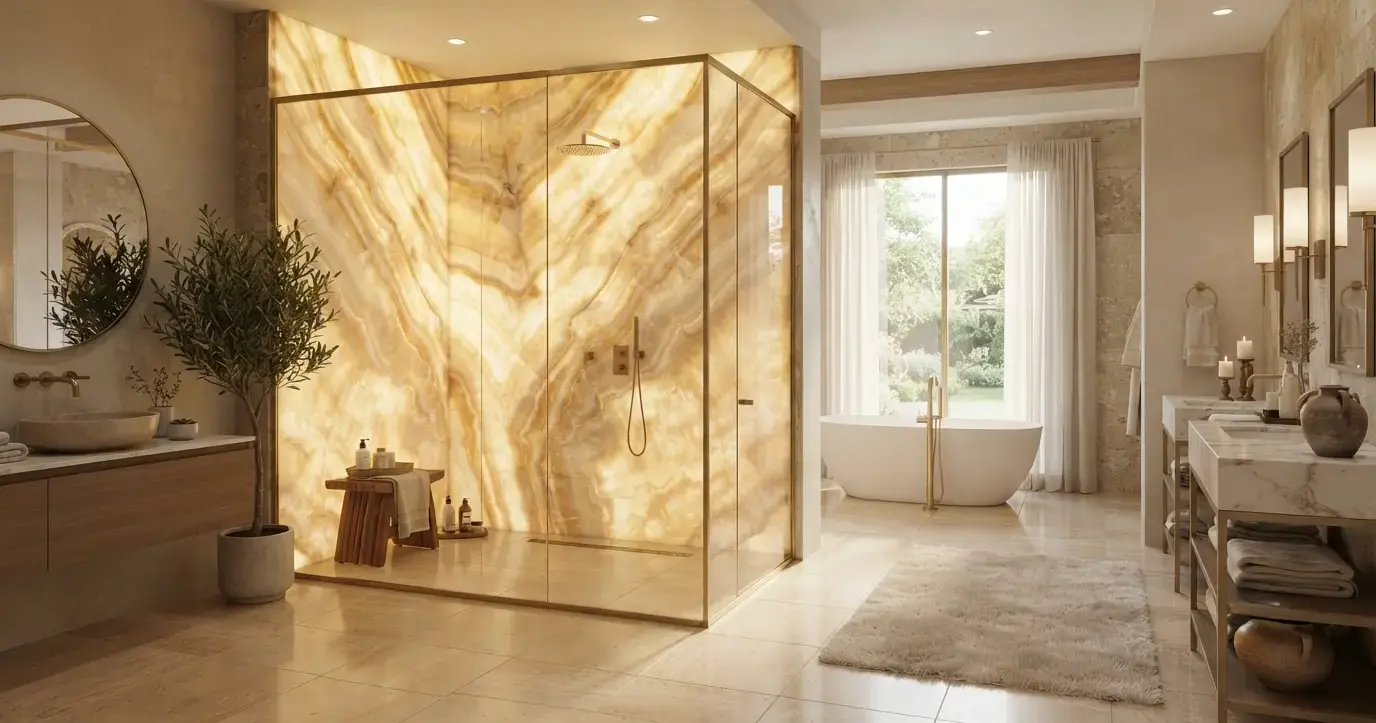
Semi-precious stone slabs are also worth noting for accent walls, since their specialty finish and translucent qualities suit backlit wall features in bathroom shower designs, though these materials are restricted to wall applications only. A small backlit niche or single feature panel is a common way to introduce this material without extending it across an entire enclosure, keeping the overall material palette manageable.
Nova Tile and Stone: Expert Guidance for Your Shower Project
Nova Tile and Stone maintains a showroom in Fernley where slabs are available for in-person viewing and comparison. A second showroom location in Reno expands access to additional large-format inventory for regional homeowners. Buyers near the California border can also visit the Minden showroom for material consultations. Further west, the Sacramento location rounds out Nova's coverage across northern Nevada and Northern California.
The team profiled on the Nova design team page can help match slab material, finish, and veining pattern to a specific bathroom shower design. Stagecoach, Fallon, Silver Springs, and Wadsworth homeowners fall within Nova's regional service area for slab consultations and project planning.
Working with an experienced team helps homeowners avoid common material mismatches, such as choosing a polished finish for a shower floor or selecting a porous stone without a sealing plan already in place.
Homeowners can bring room measurements and inspiration photos to a showroom visit for more tailored material suggestions. Comparing in-showroom slab samples under natural lighting conditions often reveals differences in tone and veining that are harder to judge from smaller reference chips.
Conclusion
Large-format shower panels continue to define modern Stagecoach bathroom design, offering fewer seams, striking veining, and a range of stone surface and materials suited to wet environments. Comparing granite, quartzite, porcelain, marble, travertine, dolomite, and quartz side by side helps match a chosen material to the moisture demands of a specific shower enclosure. Complete project inspiration and material details are available through Nova's showroom website for homeowners planning a shower update.
Visit a Nova showroom to view the full range of large-format shower panels available today.
Frequently Asked Questions
Large-format shower panels are oversized slabs of stone or porcelain used to cover shower walls or floors with fewer visible seams than standard tile.
Granite, quartzite, and porcelain generally perform well in wet shower environments, while marble, travertine, and dolomite are better suited to walls when properly sealed.
Polished finishes become slipperier when wet, so honed, leathered, or textured finishes are generally recommended for shower floor areas instead.
Most natural stone options, including granite, marble, travertine, and dolomite, benefit from periodic sealing to help resist staining and moisture absorption in a shower setting.
Yes, Stagecoach falls within Nova's regional service area, along with Fallon, Silver Springs, Wadsworth, and Fernley.