A kitchen backsplash is the tiled or stone surface installed on the wall behind a countertop, stove, or sink to protect against moisture and food splatter. The most common backsplash materials are ceramic tile, porcelain tile, glass tile, and natural stone. Ceramic and porcelain tile are the most widely used choices due to their range of colors, finishes, and price points. Subway tile is the most requested layout because it suits nearly any kitchen style and countertop material. Larger-format tile and slab backsplashes, where a single piece of quartz, quartzite, or granite extends up the wall, have grown in popularity for a seamless, low-grout look. In Woodland, CA, the right backsplash choice often depends on home style, from Craftsman and Victorian homes near the historic downtown to newer construction in communities like Spring Lake. Below, we walk through backsplash materials, patterns, and design considerations for Woodland homes.
Why Backsplash Choice Matters for Woodland Kitchens
Woodland's housing stock spans several distinct eras and styles. Homes near the historic downtown district often feature Craftsman or Victorian-era details, while neighborhoods like Southwood and Beamer Park reflect the single-story ranch layouts common to post-war construction. Newer construction in Spring Lake tends toward open-concept kitchens with larger islands and more wall space available for a statement backsplash. Because backsplash tile sits at eye level and spans a highly visible section of the kitchen, it has an outsized effect on how a space reads, more so than flooring or even countertops in some layouts.
A backsplash also has a practical role. It protects drywall from grease, water, and food splatter around the stove and sink, which matters in any kitchen regardless of age or style. Older homes with plaster or lath-and-plaster walls in particular benefit from a well-installed tile backsplash, since it reduces the need to repair or repaint those wall surfaces as frequently. A backsplash also tends to be one of the more affordable ways to update a kitchen's appearance without a full renovation, and it's one of many surfaces homeowners can explore through our full tile, stone, and flooring offerings alongside a countertop or cabinetry refresh.
Popular Backsplash Materials
Ceramic and Porcelain Tile
Ceramic and porcelain tile remain the most common backsplash materials due to their range of colors, finishes, and price points. Porcelain tile is denser and less porous than ceramic, which makes it a practical choice for areas prone to moisture, such as behind a sink or stove; independent porcelain certification testing verifies that a tile meets the low water-absorption threshold required to be labeled true porcelain. Both materials are available in a wide range of sizes, from small mosaic pieces to large-format tiles that minimize grout lines, such as this terrazzo-look matte porcelain tile. Matte, glossy, and textured finishes are all available within both material categories, giving homeowners flexibility without needing to change the base material.
Glass Tile
Glass tile is a common choice for homeowners who want a backsplash with more light reflection and visual depth. It works particularly well in kitchens with limited natural light, since it can help bounce available light around the room. Glass tile is often used in mosaic sheets, which allow for curved or detailed layouts around outlets and appliances. It also comes in a wide range of colors, including options with subtle iridescence, which can add depth without introducing a strong pattern.
Natural Stone Tile
Natural stone tile options, including marble, travertine, and slate, bring texture and variation that manufactured tile cannot fully replicate. Each stone tile has some natural variation in veining or color from piece to piece, which some homeowners prefer for a more organic look. Natural stone requires periodic sealing to maintain its resistance to staining, which is a maintenance consideration worth factoring into the decision.
Slab Backsplash
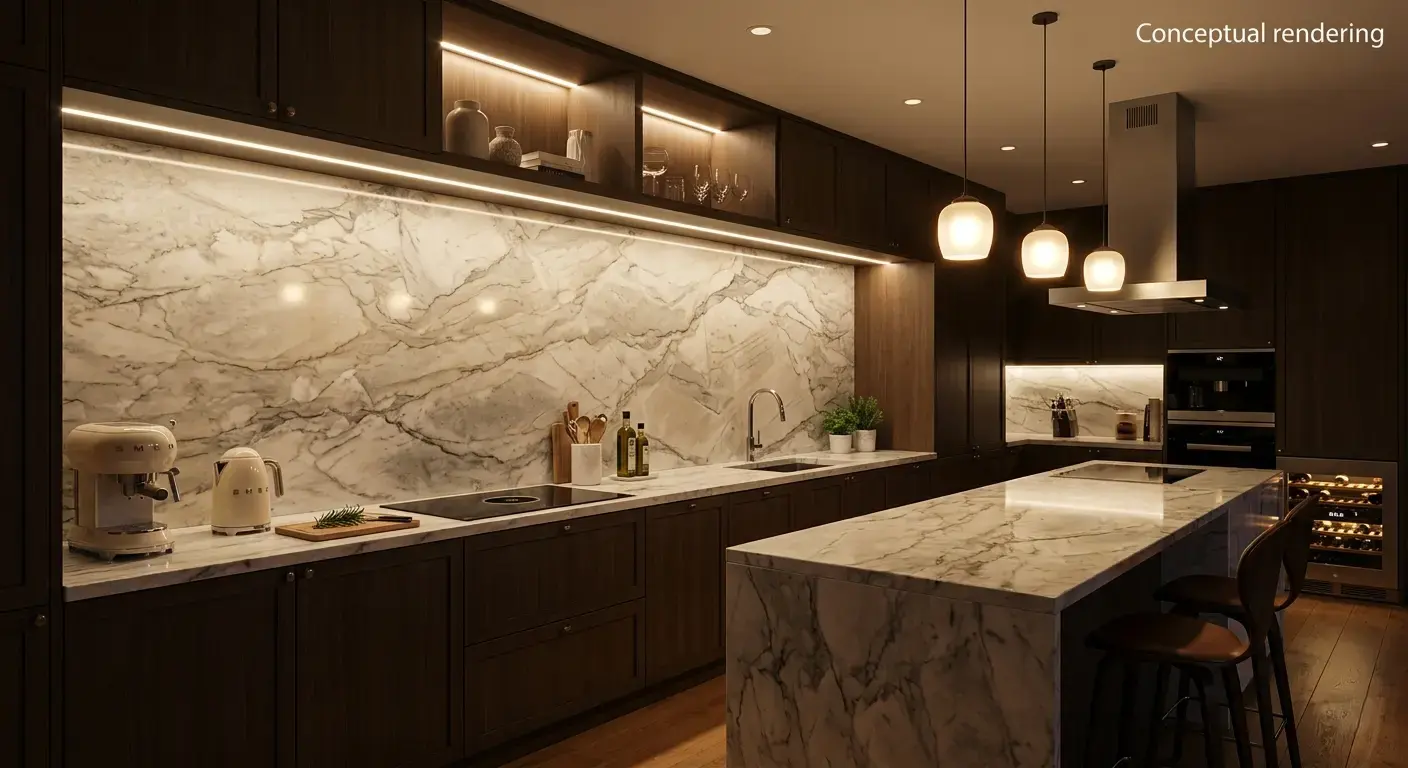
An increasingly common option is a slab backsplash, where a single piece of quartz, quartzite, or granite extends from the countertop up the wall, sometimes reaching the upper cabinets. This approach eliminates grout lines entirely and can create continuity between the countertop and backsplash, particularly when the same material is used for both. This option tends to work well in kitchens with waterfall-edge islands or a more contemporary layout, which are more common in Spring Lake's newer construction than in Woodland's older homes. A slab backsplash also simplifies cleaning, since there are no grout lines to maintain across the main work area behind the stove and sink.
Backsplash Patterns and Layouts
Subway Tile
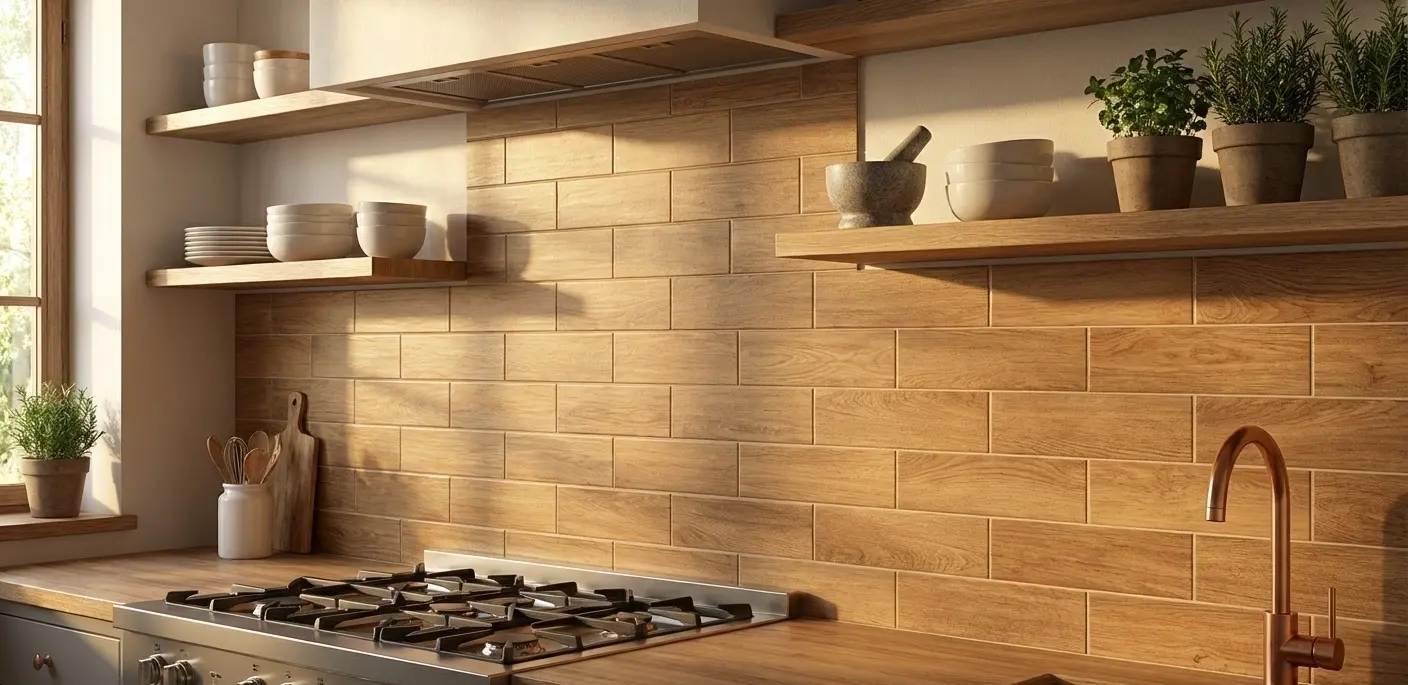
Subway tile, typically a rectangular tile laid in a brick-like offset pattern, remains one of the most requested backsplash layouts. It suits a wide range of kitchen styles, from Craftsman bungalows near downtown Woodland to more contemporary spaces, and it pairs with almost any countertop material. The classic three-by-six-inch size remains popular, and installers typically follow published ANSI installation standards for grout joint width and layout offset regardless of tile size chosen.
Herringbone
A herringbone layout arranges rectangular tiles in a zigzag pattern and adds visual movement to a backsplash without requiring a bold color choice. This pattern works with subway tile, natural stone, or glass tile and tends to draw attention as a focal point behind a range or cooktop. Because the pattern itself provides visual interest, herringbone layouts are often installed in a single neutral tone rather than a bold color.
Vertical Stack
A vertical stack pattern lines tiles directly on top of one another without an offset, creating clean, continuous vertical lines. This layout reads as more modern and pairs well with slab-style countertops or minimalist cabinetry. It also tends to draw the eye upward, which can make a kitchen with standard-height cabinets feel slightly taller.
Basketweave and Mosaic
Basketweave patterns and mosaic sheets bring more intricate detail to a backsplash and are often used as an accent behind a stove or on a small focal wall rather than across an entire kitchen. These patterns work well in smaller kitchens where a bold detail can stand in for a larger design statement, and they also allow homeowners to introduce a secondary color or material without extending it across the full kitchen. Homeowners weighing these options can browse tile selections by pattern and finish before settling on a final design.
Choosing a Backsplash for Different Woodland Home Styles
For homes near Woodland's historic downtown, a period-appropriate approach often means smaller-format subway tile, hexagon tile, or patterned cement-look tile in a classic color palette such as white, cream, or soft green. These choices tend to complement original woodwork, wainscoting, and other period details without competing with them.
For mid-century ranch homes in neighborhoods like Southwood and Beamer Park, a simpler backsplash with clean lines, such as a vertical stack layout or a single-color subway tile, tends to fit the straightforward, linear architecture typical of that era. Homeowners updating these kitchens often pair a simple backsplash with updated countertops and cabinetry hardware to refresh the space without overhauling the entire layout.
For newer construction in Spring Lake, a slab backsplash or larger-format tile often suits open-concept kitchens with bigger islands and more contemporary finishes throughout the home. Matching the backsplash material to the countertop, or choosing a complementary tone, helps maintain visual continuity in these more open layouts, where the kitchen is often visible from the living and dining areas.
Color and Finish Considerations
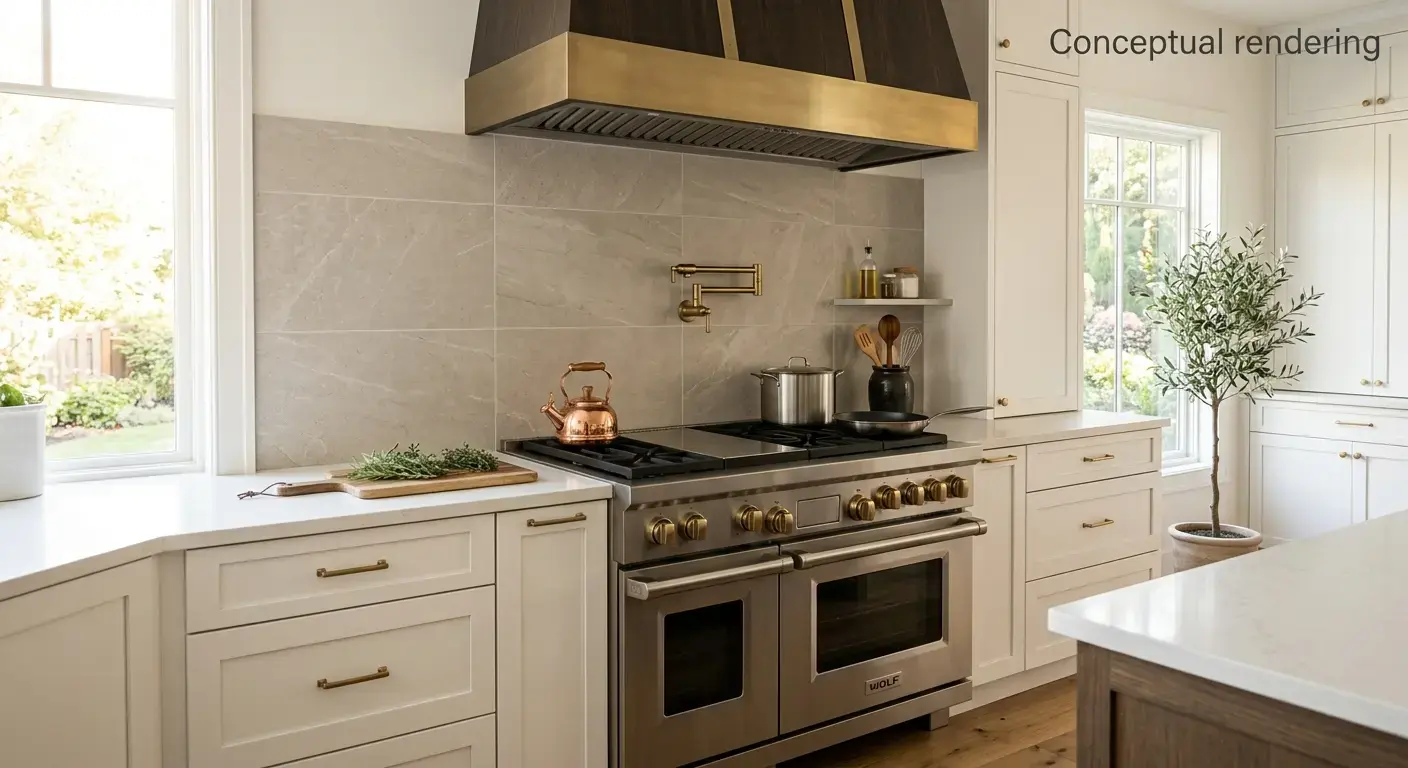
Neutral tones such as white, cream, gray, and soft greige remain a common starting point for backsplash tile, since they pair with a wide range of cabinetry and countertop colors and tend to have broader long-term appeal. Bolder colors and patterned tile are more often used as an accent, such as behind a range hood or on a small focal section, rather than across an entire backsplash.
Finish also affects how a backsplash reads in a room. A glossy finish reflects more light and can make a kitchen feel brighter, while a matte or honed finish tends to read as more understated and shows fewer fingerprints and water spots near the sink. Textured tile, including handmade-look ceramic tile with slight surface variation, has also become a common choice for homeowners wanting a backsplash with more visual depth than a flat, uniform tile provides.
Grout Color and Maintenance Considerations
Grout color affects a backsplash's overall appearance as much as the tile itself. Matching grout to the tile color creates a more uniform, seamless look, while contrasting grout emphasizes the tile's shape and pattern. Darker grout tends to show less staining over time, particularly in kitchens where the backsplash sits close to the stove.
Sealing requirements vary by material. Natural stone tile may require periodic sealing to help reduce staining, depending on the specific stone, finish, and product requirements, while most porcelain and glass tile surfaces typically do not require sealing. Homeowners should factor ongoing maintenance into their material choice, particularly for the area directly behind a stove, which sees the most exposure to grease and heat. Grout itself may also benefit from periodic sealing, regardless of tile material, to reduce staining in high-use areas.
Conclusion
A kitchen backsplash brings together practicality and design, and the right material and pattern depend on the age and style of the home it's going into, from a Craftsman bungalow near downtown Woodland to a newer build in Spring Lake. Ceramic, porcelain, glass, and natural stone tile each offer a different balance of appearance and maintenance, and layout choices like subway, herringbone, or vertical stack can shift a kitchen's overall feel considerably. Family-owned since 2005, our team welcomes Woodland homeowners to see tile and stone options in person at our Sacramento showroom at 6100 Warehouse Way, easy to find with directions from Google Maps, where staff can help match a backsplash to an existing countertop, cabinetry, or overall kitchen style. Homeowners can also book a free design consultation or call (916) 913-6682 with any questions before a visit.
Note: Some images on this page may be conceptual renderings created to illustrate design possibilities and may not depict actual installations.
Frequently Asked Questions
Ceramic and porcelain tile remain the most common backsplash materials due to their range of colors, finishes, and price points, though glass tile and natural stone are also widely used depending on the desired look.
A backsplash does not need to match the countertop exactly, though many homeowners choose complementary tones or the same material for visual continuity, particularly in a slab backsplash application.
Natural stone tile generally needs sealing at installation and then periodically afterward, though the exact frequency depends on the specific stone type and how much exposure it gets to grease, water, and heat near the stove.
Smaller-format tile layouts such as subway tile or a vertical stack pattern tend to keep a small kitchen from feeling visually crowded, while a bold mosaic or basketweave pattern can work as a smaller focal accent rather than covering the full wall.
A slab backsplash is typically made from the same or a complementary material as the countertop, most often quartz, quartzite, or granite, and works best when planned alongside the countertop selection rather than added afterward.