A kitchen backsplash is the protective surface installed on the wall between the countertop and the upper cabinets, typically covering the area behind the sink, range, and main prep zone. Backsplash materials generally fall into two categories: tile (porcelain, ceramic, glass, or natural stone tile, installed with grout) and full slab (one continuous piece of quartz, quartzite, granite, marble, or porcelain, installed without grout lines). Tile offers more pattern and color flexibility and a lower starting cost, while a full slab offers a seamless look and less day-to-day cleaning, generally at a higher upfront cost. The right choice depends less on which material looks best and more on how the kitchen is used: how much grout maintenance is acceptable, whether the backsplash sits behind a range, and whether the goal is a quick refresh or a full remodel. This guide walks through both categories in detail, with a few considerations specific to Reno kitchens.
Tile Backsplashes: Flexibility and Pattern
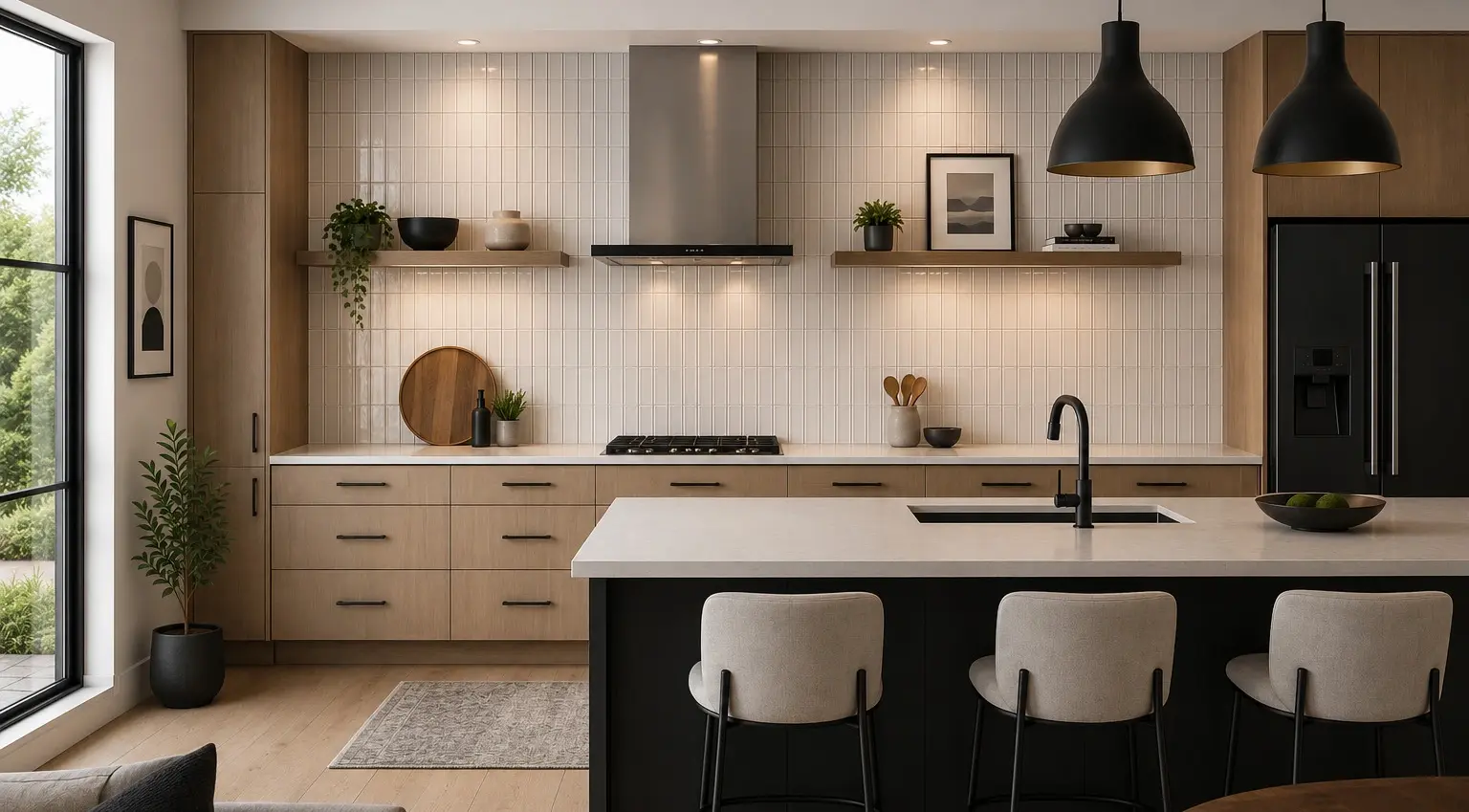
Tile remains the most common backsplash choice because it offers the widest range of looks. Porcelain and ceramic tile come in countless colors, finishes, and formats, from small mosaics to large-format panels, so a tile backsplash can be as simple or as detailed as a kitchen calls for. Subway tile laid in a classic running bond is still popular for a reason: it's timeless, easy to maintain, and pairs with almost any cabinet color. Herringbone and chevron patterns add movement for homeowners who want something more distinctive, while a small mosaic can work well as an accent behind a range without overwhelming the room.
Glass tile is another option worth considering, especially for kitchens that want extra brightness. Glass reflects light well, which can help a galley-style kitchen or one with limited natural light feel more open. The tradeoff is that glass shows water spotting and fingerprints more readily than matte porcelain, so it needs more frequent wiping down to stay looking clean.
Natural stone tile, such as marble or travertine cut into smaller format pieces, gives a more organic, textured look than manufactured tile. It generally needs to be sealed and resealed periodically since natural stone is porous, and it can scratch or etch from acidic spills more easily than porcelain. For homeowners who like the look of stone but want lower maintenance, a porcelain tile with a stone-look finish is worth comparing side by side with the real material.
One practical advantage of tile in general is that if a single piece gets chipped or cracked, it can be replaced individually without redoing the whole wall, as long as matching tile or leftover stock is on hand. That's worth keeping in mind when ordering. It's common practice to order a small amount of extra material so future repairs match exactly.
Full Slab Backsplashes: A Seamless Look
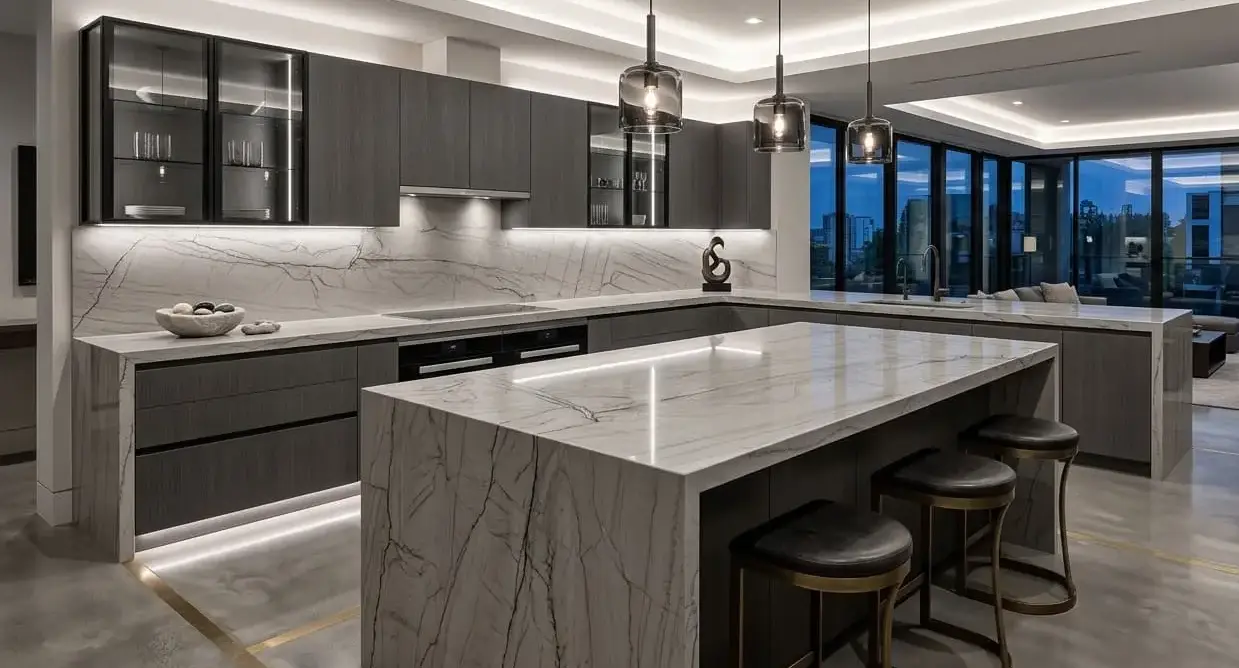
A full slab backsplash uses one continuous piece of material, usually matching or coordinating with the countertop, and runs from the counter up to the underside of the upper cabinets or, in some kitchens, all the way to the ceiling behind a range as a focal wall. Because there are no grout lines, the look reads as clean and uninterrupted, and cleanup is typically a matter of wiping down one smooth surface rather than scrubbing grout joints.
Quartz, quartzite, granite, marble, and porcelain slabs are all used for this application. Each comes with different care requirements:
- Quartz is non-porous and doesn't need sealing, which makes day-to-day cleaning simple. The tradeoff is that quartz contains a resin binder, and that resin can discolor or scorch if it's exposed to sustained high heat, so manufacturers generally recommend keeping a clearance gap or using a heat guard between a quartz backsplash and the burners on a range.
- Quartzite and granite are natural stone and handle heat better than quartz, but they're porous and need periodic sealing to resist staining, especially in a busy cooking zone.
- Marble has a soft, classic veined look that many homeowners love, but according to the Natural Stone Institute, marble is a calcareous stone that's sensitive to acidic substances like citrus or wine, which can etch an unsealed surface and leave a dulled mark rather than a true stain. It works best for cooks who don't mind a little visible character developing over time, or for kitchens where the marble is placed away from the main prep zone.
- Porcelain slab is a newer option in this category, typically used in a thinner panel format (commonly around 6mm) for wall applications like a backsplash. It's dense and low-porosity, and it resists heat and scratching well, with the tradeoff being that slab porcelain needs professional fabrication and installation, since the size and internal tension of the material make on-site cutting risky without the right tools.
A slab backsplash generally costs more upfront than tile because of the material and the precision cutting and installation involved, but many homeowners find the lower long-term maintenance worth the investment over the life of the kitchen. If you'd like to compare full-size slab materials in person, visit the Reno showroom to explore available options and finishes. You can also schedule a design consultation to discuss which slab material best fits your kitchen design and maintenance preferences.
Matching the Backsplash to Countertops and Cabinets
Whether to match the backsplash to the countertop or treat it as a separate design element is mostly a matter of preference, but there are a few patterns worth knowing.
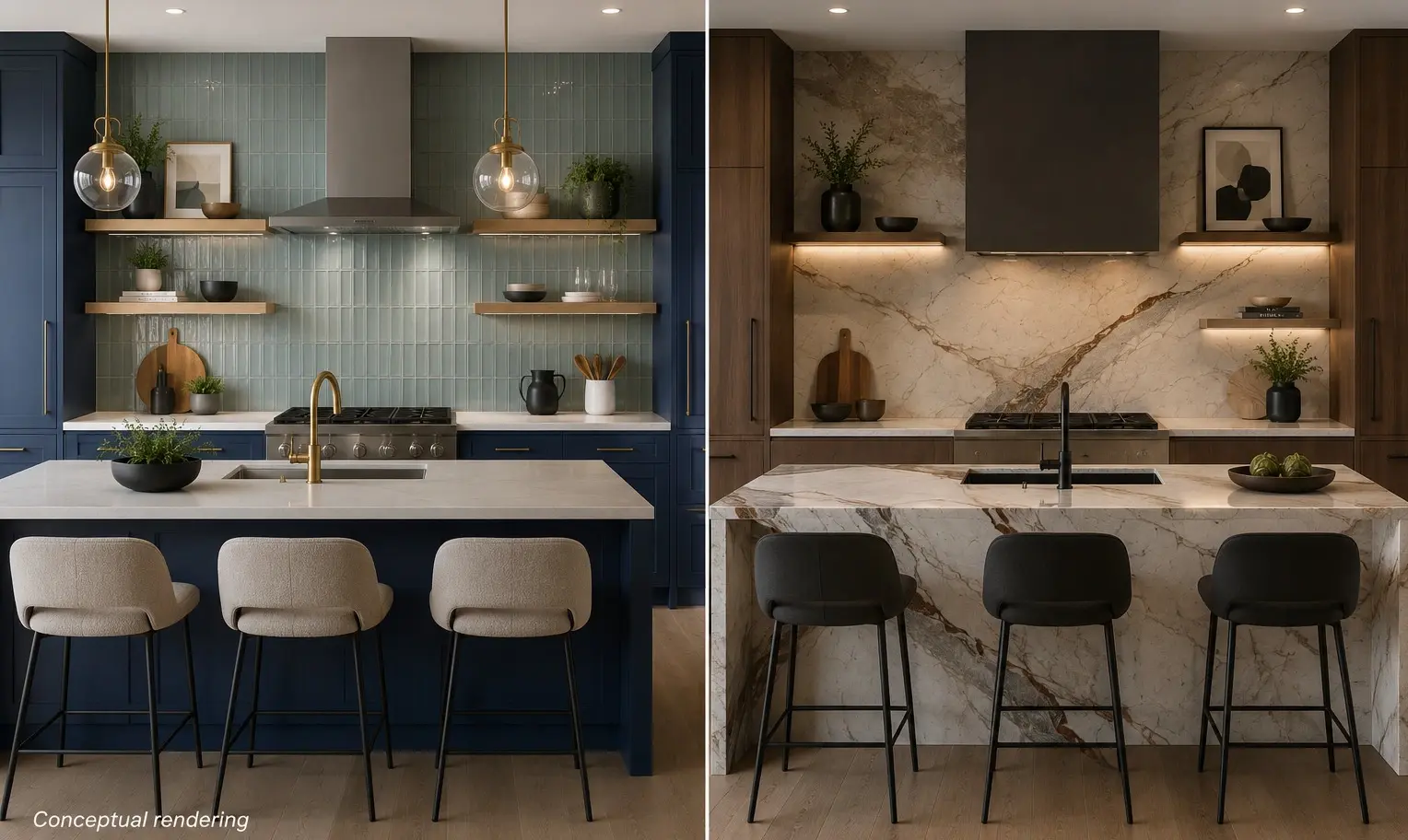
A backsplash in the same material as the countertop, especially as a full slab, creates a cohesive, monochromatic look that reads as more contemporary and tends to make a kitchen feel larger because the eye isn't broken up by transitions. A contrasting backsplash, such as a patterned tile against a solid-color countertop, gives a kitchen more visual interest and is an easier way to introduce a bold color or pattern without committing it to every surface in the room.
For kitchens with busy or heavily veined countertop material, a simpler, more neutral backsplash usually balances the space better than another bold pattern layered on top. The reverse is also true: a quiet, solid-color countertop gives more room to use a patterned or textured tile on the backsplash wall.
Behind the Range: A Special Case
The wall behind a cooktop or range sees more grease, splatter, and heat than any other part of the kitchen, which makes material choice especially important in that zone. Porcelain and ceramic tile, natural stone, and a quartz or stone slab installed with proper heat clearance all hold up well here, provided the manufacturer's clearance recommendations are followed for whichever material is chosen, especially with a high-BTU range. Some homeowners choose a small "picture frame" of tile in that specific zone even when the rest of the kitchen has a quartz slab backsplash, as an extra buffer against heat and grease in the highest-use spot.
Reno-Specific Considerations
Smoke Season and Indoor Cooking
Reno's late summer and early fall months bring a seasonal wildfire smoke pattern. Researchers at the Desert Research Institute tracked Reno's air quality over a 19-month period spanning 2017 to 2020 and found that smoke from more than 106 wildfires affected the city's air during that stretch, with smoke accounting for over half of the fine particulate pollution on the smokiest summer days. During smoky stretches, the standard advice is to keep windows closed and rely on indoor filtration and recirculated air rather than venting the house. For a kitchen, that means range hood and indoor air quality carry more of the load during those weeks, since cracking a window over the sink to clear cooking smoke and grease isn't always an option. The Home Ventilating Institute recommends a minimum ventilation rate based on the range's location and width, and that recommendation carries extra weight in a season when natural airflow isn't an option. A backsplash that wipes clean easily, whether that's a smooth slab or a glazed tile with a well-sealed grout joint, holds up better through a season where indoor cooking residue has fewer chances to vent outdoors.
Older Homes and Backsplash Upgrades
Many homes in Reno's older neighborhoods, including parts of the Old Southwest and Northwest, were built with a short 4-inch backsplash, a strip of the same countertop material running just a few inches up the wall, which was standard for the era. Updating to a full-height tile or slab backsplash is one of the more visible, lower-disruption upgrades available in a kitchen remodel, since it typically doesn't require moving plumbing, electrical, or cabinetry, just removing the old short backsplash and finishing the wall behind it. It's a common starting point for homeowners doing a kitchen refresh in phases rather than a full gut remodel.
By contrast, homeowners with newer construction in South Reno and Damonte Ranch are more likely to already have a full-height backsplash in place, since that's become a more common feature in newer kitchen builds generally. For those homeowners, a remodel is more often about upgrading the material itself, swapping a builder-grade tile for a slab or a more distinctive pattern, rather than adding height where there wasn't one before.
Conclusion
There's no single right answer between tile, slab, and natural stone. A few questions tend to help narrow it down:
- How much grout maintenance are you willing to take on, versus a smooth surface with a higher upfront cost?
- Do you want the backsplash to disappear into a cohesive look with the countertop, or stand out as its own design feature?
- Is the backsplash going directly behind a range or cooktop, where heat tolerance and clearance matter more?
- Are you updating the whole kitchen, or working in phases starting with the backsplash?
For Reno kitchens, two additional factors are worth weighing alongside those: the demands that wildfire smoke season places on indoor ventilation, and whether the home's age means the kitchen already has a full-height backsplash or is still due for one. Whichever direction fits best, seeing the actual material samples in the kitchen's own lighting remains the most reliable step before committing, and that comparison is easiest to do in person.
Nova Tile and Stone's Reno showroom, located at 12835 Old Virginia Road, Reno, NV 89521, carries tile, natural stone, quartz, sintered stone, and porcelain slab options for kitchen backsplash projects, along with the full range of flooring materials for the rest of the home. Tile samples can be taken home for $1 each, and the showroom offers free design consultations. It can be reached at (775) 331-6682.
Frequently Asked Questions
No. Backsplash and flooring are typically chosen independently, since they're rarely viewed together at the same angle. It's more common to coordinate the backsplash with the countertop or cabinet color, while the floor is treated as its own decision based on traffic and durability needs.
In most cases, existing tile should be removed first so the new material has a flat, stable surface to bond to, especially for a full slab, which requires a very even wall. Installing over old tile can also add bulk that interferes with outlet covers, cabinet trim, and the transition at the countertop edge.
This depends on the kitchen layout and budget. Some kitchens use a short backsplash, around 4 to 6 inches, in lower-use areas such as next to open shelving, while the area around the sink and range gets full-height coverage for better protection. There's no required minimum, and that mixed-height approach is common in remodels that are being phased over time.
Yes. Grout color affects both the overall look and the long-term maintenance. Lighter grout shows the tile pattern more clearly but can discolor faster in high-splash areas, while darker grout hides daily grime better but can make small tile joints look heavier. Many newer grout formulations resist staining better than older cement-based grouts, which is worth asking about when comparing tile options.
Most natural stone, including marble, travertine, and granite, is porous and benefits from sealing to resist staining, particularly in a kitchen where cooking splatter and acidic spills are common. The Natural Stone Institute notes that sealers act as repellents rather than true seals, making the stone more stain-resistant rather than stain-proof. How often resealing is needed depends on the specific stone and the sealer used, so it's worth checking the manufacturer's guidance for the material you choose.
Note: Some images on this page may be conceptual renderings created to illustrate design possibilities and may not depict actual installations.