Travertine slab is worth it for most homeowners: it costs less than marble and comparable mid-range granite, holds up well indoors and outdoors in mild climates like Rancho Cordova's, and needs only annual resealing to prevent staining. The trade-off is porosity, since travertine absorbs liquids more readily than granite or quartzite and etches from acidic spills, so it works best for homeowners willing to reseal it once a year rather than treat it as a maintenance-free surface. Compared to marble, travertine offers a similar warm, natural look at a lower price point with less pronounced veining.
What Travertine Actually Is
Travertine forms from mineral deposits left behind by hot springs and limestone caves, which is why it carries the small pits and channels that give the stone its recognizable texture. Quarries fill many of these natural voids with resin or a color-matched grout before the slab reaches a showroom, which is called a filled finish. Unfilled travertine keeps its open pores and rougher surface, and both versions are common in kitchens, bathrooms, and outdoor living spaces across the Sacramento region. For a broader look at how travertine stacks up against other stone types, this guide to natural stone countertops breaks down the pros and cons of each.
The stone comes in a range of tones, from soft ivory and beige to deeper walnut and rust shades, depending on the mineral content at the quarry site. Because it forms in layers, travertine often shows a linear or cloudy pattern rather than the bold veining associated with marble. This gives it a calmer, more uniform appearance that many homeowners in Rancho Cordova prefer for kitchens with a lot of cabinetry or an already busy backsplash.
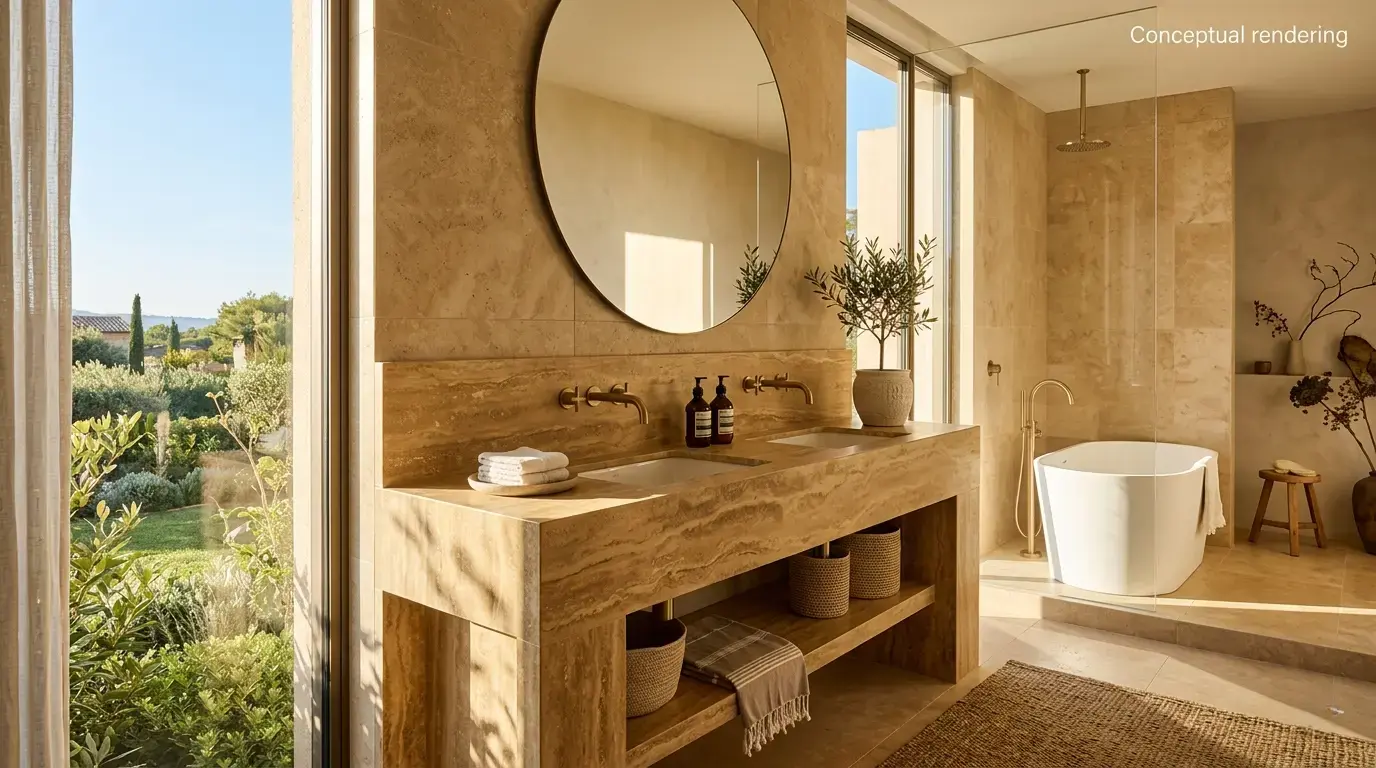
Travertine also comes in several finish options that change both its look and its performance. Polished travertine has a smooth, glossy surface that shows off color variation well but can be slippery when wet, making it a better fit for countertops or low-moisture floors than a shower pan. Honed travertine has a flat, matte finish that hides scratches and etching more easily than a polished surface, which is why it's a common choice for kitchen counters and floors. Tumbled and brushed finishes keep more of the stone's natural pitted texture and softened edges, giving a rustic, aged look that many homeowners choose for patios, pool decks, and outdoor kitchen surrounds, since the added texture also improves slip resistance underfoot. If you want to see how these finishes look in person before deciding, you can browse our current travertine selection online ahead of a showroom visit.
How Travertine Performs Day to Day
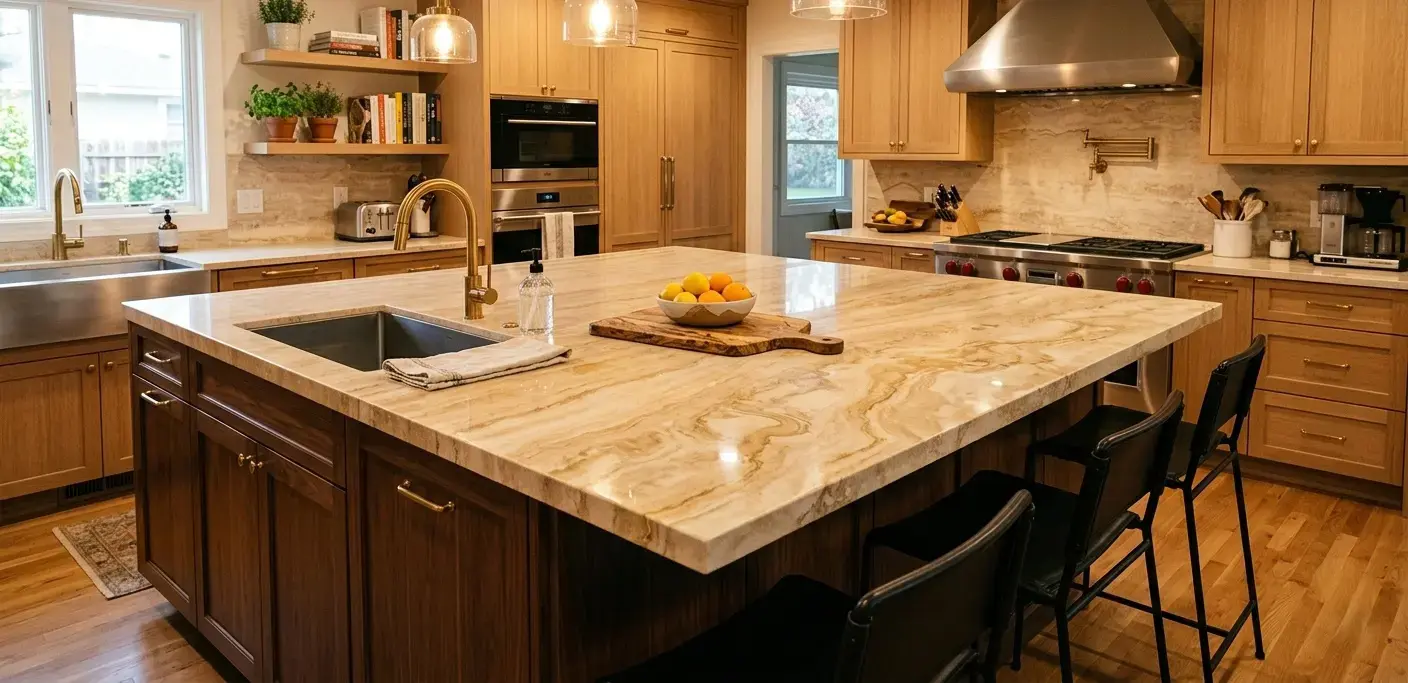
Travertine sits at the softer end of the natural stone hardness scale, typically ranking a 3 to 4 on the Mohs scale, which puts it below granite and roughly on par with or slightly softer than marble. It resists everyday wear reasonably well but is more prone to scratching or etching from acidic substances like lemon juice, vinegar, or wine than harder stones. This matters most on kitchen countertops, where spills happen regularly, and less on vertical surfaces like a fireplace surround or accent wall where contact is minimal.
Porosity is the main factor that separates travertine from denser stones. Even filled travertine retains some capacity to absorb liquids if the sealant wears down, which is why sealing schedules matter more here than they do with granite or quartzite. Left unsealed, travertine can develop stains from oil, wine, or coffee, and the surface may show water spots more readily in high-humidity applications like a shower surround.
None of this makes travertine a poor choice. It simply means the stone asks for a bit more attention than some alternatives.
Day-to-day care for travertine is straightforward once you know the ground rules. A soft cloth or mop with warm water and a pH-neutral stone cleaner handles regular cleaning without wearing down the sealant. Acidic cleaners, vinegar, and citrus-based products should stay off the surface entirely, since they react with the calcium carbonate in the stone and can leave a dull etched mark. Spills are best blotted rather than wiped, since wiping can spread an acidic liquid before it has a chance to be absorbed by a towel instead of the stone.
Travertine in Rancho Cordova's Climate
Rancho Cordova sees hot, dry summers and mild, wet winters, which affects how travertine performs depending on where it's installed. Indoors, climate control keeps humidity and temperature swings minimal, so sealed travertine countertops, floors, and shower surrounds hold up well with normal seasonal changes.
Outdoor applications require a bit more thought. Travertine is a popular choice for patios, pool decks, and outdoor kitchen surrounds because its natural texture provides a slip-resistant surface, and its light color reflects heat rather than absorbing it the way darker stones do. This is a relevant factor during Sacramento-area summers, when surface temperature around a pool matters as much as appearance. Outdoor travertine needs a sealant rated for exterior exposure and periodic reapplication, since sun and irrigation water will wear down protection faster than indoor use would. Filled travertine also tends to hold up better than unfilled travertine in outdoor settings, since fewer open pores means less water finding its way into the stone.
Freeze-thaw damage, where trapped moisture expands and cracks a porous stone, is a real concern for travertine in colder climates, but it's a much smaller factor in Rancho Cordova given the region's mild winters. If you're unsure whether a specific finish will hold up in your intended spot, a quick way to sort that out is to book a design consultation and talk through the application with our team.
Comparing Travertine to Granite, Marble, and Quartzite
Homeowners often ask how travertine stacks up against the other slab materials we carry, so here's a straightforward comparison. This stone countertop comparison covers similar ground if you want a second reference point.
Granite is denser and less porous than travertine, so it resists staining and etching better and needs less frequent sealing. Granite typically costs a comparable amount to mid-range travertine, though pricing varies widely by pattern rarity and slab size.
Marble is harder and generally less porous than travertine, which gives it somewhat better resistance to staining, though as a calcite-based stone it's just as vulnerable to etching from acids like vinegar or citrus. Marble tends to show more pronounced veining and a glossier look when polished, and it typically carries a higher price point than travertine for comparable slab sizes.
Quartzite is a much harder, denser stone that resists scratching and etching far better than travertine, making it a lower-maintenance option for households worried about daily wear. Quartzite slabs also tend to cost more, particularly for the rarer color patterns.
Travertine's difference from all three is its consistent, warm color palette and its lower cost relative to rarer marble and quartzite patterns, which makes it an accessible way to bring natural stone into a home without stretching the budget as far as some alternatives require.
What Drives the Cost of a Travertine Slab
Travertine pricing depends on the fill type, the finish, the slab's country of origin, and how large a single continuous slab you need for your countertop or floor layout. Unfilled, honed travertine tends to sit at the more affordable end of the natural stone spectrum, while polished or exotic color variations can approach the pricing of mid-tier marble.
For Rancho Cordova homeowners planning a full kitchen or bathroom renovation, it helps to view travertine slab cost in the context of the whole project rather than as an isolated line item. If you already have a specific bundle in mind, you can submit a slab quote request for exact pricing, and contractors or designers sourcing travertine for multiple projects can apply for a trade account for volume pricing.
Is Travertine the Right Fit for Your Home?
Travertine tends to suit households that want a warm, natural color palette, don't mind an occasional sealing task, and are less concerned about acidic spills damaging a kitchen counter.
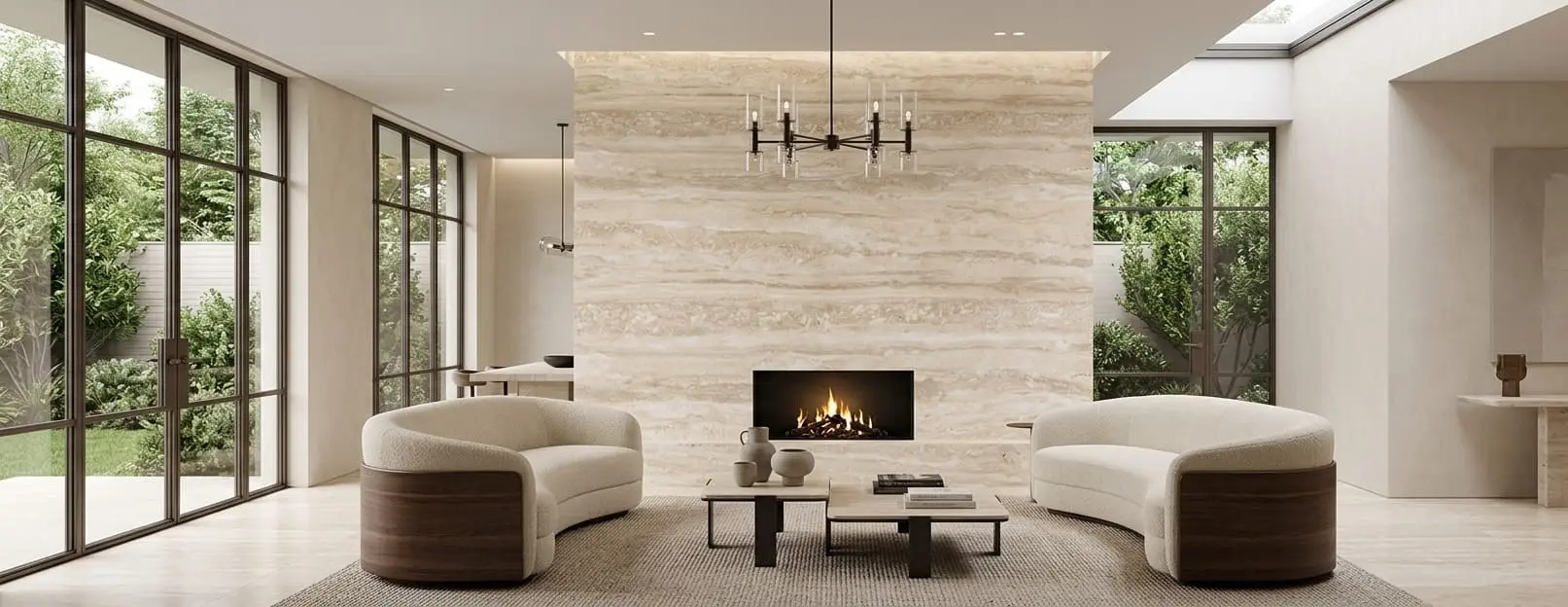
Beyond kitchen countertops, travertine slab shows up in a range of applications around a home. Bathroom vanities and shower surrounds take advantage of its warm tones in a smaller-footprint space when properly sealed, while flooring and wall cladding let the stone's natural pattern carry a whole room without competing with cabinetry or furniture. Fireplace surrounds are another common use, since travertine sees little direct contact and shows its texture and color without much risk of staining. Outdoors, it shows up just as often on pool decks, patios, and outdoor kitchen surrounds, where its cooler surface temperature and slip resistance are practical considerations in a Sacramento-area summer.
Households with young children who spill juice or condiments frequently, or anyone who wants a seal-it-once-and-forget-it surface, may find granite or quartzite a better match for a busy kitchen. If travertine doesn't end up being the right match, our full range of natural stone, tile, and flooring options gives you plenty of alternatives to explore.
One additional note for kitchen countertops specifically: because travertine is porous, it can absorb odors and staining agents more readily than granite or quartzite in direct food-prep zones. Many homeowners address this by reserving travertine for a kitchen island, bar counter, or backsplash rather than the primary prep surface, while others commit to a strict sealing and cleanup routine on their main counters.
Conclusion
If you're weighing travertine against other natural stone options for a kitchen, bathroom, or outdoor space, seeing the actual slab in person makes the decision much easier than judging it from a photo, since color, veining pattern, and finish vary from batch to batch. Our team can walk you through filled versus unfilled options, finish choices, and how each will hold up in your specific application, whether that's a kitchen island, a shower surround, or a pool deck. Stop by our Sacramento showroom at 6100 Warehouse Way, Sacramento, CA 95826, or give us a call at (916) 913-6682, to talk through what will work best for your Rancho Cordova home.
Note: Some images on this page may be conceptual renderings created to illustrate design possibilities and may not depict actual installations.
Frequently Asked Questions
Travertine and granite often land in a similar price range, though the exact cost depends on the fill type, finish, and slab size you choose. Unfilled, honed travertine tends to be one of the more affordable natural stone options, while polished or rare-pattern granite can cost more than standard travertine.
Travertine is more porous than granite or quartzite, so it can stain from oil, wine, or coffee if the sealant has worn down. A regular sealing schedule reduces this risk and keeps the surface protected from everyday spills.
Yes, travertine is a common choice for patios, pool decks, and outdoor kitchens because its texture provides slip resistance and its light color stays cooler underfoot in summer heat. Outdoor installations need an exterior-rated sealant and periodic reapplication to hold up against sun and irrigation exposure.
Sealing frequency depends on the finish and how much daily use the surface gets, but many homeowners reseal travertine roughly once a year, with high-moisture areas like showers sometimes needing more frequent attention. A simple water-bead test, where water no longer beads up on the surface, is a sign it's time to reseal.
Natural stone surfaces generally appeal to buyers, and travertine's warm color palette works in a range of design styles. Buyers who prioritize low maintenance may weigh travertine's sealing needs against harder stones like granite or quartzite when evaluating a kitchen or bathroom.