Travertine is generally not considered an expensive natural stone. It sits in the mid-range of natural stone pricing, typically costing less than marble or quartzite and more than basic ceramic tile, which makes it one of the more accessible natural stone options for South Lake Tahoe homeowners. What changes the picture is grade, whether it's installed as tile or slab, and how this mountain climate's freeze-thaw cycles affect what an exterior installation actually requires to hold up over time.
South Lake Tahoe sits at roughly 6,237 feet in elevation. Its mix of vintage cabins, remodeled vacation homes, and newer construction around neighborhoods like Tahoe Keys, Montgomery Estates, and the Ski Run Boulevard corridor means travertine gets requested for everything from bathroom floors to fireplace surrounds to patio pavers, both indoors and out.
What Determines Travertine's Price
Travertine is sold in three general grades, and the grade you choose has the biggest single impact on cost.
Commercial grade (also called third grade) has visible holes, thickness variation, and color inconsistency. It's the most economical option and works reasonably well for utility spaces or rustic outdoor areas where those imperfections read as character rather than flaw.
Standard grade (second grade) is the most commonly installed option. It has smoother, more uniform cuts with fewer surface voids, sitting in the middle of the price range, and it works well for everyday flooring, patios, and standard bathrooms.
Premium grade (first grade) sits at the top of the range, with minimal holes, consistent color, and uniform thickness. This is the grade most often recommended for higher-visibility rooms or for any exterior application in a climate that sees hard freezes.
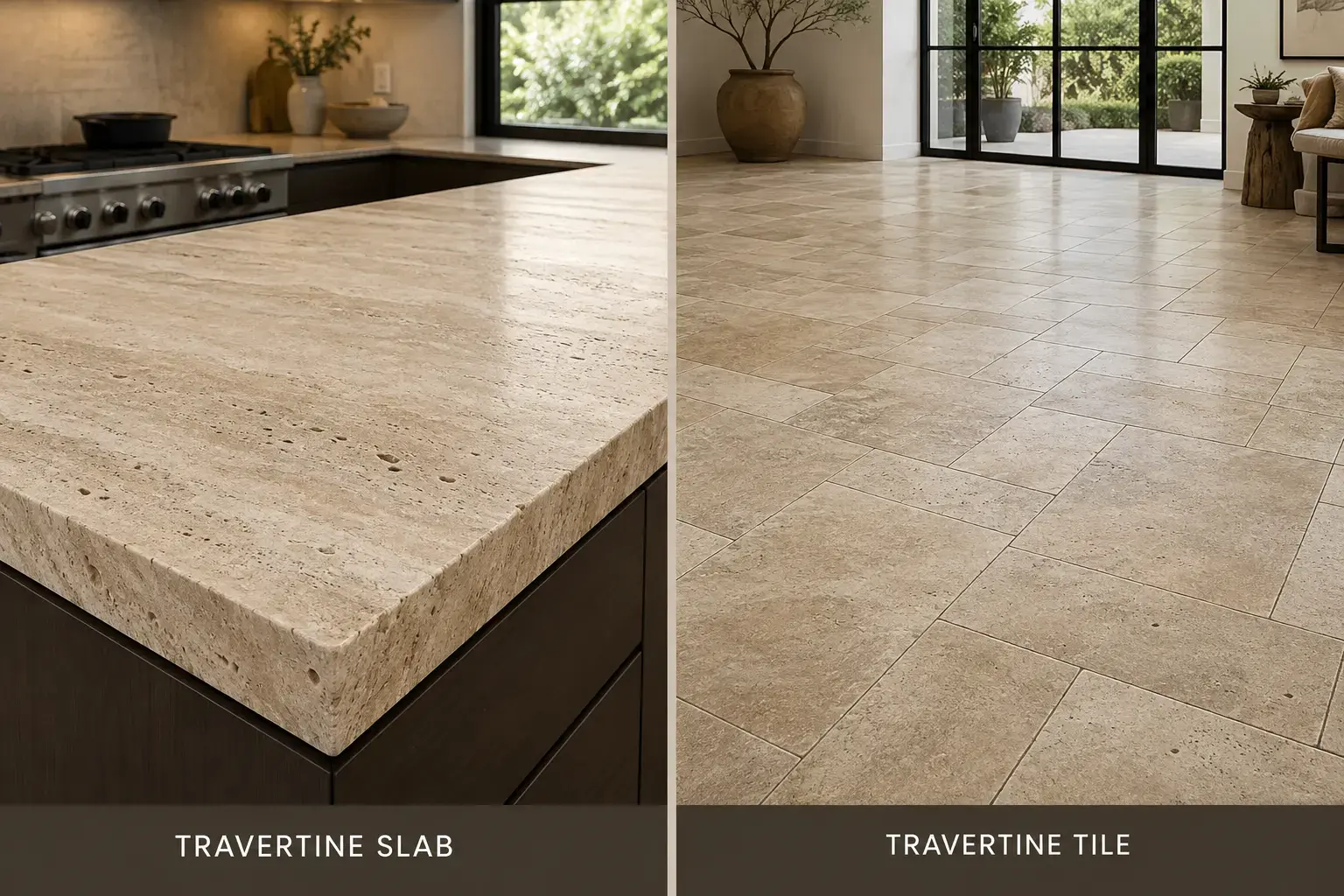
Beyond grade, slab and tile pricing work differently. Countertop slabs cost meaningfully more than tile because of the material size and the fabrication work involved in cutting, templating, and edge-profiling a single large piece. Tile, by comparison, is lighter, easier to handle, and generally the more budget-friendly path for flooring, walls, and backsplashes. Labor is a separate cost layer on top of material, and it moves with pattern complexity, how uncommon the color or veining is, and whether old flooring needs to come out first, as this grade-by-grade cost breakdown shows in more detail.
How Travertine Compares to Other Materials
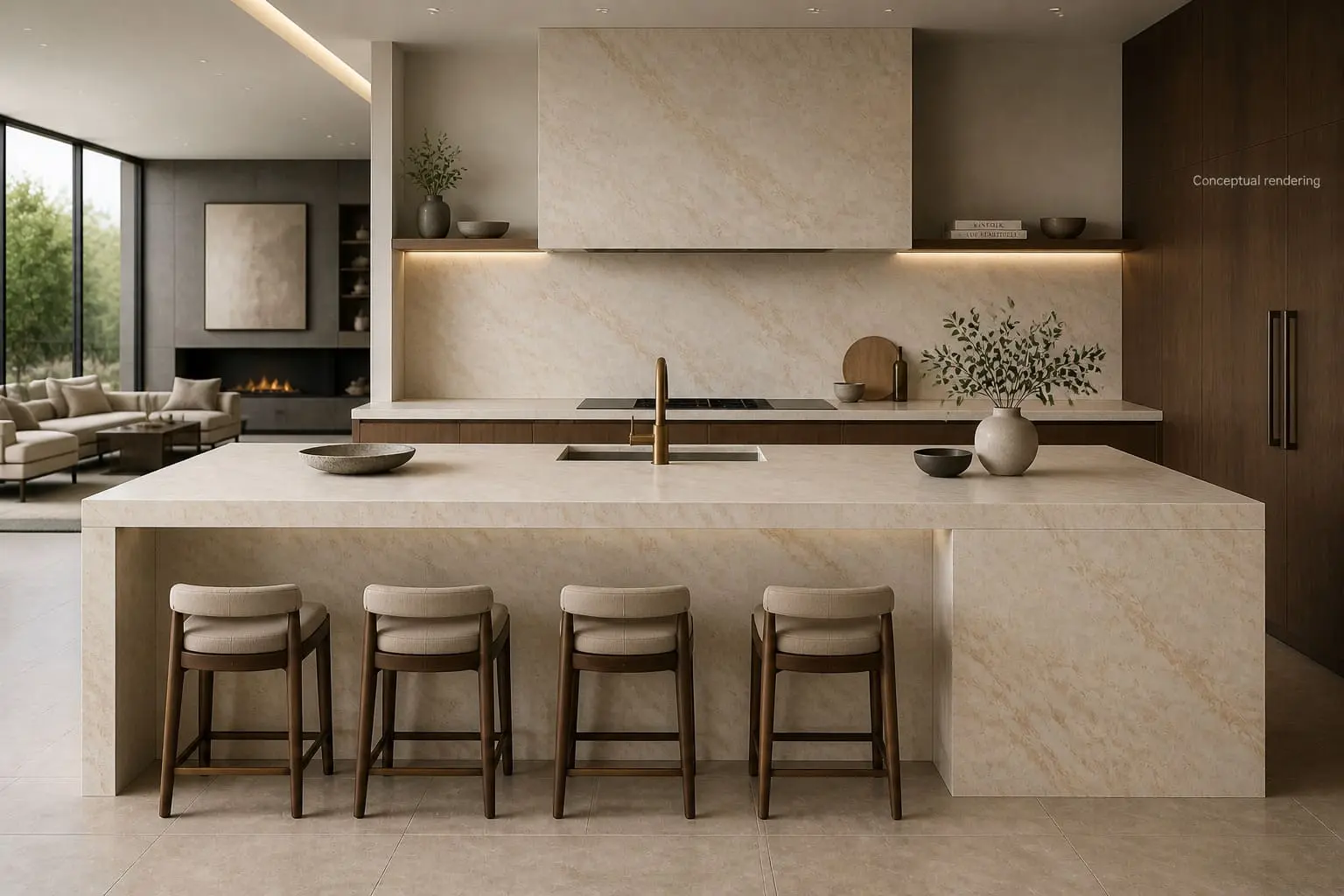
Travertine's price range overlaps heavily with limestone and sits below quartzite and many marbles, but above basic porcelain tile. For countertops specifically, engineered quartz spans a wide range depending on brand and edge work, while natural stone slabs like granite and quartzite tend to sit at the higher end once fabrication is included. Travertine tile for floors tends to cost more than laminate or standard LVP, but less than natural hardwood, a comparison covered in more detail by this countertop material cost comparison.
Where travertine tends to win on value is in larger-format flooring or wall applications, where its natural variation covers square footage without the higher fabrication costs that countertop slabs require. Where it tends to lose value, relatively speaking, is in exterior applications in cold climates, which is the piece most relevant to a South Lake Tahoe project.
What Pushes the Price Up or Down
A few factors move travertine pricing more than people expect:
Finish. Polished and honed finishes cost more to produce than tumbled or brushed finishes. Tumbled and brushed finishes may offer more texture underfoot than polished stone, but suitability for wet or icy entryways should be confirmed with product-specific slip-resistance data.
Filled versus unfilled. Filled travertine has its natural surface holes patched with resin or cement for a smoother look, which typically adds cost. Unfilled or tumbled travertine is often the more economical choice for exterior use.
Slab versus tile. Slabs cost significantly more than tile because of weight, cutting precision, and the labor required to template and set a single large piece, particularly for countertops.
Edge profiles. Custom or ornate edge work on a slab adds to the base material and installation cost.
Sealing. Because travertine is porous, sealing is part of the total project cost rather than an optional add-on, and this becomes especially relevant outdoors, which the next section covers.
Travertine and South Lake Tahoe's Climate: An Added Cost Factor
South Lake Tahoe's elevation and mountain setting bring cold, snowy winters with real freeze-thaw cycles from November through April. That climate doesn't change what travertine costs to buy, but it does change what it costs to install and maintain correctly, which is worth understanding before deciding the stone is or isn't a good fit for your project.
Travertine is naturally porous, and in a hard freeze, any moisture that has worked its way into the stone can expand as it freezes, leading to surface flaking or cracking over time. Stones with high inherent porosity, including travertine and limestone, don't get the same natural protection from a sealer that a low-porosity stone like granite provides on its own. That doesn't rule travertine out for this area, but it does mean a few things typically get added to the project scope for any exterior use, patio, walkway, or outdoor fireplace surround:
- Denser, premium-grade material is generally recommended over commercial or standard grade for anything exposed to the elements.
- Sand-set or mud-set installation, rather than a rigid mortar bed, allows the stone to move slightly with freeze-thaw cycles instead of cracking against a fixed base.
- Proper drainage and slope underneath the installation keep water from pooling and freezing under the stone, which causes as much damage as moisture entering from the top.
- A penetrating sealer applied to all faces, not just the top surface, before installation, with more frequent resealing for exterior applications than interior ones.
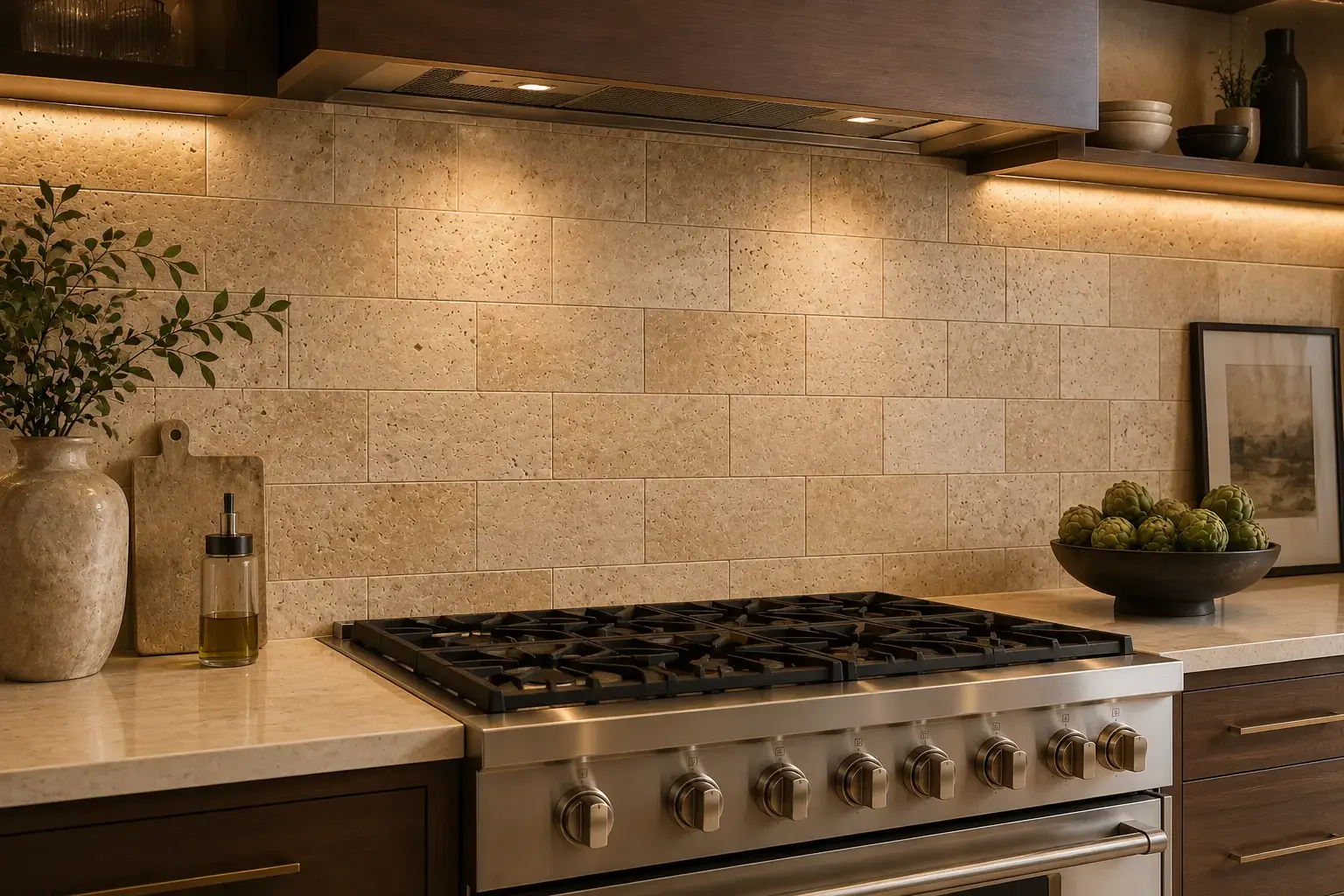
Indoors, none of this is a significant concern. A travertine floor, backsplash, or fireplace surround inside a heated South Lake Tahoe home behaves the same as it would anywhere else, and standard sealing maintenance is enough. It's specifically exterior applications, patios, entryway steps, and pool or hot tub surrounds, where the added installation steps and more frequent resealing become part of the real cost of the project over its lifetime.
Getting an Accurate Quote for Your Project
Because grade, finish, and application change the cost so much, a general overview only gets you so far. The most reliable way to know what a specific travertine project will run is to look at actual slabs or tile lots and talk through the application with someone who can flag whether a piece is suited for an interior floor versus an exterior patio.
Nova Tile and Stone's Reno showroom, located at 12835 Old Virginia Road, Suite 24, serves homeowners throughout the region, including South Lake Tahoe, with free design consultations and a live inventory of natural stone slabs. As a direct stone importer, Nova Tile and Stone works with a wide range of travertine grades and finishes, and tile samples are available to take home so you can see how a specific piece looks in your own lighting before committing. Slab materials don't have take-home samples, but the design team can walk through slab options and application recommendations in person or by appointment. Nova Tile and Stone supplies materials only; fabrication, installation, and setting materials like mortar, grout, and thinset are handled by your own contractor or installer.
Conclusion
Travertine isn't the cheapest natural stone option, but it isn't the most expensive either. For an interior floor, wall, or countertop, it's a genuinely reasonable mid-range choice, particularly in standard or premium grade. For exterior use in a place like South Lake Tahoe, the material itself is only part of the picture. Grade, installation method, drainage, and a proper sealing schedule all factor into what the project actually costs over time, and skipping any of them tends to cost more later in repairs than it would have upfront in doing it right.
Frequently Asked Questions
It depends on the quartz brand and edge work, but travertine slab countertops and mid-range engineered quartz often land in overlapping territory. Because quartz generally doesn't require sealing, its lifetime maintenance can end up lower-cost even when the upfront price is close to travertine's.
Yes. Larger-format tiles, such as 18-by-18-inch or 12-by-24-inch pieces, typically cost a bit more per square foot than smaller standard tiles because they use more of each quarried block and generate more cutting waste. They also mean fewer seams and fewer grout lines across a large floor, which can offset some of that difference in labor time.
Remnant pieces, left over from another project's cut, are sometimes available at a reduced cost and work well for smaller applications like a vanity top or hearth surround. Color and pattern matching to a larger room isn't guaranteed, though, since remnants come from whatever slab happened to be cut previously.
Yes, to some degree. Travertine is quarried in various regions, including Turkey, Italy, and Mexico, and the source affects the stone's color, density, and consistency. Import distance and handling can add to the landed cost of the material, which is one reason pricing can vary between suppliers carrying the same general grade of stone.
A covered patio is still exposed to the same freeze-thaw temperature swings, so premium grade and proper sealing still matter. It sees less direct snow accumulation and meltwater pooling than an uncovered space, though, which can mean a slightly longer interval between resealings even with the same grade and installation method.
Note: Some images on this page may be conceptual renderings created to illustrate design possibilities and may not depict actual installations.