No, Taj Mahal quartzite is not outdated in 2026. It remains one of the most requested natural stones among interior designers, valued for its soft ivory-and-gold veining and a Mohs hardness of roughly 6.5 to 7.5, well above marble's 3 to 5. That durability, combined with a neutral palette that doesn't chase passing color trends, is why the stone keeps appearing on 2026 design lists rather than falling off them. For homeowners in Kings Beach and the broader North Lake Tahoe area, where kitchens face heavy seasonal use, wood-burning stoves, and wide temperature swings, that mix of resilience and timeless color makes Taj Mahal quartzite a practical choice rather than a passing trend.
What Is Taj Mahal Quartzite?
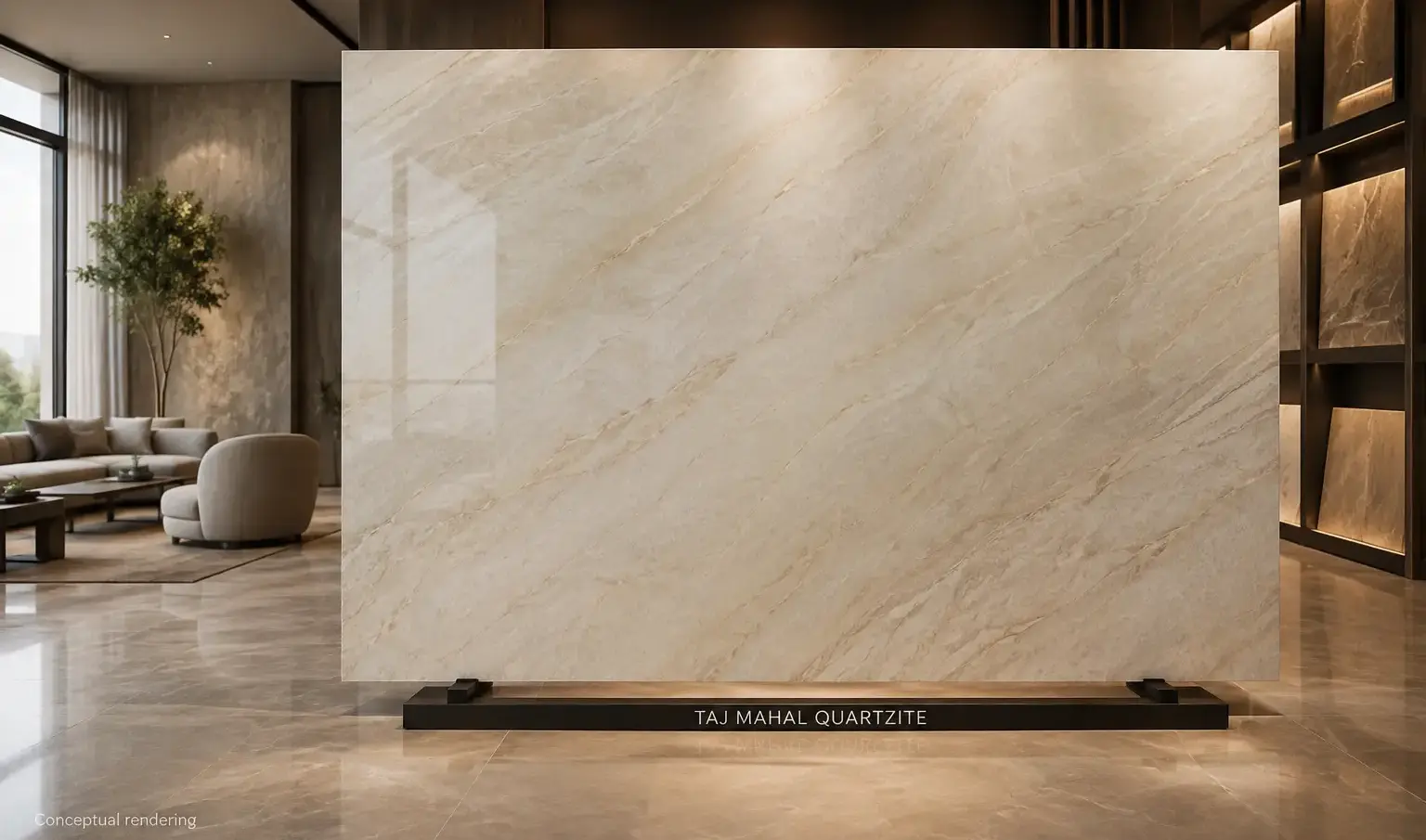
Taj Mahal quartzite is a natural stone quarried primarily in Brazil. Despite its name, it has no direct connection to the monument in Agra, India. The name comes from its resemblance to the pale, warm marble the Taj Mahal is built from: a soft white to creamy ivory background threaded with subtle veining in beige, gold, taupe, or soft gray.
As a true quartzite, it forms through a metamorphic process that fuses sandstone into an interlocking network of quartz crystals under intense heat and pressure deep in the earth over long periods, producing a dense, crystalline stone. On the Mohs hardness scale, Taj Mahal typically measures between 6.5 and 7.5, which puts it ahead of marble (roughly 3 to 5) and on par with or slightly harder than most granite. That hardness is what separates genuine quartzite from engineered quartz surfaces or porcelain slabs that borrow the same name and color palette.
Why the "Outdated" Question Comes Up in the First Place
Kitchen materials move in cycles, and any stone that becomes widely popular eventually gets asked whether it has peaked. Taj Mahal quartzite saw a surge in demand over the past several years as homeowners searched for a marble look without marble's maintenance demands, and widespread use naturally invites the question of whether a material has become overexposed.
Two things tend to get conflated in that conversation. One is genuine design fatigue, where a look becomes so common that it starts to feel default rather than distinctive. The other is confusion between the natural stone itself and the flood of engineered quartz and porcelain products marketed under similar "Taj Mahal" naming, which vary widely in quality and can wear differently than the real material. The natural stone itself has not lost favor. What has shifted is how homeowners are choosing to use it.
What the Current Design Data Actually Shows
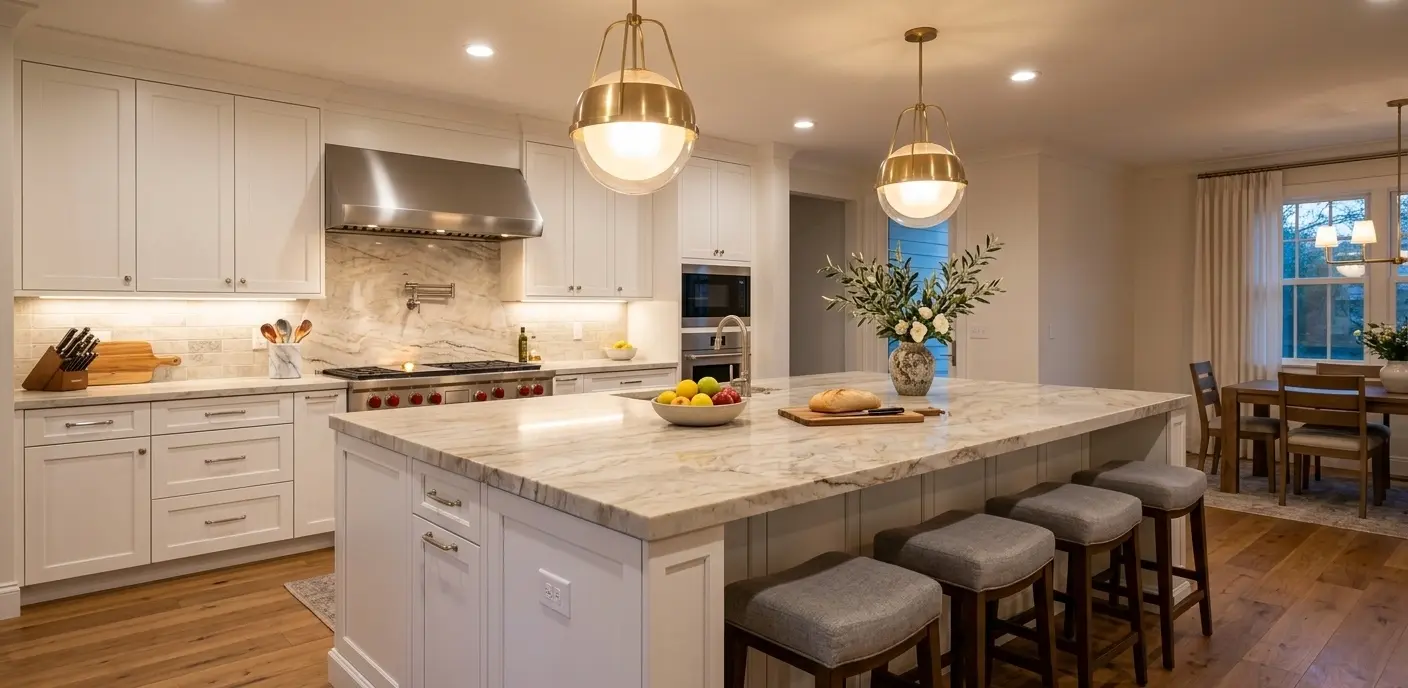
Recent industry coverage points the other direction from "outdated." A 2026 kitchen trends roundup from a national home design publication specifically singled out quartzite, and Taj Mahal by name, as one of the stones designers expect to see the most through next year, citing its natural variation and resilience for daily use. That same coverage noted a broader shift back toward natural stone generally, driven partly by homeowners' growing hesitation around the health and environmental concerns tied to manufacturing engineered quartz.
Its neutral, warm palette also works against the usual reason countertops end up looking dated: color-driven trends. Surfaces tied to a specific gray, greige, or stark-white moment tend to date visibly once that moment passes. Taj Mahal's warm ivory base was never anchored to one particular color cycle, which is why it continues to pair well with new cabinet colors and finishes as they come into style, rather than clashing with them the way trend-driven surfaces often do.
The Marble Comparison Homeowners Keep Making
Much of the "is it outdated" question actually traces back to a related comparison: quartzite versus marble. Interior designers found a consistent theme, that many clients are actively moving away from polished marble toward quartzite specifically because marble's upkeep does not match the pace of daily life, while quartzite delivers a similar aesthetic with meaningfully less maintenance.
For a second home or full-time residence in Kings Beach, where a countertop might see anything from muddy hiking boots in the mudroom sink to a full house of holiday guests, that practicality carries real weight.
Why Taj Mahal Quartzite Fits a North Lake Tahoe Home
Kings Beach sits on the north shore of Lake Tahoe at roughly 6,250 feet elevation, close to the lake's own surface elevation of about 6,225 feet, in a stretch of the Sierra Nevada known for a lakeside beach town character: a mix of lakefront cottages, rustic cabins, and modern mountain homes, many of which see heavy seasonal turnover between full-time residents and vacation guests. That kind of use puts real demands on a kitchen surface.
A few practical reasons Taj Mahal holds up well in this setting:
- Heat resistance. Many North Tahoe kitchens sit near a wood stove, fireplace, or see frequent use of slow cookers and cast iron during the winter season. Quartzite's density means it's less prone to scorching or discoloring from occasional heat exposure than softer stones or resin-based surfaces, though a trivet is still the safer habit for any hot cookware.
- Scratch and wear resistance. Vacation rental kitchens and busy family kitchens alike see more daily traffic than a typical single-household kitchen. Quartzite's hardness holds up to that pace better than marble.
- A palette that works with mountain materials. Taj Mahal's warm ivory and gold veining pairs naturally with the wood-and-stone design language common in Tahoe-area homes, without the cool starkness of some white quartz alternatives.
Where Taj Mahal Quartzite Fits Beyond the Kitchen Counter
Countertops are the most common use, but Taj Mahal quartzite shows up in several other spots in Tahoe-area homes:
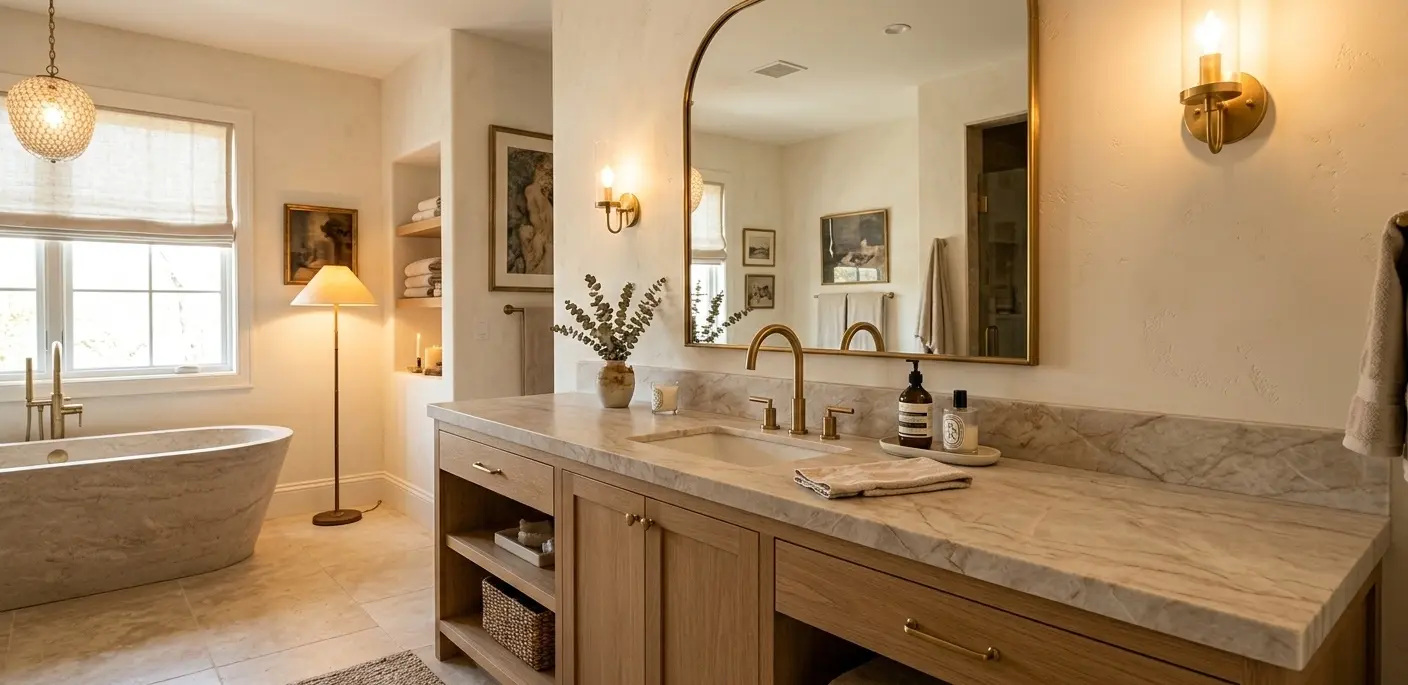
- Bathroom vanities. Its resistance to moisture and staining makes it a natural fit for primary bath and guest bath vanities, especially in homes with well water or heavier mineral content.
- Waterfall islands. Extending the slab vertically down the sides of an island carries the veining in one continuous sweep, which reads well against the timber framing common in mountain homes.
- Fireplace surrounds. Many North Lake Tahoe living rooms are built around a stone or masonry fireplace. Taj Mahal's heat tolerance and warm tone make it a reasonable alternative or complement to river rock or granite surrounds.
- Accent walls. In smaller spaces like a powder room or a wet bar, a single slab used as a backsplash-to-ceiling accent avoids the cost of a full kitchen while still bringing in the material.
How to Keep Taj Mahal Quartzite From Feeling Dated
If the concern is less about the stone itself and more about avoiding a look that feels like it was pulled straight from a builder-grade spec sheet, a few choices make a noticeable difference:
- Finish selection. A honed or leathered finish gives Taj Mahal a softer, more textured look than high-polish, which tends to read as more current and also hides fingerprints and water spots better in a high-use kitchen.
- Edge profile. A simple eased or bullnose edge keeps the stone looking intentional rather than dated, while more elaborate ogee profiles can start to feel more traditional.
- Pairing with cabinetry. Taj Mahal reads differently against warm wood tones versus painted white cabinetry, and against matte black hardware versus polished brass. Choosing cabinetry and fixtures that complement rather than compete with the veining keeps the overall kitchen feeling cohesive.
- Slab selection. Because it is a natural stone, no two slabs are identical. Selecting a slab with veining that suits the scale of the room, rather than defaulting to whatever is in stock, helps the finished kitchen feel custom rather than generic.
You can also explore our offerings to see available slab options, then request a slab quote when you find a Taj Mahal quartzite slab that fits your project.
Caring for Taj Mahal Quartzite in a Lake Tahoe Climate
Taj Mahal quartzite is low maintenance relative to marble, but it is not maintenance-free. A few care basics apply particularly well to the North Tahoe climate:
- Sealing. Despite its density, quartzite benefits from periodic sealing to guard against staining, particularly in kitchens that see wine, coffee, or cooking oil on a daily basis.
- Everyday cleaning. A mild soap and soft cloth are sufficient for regular cleaning. Harsh acidic cleaners are unnecessary and can dull the sealant over time.
- Seasonal considerations. Homes that sit closed up for stretches during the off-season benefit from a fresh sealant check before opening back up for the summer or winter rush, since fluctuating humidity and temperature can affect how well a sealant holds.
When Taj Mahal Quartzite Might Not Be the Right Fit
No material is the right choice for every project, and it's worth naming where Taj Mahal falls short of the mark:
- Strict budgets. As a premium natural stone, Taj Mahal typically costs more than granite or entry-level engineered quartz. If cost is the deciding factor, those alternatives can deliver a similar light, veined look for less.
- A preference for stark, cool white. Taj Mahal's base tone runs warm, ivory, and creamy rather than bright white. Homeowners set on a crisp, cool-white kitchen usually end up happier with an engineered quartz built for that exact look.
- Multi-unit consistency needs. An owner managing several rental units in Kings Beach who wants every kitchen to look identical will find natural variation works against that goal. An engineered surface reproduces far more predictably from unit to unit.
Conclusion
Taj Mahal quartzite has stayed relevant for kitchens and bathrooms because its appeal was never tied to a single design moment. For a Kings Beach or North Lake Tahoe home, that translates into a countertop that holds up to real daily use, whether the house is a full-time residence or a heavily booked vacation rental, without asking homeowners to compromise on style to get there.
Comparing actual slabs side by side, rather than judging the stone from a photo, is usually the deciding factor for homeowners weighing quartzite against marble or engineered alternatives, since veining, tone, and finish can read differently under different lighting.
Nova Tile and Stone's Reno showroom is located at 12835 Old Virginia Rd, Suite 24, Reno, NV 89521, and can be reached at (775) 331-6682.
Frequently Asked Questions
No. Taj Mahal quartzite has held steady popularity for several years rather than spiking and fading the way seasonal color trends do, and it continues to be named by designers as one of the top natural stones for 2026 kitchens.
Taj Mahal quartzite is a natural stone formed from compressed sandstone, while Taj Mahal quartz is an engineered product made from crushed stone and resin designed to mimic its look. Compared to granite, natural Taj Mahal quartzite is generally just as hard or slightly harder, with a softer, more marble-like veining pattern.
Yes. Its resistance to heat and scratching makes it well suited to homes with wood stoves, heavy cooking use, or frequent guest turnover, all common in Kings Beach and North Lake Tahoe properties, whether full-time residences or vacation rentals.
Most homeowners reseal Taj Mahal quartzite roughly once a year, though kitchens with daily exposure to wine, oil, or acidic foods may benefit from checking the seal more frequently. A simple water-droplet test can show whether a surface still repels moisture properly.
Yes. Its neutral, warm veining pairs well with painted cabinetry and traditional details as easily as it does with minimalist, modern layouts, which is part of why it has not become tied to one particular design era.
Note: Some images on this page may be conceptual renderings created to illustrate design possibilities and may not depict actual installations.