Onyx is not recommended for a Granite Bay kitchen countertop, but it works well as a backlit bar, vanity top, or accent feature in a kitchen or bathroom. Compared to granite, quartzite, or marble, onyx is softer, more porous, and more prone to scratching and etching, which is why it performs best in lower-traffic spaces rather than as a daily food-prep surface. For Granite Bay homeowners drawn to onyx's translucent glow and dramatic veining, the real design decision isn't whether the stone looks good. It's choosing the right application for it.
Granite Bay has no shortage of large, light-filled kitchens and spa-style bathrooms, which is exactly the kind of setting where onyx tends to shine. But onyx behaves differently than the granite, quartzite, or marble most homeowners are used to shopping for, so it helps to understand what you're getting into before you commit a slab to your project. This Old House's overview of stone countertop options is a helpful starting point if you're comparing onyx against more traditional choices.
What Makes Onyx Different From Other Natural Stone
Onyx forms in caves as mineral-rich water deposits layer after layer of calcite or aragonite, which is why the stone develops such fluid, banded patterns. That same formation process is what gives onyx its most distinctive trait: translucency. Cut thin enough and lit from behind, onyx glows, letting light pass through its veining in a way granite and quartzite simply can't replicate.
Color range is wide. Depending on the mineral deposits present, onyx slabs can lean toward warm honey and amber tones, cool green and white, or deeper multi-toned blends with heavier veining. Each slab carries its own pattern, so if you're chasing a specific look, it's worth seeing the actual slab in person rather than working from a sample chip. You can see what else is available on our showroom floor to compare onyx against other natural stone options in person.
Where Onyx Makes Sense in a Granite Bay Home
Because onyx is softer and more porous than granite, quartzite, or marble, it tends to perform best in lower-traffic, lower-impact spaces where its visual impact can take center stage without daily wear working against it.
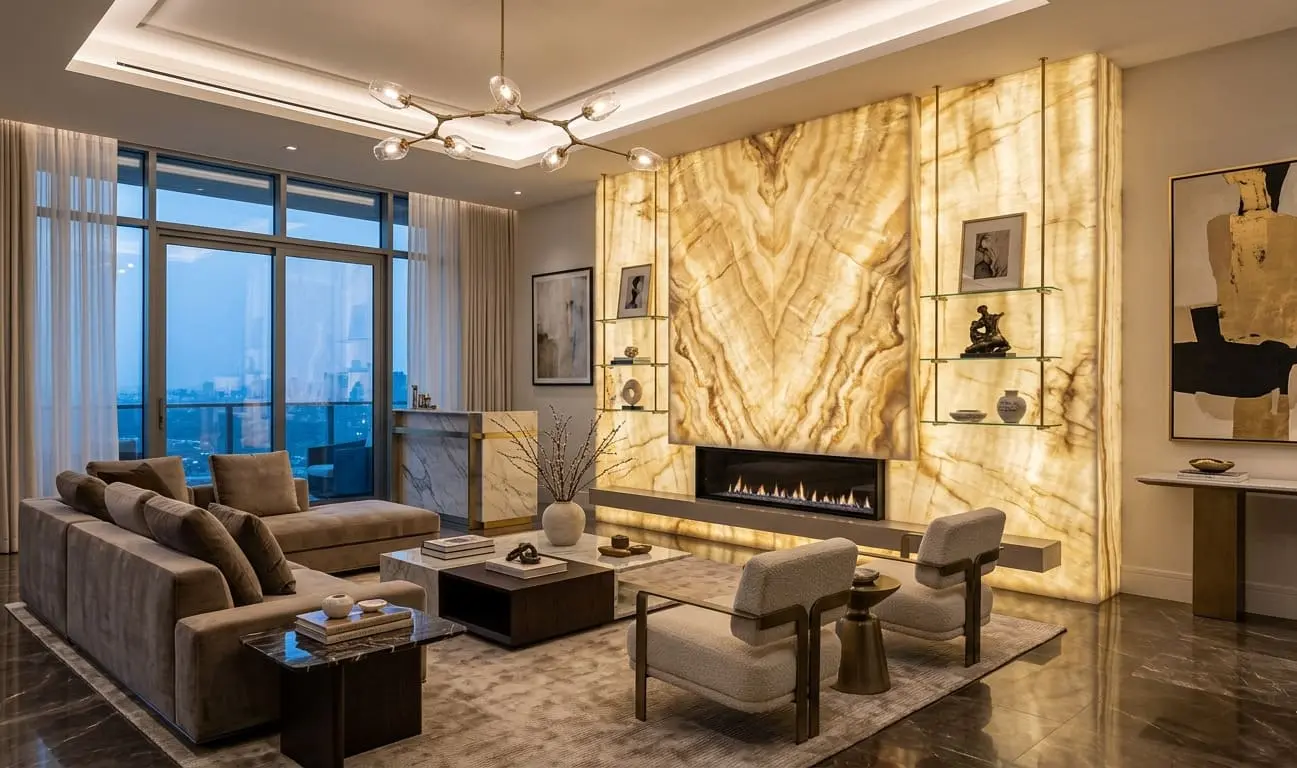
Backlit features. A backlit onyx wall, bar front, or shower panel is where the stone earns its reputation. With lighting installed behind the slab, the veining and translucency become the focal point of the room.
Wet bars and wine rooms. These spaces see far less abuse than a kitchen countertop, which makes them a natural fit for onyx's more delicate nature.
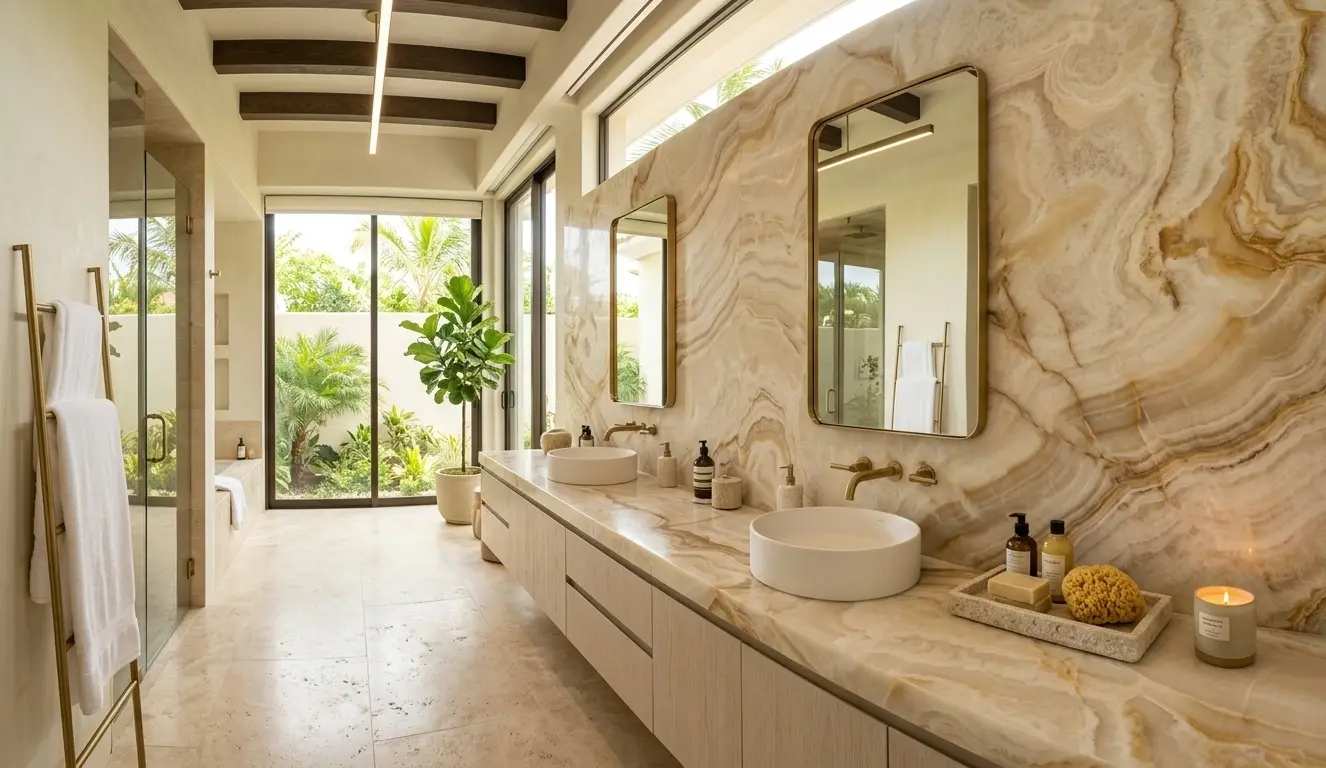
Bathroom vanities. A vanity top handles far less than a kitchen island, so onyx can hold up well here, particularly in a primary bath where the surface isn't exposed to knives, hot pans, or acidic foods on a daily basis.
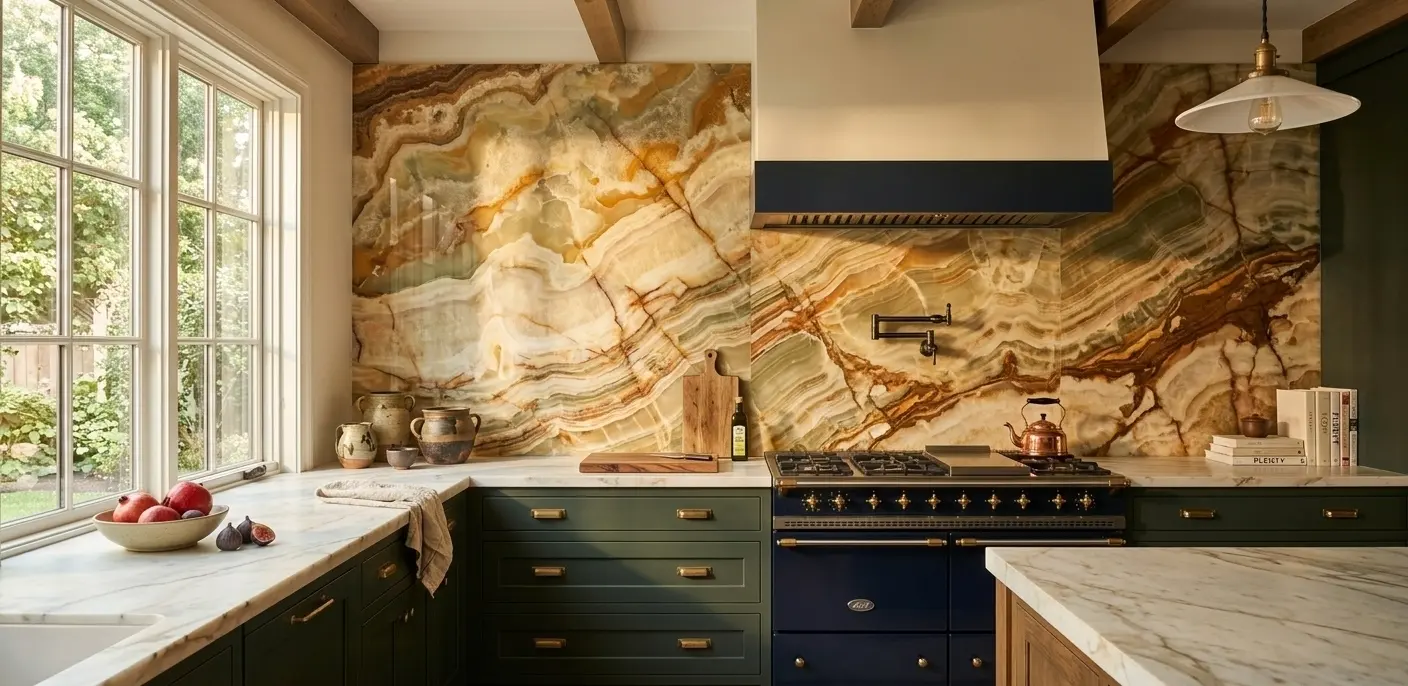
Accent islands or waterfall panels. Some homeowners use onyx as a secondary material, pairing it with a harder-wearing stone for the main prep surface while reserving onyx for a waterfall edge, backsplash, or decorative island face. You can browse our live slab inventory to see current onyx and pairing-stone options in person.
Fireplace surrounds and media walls. Living rooms and great rooms rarely see the spills and heat exposure a kitchen does, which makes a fireplace surround or media wall another low-traffic spot where onyx's veining and glow can become a room's centerpiece.
Full kitchen countertops. This is where we'd encourage some caution. Onyx is more prone to etching, scratching, and staining than granite or quartzite, and it requires more frequent sealing to help protect against everyday spills. For an active kitchen handling regular cooking and cleanup, a harder stone will generally hold up with less upkeep.
Weighing the Pros and Cons
What onyx offers:
- A translucent quality no other natural stone can match, especially with backlighting
- A wide range of colors and dramatic veining patterns
- A strong option for a focal-point feature rather than a workhorse surface
- A striking option for feature installations like backlit walls or bar fronts where visual impact matters more than daily durability
What to plan around:
- Higher porosity, meaning spills should be wiped up quickly to avoid staining
- Increased susceptibility to scratching and etching compared to granite or quartzite
- More frequent sealing needed to maintain performance over time
- A higher cost per square foot in many cases, given the stone's rarity and the care required in fabrication
None of this means onyx is a poor choice. It means onyx rewards being used where its strengths matter most and its weaknesses matter least. Fine Homebuilding's guide to natural stone countertops offers a useful side-by-side look at how different stone types compare on durability and care.
Pairing Onyx With a Primary Countertop Material
Many Granite Bay homeowners who love the look of onyx choose to pair it with a harder stone rather than using it across an entire kitchen. In this approach, granite or quartzite typically covers the main island or perimeter counters where daily prep and cleanup happen, while onyx is reserved for a waterfall edge, a bar top, or a decorative backsplash panel. This pairing lets a kitchen feature onyx's translucency and veining in a focal point without exposing the whole surface to the wear of daily cooking.
This same approach works well in a primary bathroom. A quartzite or marble vanity deck paired with an onyx-clad tub surround or accent wall gives a bathroom a layered, high-end look while keeping the most heavily used surfaces on a more resilient material. Because onyx tends to draw the eye on its own, even a small amount used strategically can carry a room's design. If you're working with a designer or contractor on this kind of layered material plan, our trade account program offers pricing and support built for exactly this type of project.
Finish Options for Onyx Slabs
Onyx is available in a few different finish types, and each changes how the stone reads in a room. A polished finish is the most common choice for onyx, since a high-gloss surface enhances the stone's natural glow and makes backlighting more effective. A honed finish softens the surface to a matte or satin look, which mutes some of the glow but can suit a more understated design. A leathered finish adds a subtle texture to the surface, giving the stone a tactile quality, though this finish is used less often on onyx than on granite or quartzite because it can reduce the clarity needed for backlighting.
If backlighting is part of your plan, a polished finish paired with a thinner slab cut generally allows the most light to pass through. Homeowners who want onyx purely for its color and veining, without the glow effect, have more flexibility to choose a honed finish instead.
Cost Considerations
Onyx generally costs more than granite and often more than many quartzite options, largely due to its rarity and the additional care required in cutting and handling such a soft material. Pricing varies by color, veining intensity, slab size, and whether the piece will be backlit, which typically requires additional fabrication considerations.
A few factors tend to drive the biggest swings in price. Slab size matters, since larger onyx slabs are harder to source without natural flaws and command a premium as a result. Country of origin plays a role too, as onyx is imported from a limited number of regions known for producing quality deposits, and transportation adds to the base cost. Veining intensity and color rarity also affect price, with bold, high-contrast veining or uncommon colors like deep green or vivid red typically priced higher than more common honey and white tones. If you're comparing onyx against other natural stone options for your Granite Bay project, it's worth budgeting for both the material and any lighting infrastructure if you're planning a backlit installation. You can request a slab quote once you've narrowed down a color and finish.
Caring for Onyx Over Time
General care for onyx follows the same principles as other porous natural stones, with a bit more attention required given its sensitivity. Sealing on a regular schedule helps reduce staining risk, and cleaning with a pH-neutral stone cleaner (rather than acidic or abrasive products) helps protect the polished finish. Wiping up spills promptly, using coasters and trivets, and avoiding direct contact with citrus, wine, or vinegar will go a long way toward keeping an onyx surface looking its best. Because onyx is more delicate than granite or quartzite, many homeowners find it helpful to treat it more like a decorative material than a daily-use work surface, which lines up with where it performs best in the first place.
Is Onyx Right for Your Project?
If you're drawn to onyx for a backlit bar, an accent wall, a vanity top, or a waterfall feature in a lower-traffic area, it's a strong option worth exploring. If you're set on a full kitchen countertop that needs to stand up to daily cooking, a harder stone like granite or quartzite may serve your household better, with onyx reserved for an accent detail elsewhere in the space. The easiest way to compare options side by side is to schedule a design consultation with our team.
Conclusion
Onyx isn't the right fit for every surface, but in the right setting, it's one of the more striking natural stone options available. For Granite Bay homeowners weighing onyx against granite, quartzite, or marble, the deciding factor usually comes down to how the space will be used day to day rather than looks alone. We're happy to walk through your specific project, compare onyx alongside other natural stone options, and help you figure out where it makes the most sense in your home. Our Sacramento showroom at 6100 Warehouse Way, Sacramento, CA 95826 is open for in-person slab viewing, and our team can be reached at (916) 913-6682 to schedule a design consultation or ask any questions about onyx before you decide.
Note: Some images on this page may be conceptual renderings created to illustrate design possibilities and may not depict actual installations.
Frequently Asked Questions
Onyx can be used for kitchen countertops, but it's more prone to scratching, etching, and staining than granite or quartzite. Many homeowners reserve onyx for lower-traffic features like a waterfall island panel or backlit accent, using a harder stone for the main prep surface.
Yes. Onyx's natural translucency allows light to pass through the stone when cut to an appropriate thickness and installed with lighting behind it, creating a glowing effect that highlights the stone's veining and color.
Onyx typically needs more frequent sealing than granite or quartzite due to its higher porosity. Checking the seal every six months to a year, and resealing as needed, helps protect against staining.
Onyx generally costs more than granite, largely due to its rarity and the additional care required during fabrication. Pricing can vary based on color, veining, and whether the slab will be used in a backlit application.
Onyx works well for bathroom vanity tops, shower wall panels, and backlit features, since bathrooms typically see less daily wear than a kitchen. Its translucency also pairs well with soft ambient lighting in a primary bath.