Natural stone is a solid choice for most Reno homes, but which type makes sense depends on where it's going and Reno's high desert climate. Dense, low-porosity stones like granite and quartzite hold up well in busy kitchens and in exterior applications that face freeze-thaw winters, while softer, more porous stones like marble and dolomite suit indoor spaces such as bathrooms and fireplace surrounds, where daily wear is lighter and climate isn't a factor.
Reno spans everything from established neighborhoods near downtown and Midtown to newer, larger-scale developments like Damonte Ranch in South Reno, and homeowners in either kind of neighborhood are likely already considering natural stone for a kitchen, bathroom, or outdoor renovation. The real question isn't whether it works here, it's which stone fits your specific space, your climate, and how you actually live day to day.
What Counts as Natural Stone
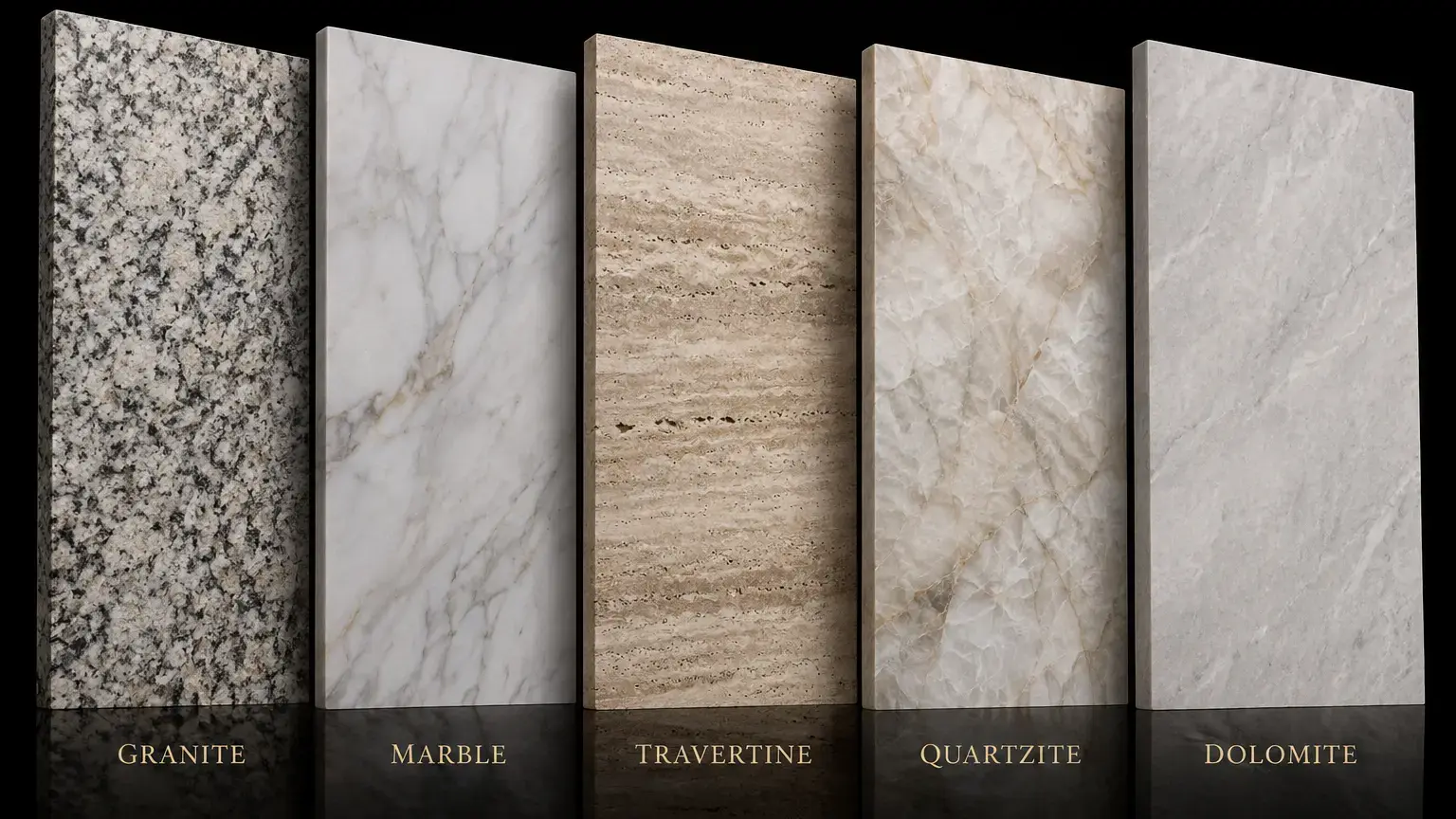
Natural stone is quarried directly from the earth rather than manufactured, which is what gives every slab its one-of-a-kind veining and color variation. No two pieces are identical, even when cut from the same block, which is part of the appeal for homeowners who want a surface that can't be replicated elsewhere. Nova Tile and Stone carries current natural stone slab inventory across these categories, but the most common types homeowners run into are:
Granite is an igneous stone valued for its hardness and heat resistance, which is why it's remained a longtime favorite for kitchen counters and islands. It resists scratching well, though like most natural stone it still benefits from basic care around spills and hot cookware.
Marble is a metamorphic stone prized for its soft, flowing veining and classic look. It reads as more formal and refined than granite, but it's also more porous and softer, which means it scratches and etches more easily, particularly from acidic substances like citrus juice or wine.
Travertine is a textured form of limestone, often left with its natural pitted surface or filled to a smoother finish. It's a common choice for flooring, showers, and outdoor patios, where its slightly matte, non-slip texture works in its favor.
Quartzite is a dense, hard stone formed when quartz sandstone is compressed under heat and pressure. It resembles marble in its veining and coloring but performs much closer to granite in terms of scratch and heat resistance, making it a popular middle ground for homeowners who want the marble look with more everyday durability.
Dolomite is a sedimentary stone that sits between marble and granite in overall hardness. It's available in polished, honed, leathered, and specialty finishes, and it suits interior applications well, including walls, floors, and fireplace surrounds.
Each of these stones behaves a little differently once it's installed, and that difference matters more in a climate like ours than it might somewhere with milder, more consistent weather. An explanation of how these rock types actually form shows why: granite cools slowly from magma underground, while quartzite and marble start out as sandstone and limestone that get transformed by heat and pressure over time. Those different origins are a big part of what gives each stone its distinct hardness and porosity.
Finishes Matter as Much as the Stone Itself
The specific stone you choose is only half the equation. The finish applied to that stone changes both its look and how it performs day to day.
Polished finishes have the glossy, reflective look most people picture when they think of natural stone. They show veining and color most vividly, but they also show fingerprints, water spots, and etching more readily than other finishes.
Honed finishes have a matte, low sheen surface. They're a common choice for softer stones like marble, since minor etching from acidic spills is far less noticeable on a honed surface than a polished one.
Leathered finishes have a subtle texture that adds depth without going fully matte, and they tend to hide fingerprints and small imperfections well, which makes them a practical option for kitchen islands that see a lot of daily use.

Reno's Climate and What It Means for Your Stone Choice
Reno sits in the Truckee Meadows basin at around 4,400 to 4,500 feet of elevation, which gives the region a high desert climate: hot, dry summers, cold winters, and daily temperature swings that can be significant even within the same 24 hours. Regional climate research notes that nighttime lows across most of Nevada average below freezing from October through April, which is a big part of why exterior stone selection matters so much here. That combination affects how natural stone performs, particularly outdoors.
Indoors, temperature swings are rarely a concern since Reno homes' HVAC systems keep conditions stable. This is where softer, more porous stones like marble, travertine, and dolomite can be used freely for backsplashes, shower surrounds, and fireplace surrounds without worrying about freeze-thaw cycling.
Outdoors is a different story. Patios, outdoor kitchens, and fire pit surrounds in Reno go through repeated freezing and thawing over the winter months, and any stone installed outside needs to handle moisture that gets into its pores and then expands as it freezes. Denser, less porous stones such as granite and quartzite generally hold up better to this cycle than softer, more absorbent stones. If you're planning an exterior stone feature, that durability difference is worth discussing with whoever is helping you select material, since not every stone that looks great indoors is the best candidate for a patio that sees a Reno winter.
The region's low humidity is a smaller but related factor. Dry air means less ambient moisture working its way into stone over time compared to a humid climate, which can be a modest advantage for porous stones. It doesn't eliminate the need for sealing or care, but it's one more reason natural stone tends to hold up reasonably well here as long as it's matched correctly to indoor versus outdoor use.
Where Natural Stone Fits in a Reno Home
Natural stone shows up throughout Reno, from stone accents on newer stucco homes in South Reno developments like Damonte Ranch to stone fireplace surrounds and flooring in older, established homes closer to downtown. Regardless of a home's age or style, natural stone tends to show up in a few consistent places:
Kitchen countertops and islands. Granite and quartzite are the most common choices here because of their durability and heat resistance, both useful qualities in a busy kitchen.
Bathroom vanities and shower surrounds. Marble and dolomite are popular for their appearance, especially in primary bathrooms where daily wear is lighter than in a kitchen.
Fireplace surrounds. Dolomite's leathered and honed finishes in particular lend themselves well to fireplace applications, indoors where climate isn't a factor.
Flooring. Travertine and other natural stone tile options work well in entryways and bathrooms, though slip resistance and finish should be considered for wet areas.
Exterior accents. Stone veneer and pavers around entries, patios, and outdoor kitchens are common around Reno, where the durability considerations covered above matter more than pure aesthetics.
Maintenance: What to Actually Expect
Natural stone has a reputation for being high maintenance, and there's some truth to that, but it depends heavily on which stone you choose. Porous stones like marble, limestone, and travertine benefit from more frequent sealing than dense stones like granite. Guidance on stone countertop upkeep suggests marble and limestone generally hold up best with sealing a few times a year, while granite needs it far less often, and engineered quartz doesn't need sealing at all.
That said, not every granite countertop needs sealing on a fixed schedule. A formal position statement on the topic from a national stone trade organization points out that most granite holds up fine without sealing, since consistent cleaning after use is usually enough to prevent staining, though many homeowners still choose to seal it anyway for peace of mind against moisture and everyday spills.
Day-to-day care is simpler than the sealing schedule suggests. Wipe up spills quickly, especially acidic ones like citrus juice or wine, use coasters and trivets, and avoid harsh or abrasive cleaners that can dull the surface finish over time. A soft cloth and mild soap handle most routine cleaning.
Natural Stone vs. Engineered Options
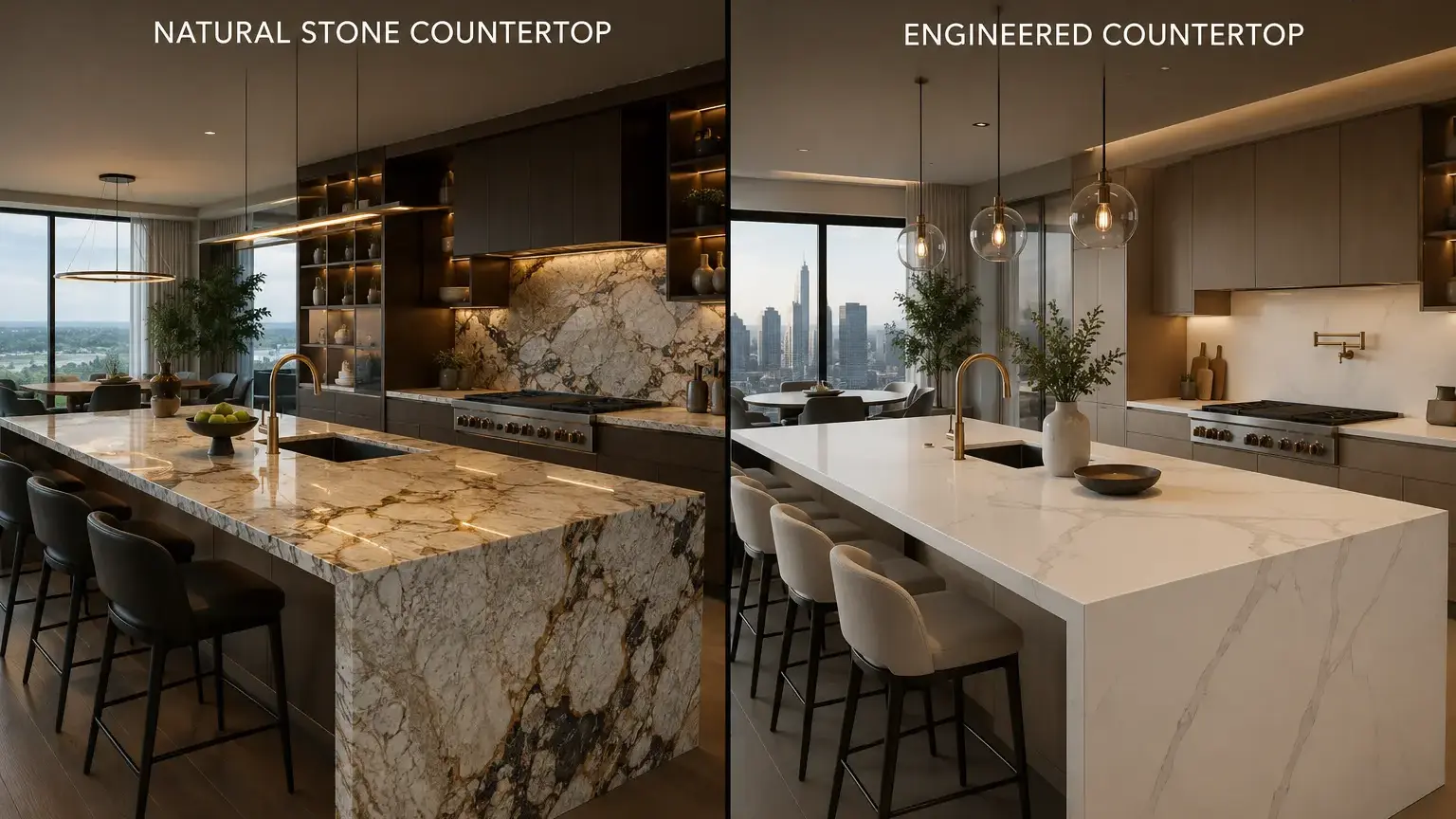
It's worth acknowledging that natural stone isn't the only option, and depending on your household, an engineered surface like quartz might actually make more sense. Quartz is manufactured from crushed stone and resin, which means it's more uniform in appearance, doesn't require sealing, and resists staining more consistently than most natural stone. The tradeoff is that you lose the one-of-a-kind veining and mineral character that draws homeowners to natural stone in the first place. If low maintenance is your top priority, quartz is worth a look. If you want a surface that's genuinely unique to your home, natural stone remains the better fit. To explore both options in person, visit Nova Tile and Stone's complete offering at our Reno showroom.
Conclusion
There isn't a single right answer for every Reno home. The decision usually comes down to three questions: where the stone is going, how that space actually gets used, and how much upkeep you're realistically willing to commit to. Visiting the showroom to view available full slabs in person also helps more than photos ever will, since natural stone varies from slab to slab and lighting changes how a color or vein pattern reads in your space.
If you'd like to see and feel the material in person before deciding, Nova Tile and Stone's Reno showroom is located at 12835 Old Virginia Rd, Suite 24, Reno, NV 89521, and our team offers free design consultations to help match stone selections to your specific project. You can reach the showroom at (775) 331-6682.
Frequently Asked Questions
It depends on the stone. Denser, less porous options like granite and quartzite are generally the safer pick for patios, outdoor kitchens, and fire pit surrounds in Reno, for the reasons covered in the climate section above.
With proper care, dense stones like granite and quartzite typically last decades, and even softer stones like marble hold up well over the long run when sealed and cleaned consistently. Lifespan tends to depend more on maintenance habits and where the stone is installed than on the specific stone type.
This varies by stone and by the specific slab. A simple water-drop test can tell you where you stand: place a drop of water on the surface, and if it darkens the stone within a few minutes rather than beading up, it's time to reseal.
It can be, but finish matters. Highly polished stone can be slippery when wet, so a honed or textured finish, like travertine's slightly pitted surface, is usually a better fit for bathrooms and entryways.
Slab installations, like kitchen countertops, are generally best left to a professional fabricator. Slabs are heavy, cutting for sinks and edges takes specialized tools, and a poorly supported seam can crack the stone. Tile-format natural stone, such as travertine flooring, is more approachable for an experienced do-it-yourselfer, though it still needs proper substrate prep to hold up.
Note: Some images on this page may be conceptual renderings created to illustrate design possibilities and may not depict actual installations.