Mont Blanc quartzite is a natural stone quarried primarily in Brazil, rating approximately 7 to 8 on the Mohs hardness scale, which makes it a strong fit for Lincoln, CA kitchens that need a marble-like white and gray surface without marble's vulnerability to scratching and etching. For most Lincoln homeowners, it holds up well to daily cooking, warm summers, and busy households, though the right choice still depends on budget, finish, and how much upkeep the household wants to take on. This guide covers what the stone is, how it performs in a Lincoln kitchen, and what to weigh before choosing it.
What Is Mont Blanc Quartzite?
Mont Blanc quartzite forms when quartz-rich sandstone is subjected to intense heat and pressure below the earth's surface, a metamorphic process that gives the stone its density and hardness. Mont Blanc specifically features a soft white to light gray background with subtle veining in gray, cream, and warm gold tones, which is why it is frequently compared to Carrara or Calacatta marble at first glance.
The resemblance to marble is part of the appeal, but the mineral composition is different, and that difference matters for how the stone performs in a working kitchen. Marble is a calcium-based stone that etches easily when it comes into contact with lemon juice, vinegar, wine, or tomato-based sauces. Quartzite, including Mont Blanc, resists that kind of etching far better because of its quartz content, which makes it a practical substitute for households that want the look without the constant caution marble requires. This Old House's general guide to stone countertops covers how these tradeoffs play out across the full range of stone materials, not just quartzite.
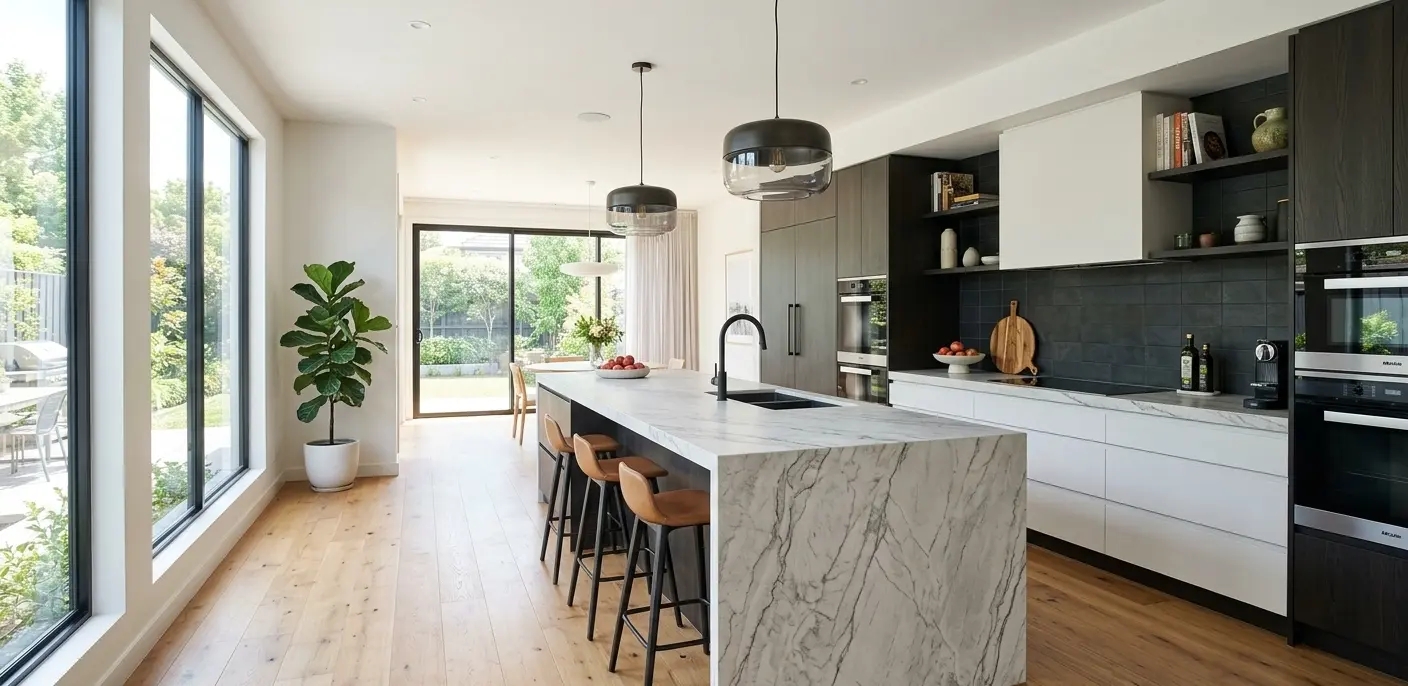
Why Mont Blanc Suits a Lincoln, CA Kitchen
Lincoln sits in a part of Placer County that regularly sees hot, dry summers, and kitchens here tend to get heavy use for both everyday cooking and outdoor-adjacent entertaining. A few local factors make Mont Blanc a sensible fit for the area.
Warm-weather cooking habits. Many Lincoln homes have open kitchens that connect to patios or outdoor living spaces, and countertops in these layouts see more traffic during the summer months when families cook and entertain outside as much as inside. A stone that resists scratching and holds up to hot cookware placed nearby gives homeowners more flexibility during that heavier-use season, though trivets are still recommended for direct contact with very hot pots or pans.
Popular home styles in the area. Newer construction in Lincoln, including homes in Twelve Bridges and around the Del Webb communities, often leans toward transitional or modern farmhouse interiors with light cabinetry and neutral palettes. Mont Blanc's white and gray tones pair naturally with these styles, and its subtle veining works well in kitchens that want visual interest without a heavy, dramatic pattern.
A move away from engineered surfaces. Homeowners upgrading older kitchens in established Lincoln neighborhoods are increasingly asking about natural stone as an alternative to the engineered quartz that was standard in many builds from the 2000s and 2010s. Mont Blanc gives that group a natural-stone option that still performs well against the kinds of daily wear a kitchen sees, and it sits alongside our broader tile and flooring selection for homeowners planning a fuller kitchen remodel rather than a countertop swap alone.
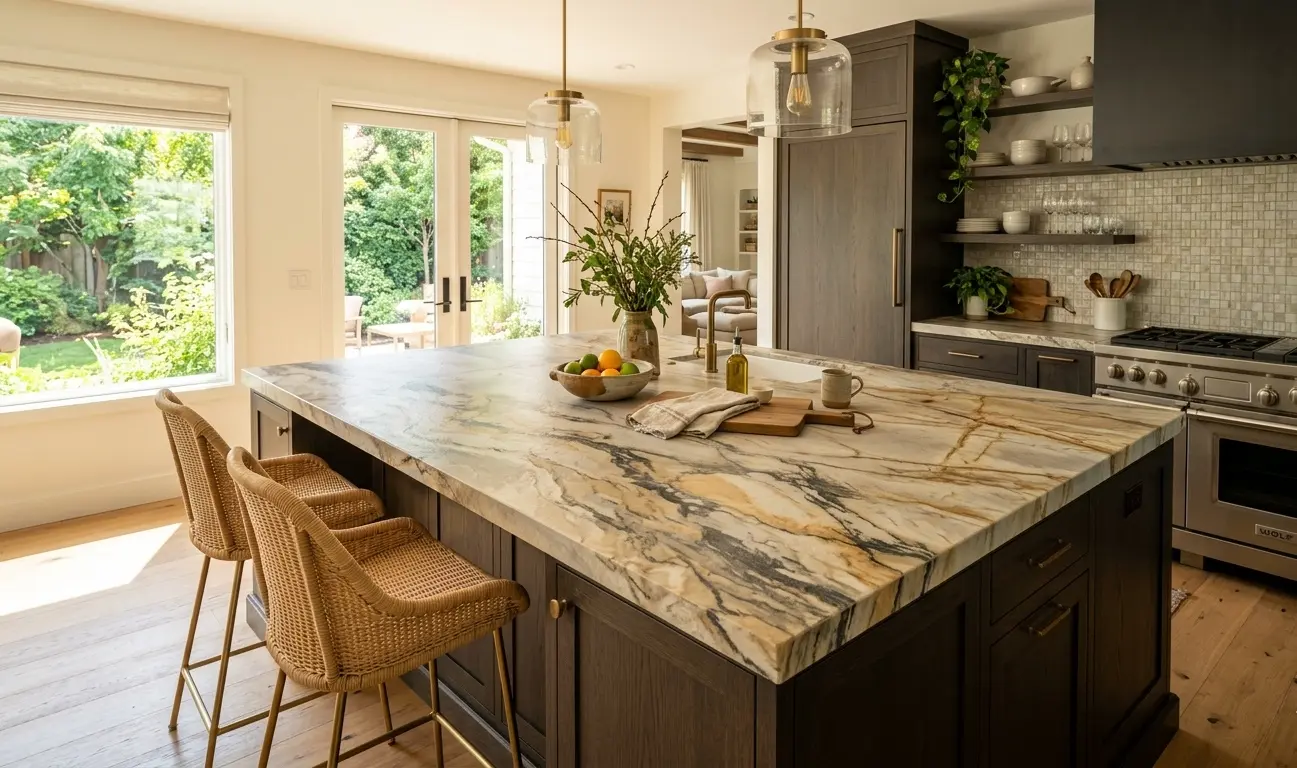
What to Weigh Before Choosing Mont Blanc
Cost relative to alternatives. Mont Blanc typically costs more than engineered quartz and standard granite, though pricing varies by slab grade, thickness, and finish. First-choice slabs with more dramatic, consistent veining generally command a higher price than commercial-grade slabs with more subtle movement, so the total project cost can shift noticeably depending on which grade a homeowner selects. Thickness plays a role too. A 3 cm slab is the standard choice for kitchen countertops because it supports itself across cabinet spans without a built-up edge, while a 2 cm slab is more common for backsplashes, wall cladding, and vanity tops where a slimmer profile fits the design. Homeowners comparing Mont Blanc to marble should note that while the upfront cost can be similar, the reduced need for repair and replacement over time can offset the difference for a busy kitchen. Getting a project-specific slab quote based on square footage, edge profile, and finish is the most accurate way to budget, since per-square-foot estimates found online rarely account for a specific kitchen's layout or cutout requirements. Contractors and designers managing the purchase on a homeowner's behalf can also look into a trade account for project pricing.
Sealing and everyday care. Like all natural stone, Mont Blanc benefits from periodic sealing to maintain its resistance to staining. A penetrating sealer applied at installation and reapplied roughly every one to two years, depending on use, helps the surface shed liquids before they can soak in. Day to day, a soft cloth, warm water, and a pH-neutral stone cleaner are sufficient. Bleach, ammonia, and abrasive pads should be avoided, since they can wear down the sealer over time. A simple water bead test, placing a few drops on the surface and watching whether they bead up or absorb, is a reliable way to check whether resealing is due.
Heat and scratch limits. Mont Blanc resists heat and scratching better than marble, but it is not immune to either. Very hot cookware placed directly on the surface can still cause thermal stress over time, so trivets remain a good habit regardless of the stone. Cutting directly on the surface should also be avoided, since even hard stones can dull knife blades and pick up fine surface marks with repeated use.
Slab variation. As a natural material, Mont Blanc varies from slab to slab, and veining density can range from subtle to more pronounced within the same quarry lot. Browsing the current slab inventory and viewing actual slabs in person before finalizing a selection helps confirm the veining and background tone match the kitchen's design intent, rather than relying on a small sample chip.
Design Pairings That Work Well
Mont Blanc's neutral palette makes it flexible across several kitchen styles common in Lincoln homes.
- With dark cabinetry: Navy, charcoal, and black cabinets create strong contrast against Mont Blanc's light background, a combination frequently used in transitional and contemporary kitchens.
- With light wood tones: Natural or white oak cabinetry paired with Mont Blanc creates a softer, warmer look suited to modern farmhouse and Scandinavian-influenced interiors.
- With brass or matte black hardware: Both metal finishes read well against the stone's cool gray veining, giving homeowners flexibility depending on whether they want a warmer or more industrial feel.
- In monochromatic kitchens: White or light gray cabinetry paired with Mont Blanc keeps the palette quiet and works particularly well in smaller kitchens where a busier stone pattern might feel overwhelming.
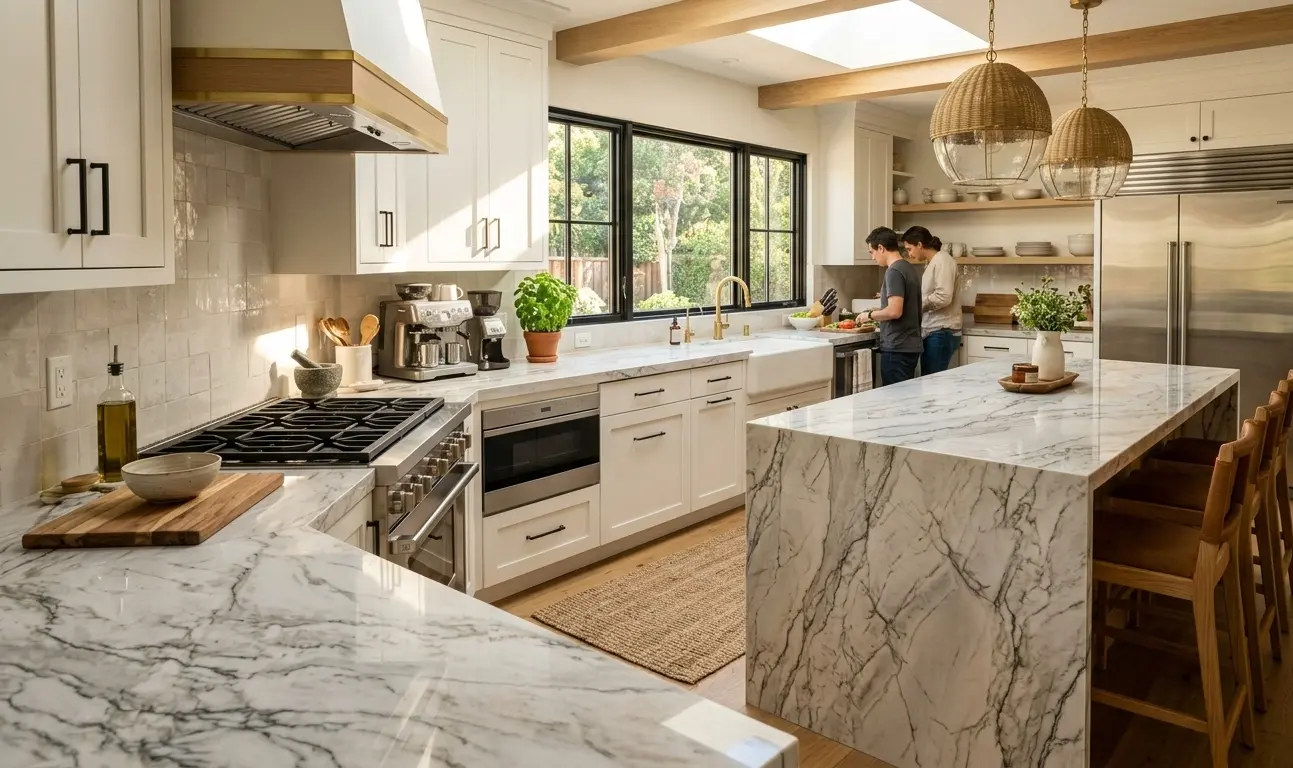
Finish Options to Consider
Mont Blanc is typically available in a few different finishes, and the choice affects both the look and the feel of the final surface.
Polished. A polished finish is the most common choice for Mont Blanc and gives the stone a glossy surface that makes the veining appear more vivid and the background brighter. This finish tends to show water spots and fingerprints more readily than other options, though it is also the easiest to wipe clean.
Honed. A honed finish has a matte, low-sheen surface that softens the contrast between the background and the veining. This option is sometimes chosen for bathroom vanities or kitchens going for a more understated look, though a honed surface can be slightly more prone to visible etching if it comes into contact with acidic substances, since etch marks are more noticeable on a matte surface.
Leathered. A leathered finish adds a light texture to the stone, which helps mask fingerprints and small surface marks while still preserving most of the color depth. This finish is less common for Mont Blanc than polished or honed, but it is worth asking about for kitchens where daily fingerprints and smudging are a concern.
Seeing each finish under the lighting conditions of the actual kitchen, rather than under showroom lighting alone, is the best way to judge how a finish will read once installed.
Mont Blanc vs. Other Options Lincoln Homeowners Consider
Homeowners researching Mont Blanc often cross-shop it against a short list of alternatives, and Fine Homebuilding's guide to natural stone countertops is a useful reference for how different stone types stack up on hardness, cost, and maintenance.
Mont Blanc vs. marble. Marble offers a similar aesthetic but etches more easily and requires more frequent sealing and more careful daily maintenance. For a kitchen that sees regular cooking with acidic ingredients, Mont Blanc is generally the more forgiving choice.
Mont Blanc vs. granite. Granite is available in a much wider range of colors and patterns and tends to cost less, but it rarely offers the soft, marble-like veining that draws people to Mont Blanc in the first place. The choice here usually comes down to aesthetic preference rather than performance.
Mont Blanc vs. engineered quartz. Engineered quartz offers more consistent coloring since it is manufactured rather than quarried, and it typically requires no sealing. Homeowners who want a completely uniform look across a large kitchen may prefer quartz, while those who want the natural variation of real stone tend to choose Mont Blanc instead.
Is It the Right Choice for Your Kitchen?
The answer depends on priorities. If a Lincoln homeowner wants a white, veined stone that can handle a busy household without the etching concerns that come with marble, Mont Blanc is worth serious consideration. If budget is the primary constraint, or if a perfectly uniform surface is the goal, granite or engineered quartz may be a better starting point. The most reliable way to decide is to see slabs in person, since photos and small samples rarely capture the full range of veining and tone within a single quarry block.
Conclusion
For a Lincoln kitchen that sees regular cooking, warm summers, and everyday family use, Mont Blanc quartzite offers a way to get a marble-inspired look without taking on marble's maintenance demands. The finish, grade, and thickness selected will shape both the final appearance and the total cost, so it helps to walk through those choices with a specific kitchen layout in mind rather than deciding from a photo alone. For homeowners in Lincoln and the surrounding area, our Sacramento showroom at 6100 Warehouse Way in Sacramento carries a current selection of Mont Blanc quartzite slabs to view in person, and our team is available at (916) 913-6682 or through a scheduled design consultation to help walk through options and next steps.
Note: Some images on this page may be conceptual renderings created to illustrate design possibilities and may not depict actual installations.
Frequently Asked Questions
Mont Blanc is a true quartzite, formed from quartz-rich sandstone under heat and pressure. It shares a visual resemblance to white marble because of its light background and soft veining, but its mineral makeup is different, which is why it resists etching and scratching better than marble does.
Yes, for most households. Its resistance to scratching and etching makes it well suited to daily cooking and cleanup, though trivets and cutting boards are still recommended to protect the surface over time.
Most installations call for resealing every one to two years, depending on how the kitchen is used. A simple water bead test, placing a few drops on the surface, can help confirm whether resealing is due.
Granite is generally available at a lower price point and in a wider range of colors, but it does not typically offer the soft, marble-like veining that Mont Blanc is known for. The choice often comes down to whether a homeowner prioritizes cost and color variety or a specific aesthetic.
It resists heat better than marble, but placing very hot cookware directly on any natural stone surface can cause stress over time. Using trivets or hot pads is a simple habit that helps protect the surface regardless of the stone type.