Marble countertops are not too high-maintenance for most households, but they do require more attention than granite or quartz: prompt cleanup of acidic spills and resealing roughly every six to twelve months. For a Truckee mountain home, that trade-off is often worth it in spaces like kitchen islands, bathroom vanities, and baking stations, where marble's natural veining stands out without absorbing the daily wear of a full working kitchen. If the idea of a single etch mark bothering you for years sounds stressful, a marble-look quartz or quartzite is a lower-maintenance alternative worth comparing. Here's what actually goes into living with marble, and how it fits into a mountain home specifically.
What Marble Actually Requires
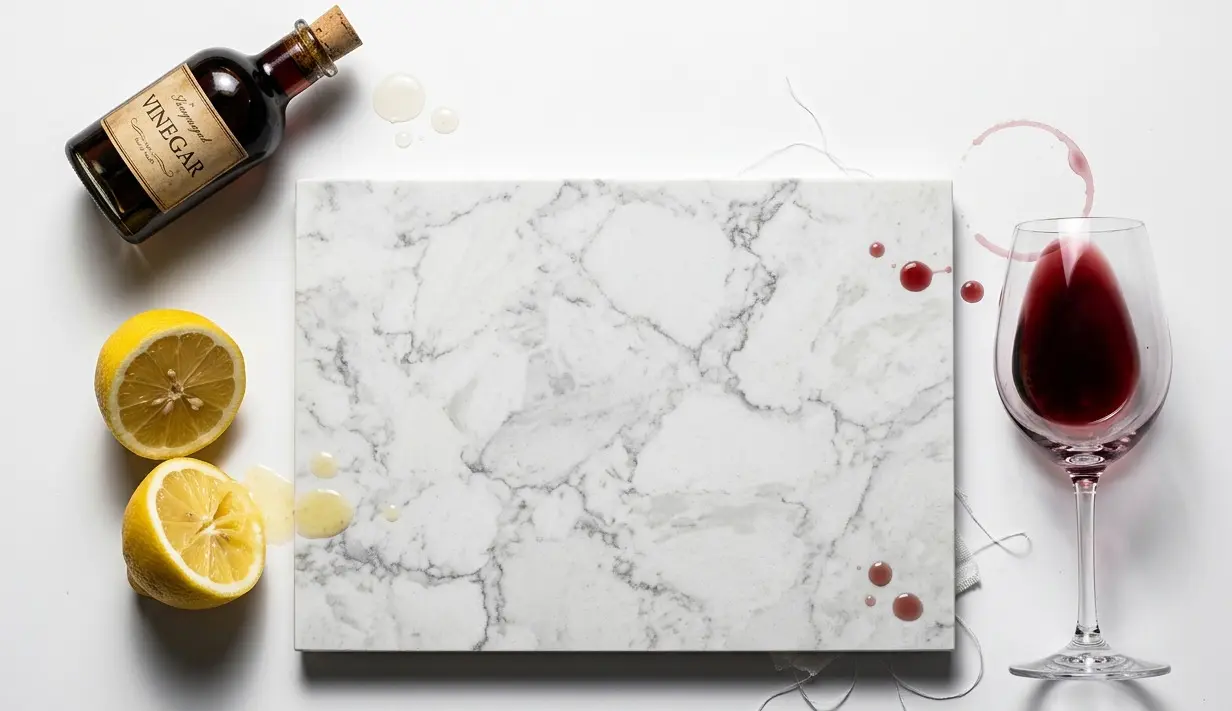
Marble is calcium-based, which makes it sensitive to acidic spills. Wine, citrus juice, coffee, and vinegar-based dressings can etch the surface, dulling the polish where they sit. This isn't unique to Truckee, but it matters for how you use your kitchen: a marble island that hosts a busy après-ski gathering or a holiday dinner will need more attentive cleanup than a quartz or granite surface would.
A straightforward daily habit: blot spills immediately with a paper towel rather than wiping them, since wiping can spread the liquid. Then flush the area with water and mild soap, and dry it thoroughly. For routine cleaning, a neutral cleaner, stone soap, or a mild liquid dishwashing detergent with warm water is recommended, since products containing lemon, vinegar, or other acids can dull or etch the surface. Scouring powders and abrasive creams are also worth avoiding, since they can scratch the surface even when a stain isn't the issue.
Sealing needs vary by finish, use, and sealer, but many marble surfaces benefit from resealing roughly every six to twelve months. The water-bead test is the more reliable way to judge timing: splash a few drops of water on the counter, and if it beads up, the seal is still working, while if it soaks in quickly, it's time to reapply. A penetrating sealer makes marble more resistant to absorbing spills, though it doesn't make the stone stain-proof.
If you're maintaining a second home or cabin that sits empty for stretches of the year, which is common in Truckee given how many properties here serve as ski season or summer retreats, it's worth building a sealing check into your seasonal routine. An unattended spill in an empty house has far more time to set in before anyone notices.
What Marble Actually Is
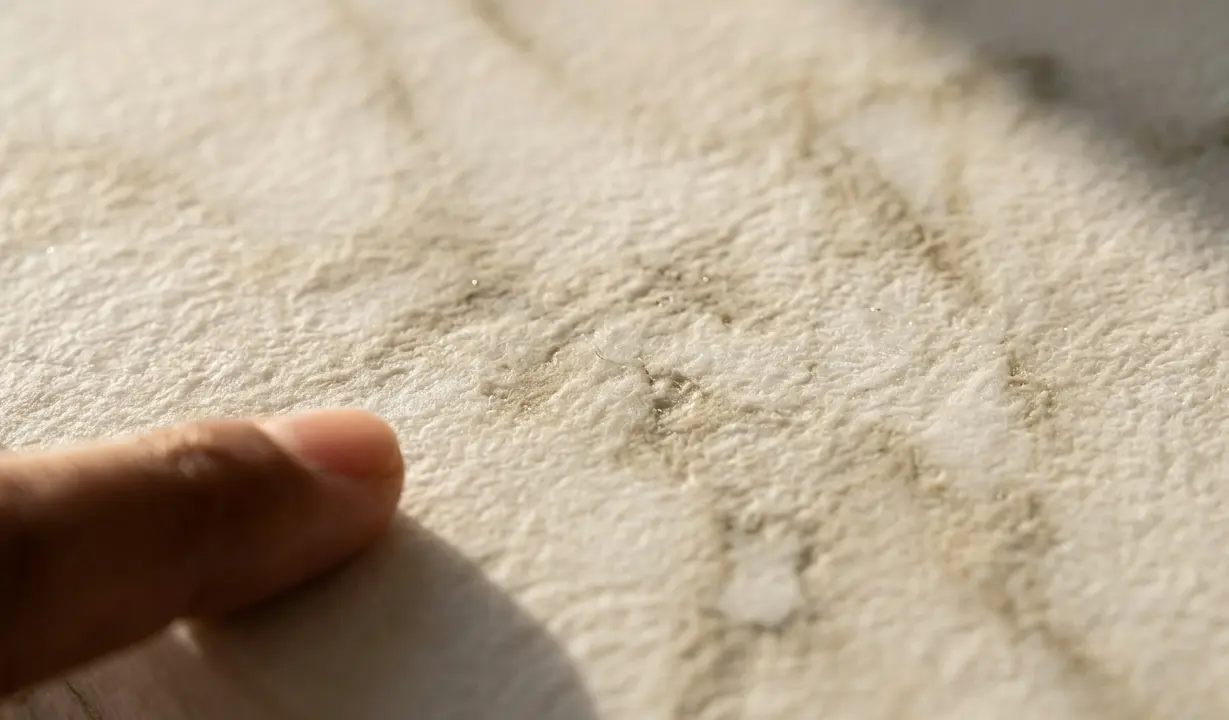
Marble starts out as limestone. Over millions of years, heat and pressure recrystallize the stone into a denser, harder material, a process geologists call metamorphism. That process doesn't melt the original rock; instead it transforms the rock into something denser and more compact, rearranging or replacing minerals as pressure and temperature act on it over long stretches of geologic time.
Marble is one of the most familiar results of that process, valued for centuries in sculpture and architecture for its fine crystalline structure and the mineral veining that gives every slab its own character. No two slabs are alike, and the veining pattern you choose becomes a permanent, one-of-a-kind feature of your home, not unlike the granite outcroppings and glacially carved peaks that define the Sierra Nevada skyline around Truckee. When you set a marble slab into a kitchen island in a home a few miles from Donner Pass, you're bringing a small piece of that same geologic story indoors, just formed under different conditions and in a different corner of the world.
Marble in a Truckee Mountain Home
Truckee's design language leans into its surroundings: exposed timber, dark iron fixtures, stone fireplaces, and big windows framing views of Donner Lake or the surrounding forest. White and light gray marble slabs, with their soft veining, create a striking contrast against that rustic backdrop, whether you're renovating a historic downtown property near the old railroad depot or building new in one of the area's ski-adjacent neighborhoods. There's a reason marble shows up so often in mountain lodge and alpine chalet design: the cool, pale surface reads as refined and a little unexpected against heavy wood beams and stone hearths, giving a rustic space a more polished focal point without losing its warmth.
One decision that matters more in a well-used mountain kitchen than people expect is finish. A polished marble surface has a glossy, reflective look, while a honed finish looks matte and softer. A matte finish can make stains more noticeable on porous materials like marble, but it's generally better at hiding scratches and other small flaws, and it reduces glare in a bright kitchen. For a mountain home with a lot of natural light bouncing off snow for much of the year, especially a kitchen with west-facing windows catching afternoon glare, a honed finish is worth considering if you want a softer, more forgiving surface day to day. Polished marble, on the other hand, tends to show off veining more dramatically and can make a smaller kitchen or bathroom feel brighter and more open, which is worth weighing if your space is on the cozier side.
Where Marble Works Best
You don't have to commit your entire kitchen to marble to enjoy it. Bathroom vanities, powder rooms, and accent islands are popular choices, letting you get the look without exposing the stone to the acidic spills and heavy prep work of a primary cooking surface. A powder room off a mountain home's entryway, for example, sees light use and occasional cleaning, which makes it a low-risk place to enjoy dramatic veining without worrying much about daily wear.
Some homeowners choose marble specifically for a baking station, since the stone's naturally cool surface is a longtime favorite for rolling out dough and working with pastry. If baking is a regular part of your household's routine, a marble insert set into an island or a dedicated section of counter can give you that functional benefit without putting your entire prep surface at risk.
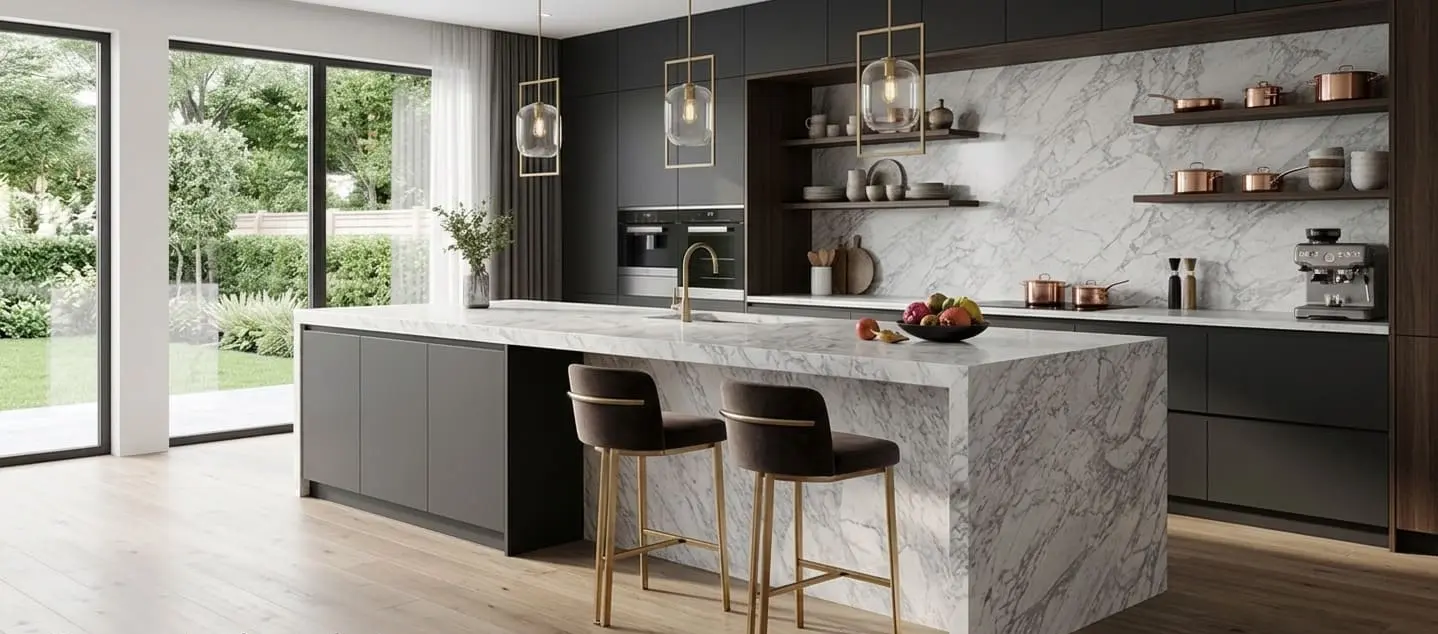
If you love the look but aren't sure you want the full commitment in a high-traffic kitchen, pairing materials is a straightforward way to get the visual impact without the exposure: a marble waterfall island edge next to walnut or reclaimed wood cabinetry, or a marble backsplash behind the range with a harder stone like soapstone, granite, or quartzite on the perimeter counters that see the most daily use. Quartzite in particular shares marble's pale, veined aesthetic while being significantly harder and less reactive to acids, which makes it a popular middle ground for anyone who wants the look with less day-to-day worry.
One More Thing Worth Considering
Marble develops what's often called a patina: small etch marks and a softened polish that build up over time. Some homeowners find this adds character to a well-loved kitchen, while others find it frustrating if they were hoping for a surface that looks new indefinitely. There's no wrong answer, but it's worth being honest with yourself about which camp you fall into before committing a full kitchen's worth of material to it.
Talk Through Your Options in Reno
Every kitchen and bath is different, and the right stone for your Truckee home depends on how you cook, how often you entertain, and how much upkeep you actually want to take on. Nova Tile and Stone's Reno showroom carries a wide range of natural stone, including marble, quartzite, and dolomite, along with engineered quartz for anyone weighing a lower-maintenance alternative. Free design consultations are available to help you compare slabs in person and figure out what actually fits your household.
Nova Tile and Stone
12835 Old Virginia Rd, Suite 24, Reno, NV 89521
(775) 331-6682
Monday–Friday 7:30am–6pm, Saturday 9am–3pm
Conclusion
Marble isn't a maintenance nightmare, but it also isn't a set-it-and-forget-it surface. It's a trade: natural veining no engineered material fully replicates, in exchange for a habit of quick spill cleanup and periodic resealing. For most Truckee homes, that trade makes the most sense in a focal application such as an island, a vanity, or a baking station, rather than the entire kitchen, especially in a home that sits empty part of the year. Whether marble is the right call ultimately depends less on the stone itself and more on your own kitchen habits and how you feel about a surface that shows its age. If you're exploring our offerings, you can view available slabs and submit a slab quote request before visiting our Reno showroom to see your options in person.
Frequently Asked Questions
Marble requires more attentiveness than granite or quartz, mainly prompt cleanup of acidic spills and periodic resealing, but it isn't difficult to live with once those habits become routine. Whether it's too much depends on how your household actually uses the kitchen.
Marble is porous, so liquids like wine, coffee, and citrus juice can penetrate the surface if left to sit. Sealing reduces this risk but doesn't eliminate it, so prompt cleanup still matters even on a sealed surface.
Marble is a natural stone that requires sealing and careful cleanup around acidic spills, while quartz is an engineered surface that doesn't need sealing and resists staining more consistently. Marble offers unique natural veining that quartz can only imitate, while quartz offers more predictable day-to-day durability.
A polished finish is glossy and reflective, while a honed finish is matte. Honed marble tends to hide scratches and small flaws more effectively and cuts down on glare, though stains can be slightly more visible on the matte surface.
No. Many homeowners use marble on an island, a baking station, or a bathroom vanity, while choosing a more durable material for high-traffic perimeter counters. This gives you the look of marble without exposing the entire kitchen to its maintenance needs.
Note: Some images on this page may be conceptual renderings created to illustrate design possibilities and may not depict actual installations.