Leathered Mont Blanc quartzite is a Brazilian-quarried natural stone with a soft, grey-veined, off-white appearance and a textured, matte surface created by brushing away the stone's softer minerals. The finish is well suited to Incline Village homes because it resists fingerprints, water spots, and light wear better than a polished surface, while the quartzite underneath remains hard enough to handle the heavy seasonal use common in Lake Tahoe mountain properties. That combination of durability and a forgiving surface is part of why the finish has become more common in mountain-home kitchens and bathrooms in recent years, as homeowners move away from high-gloss surfaces toward materials that feel more tactile and less formal.
For homeowners weighing whether this stone and finish combination fits their kitchen, bathroom, or fireplace surround, understanding both the material itself and the local context it will live in, from Tahoe's seasonal use patterns to the upkeep the finish requires, makes the decision easier.
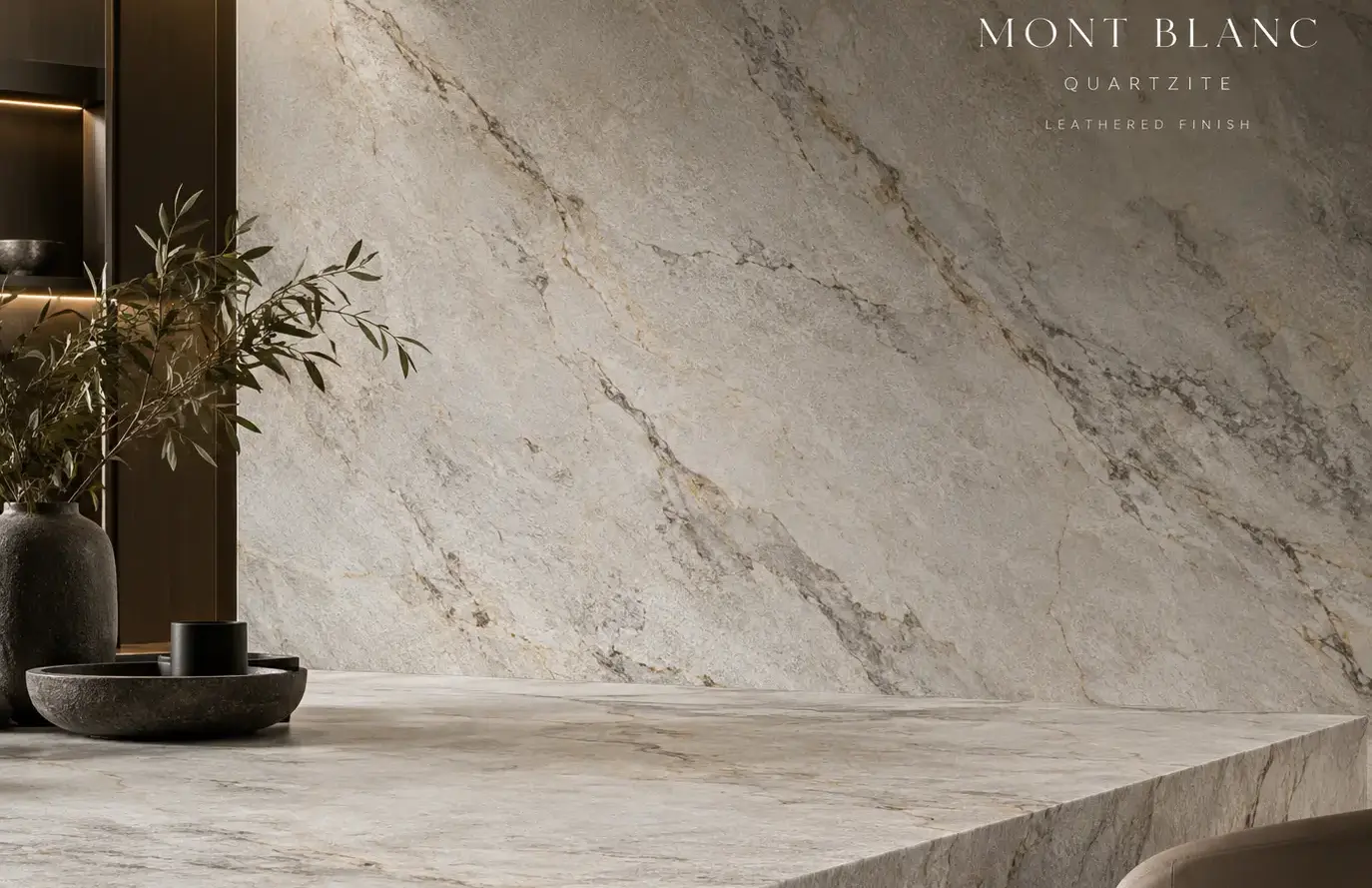
What Is Mont Blanc Quartzite?
Mont Blanc is a quartzite quarried in Brazil, known for its pale, softly veined surface. Quartzite forms when sandstone is subjected to intense heat and pressure deep in the earth, a process that fuses quartz grains into a dense, interlocking structure. It is often compared to marble because of its similar veining and pale coloring, but the resemblance stops there. Quartzite as a category generally falls between 7 and 8 on the Mohs hardness scale, a range confirmed by a comparison of hardness ratings across quartzite and other common countertop stones, and Mont Blanc itself has been documented around 7, meaningfully harder than marble and more resistant to scratching, etching, and heat.
What Does a Leathered Finish Actually Mean?
A leathered finish is created by running the polished or honed stone surface through a brushing process, usually with diamond-tipped tools, that wears away the softer minerals while leaving the harder crystals slightly raised. The result is a texture with gentle peaks and valleys, similar to the grain in worn leather, rather than a flat, glassy surface.
This is different from honing, which simply flattens the stone to a matte finish without adding texture, and different again from polishing, which creates the high shine most people associate with countertops. A leathered surface catches light unevenly, which softens the visual impact of veining and gives the stone a more tactile, dimensional feel. The tactile pull people describe once they have touched a leathered surface in person comes up often among those who encounter the finish in a showroom for the first time.
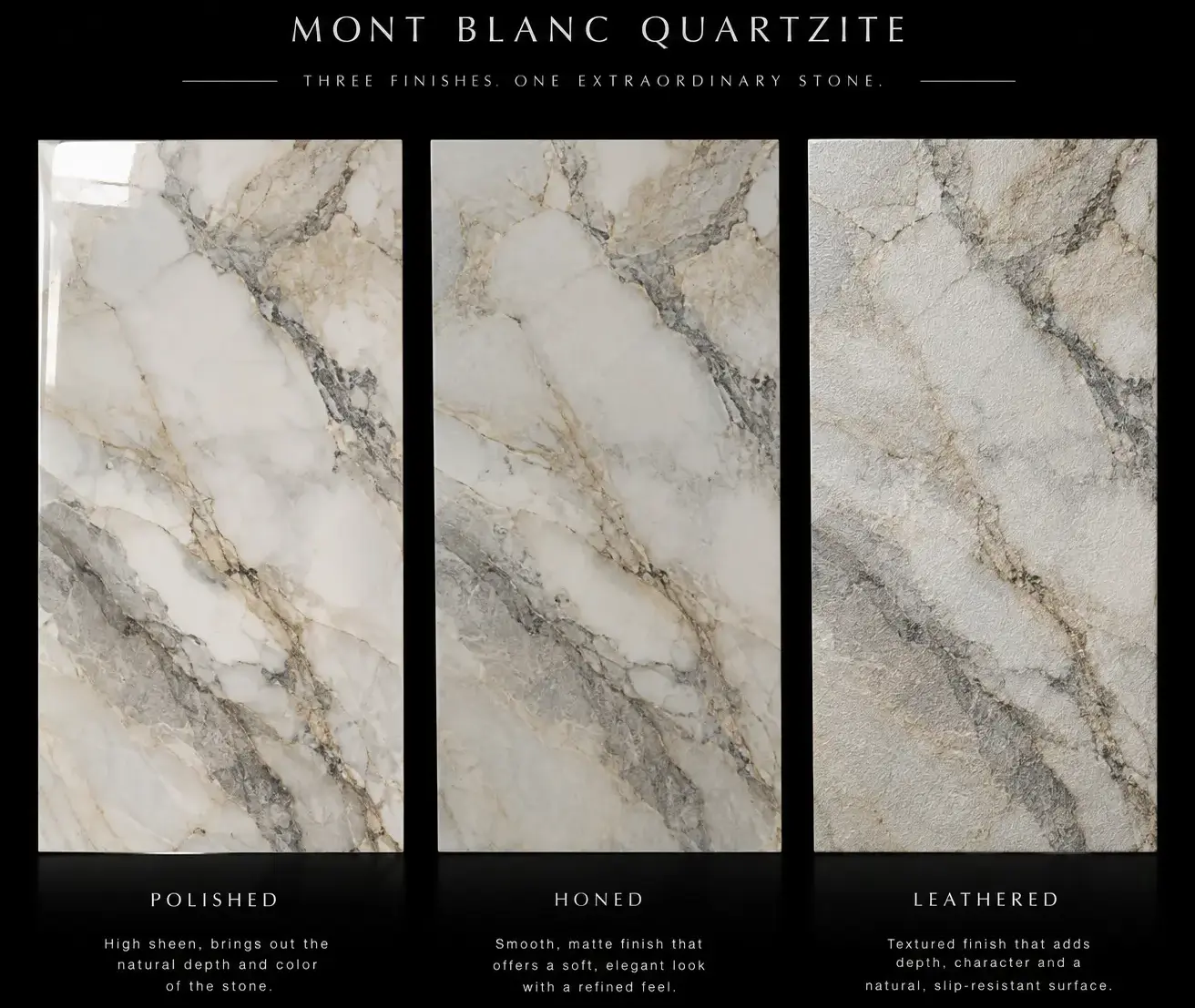
Leathered vs. Honed vs. Polished: A Quick Comparison
If you are still deciding between finishes for Mont Blanc, it helps to think about how each one behaves day to day rather than how each one is made:
- Polished shows off veining most vividly, but also shows everyday marks and light scratching more readily than the other two finishes.
- Honed sits in the middle, hiding some wear but still showing oil smudges over time.
- Leathered is the most forgiving of daily use, at the cost of a slightly more involved cleaning routine.
There is no universally correct choice here. It comes down to how the room is used and the overall design direction of the home.
Why Leathered Mont Blanc Fits an Incline Village Home
Incline Village sits on the north shore of Lake Tahoe at roughly 6,300 to 6,350 feet, tucked against the Carson Range with Mount Rose and Mount Houghton rising to the north. It is a place where architecture tends to lean into the surroundings: exposed timber, stone fireplace surrounds, and great rooms oriented toward lake or mountain views. Many homes here are second homes or ski properties, which means design choices often prioritize a warm, lived-in feel that still holds up to heavy seasonal use, snow tracked in from the slopes, wet boots by the door, and long stretches where the house sits unoccupied between visits.
A leathered finish suits that context well. Because it already has a matte, non-reflective quality, it tends to read as forgiving in rooms with a lot of natural wood, stone, and mountain light coming through large windows, a common feature in Tahoe-area homes.
There is also a seasonal rhythm to consider that is specific to a place like Incline Village. A home used heavily over a winter of ski trips, then left mostly quiet through the spring, puts different demands on a surface than a home lived in every day. Polished stone in a heavily used mountain kitchen tends to show its wear quickly between visits, since there is no daily upkeep to catch small marks before they set in. A leathered surface is more forgiving of that gap, which is one reason it shows up so often in vacation and second-home design work throughout the Tahoe basin.
Pair that with Mont Blanc's pale, softly veined coloring and you get a stone that can anchor a kitchen island or bathroom vanity without competing with the view outside the window, which in Incline Village is often the point of the room in the first place.
Durability and Maintenance Considerations
Quartzite's hardness makes it a strong choice for high-use surfaces, but a leathered finish does change a few practical details worth knowing before you commit.
Sealing. Like other natural stone, quartzite is porous to some degree, and Mont Blanc is no exception. A leathered surface has slightly more open pores than a polished one because the brushing process exposes more of the stone's texture. Sealing on a regular schedule and reapplying as recommended by your fabricator helps guard against staining, a practice also recommended in consumer guidance on when and why to seal porous natural stone. In a climate like Incline Village, where homes swing between dry summer heat and heavy winter snow load, keeping to that sealing schedule matters more than it might in a milder climate, since temperature and humidity swings can affect how a sealed surface holds up over time.
Cleaning. The texture of a leathered finish means dust and debris can settle into the small grooves. A soft brush or a vacuum with a brush attachment handles this well, followed by a pH-neutral stone cleaner and a soft cloth. Avoid acidic or abrasive cleaners, which can affect the surface over time regardless of finish.
Wear patterns. Because the leathered texture already has some visual irregularity built in, it hides fingerprints, water spots, and minor scratches far more effectively than a polished surface would. This is one of the more practical reasons homeowners choose the finish for kitchens that see regular cooking and entertaining.
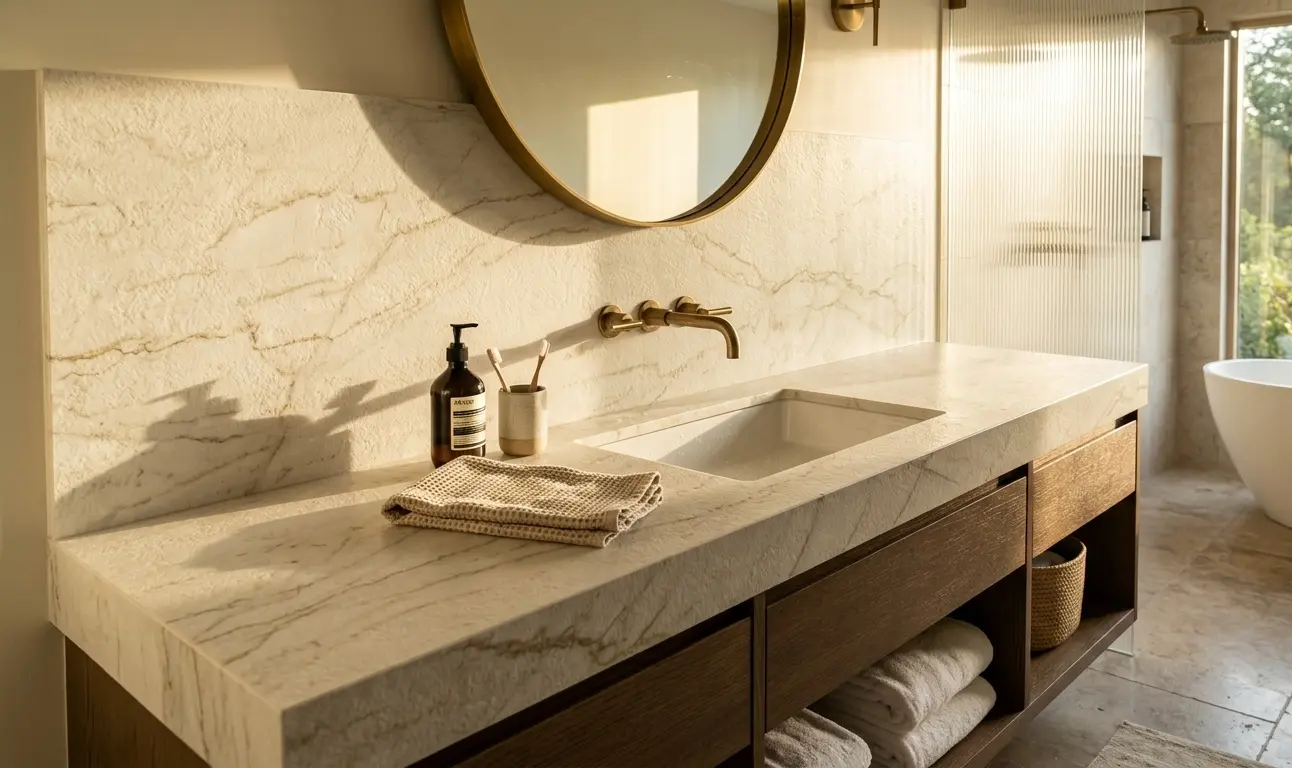
Where Leathered Mont Blanc Works Best in the Home
This stone and finish combination tends to perform well in several common applications:
- Kitchen islands and perimeter counters, where the texture hides everyday wear from food prep
- Bathroom vanities, where the softer light interaction feels calmer than a polished surface
- Fireplace surrounds, a natural fit for the mountain-lodge aesthetic common throughout Incline Village
- Wet bars and butler's pantries, where a tactile, less formal surface suits a more casual space
It is less commonly used for exterior applications, since leathered finishes are generally chosen for their tactile, indoor-facing qualities rather than for outdoor durability testing, though quartzite itself performs well in exterior settings when the specific finish and installation are suited to freeze-thaw conditions. To explore our complete offerings, including other stone options and finishes, visit our showroom and view the materials in person.
Pairing Leathered Mont Blanc With Other Materials
Because the stone's palette is soft and neutral, leathered Mont Blanc tends to work well alongside the material choices already common in mountain homes, an approach visible in recent mountain kitchen projects that pair quartzite countertops and leathered stone finishes with wood and metal accents. Warm wood tones, such as reclaimed oak or knotty pine cabinetry, play well against the cool grey veining without clashing. Blackened or oil-rubbed bronze fixtures pick up on the subtler grey tones in the stone, while brass or unlacquered brass hardware tends to warm the whole palette and soften the contrast.
For fireplace surrounds specifically, a darker stone hearth or a wood mantel keeps the surround from feeling too formal for a room built around a wood-burning or gas fireplace. In kitchens, many homeowners choose a leathered island paired with polished or honed perimeter counters, which adds contrast and texture without leathering every surface in the room.
Conclusion
Leathered Mont Blanc quartzite brings together a few things that matter in a mountain home: a soft, marble-like appearance, a hardness that resists the daily wear a busy kitchen or ski house puts on a surface, and a texture that stays forgiving of everyday use between visits. For a place like Incline Village, where homes swing between heavy winter use and quieter stretches the rest of the year, that combination is worth taking seriously.
The finish is not the right fit for every kitchen or every design style, and the choice between leathered, honed, and polished ultimately comes down to how a space gets used and what look a homeowner is going for. Seeing an actual slab, and running a hand over the texture, remains the best way to know if it fits.
Nova Tile and Stone's Reno showroom serves Incline Village along with the rest of the Truckee Meadows and North Lake Tahoe area, and carries natural stone slabs including quartzite for browsing in person. The showroom is located at 12835 Old Virginia Road, Suite 24, Reno, NV 89521, and can be reached at (775) 331-6682.
Frequently Asked Questions
Pricing generally reflects the slab and fabrication work rather than the finish alone, though leathering does require additional processing time, which can add modestly to the cost depending on the fabricator.
No. The finish changes surface texture and how wear shows, not the stone's structural hardness.
It is more commonly used on countertops and vertical surfaces like fireplace surrounds, since the texture is primarily valued for its tactile and visual qualities rather than for foot traffic durability, though some homeowners do use leathered stone on flooring in lower-traffic areas.
This depends on the specific slab, its porosity, and how the space is used. A fabricator or installer can recommend a sealing schedule based on the exact stone.
The leathering process looks similar on both stones, but the underlying material behaves differently. Marble reacts chemically to acids in a way quartzite does not, so a leathered marble surface will still etch over time while a leathered quartzite surface largely will not. That difference in the base stone, not the finish, is usually the deciding factor for a busy kitchen.
Note: Some images on this page may be conceptual renderings created to illustrate design possibilities and may not depict actual installations.