Dolomite is a natural stone used for countertops, flooring, and other interior surfaces. It forms when magnesium-rich groundwater slowly converts limestone into a harder mineral over geologic time. Dolomite ranks 3.5 to 4 on the Mohs hardness scale, making it more scratch-resistant than marble (about 3) but softer than quartzite (about 7). It offers marble-like veining with slightly better scratch resistance than marble, which makes it a common choice for kitchen islands, bathroom vanities, and moderately used kitchens in a Woodland, CA remodel. In high-traffic family kitchens, quartzite or granite typically requires less maintenance.
Where Dolomite Comes From
Dolomite is a genuine natural stone, quarried directly from the earth rather than manufactured in a factory. It forms through a process called dolomitization, in which calcium carbonate in limestone slowly converts to calcium magnesium carbonate as magnesium-rich water passes through the rock over millions of years. This chemical shift is what separates dolomite from ordinary limestone and marble.
On the Mohs hardness scale, dolomite typically measures 3.5 to 4. That places it just above marble, which sits around 3, and well below quartzite, which can reach 7. This small gap in hardness gives dolomite a bit more resistance to everyday scratching than marble while retaining much of the same soft, luminous veining that draws people to a marble look in the first place.
Because it is a natural material and not an engineered product, every dolomite slab is different. Veining, color, and mineral inclusions vary from one slab to the next, and even within the same quarry block. Homeowners who want a predictable, uniform pattern from slab to slab may find this variability worth weighing against dolomite's natural character, which is part of why it helps to browse the current slab inventory in person rather than relying on photos alone.
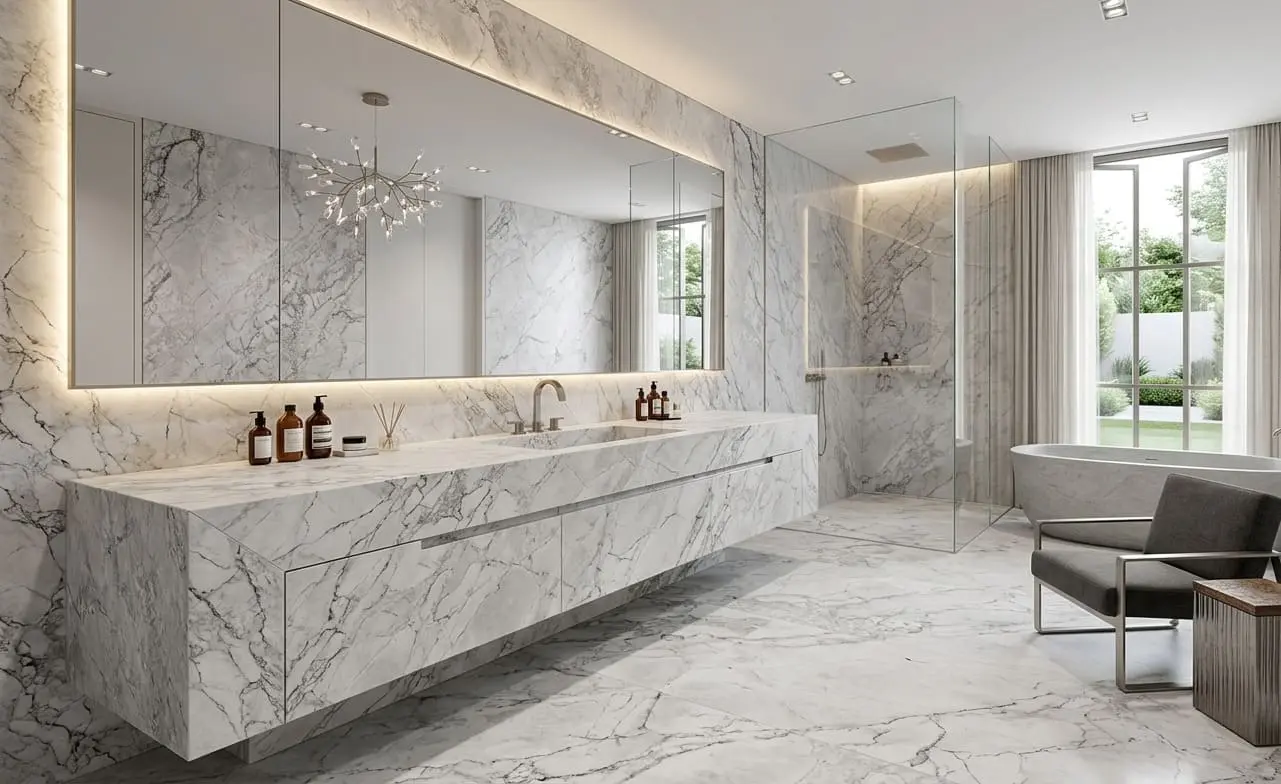
How Dolomite Compares to Other Natural Stone
For a Woodland remodel, dolomite usually gets compared against two other natural stone options: marble and quartzite.
Marble offers the most classic, softest veining of the three, but it is also the most prone to etching from wine, citrus, and vinegar, and it scratches more easily under daily use. Quartzite sits at the other end of the spectrum, offering higher hardness and stronger acid resistance, generally at a higher price point.
Dolomite lands in between. Its added magnesium content gives it somewhat better resistance to acidic spills than marble, though it is not immune to etching, and spills still need to be wiped up promptly rather than left to sit. This middle position is part of why dolomite appeals to homeowners who like the marble aesthetic but want a bit more forgiveness in daily use.
Where dolomite tends to fall short is in households with heavy daily cooking, young kids, or a low tolerance for occasional upkeep. In those situations, granite or quartzite typically holds up with less day-to-day attention. This Old House's overview of stone countertop materials covers these tradeoffs across a wider range of stone types, which can help frame how dolomite fits into the bigger picture.
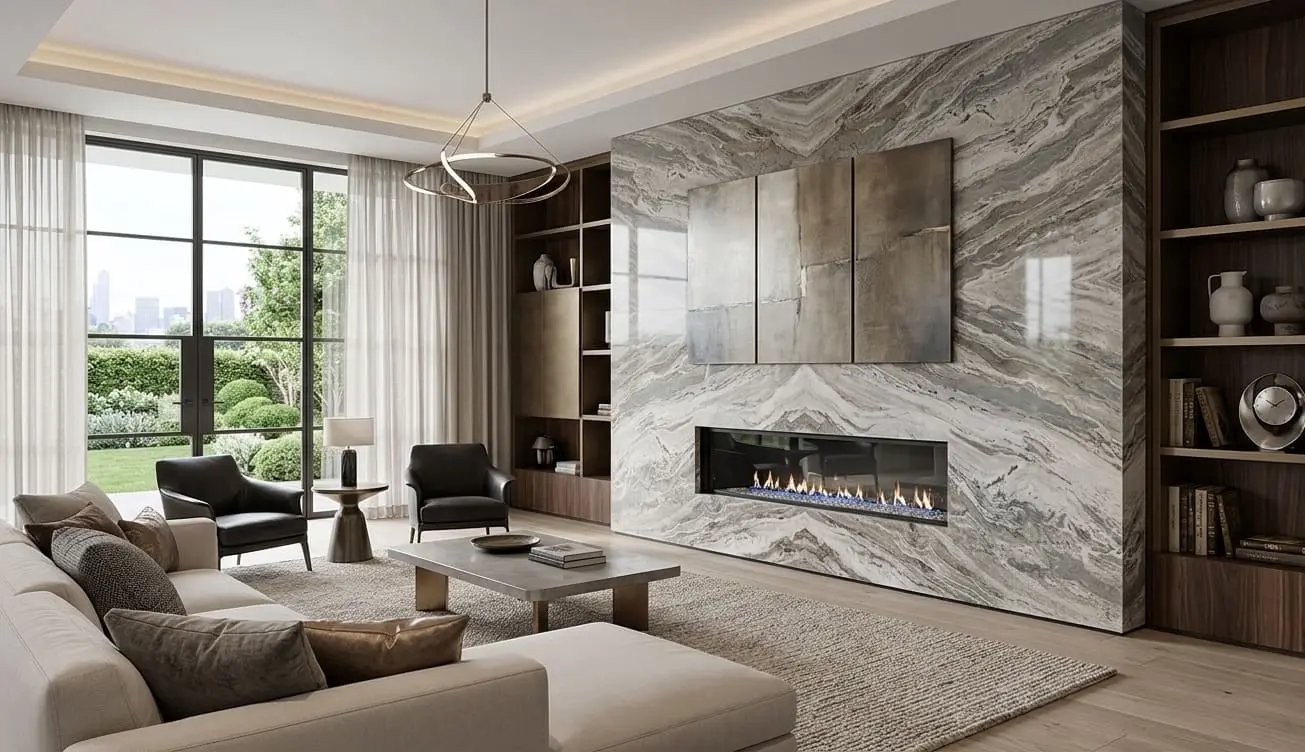
Where Dolomite Works Well in a Remodel
Dolomite tends to perform best in spaces where it is appreciated for its look and where daily wear is moderate rather than constant. A few common applications include:
- Kitchen islands, where the stone becomes a visual centerpiece rather than the primary workspace for every meal
- Bathroom vanities, where exposure to acidic spills is far less frequent than in a kitchen
- Secondary prep areas, such as a butler's pantry or wet bar, where use is lighter than a main kitchen counter
- Fireplace surrounds and accent walls, where spills and scratching are rarely a concern
Primary kitchen countertops in a heavily used family kitchen are the application where dolomite requires the most honest self-assessment. It can work well there, but only if the household is genuinely willing to maintain a sealing schedule and use cutting boards and trivets as a matter of habit.
Does Dolomite Fit Woodland's Homes?
Woodland has a housing character shaped by its agricultural history and a well-preserved historic core, with many surrounding residential streets carrying an older, character-driven feel into individual homes. In houses with existing trim, older cabinetry, or a more traditional layout, dolomite's soft veining and neutral gray, white, and cream tones tend to read as a natural extension of the home rather than a sharp modern contrast.
That same neutral palette works just as well in newer construction where the goal is a warmer, more transitional look rather than a stark, high-contrast finish. Dolomite pairs comfortably with painted cabinetry, farmhouse-style sinks, and simple hardware, which makes it a flexible choice across a range of home styles found throughout Woodland. Homeowners planning a full remodel rather than a single surface may also want to see how dolomite pairs with flooring and other materials by looking through the full catalog of tile, stone, and flooring.
What Maintenance Actually Involves
Dolomite is not a no-maintenance material, and it helps to go into a remodel with a realistic picture of what ongoing care looks like rather than assumptions carried over from granite or quartz.
In practice, that generally means:
- Resealing the surface roughly every 6 to 12 months, depending on use and the finish selected
- Cleaning with a pH-neutral cleaner rather than anything acidic or abrasive
- Wiping up wine, citrus, coffee, and vinegar spills promptly instead of letting them sit
- Using cutting boards and trivets consistently, not just occasionally
None of this is especially difficult, but it is a different rhythm than a fully maintenance-free surface. Homeowners who already care for marble or limestone elsewhere in the home will likely find dolomite's needs familiar and manageable. Fine Homebuilding's guide to natural stone countertops goes further into how sealing frequency and finish choice affect upkeep across different stone types.
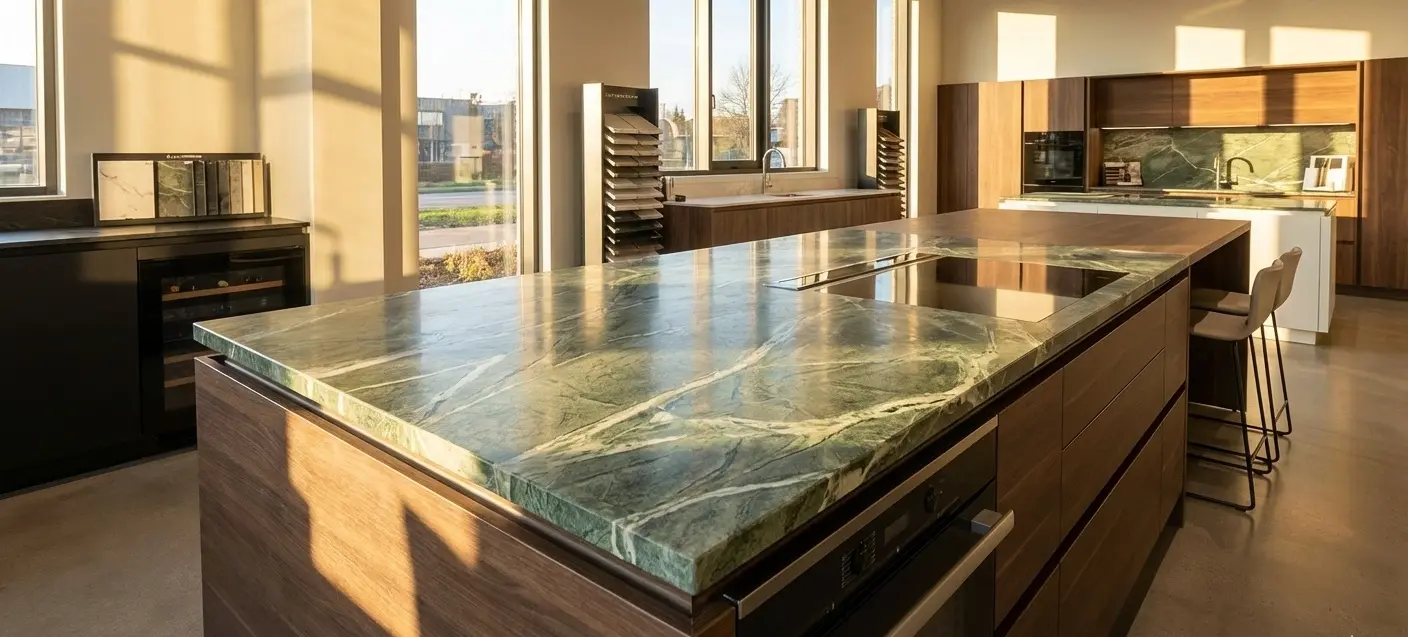
Color and Finish Options
Dolomite is quarried in a range of colors, which gives some flexibility depending on the look a remodel is going for. White and light gray dolomite tend to carry soft gold, taupe, or charcoal veining that closely resembles Carrara or Calacatta marble, making it a common substitute for homeowners drawn to that aesthetic. Deeper gray and blue-gray dolomite offer a cooler, more neutral background that pairs well with both warm wood tones and white cabinetry. Less common colorations, including green and black dolomite, bring a more distinctive look for homeowners who want a natural stone that stands out rather than blends in.
Finish also changes the character of the stone considerably. A polished finish brings out the deepest color saturation and the most contrast in the veining, giving the surface a reflective sheen. A honed finish softens that same veining into a matte, more understated look, which some homeowners prefer for a quieter, more traditional kitchen. A leathered finish adds a subtle texture to the surface, which can help disguise minor wear and fingerprints over time while still showing the stone's natural pattern.
None of these choices are purely cosmetic. A polished finish shows etching and scratching more visibly than a honed or leathered one, so the finish selected can influence how forgiving the surface feels in daily use, independent of the color chosen.
Questions Worth Asking Before Committing
A few honest questions can help clarify whether dolomite is the right call for a specific remodel:
- How is this space actually used day to day? A kitchen island used mainly for serving and light prep has very different demands than a main countertop used for every meal.
- Who is doing the cooking, and how often? Households that cook daily with acidic ingredients, citrus, and wine will test dolomite's limits more than households that eat out frequently or cook lightly.
- Is there tolerance for a sealing routine? Resealing every 6 to 12 months is not difficult, but it does require remembering to do it and following through.
- Does the look matter more than the maintenance? For some homeowners, the marble-like appearance is worth the extra care. For others, a lower-maintenance stone with a similar look, such as quartzite, is the more practical long-term choice.
There is no universally correct answer here. The right decision depends on matching the stone's characteristics to how a household actually lives, rather than choosing based on appearance alone.
Cost Considerations
Dolomite generally falls between marble and quartzite in price, though exact costs vary by color, finish, slab size, and current inventory. Homeowners comparing options should weigh not just the upfront material cost, but the ongoing cost of sealing and careful use over the life of the countertop. A stone that requires slightly more attention but costs less upfront may still be the right trade-off for some households and the wrong one for others. Homeowners who have narrowed down a specific bundle can request a quote for that slab directly, and contractors or designers working on a Woodland project can look into a trade account for preferred pricing.
Conclusion
Whether dolomite is the right natural stone for a Woodland remodel comes down less to the stone itself and more to how the space will actually be used. For a kitchen island, a bathroom vanity, or a moderately used kitchen where the priority is a marble-adjacent look with a bit more forgiveness, dolomite is a reasonable and often attractive choice. For a high-traffic family kitchen where minimal maintenance is the top priority, quartzite or granite may be the better fit.
Because every dolomite slab is different and inventory changes regularly, the most reliable way to decide is to see current slabs in person and discuss the specific demands of your household with someone familiar with the material. Our design consultants can walk through available dolomite options, compare them against marble and quartzite side by side, and talk through what realistic upkeep will look like for your specific project. Anyone in Woodland planning a visit can book a design consultation ahead of time or stop by the Sacramento showroom page for hours and directions. Our showroom is located at 6100 Warehouse Way, Sacramento, CA 95826, on Google Maps here, and our team can be reached at (916) 913-6682.
Note: Some images on this page may be conceptual renderings created to illustrate design possibilities and may not depict actual installations.
Frequently Asked Questions
Dolomite is a genuine natural stone. It forms geologically through the alteration of limestone by magnesium-rich groundwater, and each slab is quarried rather than manufactured, which is why color and veining vary from one slab to the next.
Yes. Dolomite typically ranks 3.5 to 4 on the Mohs hardness scale, compared with roughly 3 for marble, giving it somewhat better resistance to everyday scratching.
Dolomite has better acid resistance than pure marble, but it is still a calcareous stone and can etch from prolonged contact with acidic substances. Prompt cleanup and regular sealing help reduce the risk.
Quartzite is harder and more resistant to acids, making it a lower-maintenance option for heavy daily use. Dolomite offers a similar marble-like appearance at a different price point, suited to careful, everyday use.
Most dolomite countertops benefit from resealing every 6 to 12 months, depending on how the space is used and which finish was selected.