Yes, Calacatta marble is a real, naturally quarried stone. It comes from the Apuan Alps near Carrara, Italy, and is known for its bright white background and bold gray or gold veining. However, the name "Calacatta" is also widely used to market quartz, porcelain, and laminate products that only imitate the look, so not everything labeled Calacatta is actual marble.
For homeowners in Fair Oaks researching countertops, this distinction matters for both budget and durability. Genuine quarried marble, engineered quartz, and porcelain slabs each carry the Calacatta name but behave very differently in a kitchen or bathroom, so knowing which one you are comparing is the first step before choosing a material. Our Sacramento showroom carries all three, which makes it a practical place to start comparing them side by side.
Where Real Calacatta Marble Comes From
Authentic Calacatta marble is quarried from the Apuan Alps in the Carrara region of northern Italy, the same mountain range that has supplied marble for centuries. It forms through the metamorphism of limestone under heat and pressure over millions of years, which is what produces the dramatic veining that runs through the stone. True Calacatta typically has a bright white or slightly warm background with bold, widely spaced veins in gray, gold, or a combination of both. Because it comes from a small number of quarries and the veining patterns vary from block to block, natural Calacatta is one of the more costly marbles on the market.
That scarcity is exactly why so many other products borrow the Calacatta name. Once you know what the real stone actually looks like and where it comes from, it becomes much easier to spot the difference between an authentic slab and a manufactured lookalike.
How to Tell Real Calacatta From Imitations
If you are trying to figure out whether what you are looking at is genuine marble or a manufactured lookalike, there are a few practical ways to check.
Check the material category first. Natural Calacatta marble is sold as slabs cut directly from quarried blocks. If a product is labeled "Calacatta quartz," "Calacatta porcelain," or "Calacatta laminate," you are looking at an engineered or printed material designed to mimic the appearance of the real stone, not the stone itself. This is not automatically a bad option. Engineered quartz and porcelain surfaces with a Calacatta look can offer more consistency and less maintenance than natural marble. The key is knowing which category you are shopping in so you can compare it fairly against other options.
Look at the veining pattern. Natural marble veining tends to be irregular and organic, with variations in thickness, direction, and intensity across a single slab. Printed materials, even high quality digital reproductions, often repeat patterns at intervals because the design is based on a limited set of source images. Standing in front of a full slab in a showroom makes this much easier to spot than looking at a small sample chip.
Feel the surface temperature and weight. Natural stone tends to feel cool to the touch and has real heft. Engineered materials can come close but often feel slightly different once you have handled both side by side. For a broader look at how different natural stones compare on weight, hardness, and feel, this general guide to stone countertop materials covers the main categories homeowners typically consider.
Ask about the finish and edges. Genuine marble slabs show the mineral structure of the stone when you look closely at a polished edge. Manufactured surfaces have a printed or layered look at the edge that a trained eye, or even a curious homeowner, can usually pick out with a side by side comparison.
Request documentation. Reputable suppliers should be able to tell you the quarry origin and material type for any slab. If a product is labeled Calacatta but nobody can tell you where it was quarried, that is a signal it may be an engineered surface being sold under the marble name.
Why the Naming Confusion Persists
Knowing how to spot the differences above only solves half the problem, since it still helps to understand why the name is used so loosely in the first place. "Calacatta" has become shorthand in the design world for a specific look rather than a name tied exclusively to one material. In practice, quartz and porcelain manufacturers frequently name products "Calacatta Gold" or similar without the material ever having come from an Italian quarry. The name is being used to describe an aesthetic category, similar to how "farmhouse sink" describes a style rather than a specific manufacturer, rather than to make a claim about where the material physically originated.
For homeowners, the practical takeaway is that you should never assume a product is natural marble just because Calacatta appears in the name. Always ask directly whether you are looking at quarried marble, engineered quartz, sintered stone, or porcelain, and let that answer guide your comparison of price, care requirements, and appearance. This same labeling issue shows up with other natural stones too. Industry coverage on how natural stone countertops perform notes that quartzite faces a nearly identical naming problem, where the label gets applied to stones that are not actually quartzite at all.
What This Means for Fair Oaks Homeowners
With a clearer picture of what real Calacatta is and why the name gets borrowed so often, the next question is how to apply that knowledge to an actual project. Fair Oaks has a strong mix of established ranch style homes, updated mid-century properties, and newer custom builds, and Calacatta shows up as a popular request across all of them because the bright background and bold veining work with both traditional and contemporary kitchens. Before deciding between natural Calacatta marble and one of its engineered counterparts, it helps to think through how the space will actually be used.
If you are drawn to the idea of a kitchen island or bathroom vanity that develops character over time, natural marble is worth considering, since it is a material with a long documented history in architecture and design. If your household includes a lot of daily cooking, frequent acidic spills from citrus or wine, or young kids who are hard on surfaces, an engineered Calacatta look quartz or porcelain slab may be a more practical fit while still giving you the visual style you are after.
We keep a wide range of both natural Calacatta marble slabs and Calacatta style quartz and porcelain options on display across our four showrooms in Northern Nevada and Sacramento, which serve Fair Oaks and the surrounding communities. Walking the floor and comparing full slabs side by side is the most reliable way to understand the differences described above, since photos and small samples rarely capture the full veining pattern or the material's actual weight and finish. You can also browse current slab availability online before your visit to get a sense of what is on the floor.
Cost and Care Expectations
Natural Calacatta marble generally costs more per square foot than many other marbles and most engineered alternatives, driven by the limited quarry supply and the labor involved in cutting and matching veining across slabs. Pricing varies based on slab thickness, finish, and the specific quarry lot, so getting an accurate quote requires looking at actual inventory rather than relying on general price ranges you might find online. If you already have a specific slab or bundle in mind, requesting a quote directly is the fastest way to get real numbers for your project.
Natural marble is a softer stone on the Mohs hardness scale, which means it is more prone to etching from acidic substances like lemon juice, vinegar, and some cleaning products. Etching shows up as a dull spot rather than a stain, and many homeowners come to see it as part of the character of a natural stone surface over years of use. If you prefer a surface that resists etching and staining with less ongoing attention, an engineered quartz or porcelain option with a Calacatta pattern is generally the lower maintenance choice. Whichever direction you lean, it is worth discussing sealing schedules and daily care habits with a natural stone care professional so you know what to expect before you commit to a material.
Matching Calacatta to Your Fair Oaks Kitchen or Bathroom
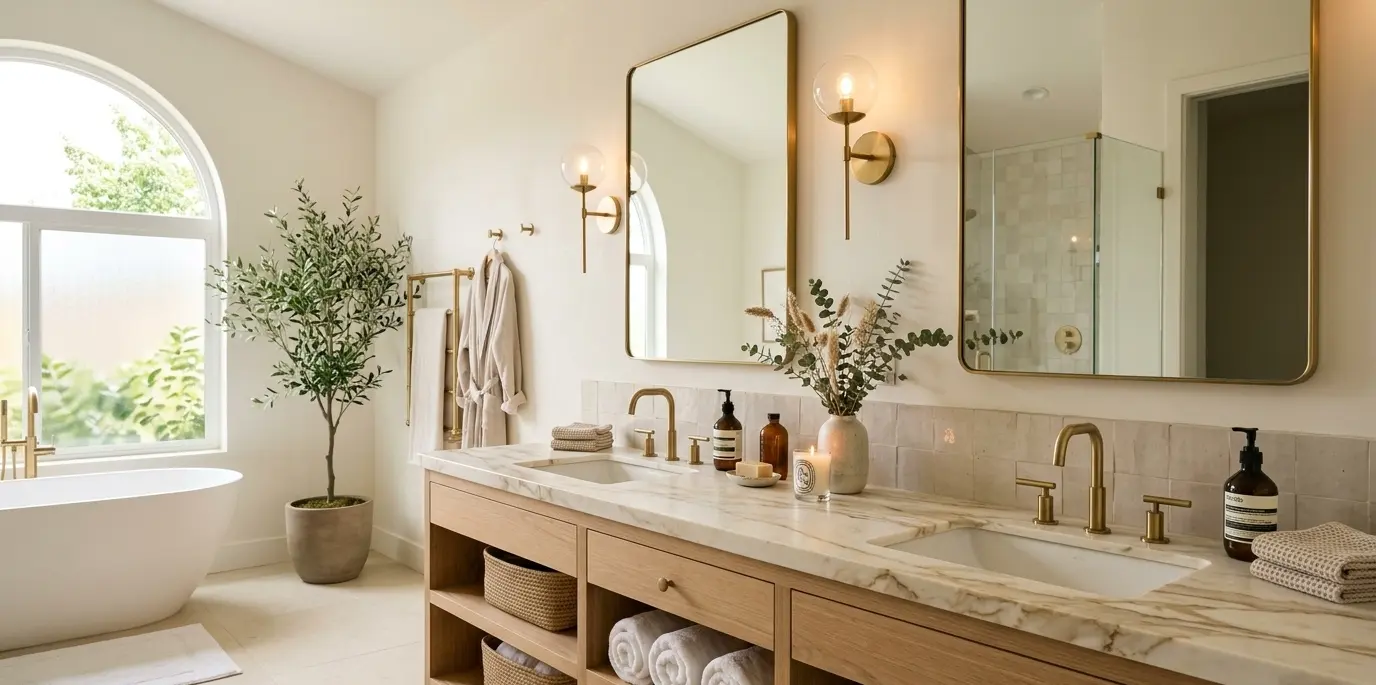
Once you have settled on natural marble versus an engineered alternative, the next decision is how to pair Calacatta with the rest of your space. Because the veining is bold and the background is bright, Calacatta tends to work best as a focal point rather than something that competes with several other high contrast finishes in the same room. Many Fair Oaks homeowners pair it with simple cabinetry in white, warm wood tones, or a muted color so the stone stays the visual anchor of the kitchen or bathroom. Brass or matte black fixtures tend to pick up the gold or gray tones in the veining and tie the room together without adding another competing pattern.
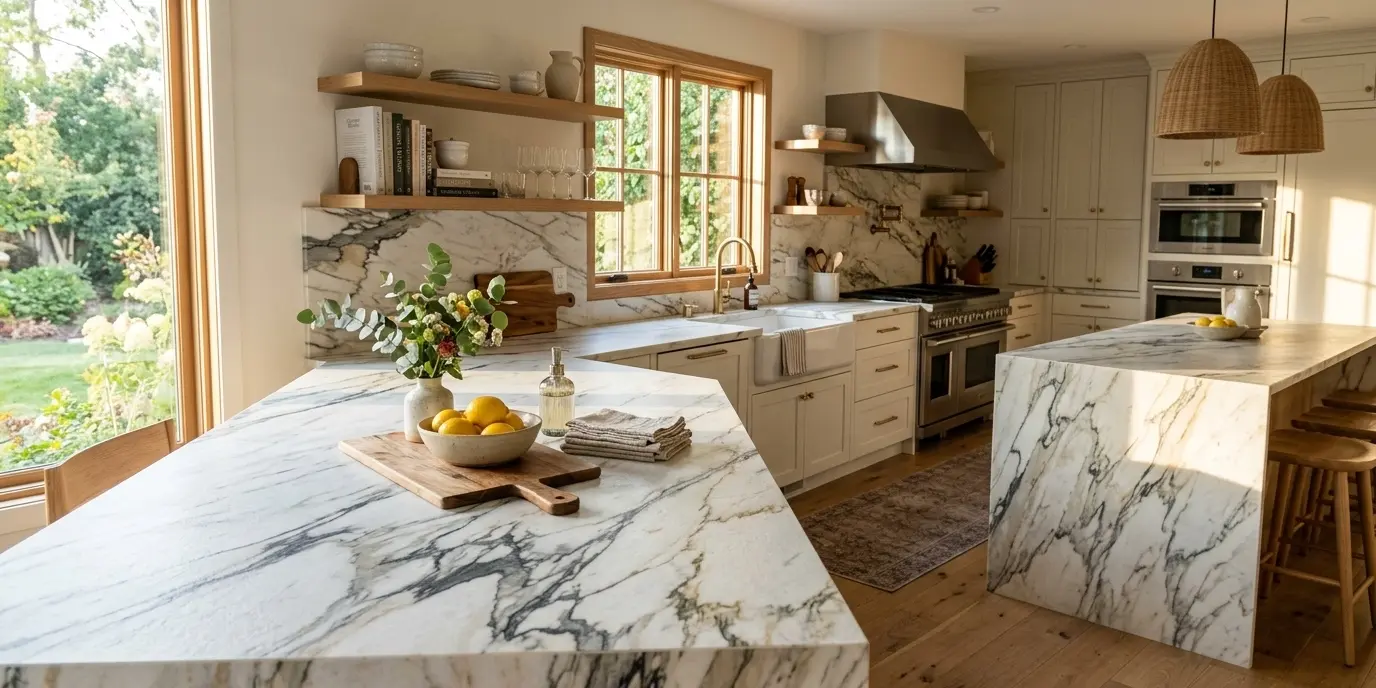
Slab orientation also matters more with Calacatta than with more uniform materials. Because the veining runs in a specific direction through the block, how a fabricator lays out the pattern across an island, backsplash, or waterfall edge changes the finished look substantially. If continuity of veining across a seam or corner matters to you, ask to see the actual slab and a layout plan rather than approving a project based on a small sample alone. This is one of the advantages of shopping in person, since a showroom visit lets you see full slabs side by side and picture how the veining will read once it is installed in your specific space. Homeowners ready to move forward can book a design consultation directly at the Sacramento showroom, and contractors or designers managing a Fair Oaks project can apply for a trade account for pricing and job-site delivery.
Conclusion
Real Calacatta marble is a genuine, quarried Italian stone with a distinct look and a real cost to match, but the name alone will not tell you what material is actually in front of you. The only reliable way to know is to compare slabs and samples directly and ask clear questions about origin and material type before you buy. If you are working through this decision for a kitchen, bathroom, or fireplace project in Fair Oaks, our design team can walk you through natural Calacatta marble alongside quartz and porcelain alternatives so you can see the differences for yourself. Stop by our showroom location on Warehouse Way at 6100 Warehouse Way, Sacramento, CA 95826, or call us at (916) 913-6682 to schedule a free design consultation and get a firsthand look at what is actually available under the Calacatta name.
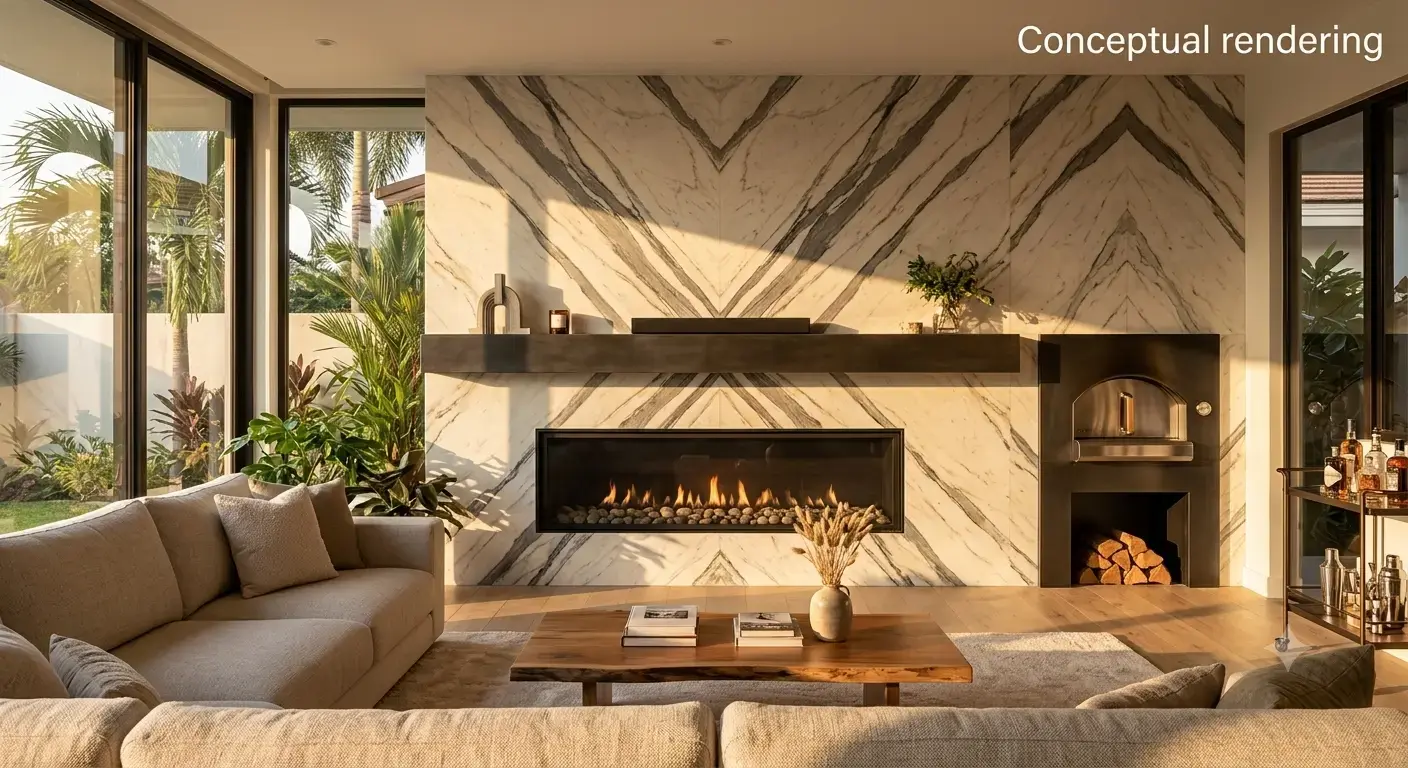
Note: Some images on this page may be conceptual renderings created to illustrate design possibilities and may not depict actual installations.
Frequently Asked Questions
Calacatta marble is a real, naturally quarried stone that comes from the Apuan Alps in the Carrara region of Italy. The name is also used loosely by some manufacturers of quartz, porcelain, and laminate products to describe a similar visual style, so the same name does not always mean the same material.
Check whether the product is labeled as marble, quartz, porcelain, or laminate, since only marble is the natural quarried stone. Look closely at the veining for irregular, organic patterns rather than repeating designs, and ask the supplier directly about the material's origin.
Yes, natural Calacatta marble typically costs more than many other marbles because of its limited quarry supply and the labor involved in matching veining across slabs. Actual pricing depends on slab thickness, finish, and the specific lot, so it is best confirmed by looking at current inventory.
Natural Calacatta marble is a softer stone and can etch from contact with acidic substances like citrus juice or vinegar. Homeowners who want a lower maintenance option often choose an engineered quartz or porcelain surface with a Calacatta style pattern instead.
Yes, our Sacramento showroom carries natural Calacatta marble slabs along with Calacatta style quartz and porcelain options, and it serves homeowners throughout Fair Oaks and the surrounding area. Viewing full slabs in person is the best way to compare veining, weight, and finish before making a decision.