A marble kitchen island is worth it for households that value its veining and color over low maintenance, since marble etches when acidic foods or liquids touch it and needs periodic sealing to guard against stains. Households with heavy daily cooking, young children, or frequent acidic spills often get more practical results from granite, quartz, or genuine quartzite instead. For Elk Grove homeowners, whether a marble island makes sense comes down to how the kitchen actually gets used day to day, not just how it looks in photos.
Whether the decision is for a new build, a remodel, or an island-only update, it helps to separate what marble does well from where it asks for more attention than other stone or surface options.
What Draws People to a Marble Island
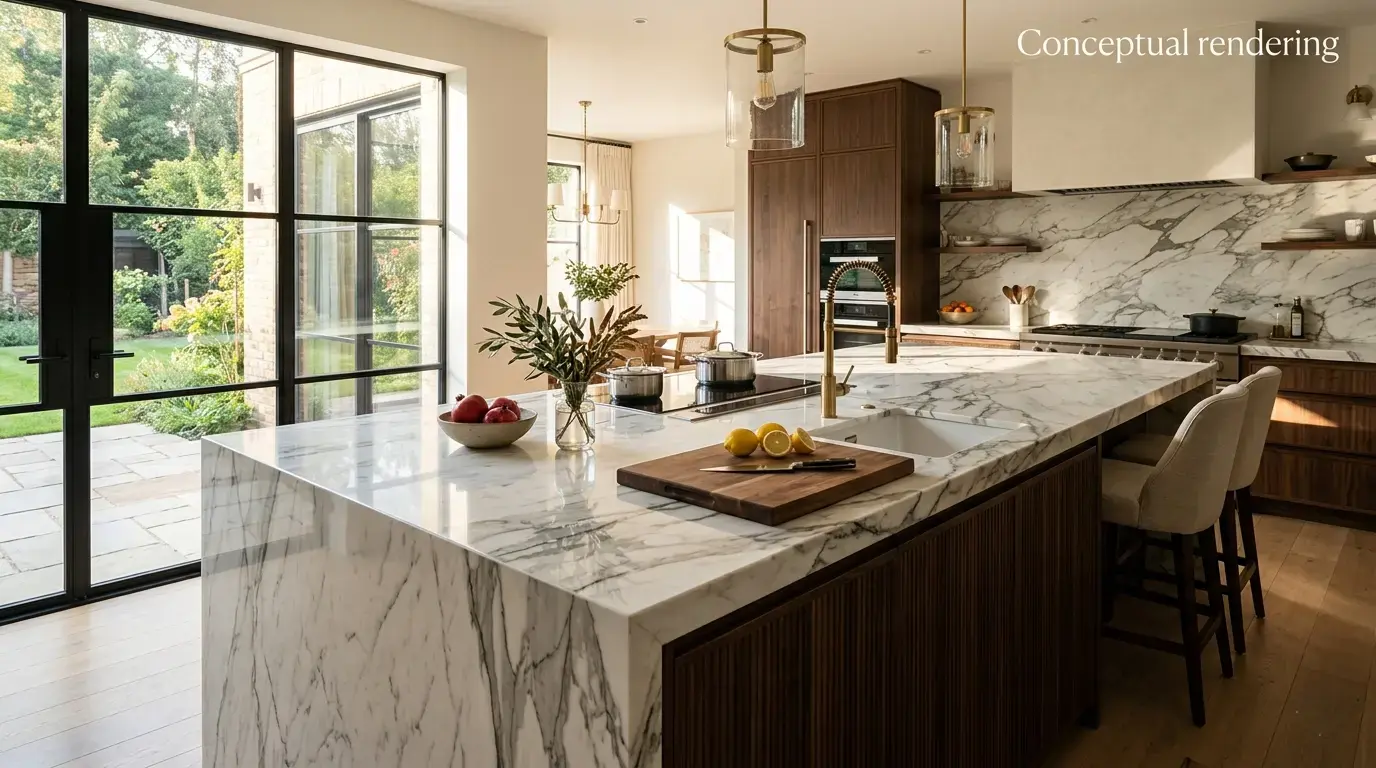
Marble's veining pattern and color range set it apart from more uniform materials. Each slab carries its own movement, from soft gray Carrara-style veining to bolder, high-contrast patterns in stones like Calacatta. Because an island is typically the visual centerpiece of an open kitchen layout, many homeowners choose to reserve marble specifically for that surface rather than using it across every counter in the room.
An island also tends to see a different kind of use than perimeter counters. It is often where guests gather, where prep work happens intermittently rather than constantly, and where the countertop is more visible from adjoining living spaces. That combination of high visibility and moderate daily use is part of why marble islands have become a common choice, even in kitchens where quartz or granite handles the busier perimeter counters near the range and sink.
Many newer Elk Grove homes are built with open-concept layouts that connect the kitchen directly to the dining and living areas, where an island functions almost like a piece of furniture as much as a work surface. In that kind of layout, some homeowners are willing to accept marble's maintenance needs in exchange for its appearance. In a more closed-off kitchen layout, where the island sits apart from the main living space, that same trade-off may feel less worthwhile.
Where Marble Asks for More Attention
Marble is a calcite-based stone, which makes it more reactive to acidic substances than quartzite or granite. Contact with citrus juice, vinegar, wine, or tomato-based sauces can cause etching, a dulling or light mark on the surface where the acid has reacted with the stone. Etching is not the same as staining. It affects the finish rather than the color, and it happens even on well-sealed marble because sealers protect against liquid absorption, not against the chemical reaction that causes etching. The general care guidelines for calcareous stone published by the Natural Stone Institute cover this distinction in more detail for homeowners who want a deeper technical explanation.
Homeowners who choose marble typically fall into one of two groups: those who plan to reseal periodically and treat light etching as part of the material's natural character, and those who prefer a surface that resists these changes altogether. Neither approach is right or wrong. It depends on how much the household wants to manage that maintenance rhythm versus prioritizing a lower-upkeep surface.
Because marble is more porous than granite or engineered quartz, sealing on a regular schedule helps reduce the chance of staining from oils, sauces, or standing liquids. Households that do a lot of daily cooking, especially with acidic ingredients, tend to notice these effects sooner than households that use the island mainly for casual meals, homework, or entertaining.
Marble on the Island, Something Else on the Perimeter
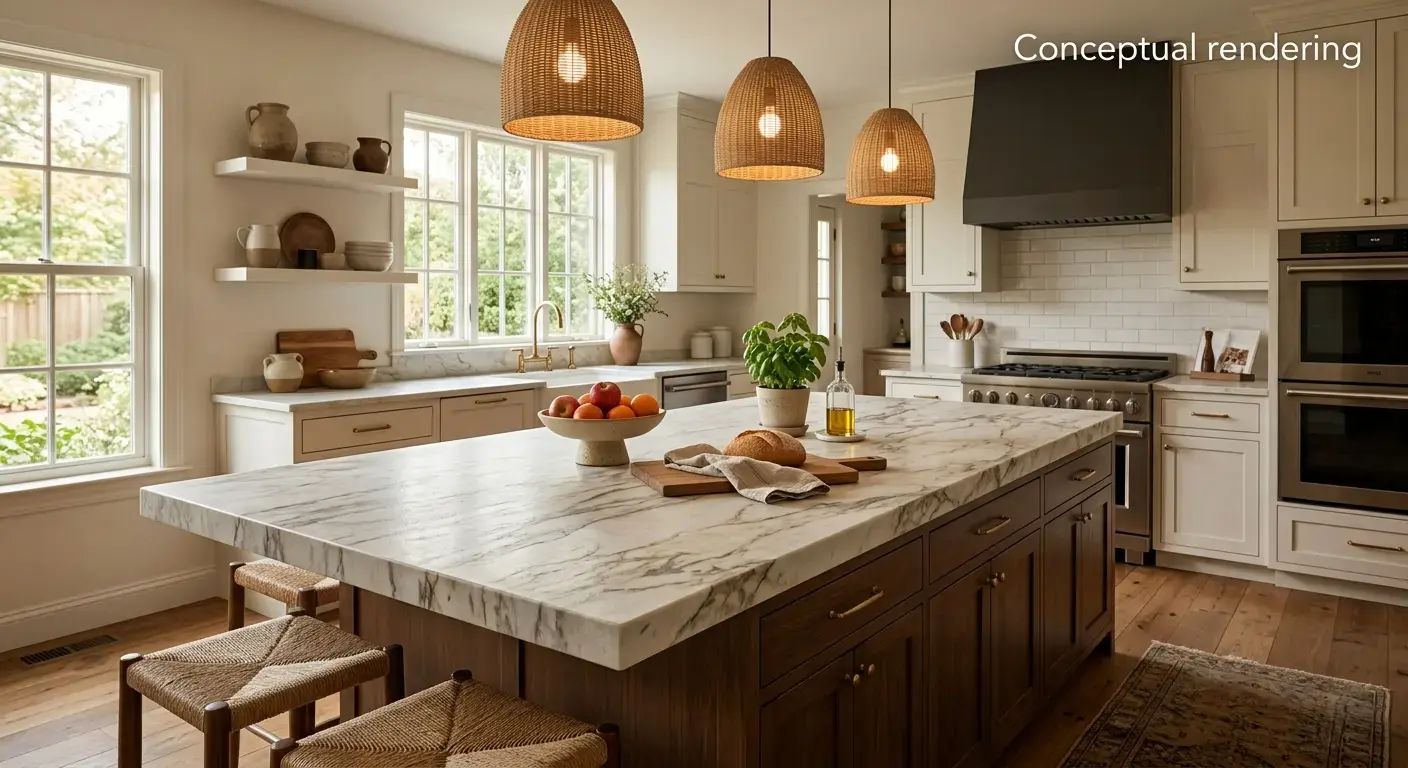
One approach that has become common is pairing a marble island with a more resistant material, such as quartz or granite, on the surrounding counters. This gives a kitchen the visual impact of marble where it is most seen, while keeping the busier prep and cooking zones on a surface that handles daily acidic spills and heat with less maintenance concern. Reviewing current slab inventory side by side makes it easier to see how different marble and granite or quartz pairings actually look before committing to a combination.
This mixed-material approach also opens up design flexibility. A lighter marble island can anchor a kitchen with darker perimeter counters, or a boldly veined marble can serve as a contrast point against a more neutral quartz or granite surface elsewhere in the room. For Elk Grove kitchens with open floor plans connecting to dining and living areas, this kind of contrast can help define the island as a distinct gathering space. Browsing the full range of tile, stone, and flooring options in one place can help homeowners see how a marble island fits into a broader material plan for the rest of the kitchen.
Cost Considerations
Marble pricing varies significantly based on the specific stone, its origin, veining complexity, and slab size. Some marble varieties are comparable in price to mid-range granite, while heavily veined or rarer stones command a higher price point. Island size also matters. A larger island surface, or one with a waterfall edge that continues the stone down the sides, requires more material and more slab yield planning than a standard rectangular top.
Because pricing depends on the specific slab and project details, the most accurate way to understand cost is to review actual slabs and island dimensions rather than relying on general price ranges found online. Requesting a quote on specific slabs is one direct way to get pricing based on the exact stone under consideration rather than a general estimate. Slab availability also changes regularly, since natural stone is quarried in limited batches rather than manufactured on demand.
It is also worth factoring in how the island's shape affects material use. A simple rectangular island with a straight edge uses stone more efficiently than one with curved corners, an overhang for seating, or a waterfall detail on one or both ends. None of these choices are wrong, but they do affect how much of a slab is needed and how the veining lines up across the visible surfaces, which is easier to plan when looking at the actual slab rather than a rendering. Contractors and designers managing multiple island installations may also want to look into a trade account for volume pricing and job-site delivery.
Is It Worth It for Your Kitchen?
A few practical questions can help clarify whether marble is the right fit for an Elk Grove kitchen island specifically:
How is the island actually used? An island used mainly for serving, casual dining, or light prep sees less acidic exposure than one used for daily meal preparation involving citrus, wine, or tomato-based cooking.
Who uses the kitchen day to day? Households with young children or frequent hosting may want to weigh the likelihood of spills against the desire for a lower-maintenance surface.
Is the appeal specific to marble, or to natural stone generally? Genuine quartzite offers a similar look to marble in many cases with greater resistance to etching, which is worth comparing side by side before deciding. It is worth noting that some slabs sold as quartzite are actually dolomitic marble, which etches much like true marble, so verifying the stone's identity matters as much as the visual comparison.
How does the island fit into the rest of the kitchen's material plan? Pairing marble with a different perimeter material can address both the aesthetic goal and the maintenance concern in the same kitchen.
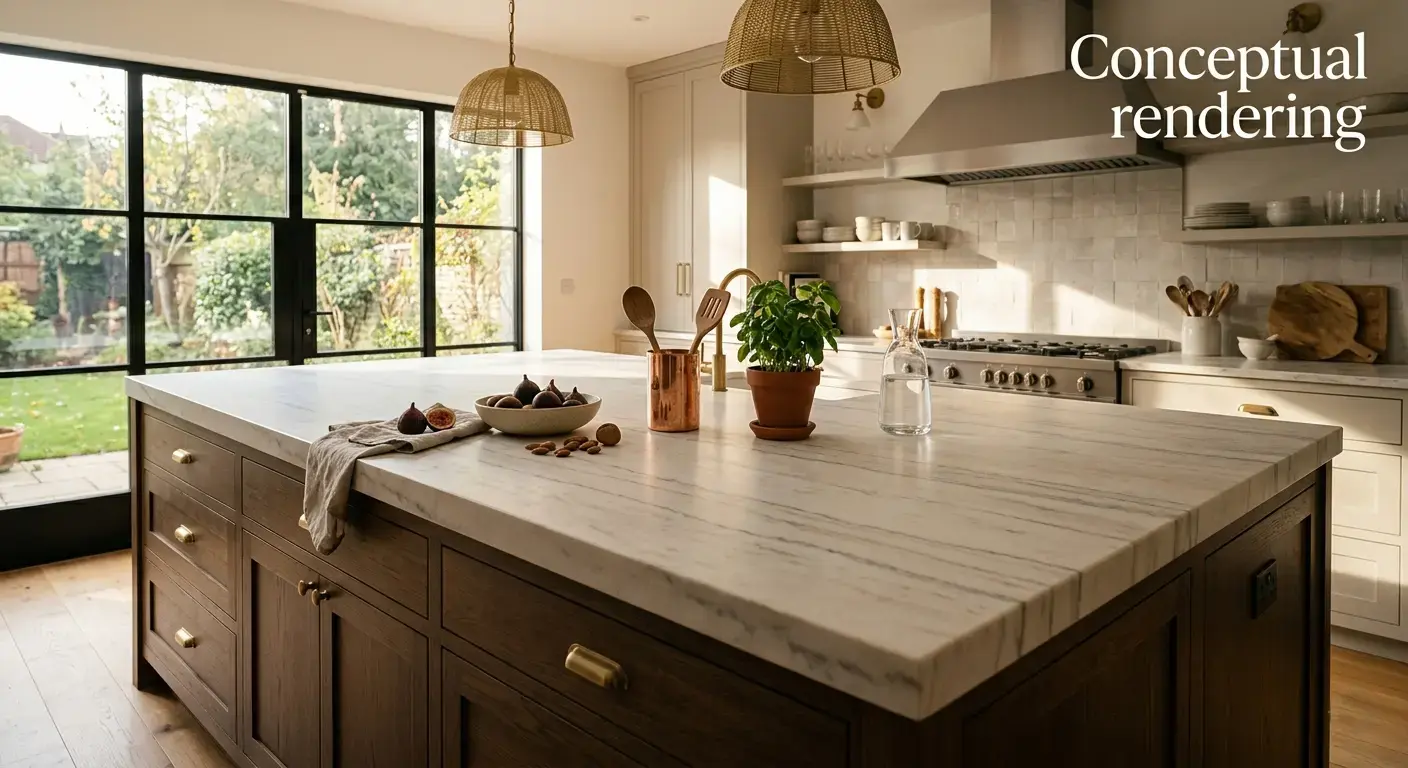
There is no single answer that applies to every household. Marble remains a strong choice for homeowners who value its appearance enough to maintain it and who use their island in a way that limits regular acidic contact. For kitchens with heavier daily use, a side-by-side comparison with quartzite, granite, or engineered quartz often leads to a more informed decision. Visiting the Sacramento showroom in person is one of the most direct ways to compare these materials before deciding.
Conclusion
Whether a marble kitchen island is worth it in an Elk Grove home comes down to matching the material to how the kitchen gets used, not just how the stone looks on its own. Marble offers a distinct look that many homeowners choose specifically for an island, but it does ask for periodic sealing and some care around acidic spills. Weighing that trade-off against a household's daily habits, and comparing marble side by side with quartzite or granite, is the most direct way to arrive at the right answer. Our team can walk through actual slabs and answer material-specific questions in person at our showroom at 6100 Warehouse Way, Sacramento, CA 95826, or by phone at (916) 913-6682. Homeowners in Elk Grove and the surrounding area planning an island update can also schedule a design consultation directly.
Note: Some images on this page may be conceptual renderings created to illustrate design possibilities and may not depict actual installations.
Frequently Asked Questions
Marble can be a good choice for a kitchen island for households willing to reseal it periodically and manage occasional etching from acidic spills. It works especially well on islands that see lighter, intermittent use rather than constant daily food preparation.
Etching is a chemical reaction between acid and the calcite in marble that dulls the surface finish, while staining is absorption of a liquid into the stone that changes its color. Sealing helps prevent staining but does not prevent etching.
Marble handles moderate heat reasonably well, but sudden temperature changes or prolonged direct contact with very hot cookware can still affect the surface over time. Using a trivet or pad is a simple way to reduce that risk.
Genuine quartzite offers a similar visual style to marble in many varieties while resisting etching better because it is not calcite-based. Some stone sold under the quartzite name is actually dolomitic marble, which does etch, so it is worth confirming a slab's identity before assuming it will behave differently from marble.
Yes, pairing a marble island with quartz, granite, or another more resistant material on the perimeter counters is a common approach. It allows the busier prep and cooking areas to use a lower-maintenance surface while the island carries the visual focal point.