Fernley Homeowner’s Guide to Granite and Quartz Maintenance
Granite and quartz remain popular choices for Fernley area kitchens and bathrooms, and each material calls for a slightly different care routine. To maintain granite and quartz surfaces, homeowners should clean spills promptly, avoid abrasive cleaners, and check granite sealant periodically since quartz does not require sealing at all.
Granite is a natural stone that benefits from routine sealing checks, while quartz is an engineered surface with a nonporous finish that resists staining without added sealant. Both materials handle daily kitchen and bathroom use well, though neither is immune to scratches or thermal shock, so trivets and cutting boards remain part of a sensible care plan.
Fernley's dry climate and hard water can leave mineral deposits on countertops, floors and walls, which makes a consistent wipe down routine especially useful. This guide walks through cleaning steps, sealing schedules and everyday habits that help granite and quartz countertops, floors and walls hold up across the seasons ahead.
Key Benefits of Granite and Quartz Countertops
Granite and quartz each bring distinct advantages to kitchen and bathroom surfaces, and understanding these differences helps homeowners set realistic care expectations from the start. Neither material is maintenance free, but both reward a small amount of regular attention with lasting good looks.
According to the TCNA Handbook, consistent surface care practices play a meaningful role in how well stone and engineered surfaces perform over time. Choosing the right finish for each room also matters, since polished surfaces behave differently from honed or leathered ones.
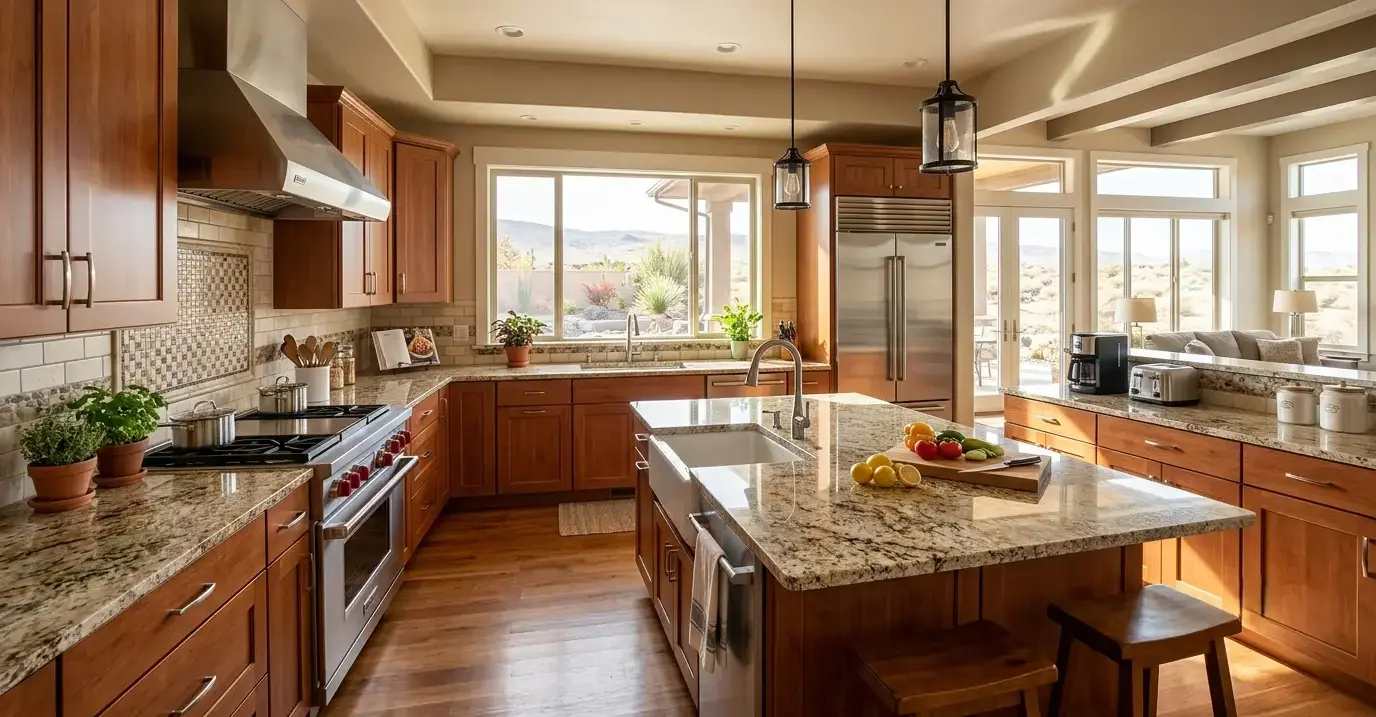 Conceptual rendering
Benefits of granite and quartz include:
- Granite offers natural heat tolerance, though trivets still protect against sudden thermal shock.
- Quartz resists staining thanks to its nonporous surface, though prompt cleanup helps prevent discoloration over time.
- Both materials offer solid scratch resistance for daily use, though cutting boards protect the finish long term.
- Granite's polished finish adds shine to countertops, though polished stone is slipperier when wet.
- Quartz needs no sealing, which simplifies long term care, though routine cleaning is still required.
- Homeowners can browse current slab options to compare finishes before choosing a surface.
Caring for Granite and Quartz in Kitchens and Bathrooms
Granite and quartz appear throughout kitchens, bathrooms, floors, and walls, and each setting calls for slightly different daily care. Countertops need the most attention against food, water, and heat, while floors face foot traffic and grit, and walls mainly deal with humidity and splashes - matching maintenance to each setting keeps surfaces looking their best.
Kitchen Countertops and Backsplashes
-
Kitchen countertops face daily exposure to food, oils and hot cookware, so trivets and cutting boards remain essential regardless of material. Homeowners in Reno kitchens often pair granite countertops with tile backsplashes for a coordinated look. Wipe spills quickly, since acidic foods can dull a granite surface if left too long.
A simple water bead test twice a year shows whether granite needs resealing, since water that soaks in within a minute signals it is time to reseal. Quartz countertops skip this step entirely, since the engineered surface does not absorb moisture the way natural stone does.
Bathroom Vanities and Shower Walls
-
Bathroom vanities see frequent contact with soap, lotion and standing water, which makes prompt drying an important habit for both materials. Some Sacramento bathrooms use honed granite or quartz vanity tops for a softer, less reflective finish that also improves grip near sinks.
Bathroom humidity can accelerate mineral buildup around faucets and soap dishes, so a quick daily wipe helps prevent cloudy spots from forming over time. Grout lines between wall tile respond well to the same mild, pH neutral cleaners recommended for granite and quartz countertops.
Floors and Walls
Granite floors and walls bring durability to high traffic areas, while quartz is generally reserved for indoor floors and walls rather than exterior applications. Minden homeowners updating hallway or entry floors often choose honed or leathered granite for better slip resistance underfoot.
Entryways and mudroom floors see the heaviest foot traffic, so placing walk off mats near exterior doors reduces grit that can dull a polished finish over time. Wall applications see far less daily wear and generally need only occasional dusting and gentle cleaning.
Seasonal Care Considerations
Fernley's dry climate and wide temperature swings between seasons can affect how quickly sealant wears on granite surfaces, especially near windows or exterior doors. Checking sealant before summer heat sets in and again before winter helps catch dry, thirsty spots early.
Quartz surfaces are less affected by seasonal humidity changes since the engineered material does not absorb moisture, though direct sunlight over long periods can still affect certain finishes. Rotating small appliances and decor periodically helps countertops age evenly across kitchens and bathrooms alike.
Granite vs. Quartz Maintenance Comparison
FEATURE | GRANITE | QUARTZ |
Sealing | Periodic resealing recommended | No sealing required |
Heat tolerance | Naturally heat resistant; trivets still recommended | Heat resistant; trivets still recommended |
Scratch resistance | High; cutting boards protect the finish | High; cutting boards still recommended |
Outdoor use | Suitable in select finishes | Indoor use only |
Wet area grip | Honed or leathered finishes grip better than polished | Honed finishes grip better than polished |
Granite and Quartz: Pros and Cons
Weighing durability, style, and everyday care
Granite pros:
Natural stone character, strong heat tolerance, suited to select outdoor applications.
Granite cons:
needs periodic sealing checks, polished finish is slipperier when wet.
Quartz pros:
No sealing required, consistent pattern across slabs, straightforward indoor care.
Quartz cons:
Not rated for outdoor applications, still requires trivets and cutting boards.
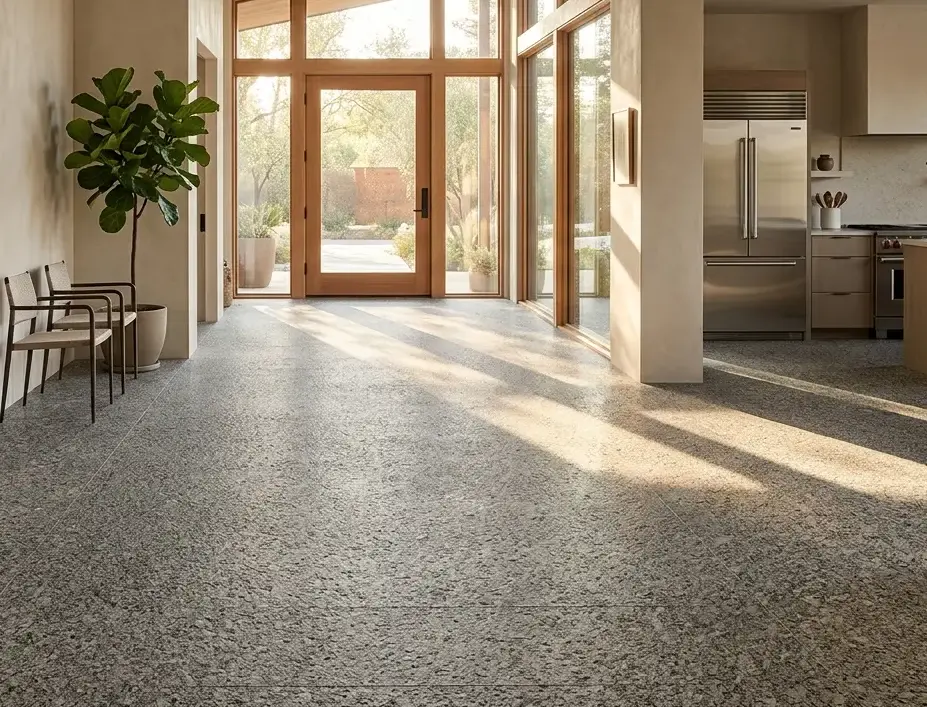
Current design coverage from recent design events shows renewed interest in natural stone finishes for both kitchens and baths. Related color trend coverage also points toward warmer palettes that pair well with honed granite and soft toned quartz.
5 Step Weekly Care Routine
- Wipe countertops, floors and walls with a soft cloth and mild, pH neutral soap.
- Dry surfaces fully to prevent hard water spotting common in Fernley's dry climate.
- Use trivets under hot cookware on granite and quartz alike.
- Use cutting boards to protect the finish from everyday knife marks.
- Check granite sealant once a year; quartz does not need this step.
Expert Guidance from Nova Tile and Stone
Choosing between granite and quartz often comes down to lifestyle, room function and personal style, and getting expert input can make the decision easier. The Nova team offers guidance on finishes, applications and care so homeowners can select a surface suited to daily life.
Coordinating tile samples ship free, making it simple to compare backsplash, floor or accent tile options alongside a granite or quartz surface before finalizing a design. Visiting a showroom in person also helps homeowners see how different finishes catch light and handle everyday wear.
Learn more about the Nova team for personalized guidance on granite, quartz and coordinating tile. Homeowners can also browse locations to shop local and visit a nearby showroom directly.
Scheduling a short consultation before finalizing a material choice helps match finish and application to how a room actually gets used day to day. Homeowners comparing granite and quartz side by side often find the decision easier after seeing both finishes in person.
Conclusion
To maintain granite and quartz surfaces effectively, homeowners only need a few consistent habits that quickly become second nature. Prompt cleanup of spills prevents staining and keeps the polished look intact, while the use of trivets or hot pads shields countertops from thermal shock and discoloration caused by direct heat. Cutting boards are equally important, protecting against scratches and preserving the smooth finish that makes these materials so appealing. Periodic checks to ensure granite sealing remains intact add another layer of defense, helping surfaces resist moisture and daily wear. These simple practices collectively preserve both durability and appearance over time, allowing countertops to remain a centerpiece of the home. For those planning a remodel, exploring the full material selection is invaluable. Fernley area homeowners can compare finishes side by side, evaluate texture and color variations, and confidently choose the best option for kitchens, bathrooms, or multipurpose spaces.
Frequently Asked Questions
Granite typically needs resealing checked once a year, though usage and finish can affect how often resealing is actually needed.
No, quartz is an engineered surface that does not require sealing, though routine cleaning still keeps it looking its best.
Trivets are recommended for both materials, since heat resistance does not mean either surface is fully proof against thermal shock.
Polished finishes are slipperier when wet, so honed or leathered granite is often a better choice for bathroom floors.
Quartz is intended for indoor applications only, while granite is available in finishes suited to select outdoor applications.