The right kitchen countertop is the one that balances durability, maintenance, and budget against how a kitchen actually gets used, not just how a slab looks on display. Common countertop materials include natural stone (granite, quartzite, marble, and dolomite), engineered quartz, sintered stone, and porcelain, each with different strengths around heat resistance, staining, and upkeep.
This guide walks through the practical side of picking a countertop: how a household uses the kitchen, what each material costs to own over time, and what tends to hold up best in Reno's high desert climate.
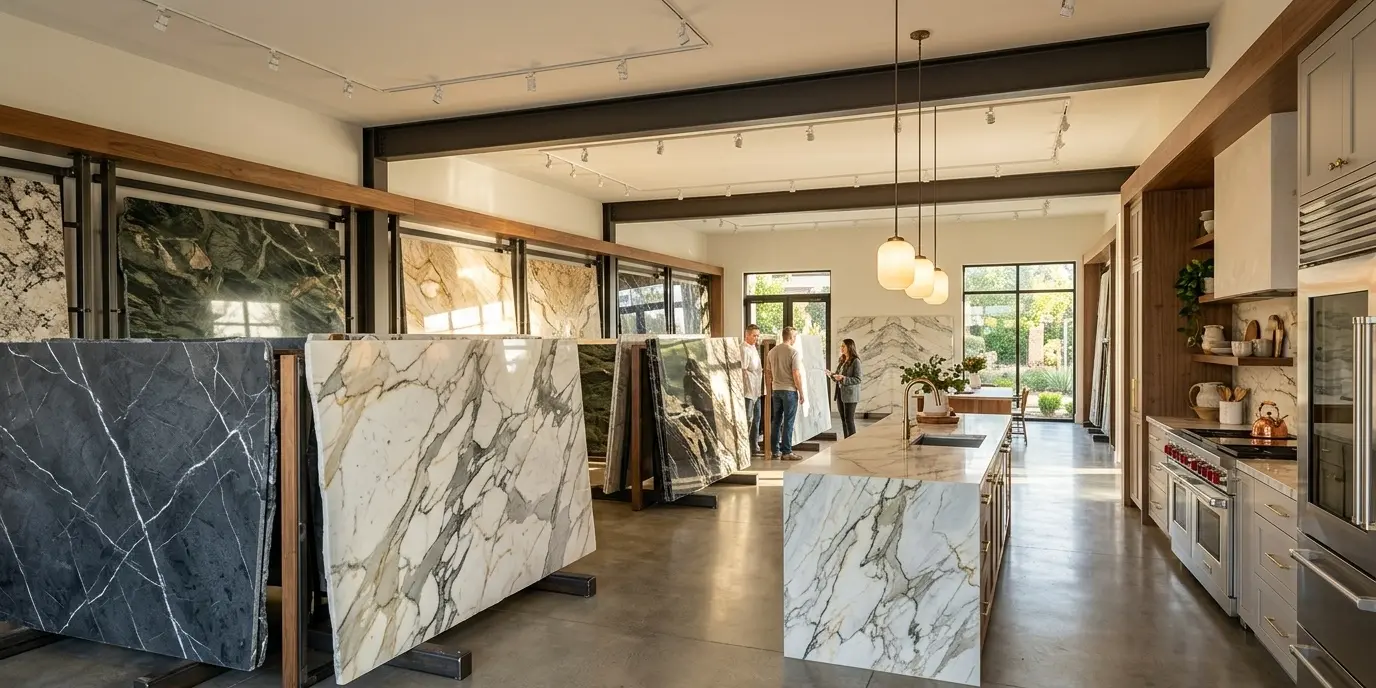
Think About How Your Kitchen Actually Gets Used
Before comparing materials, it helps to be honest about your household's habits. A countertop that gets wiped down after every meal has very different needs than one that sits under a cutting board six nights a week, or one that mostly holds a coffee maker and mail.
Designer comparisons of countertop durability and upkeep generally treat stain resistance, scratch resistance, heat resistance, and sealing needs as the core factors that separate a genuinely low-maintenance material from one that only looks that way on a showroom floor. Granite has been a leading countertop material in homes for years, and quartz has grown into a strong competitor thanks to its consistency and lack of sealing requirements. Neither is automatically the better choice. It depends on whether you value natural variation and heat tolerance, or a more uniform surface that never needs sealing.
A few honest questions to ask yourself:
- Do you cook daily with hot pans, or mostly reheat and assemble meals?
- Are there kids, pets, or frequent guests who might set down wet glasses or hot dishes without a coaster?
- Do you want a countertop with visible natural variation, or a consistent, predictable pattern from edge to edge?
- How long do you plan to stay in this home?
These answers narrow the field faster than browsing slab colors ever will.
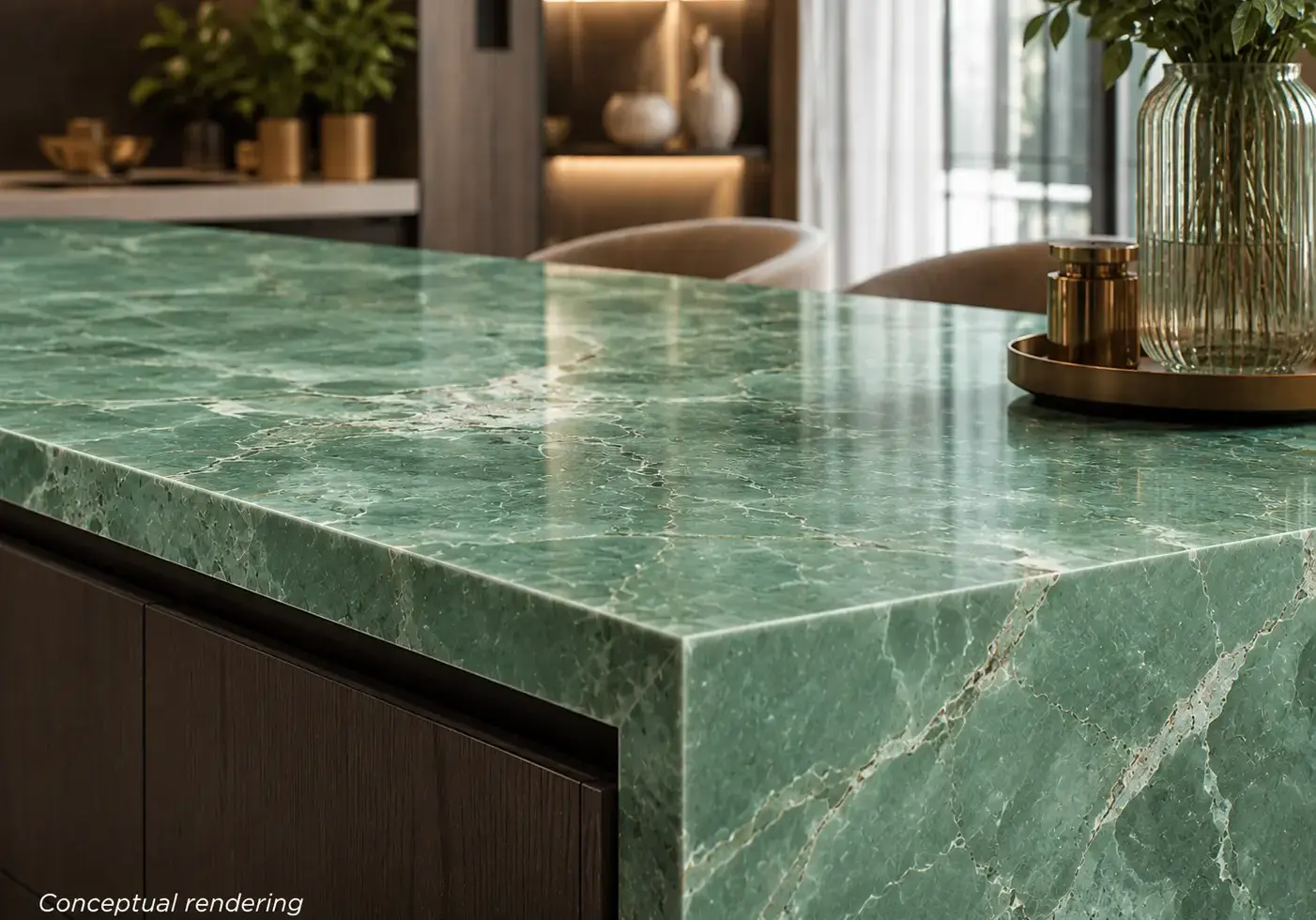
Compare the Main Countertop Materials
Most kitchen countertop projects fall into one of four categories: natural stone, quartz, sintered stone, and porcelain, plus a choice between prefabricated and custom slabs.
Natural stone covers granite, quartzite, marble, and dolomite. Each is quarried and cut rather than manufactured, so no two slabs look exactly alike. Granite and quartzite are both hard enough to resist scratching from everyday kitchen tools, and both tolerate direct heat from pots and pans well. Marble and dolomite are softer and more prone to etching from acidic spills like citrus or wine, which is part of why they are more often chosen for lower-traffic surfaces like a bar area or a bathroom vanity rather than a primary cooking counter.
Quartz is an engineered material made from crushed quartz combined with resins and pigments. Because it is manufactured, quartz offers a highly consistent pattern and color from slab to slab, which makes it easier to match across a large kitchen or an island. It resists staining well, though it is more sensitive to sustained direct heat than natural stone and should not be exposed to hot pans without a trivet.
Sintered stone is a newer category made by compressing natural minerals under extreme heat and pressure. It is dense, resists UV fading, and holds up well to heat and scratching, which makes it a reasonable option for kitchens that also open onto covered outdoor cooking spaces.
Porcelain slabs are fired at very high temperatures and share several of the same strengths as sintered stone: heat tolerance, scratch resistance, and UV stability. Porcelain slabs are also thinner and lighter than most natural stone, which can simplify installation on existing cabinetry.
Prefabricated versus custom slabs is more about project timeline and layout than material performance. Prefabricated countertops are cut to standard sizes and are typically faster to install, while custom slabs are cut to your exact kitchen dimensions and allow for features like waterfall edges or a continuous island run without visible seams.
Plan for Maintenance and Sealing
Maintenance needs differ enough between materials that it is worth planning for before installation, not after the first wine spill. The stone industry's official position on sealing granite countertops notes that most granite does not strictly need to be sealed, and no cases of food safety issues have been reported with sealed or unsealed granite, though many homeowners still choose to seal it for added protection against moisture. Marble and dolomite are more porous and benefit more consistently from a quality penetrating sealer, along with prompt cleanup of acidic spills. Quartz and porcelain generally do not require sealing; sintered stone typically does not either, though sealing needs can vary by product.
Reno's climate plays into this. The city sits in the lee of the Sierra Nevada, in a high desert climate with low humidity and hard water that varies somewhat by neighborhood depending on which water source or blend serves that part of Truckee Meadows Water Authority's system. Low humidity means sealants on natural stone tend to hold up longer between applications than they would in a humid coastal climate, and harder water in some neighborhoods can leave mineral spots near sinks if spills sit for too long, which is one more reason to wipe up water promptly regardless of which material is installed.
Whatever material you choose, a few habits protect any countertop: use a cutting board rather than cutting directly on the surface, use trivets under hot pans even on heat-tolerant materials, and clean up spills before they have time to sit.
Set a Realistic Budget Before You Fall in Love with a Slab
Countertop costs vary widely by material, slab rarity, edge profile, and the number of cutouts needed for sinks, cooktops, and faucets. As a general rule, laminate sits at the most affordable end, quartz and granite occupy a broad mid-range that overlaps significantly with each other, and rare natural stone slabs or elaborate edge details push costs toward the higher end. Getting a firm quote for your specific kitchen's square footage, rather than relying on a generic per-square-foot number, is the only way to budget accurately, since slab yield and layout complexity can shift the total substantially.
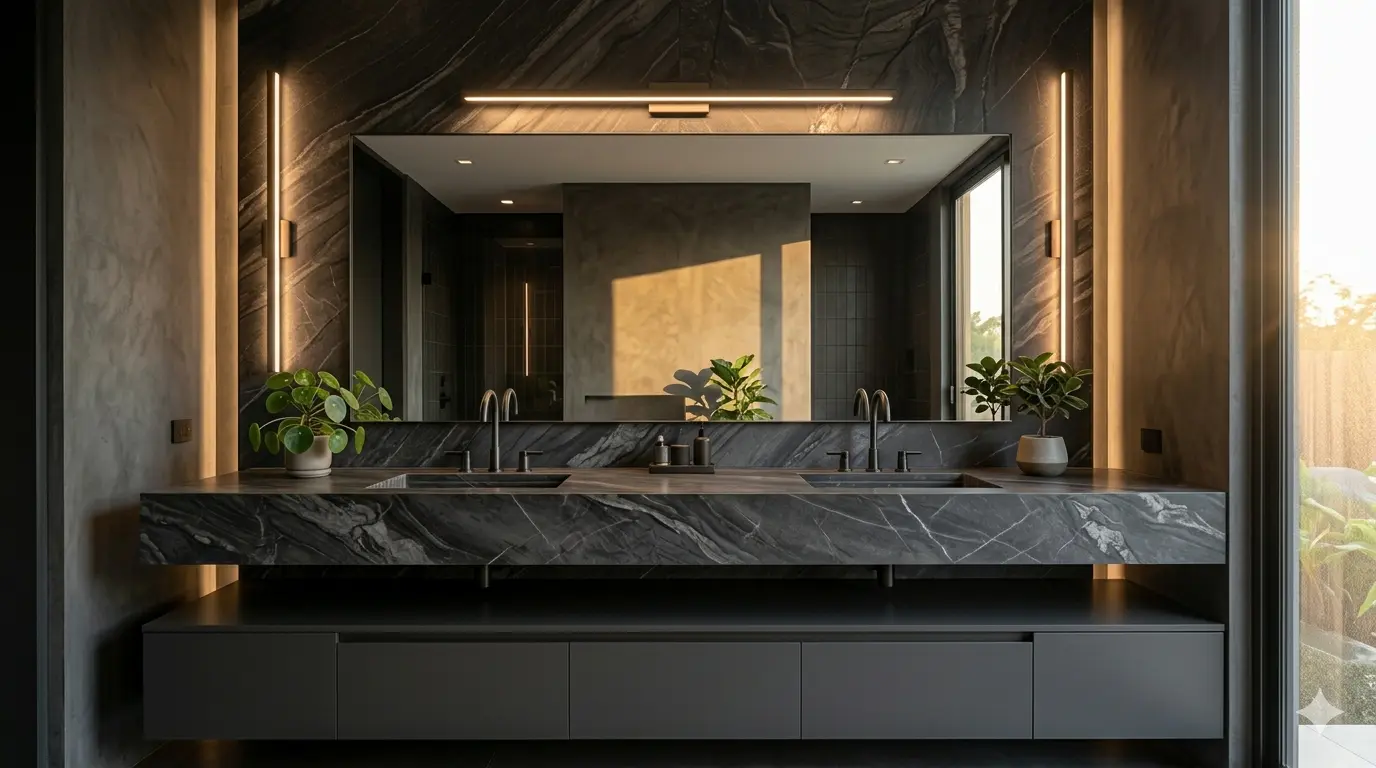
Coordinate Countertops with Cabinets, Flooring, and Lighting
A countertop rarely stands alone. It sits between cabinetry below and a backsplash above, and it reflects whatever light comes through your kitchen windows or fixtures. Professional kitchen and bath planning guidelines cover clearances, fixture placement, and coordination between cabinetry, counters, and finishes, which is a useful reference for thinking through layout before finalizing a material choice.
A general approach that works well in most kitchens: choose your flooring and cabinet finish first, since those are the largest visual surfaces in the room, then select a countertop that complements rather than competes with both. A busy natural stone pattern paired with a busy wood grain floor can feel chaotic, while a quieter quartz or porcelain surface lets more dramatic cabinetry or lighting take the lead.
Visit Nova Tile and Stone's Reno Showroom
Nova Tile and Stone's Reno showroom, located at 12835 Old Virginia Rd, Suite 24, Reno, NV 89521, can be reached at (775) 331-6682 and carries natural stone, quartz, sintered stone, and porcelain slabs, along with tile, hardwood, LVP, laminate, and carpet. As a direct stone importer, Nova Tile and Stone offers free design consultations to help match a countertop material to a kitchen's layout, lighting, and budget. The showroom is open Monday through Friday from 7:30am to 6:00pm and Saturday from 9am to 3pm.
Since Nova Tile and Stone operates as a material supplier, fabrication and installation are handled by separate fabricators and installers, so it is worth asking a design consultant for guidance on that next step once a material is narrowed down.
Conclusion
The right countertop for a kitchen comes down to matching durability, maintenance tolerance, and budget to how a household actually cooks and lives, not to which material looks best in a showroom photo. Natural stone offers natural variation and strong heat tolerance, engineered quartz offers consistency and low maintenance, and sintered stone or porcelain split the difference with strong heat and UV resistance. Reno's dry climate is forgiving for sealed natural stone, but water hardness varies enough by neighborhood that prompt cleanup still matters regardless of material. Whichever direction fits a kitchen, seeing the actual slab in person, under its own lighting, remains the most reliable way to make a final decision.
Frequently Asked Questions
Yes. It is increasingly common to pair a durable quartz or granite perimeter with a different material on an island, such as a natural stone with more dramatic veining, to create a visual focal point without needing that material to withstand daily prep work on every surface.
Darker and more heavily patterned surfaces tend to hide water spots, crumbs, and light scratching better than solid white or very light surfaces, which is worth considering for a kitchen island or a household with young kids, independent of which material is chosen.
Template measurement usually happens first, followed by fabrication of the slab to fit the exact kitchen, and installation itself is often completed in a single day once the fabricated piece is ready. Custom edge profiles or waterfall details can add time to the fabrication stage.
Yes. North facing kitchens tend to get cooler, bluer light, which can make some whites and grays look flatter, while south and west facing kitchens get warmer light that flatters beige and gold tones.
That's common, and it just flips the usual planning order: the existing cabinet color and door style become the fixed reference point instead of the last decision. Bringing an actual cabinet door or drawer front to the showroom, rather than relying on memory or a photo, makes it much easier to see how a candidate slab will actually look next to it.
Note: Some images on this page may be conceptual renderings created to illustrate design possibilities and may not depict actual installations.