For a Sacramento kitchen remodel, the most durable and climate-appropriate material choices are granite or quartzite for countertops, porcelain tile or natural stone for flooring, and ceramic or stone tile for the backsplash. These materials handle Sacramento's high heat, low humidity, and intense afternoon sun without degrading, warping, or requiring excessive maintenance. They are available through our Sacramento showroom and sourced directly to keep selection broad and pricing competitive.
Each surface in the kitchen has different performance requirements. Countertops need heat and scratch resistance. Floors need to hold up under foot traffic and spills. Backsplashes need to resist grease and moisture behind the range. The right material for each depends on how your household uses the kitchen, your maintenance tolerance, and how the surfaces will work together visually. This guide covers all three categories so you can make informed decisions before finalizing a renovation budget.
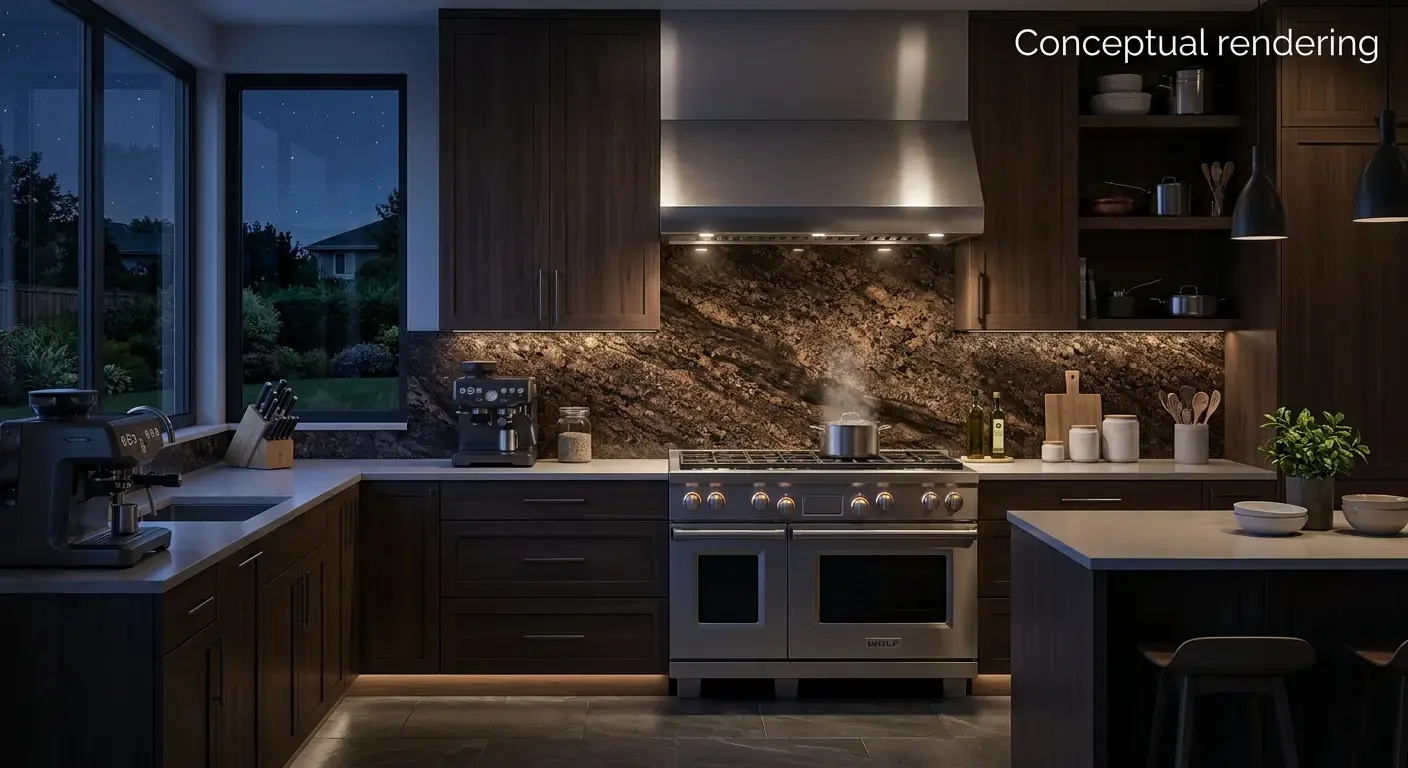
Start with Your Countertops
Countertops are the most used surface in any kitchen and typically the highest-cost material decision in a remodel. In Sacramento, natural stone slabs and engineered quartz are the most commonly specified options, each with different performance characteristics.
Granite
Granite is a dense igneous rock that resists heat, scratches, and daily wear. It can handle hot pots placed directly on the surface without damage, which is practical in a busy kitchen. Each slab has a unique natural pattern, and the material is available across a wide range of colors from neutral whites and grays to dark blacks and earth tones. Properly sealed granite resists staining and holds up well over decades of use. For Sacramento homeowners who want a durable, low-maintenance surface with a natural appearance, granite is a reliable choice. Browse the full slab inventory to compare granite varieties currently in stock.
Quartzite
Quartzite is a metamorphic stone that offers the look of marble with significantly better hardness. It rates higher on the Mohs scale than granite and resists etching better than calcite-based stones. Many quartzite slabs carry the warm vein patterns and creamy tones that homeowners associate with marble, making them a popular choice for kitchens where aesthetics matter alongside performance. Because quartzite is a natural stone, each slab is unique. It does require sealing, but maintenance is straightforward.
Marble and Dolomite
Marble and dolomite have a place in Sacramento kitchens, though they require more attention than granite or quartzite. Both are calcareous stones, which means acidic foods and cleaners can etch the surface if not wiped up promptly. That said, many homeowners accept this tradeoff because the visual warmth and character of these materials is difficult to replicate. If you want marble in the kitchen, consider using it selectively, such as on an island or perimeter countertop, while pairing it with a harder stone for the main work surface.
Engineered Quartz
Engineered quartz is a manufactured surface made from crushed stone bound with resin. It requires no sealing and resists stains and bacteria well. The tradeoff is that it can discolor under prolonged direct sunlight and does not handle heat as well as natural stone. In a Sacramento kitchen with south-facing windows, this is worth factoring in. Quartz works well for lower-traffic areas or for homeowners who prefer a maintenance-free surface with a consistent pattern.
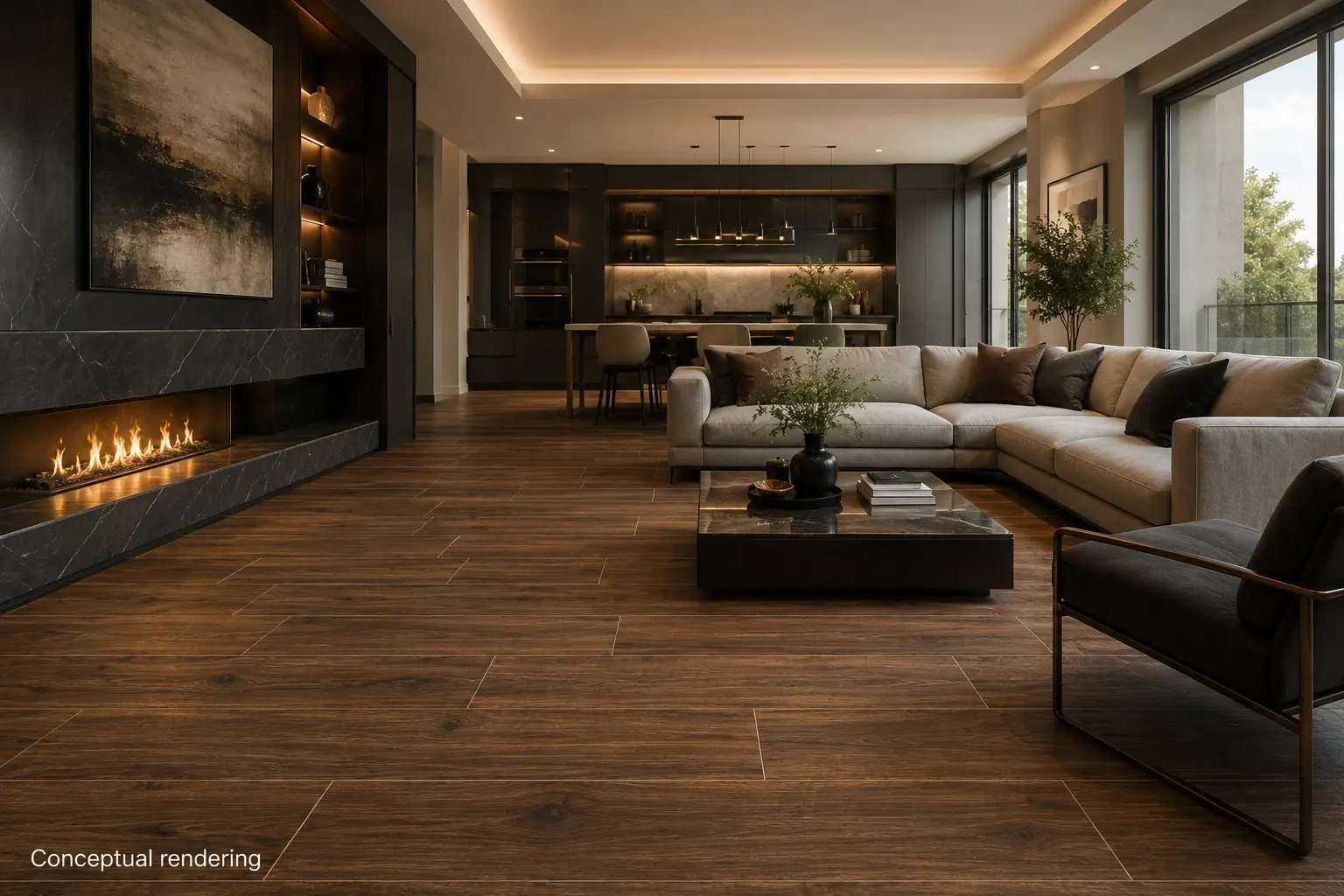
Flooring Options for Sacramento Kitchens
Kitchen floors take on foot traffic, spills, dropped items, and chair legs every day. The right flooring for a Sacramento kitchen should be durable, water-resistant, and comfortable to stand on during meal prep.
Natural Stone Tile
Travertine and granite tile are well-established options for kitchen floors. Natural stone stays cool underfoot in hot weather, which is relevant during Sacramento summers. Stone tile is dense and, when properly installed, can remain serviceable through multiple kitchen redesigns. The main considerations are sealing and grout maintenance. Unsealed stone can absorb spills and stains, so annual sealing is standard practice. Choosing a honed or brushed finish rather than a polished one reduces slip risk in a kitchen setting.
Porcelain Tile
Porcelain is one of the most practical flooring choices for a kitchen. It is fired at high temperatures, which makes it dense, non-porous, and resistant to water and staining without any sealing. Large-format porcelain tiles, including porcelain slabs used as flooring panels, create a clean look with minimal grout lines. Porcelain is also available in stone-look patterns that closely mimic marble, travertine, and concrete. Industry porcelain tile certification standards set benchmarks for density and water absorption that separate true porcelain from lower-grade ceramic. For Sacramento kitchens in high-traffic households, porcelain offers durability without the upkeep requirements of natural stone. Shop tile products to compare formats and finishes.
Engineered Hardwood
Engineered hardwood is not a stone or tile product, but it comes up in Sacramento kitchen remodels frequently enough to address. It handles humidity better than solid hardwood, but it remains vulnerable to standing water and requires careful maintenance around the sink and dishwasher. For households with young children or heavy kitchen use, stone or porcelain tile is generally more forgiving. Engineered hardwood works well in transitional spaces or light-use kitchens.
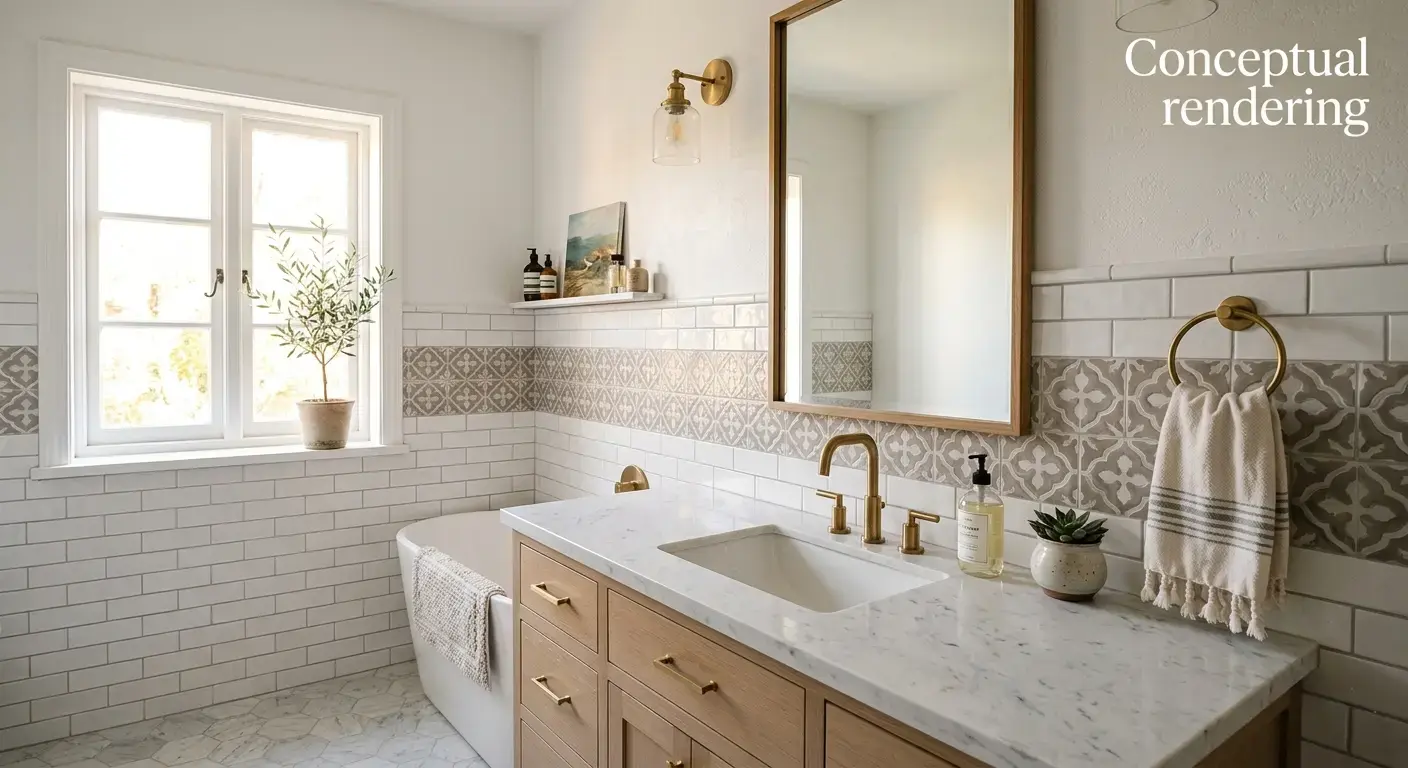
Backsplash and Wall Tile
The backsplash is the area where design flexibility is highest because it carries no structural load and sees less physical wear than countertops or flooring. This makes it a good place to introduce texture, color, or pattern without committing those elements to your entire kitchen.
Subway Tile
Classic subway tile in ceramic or porcelain remains one of the most popular backsplash choices in Sacramento kitchen remodels. The format is versatile, works with almost any countertop material, and is straightforward to install. Glazed porcelain subway tile resists staining and heat and cleans easily. When selecting tile, it is worth checking compliance with ANSI tile standards for slip resistance and dimensional consistency, particularly for wall applications near heat sources. The variation in finish, color, and layout pattern, such as stacked, herringbone, or offset, allows for significant design variation within a familiar format.
Stone Mosaic and Natural Stone Tile
Marble mosaic, travertine tile, and other natural stone formats bring warmth and texture to a backsplash. In Sacramento kitchens with natural stone countertops, continuing a complementary stone onto the backsplash ties the design together. Honed marble mosaic behind a quartzite countertop, for example, creates a layered appearance. Stone backsplashes require sealing to prevent grease and moisture absorption, but in a dry Sacramento climate, this is straightforward maintenance.
Full Slab Backsplash
A full slab backsplash, in which the same stone used for the countertop runs continuously up the wall, has become a popular high-end option. It eliminates grout lines in the backsplash zone, and makes cleaning easier. For kitchens with a quartzite or marble countertop, matching the backsplash to the slab can make a smaller kitchen feel larger. Book a free design consultation to see slab samples in person before committing.
Coordinating Materials Across the Kitchen
One of the more common mistakes in kitchen remodels is selecting materials in isolation. Choosing a countertop, then a floor, then a backsplash without thinking about how they interact can result in a space that feels disjointed. Surface design resources for architects and designers often emphasize material coordination as a foundational step before specifying individual products. A few principles help.
- Anchor with one dominant material and let the others support it. If the countertop is a bold quartzite with dramatic movement, keep the flooring and backsplash more neutral.
- Vary finish textures to add depth. A polished countertop paired with a honed floor and a matte backsplash tile creates visual interest without competing patterns.
- Consider light in the space. Sacramento kitchens with southern or western exposure take in significant afternoon sun, which affects how warm- and cool-toned stones read in the room.
- Bring samples together before deciding. Color and pattern relationships are difficult to evaluate from individual product photos. Seeing materials side by side under your kitchen's actual light conditions is the most reliable method.
Visiting a showroom is the most practical way to evaluate combinations. The Sacramento showroom at 6100 Warehouse Way carries full slabs and tile samples so you can compare materials at scale. The $1 tile sample program allows you to take tile samples home to evaluate them in your own space. For slabs, the team can walk you through the current inventory and flag options suited to your project.
Working with a Budget
Kitchen remodel material costs vary widely depending on the stone variety, slab origin, and format. A few practical points help with planning.
Natural stone pricing reflects the rarity and country of origin of the material. Brazilian quartzites, Italian marbles, and exotic granites typically carry higher price points than more common domestic granites. That said, a well-chosen mid-range granite can perform as well as a premium stone in a working kitchen, and the cost savings can be reallocated to other parts of the renovation.
Porcelain tile is generally more affordable per square foot than natural stone, though large-format slabs and specialty formats close the gap. For flooring, the installation cost of large-format tile is also a factor because it requires more precise substrate preparation.
Trade accounts are available for contractors, designers, and remodelers working on Sacramento kitchen projects. As a direct importer with four showroom locations, we offer trade pricing and dedicated support for professionals sourcing materials at volume.
Sacramento Climate Considerations
Sacramento's climate is worth addressing directly because it influences material performance in ways that are easy to overlook. The region experiences hot, dry summers with temperatures frequently above 100°F and mild, wet winters. A few implications for kitchen materials:
- Heat resistance matters. Natural stone countertops handle heat well, but engineered quartz should not have hot pans placed on it directly, as the resin binder can discolor or crack under sustained heat.
- UV exposure. South- and west-facing Sacramento kitchens receive intense afternoon sun. Some materials, including certain engineered surfaces and pigmented grouts, can fade over time with UV exposure. Natural stone and porcelain tile are more stable.
- Dry air. The low humidity in Sacramento's summers is generally favorable for stone and tile because it reduces the moisture-related issues that affect some materials in more humid climates. Sealing remains important, but moisture management is less of a concern than in coastal or tropical environments.
Conclusion
Choosing materials for a Sacramento kitchen remodel comes down to understanding how each surface will be used, how it will look alongside the other materials in the space, and how much maintenance you are willing to do. Natural stone, whether granite, quartzite, marble, or travertine, offers durability and character that holds up well in Sacramento's climate. Porcelain tile is a practical, low-maintenance option for flooring and backsplash applications. The key is evaluating materials together, in your actual space, before making final decisions.
The Sacramento showroom at 6100 Warehouse Way carries a full selection of slabs and tile and is open Monday through Friday for walk-in visits and consultations. Stop in during showroom hours to work through material options with the team, or reach the Sacramento team directly to ask about current slab availability before your visit.
Note: Some images on this page may be conceptual renderings created to illustrate design possibilities and may not depict actual installations.
Frequently Asked Questions
Granite and quartzite perform reliably in Sacramento kitchens because both materials handle heat and daily wear without degrading. Granite is widely available and performs well with routine sealing. Quartzite offers a similar performance profile with the added visual appeal of marble-like veining. Engineered quartz is a practical alternative for homeowners who prefer a no-seal surface, though it has limitations around heat exposure and prolonged sunlight.
Yes, with the right material and finish. Honed or brushed granite and travertine are suitable kitchen floor materials because they are durable and stay cool underfoot. The main requirements are proper sealing to prevent stain absorption and a finish that reduces slip risk. Large-format porcelain tile is also a practical option for kitchens with heavy foot traffic because it requires no sealing and resists moisture without maintenance.
The most reliable method is to bring physical samples together and evaluate them in the space where they will be installed. A dominant material, typically the countertop, anchors the design, and the floor and backsplash are chosen to complement it rather than compete. Varying finish types, such as pairing a polished countertop with a matte backsplash tile, helps avoid visual monotony. Sacramento's afternoon sun affects how stones read in the room, so testing samples at different times of day is worthwhile.
Heat from cooking is the more direct concern for countertop materials, not outdoor air temperature. Natural stone countertops, including granite and quartzite, can withstand hot pans placed on them without damage. Engineered quartz is more sensitive to heat because of its resin binder; trivets or cooling racks are recommended. The high outdoor temperatures in Sacramento summers also mean south-facing kitchens can reach elevated interior temperatures, which is another reason natural stone holds an advantage over resin-based surfaces in this region.
The Nova Tile and Stone Sacramento showroom is located at 6100 Warehouse Way, Sacramento, CA 95826. The showroom carries a rotating selection of full-size slabs in granite, marble, quartzite, and other natural stones, as well as a full tile selection across formats and finishes. The $1 tile sample program lets you bring samples home to evaluate under your own lighting. Book a free design consultation to work through material options with a team member. The showroom is open Monday 7:30 AM to 6:00 PM and Tuesday through Friday 7:30 AM to 5:00 PM, reached at (916) 913-6682.