Luxury vinyl plank (LVP) flooring typically lasts 10 to 25 years, depending on four main factors: the thickness of its wear layer (measured in mils), the core construction underneath it, the quality of the installation, and the amount of daily foot traffic it takes on. Products with a wear layer of 20 mils or more, installed over a properly prepped subfloor, tend to land on the higher end of that range. For a home in Carson City, NV, local conditions like high-desert sun exposure, dust, and daily temperature swings also factor into how long that floor actually holds up.
LVP Wear Layer Thickness: The Biggest Factor in Lifespan
Every LVP plank is built in layers: a rigid or flexible core, a printed design layer that creates the wood or stone look, and a clear protective coating on top called the wear layer. That wear layer is what takes the daily abuse of foot traffic, pet nails, and dragged furniture, and its thickness is measured in mils (one mil equals one one-thousandth of an inch).
As a general guideline, a wear layer of at least 12 mils is considered suitable for light residential traffic, while one home-improvement guide recommends looking for at least 20 mils in higher-traffic rooms like entries, kitchens, and hallways. A thin wear layer will show scuffs and scratches sooner, no matter how good the rest of the plank is. A thicker one buys more years before the surface starts to look tired.
It's worth checking the actual mil rating on the product label or spec sheet rather than assuming from the plank's overall thickness. A plank can feel substantial underfoot and still have a fairly thin wear layer, since the core and any attached underlayment pad make up most of that thickness.
Manufacturer warranties can offer a useful reference point here too, since they're generally tied to the wear layer thickness. According to the same guide, residential warranties on LVP commonly range from 15 years up to a limited lifetime, depending on the product tier. A warranty isn't a lifespan guarantee on its own, since most exclude things like fading or improper installation, but the length a manufacturer is willing to stand behind is a reasonable signal of how the product is expected to perform.
SPC vs. WPC Core: How It Affects LVP Durability
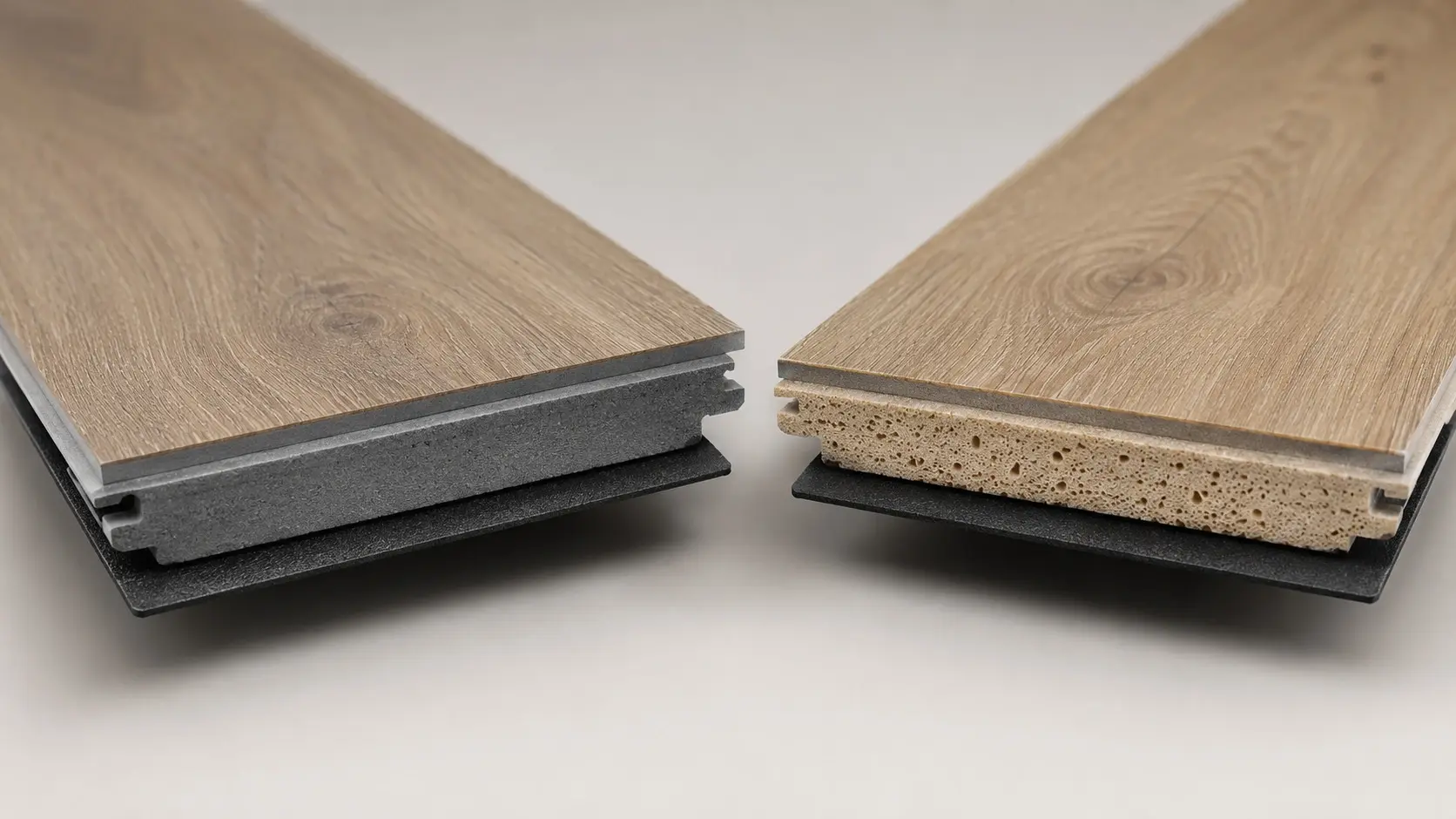
Most LVP sold today has either an SPC (stone plastic composite) or WPC (wood plastic composite) core. SPC cores are denser and more rigid, which tends to hold up better against dents from heavy furniture or dropped items. WPC cores are softer and quieter underfoot, which some homeowners prefer in bedrooms or upstairs rooms, but they can be a bit more prone to denting under concentrated weight.
Neither core type is universally "better." The right choice depends on the room and how it's used. A mudroom or kitchen benefits from the denser SPC core, while a bedroom might do fine with the extra comfort of a WPC core.
How Installation Quality Affects LVP Flooring Lifespan
Even a well-made plank with a generous wear layer can underperform if it's installed poorly. LVP typically goes down one of two ways: as a floating floor with click-and-lock planks, or as a glue-down installation directly to the subfloor. Floating floors are common for DIY installs since they don't require adhesive, but they still need a flat, clean subfloor to lock together properly. Glue-down installation is often preferred in high-traffic commercial spaces or where a more permanent bond is wanted, but it puts even more importance on subfloor prep, since any dip or high spot will telegraph through the plank and can wear through unevenly over time.
Homes with older or uneven subfloors, common in Carson City's historic neighborhoods near downtown as well as some newer construction climbing into the foothills, are worth a closer look before installation. That's not a reason to avoid LVP, since it's often a good fit for exactly these kinds of remodels given its forgiving installation over existing hard surfaces, but it is a reason to have the subfloor checked and leveled where needed rather than installing over an unevenness that will show up as premature wear a few years down the line.
How Carson City's Climate Affects LVP Flooring Lifespan
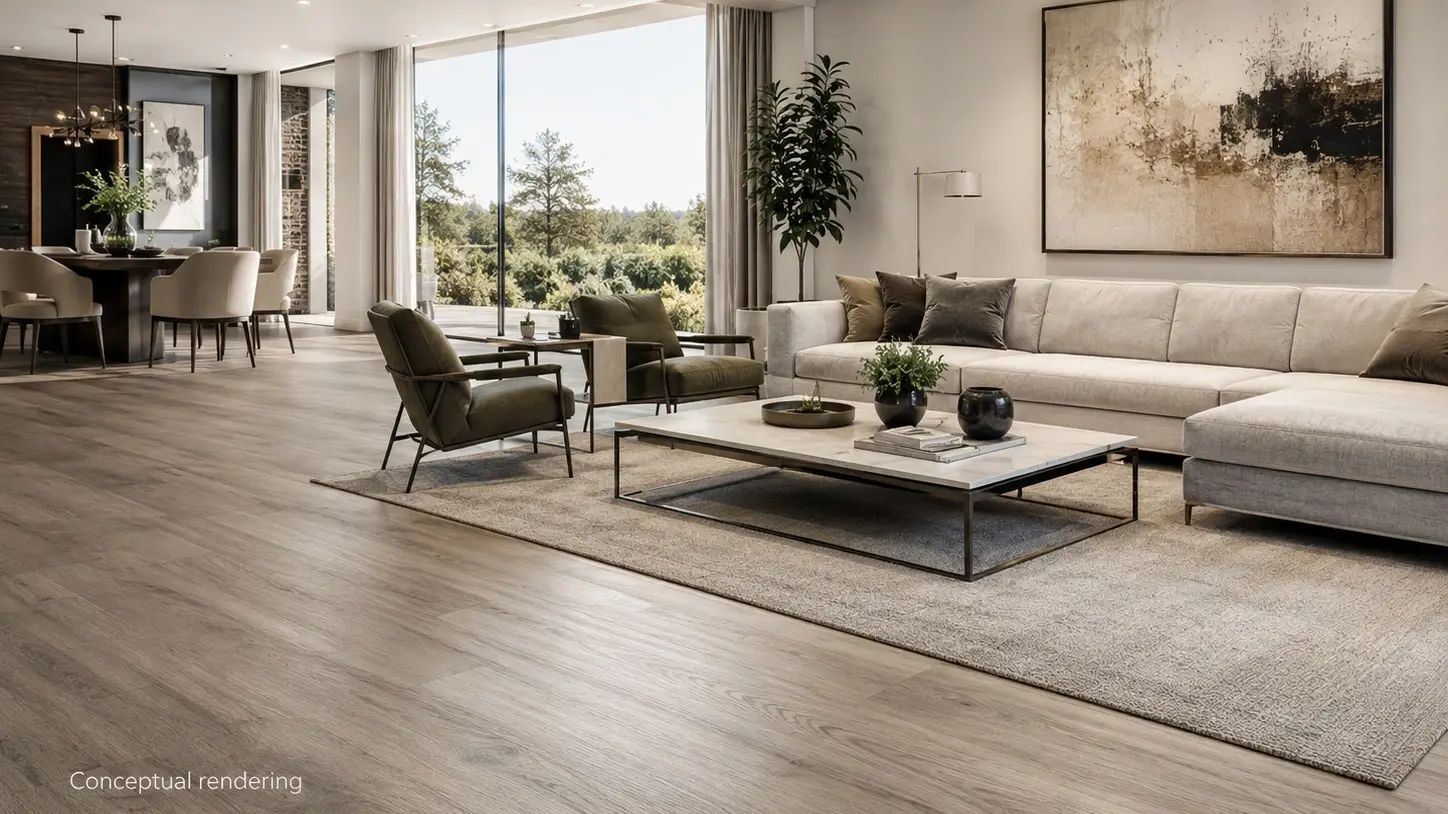
Carson City sits in a high desert basin at the eastern edge of the Carson Range, with hot dry summers, cold winters, and the kind of daily temperature swings typical of that elevation. A few things about that climate are worth factoring into an LVP decision.
Sun exposure. Homes with large west- or south-facing windows can get a lot of direct sun over the course of a day, and LVP's printed design layer can fade with prolonged UV exposure, even in products that include a UV inhibitor. In its lab testing, an independent product-testing organization exposes flooring samples to two straight weeks of ultraviolet light to measure how much the color shifts, and found that vinyl flooring generally performs well against fading compared to other flooring types, though performance still varies by product. If a room gets consistent afternoon sun, it's worth asking about a product's UV resistance specifically, and considering blinds or curtains to cut down on direct exposure over time.
Dust and grit. The high desert environment means more windblown dust and grit tracked in on shoes, especially near entryways and in homes close to unpaved areas or foothill trailheads. Grit acts like fine sandpaper on a wear layer over years of foot traffic, so a walk-off mat at exterior doors and regular sweeping go a long way toward protecting the floor's surface.
Temperature swings. LVP is generally more dimensionally stable than solid hardwood across humidity and temperature changes, which is part of why it holds up reasonably well in this kind of climate. Still, it's good practice to let planks acclimate to the room's temperature before installation, particularly in homes without central heating and cooling running consistently, like a workshop, garage conversion, or seasonal cabin in the foothills.
LVP Maintenance Tips to Extend Its Lifespan
A few ongoing habits make a real difference over the life of an LVP floor:
- Sweep or vacuum regularly to remove dust and grit before it grinds into the wear layer.
- Use a damp mop rather than a soaking wet one, and avoid harsh or abrasive cleaners that can dull the wear layer's finish.
- Add felt pads under furniture legs and use rugs in high-traffic zones to reduce point-load wear.
- Wipe up spills promptly, especially in kitchens, even though LVP is generally water-resistant to waterproof.
- Rotate rugs and furniture occasionally in sun-exposed rooms to avoid uneven fading over time.
None of these habits are complicated, but skipping them consistently is one of the more common reasons a floor wears out earlier than its rated lifespan would suggest.
Signs It's Time to Replace Your LVP Flooring
LVP doesn't fail all at once. Watch for a wear layer that's visibly thinning or scratched through to the design layer beneath, planks that are lifting, curling, or separating at the seams, and noticeable discoloration in sun-exposed areas compared to the rest of the room. Unlike hardwood, LVP can't be sanded and refinished, so once the wear layer is compromised in a section, replacement of that area (or the whole floor, depending on how it was installed) is usually the only option.
How LVP's Lifespan Compares to Other Flooring
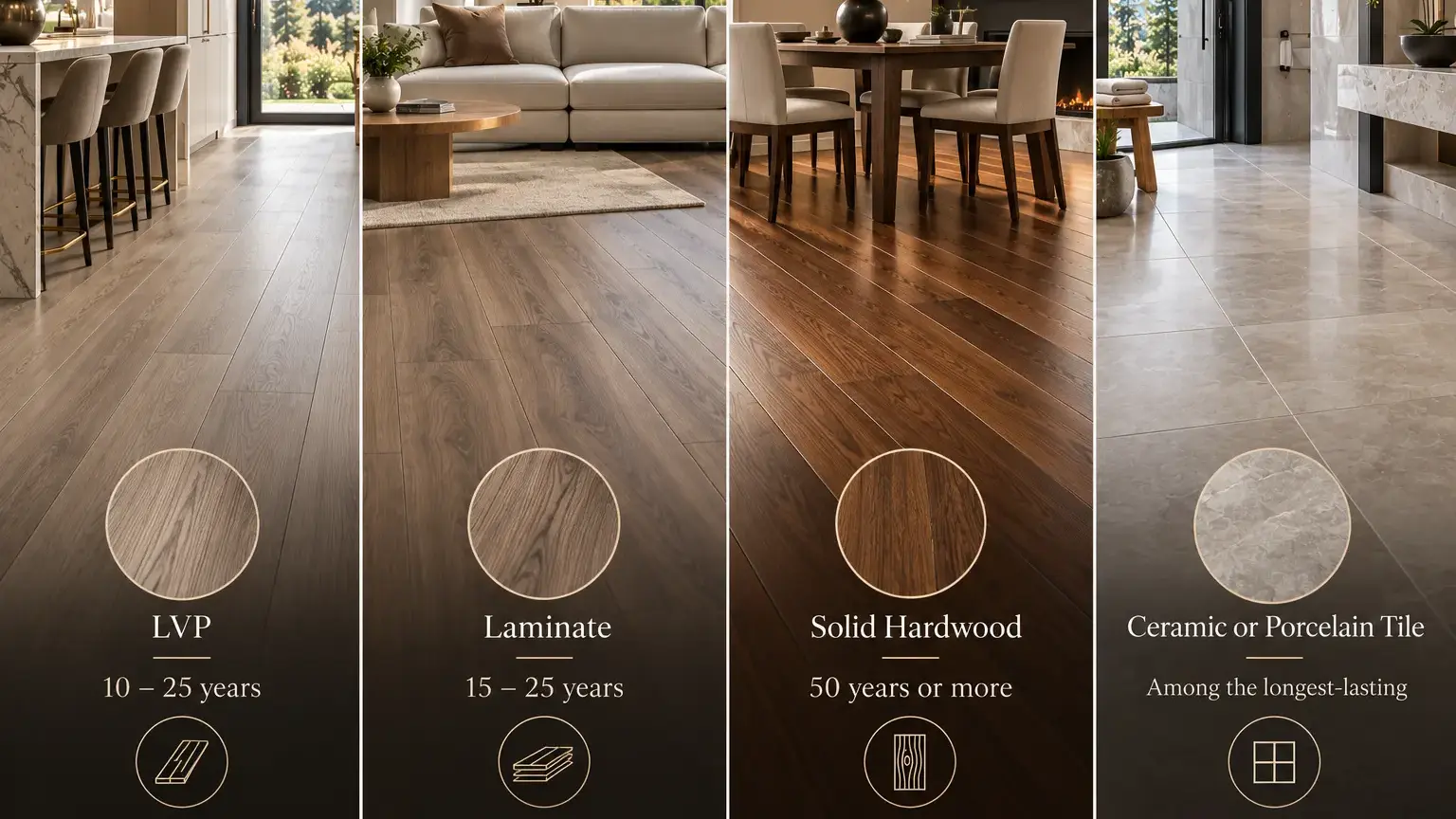
Once you know what to watch for on your own floor, it helps to see LVP's typical lifespan next to other common flooring materials, since the right choice for a remodel often depends on the room as much as the material itself.
- LVP: roughly 10 to 25 years, with the wear layer as the main variable. Cannot be refinished, only replaced.
- Laminate: roughly 15 to 25 years. Similar in that it can't be refinished once the surface wears through, but it typically holds up well against fading.
- Solid hardwood: can last 50 years or more, since it can be sanded and refinished multiple times over its life. A trade publication for wood flooring professionals notes that most solid hardwood floors can be sanded six to eight times over their service life, though hardwood is more vulnerable to moisture, denting, and direct sun than LVP.
- Ceramic or porcelain tile: among the longest-lasting flooring materials available, often outlasting the home's other finishes, but it's a harder, colder surface underfoot and more involved to install or repair.
None of these are strictly "better," since a busy household with kids and pets has different priorities than a quiet guest bedroom or a basement with moisture concerns. LVP tends to land in a middle ground: more affordable and forgiving to install than hardwood or tile, more water-resistant than either, and reasonably durable, without the multi-decade refinishing option that hardwood offers. To explore flooring options for your remodel, visit the Nova Tile and Stone website.
Conclusion
How long LVP flooring lasts in a Carson City home comes down to a handful of factors working together rather than any single number on a box. The wear layer thickness sets the baseline, core type (SPC or WPC) determines how the floor handles dents and comfort underfoot, and installation quality, particularly subfloor prep, decides whether the product reaches its full potential or wears out early. Local conditions like sun exposure, dust, and temperature swings shape the outcome further, so the same plank can perform differently from one house to the next. A little attention up front, matching the right wear layer and core to the room, prepping the subfloor properly, and keeping up with basic maintenance, is usually what separates a floor that lasts 10 years from one that lasts 25.
If you're weighing LVP for a home in Carson City, Nova Tile and Stone's Reno showroom, about 32 miles north on US-395, carries a range of LVP products and can help you compare wear layers and core types side by side.
12835 Old Virginia Road, Suite 24, Reno, NV 89521
(775) 331-6682
Frequently Asked Questions
Most products last somewhere between 10 and 25 years. Entry-level LVP with a thin wear layer tends to land on the lower end, while thicker, better-built products reach the upper end or beyond with proper installation and care.
Generally, yes, since the wear layer is what stands between daily foot traffic and the printed design layer underneath. That said, wear layer thickness is only one factor. Core construction, subfloor prep, and how the room is actually used all play a role too, so two products with the same mil rating can still perform differently.
No. Unlike solid hardwood, LVP can't be sanded and refinished, so a worn section typically gets replaced rather than restored.
Yes. Prolonged direct sunlight can fade the printed design layer over time, even in products with a UV inhibitor, so rooms with large south- or west-facing windows are the ones to watch.
Not so much in overall lifespan as in how each holds up day to day. SPC's denser core resists dents from heavy furniture better, while WPC is softer and quieter underfoot but a bit more prone to denting under concentrated weight. The right pick depends on the room more than which core simply "lasts longer."
Note: Some images on this page may be conceptual renderings created to illustrate design possibilities and may not depict actual installations.