Keeping a quartz countertop looking new in a Minden home comes down to a few consistent habits: wiping up spills quickly, keeping very hot cookware off the surface, using a cutting board instead of cutting directly on the counter, and cleaning daily with warm water and mild dish soap instead of harsh chemicals. Staying consistent with these basics is usually enough to keep quartz looking as fresh as the day it first went in.
Quartz remains one of the most requested surfaces for modern kitchens because it holds up well through years of cooking, prepping, and everyday gathering. As an engineered material, quartz combines natural minerals with resin, which gives it a look that feels both polished and practical while making it fairly straightforward to maintain.
For homeowners across Minden and the surrounding area, that mix of durability and easy care is a big part of why quartz keeps getting chosen for kitchen islands, bathroom vanity tops, and other frequently used counter spaces. You can browse our full range of countertop options on our homepage to see what fits a specific project.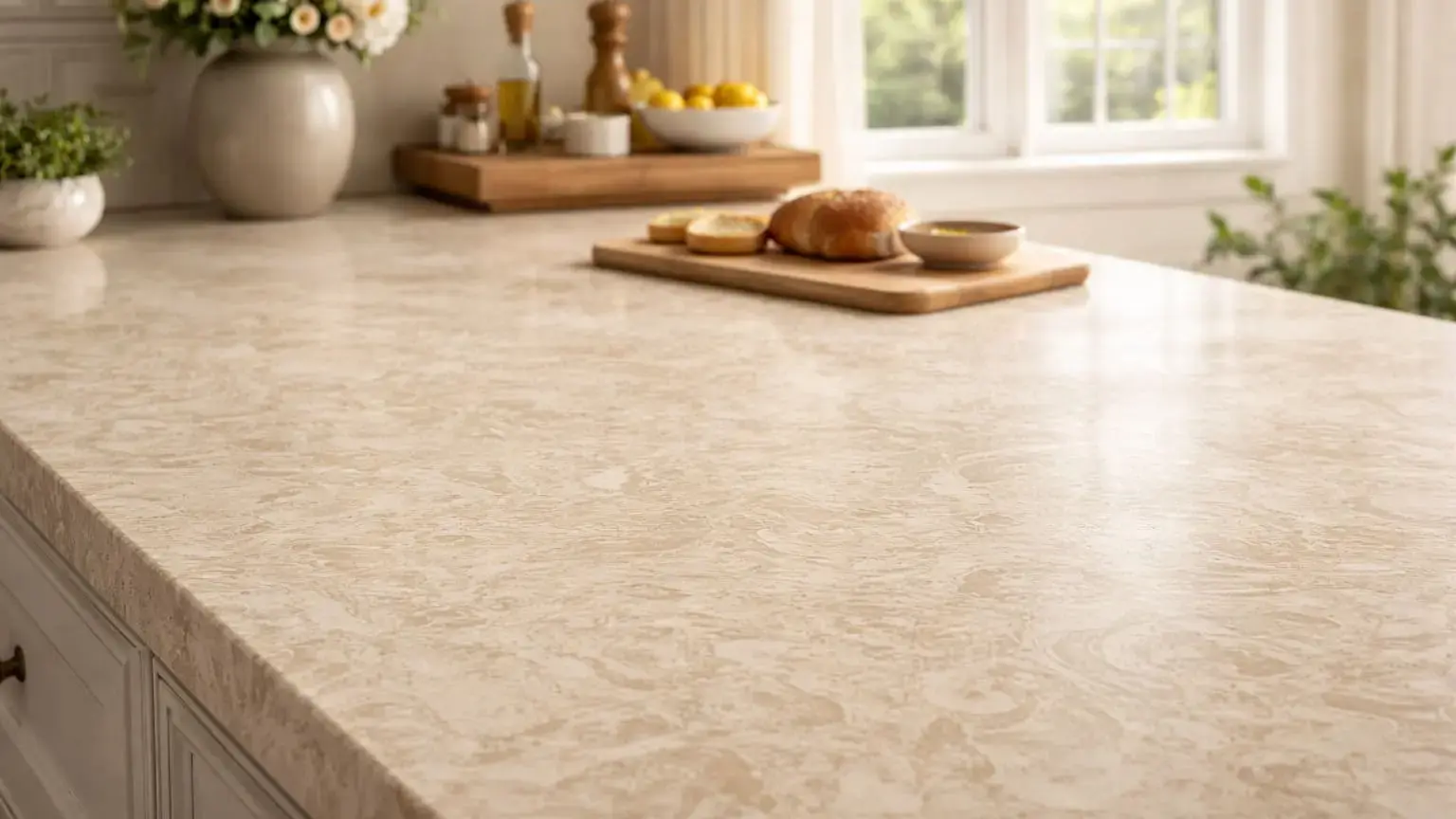
Why Quartz Continues to Be a Favorite for Kitchens
Because quartz is engineered rather than cut from a single natural block, manufacturers can control color consistency and surface texture with a level of precision that natural stone cannot always match slab to slab. This makes it a popular choice for kitchen counters, islands, and bathroom vanity tops where a predictable, repeatable look matters.
Quartz works well for food preparation, and keeping a cutting board close by still protects both the knife edge and the finish underneath. Homeowners also tend to appreciate that quartz comes in more than one finish, and that choice changes both the look of a room and the way light moves across the counter throughout the day.
Large kitchen islands in particular benefit from this consistency, since a single expanse of counter shows any variation in tone or pattern far more obviously than a smaller vanity or backsplash would. For households juggling several cooks, growing kids, or frequent entertaining, a surface that stays visually steady across a big footprint tends to reduce the small frustrations that come with everyday wear.
Choosing Between Polished and Honed Quartz Finishes
Quartz surfaces are typically available in a polished finish or a honed, matte finish, and each brings a different feel to a space. A polished finish reflects light and creates a brighter, glossier surface, which tends to work well in kitchens that already lean toward a bit of shine through cabinetry and hardware.
A honed finish has a softer, more muted look and can make light surface marks a little less noticeable between cleanings. Neither option changes how the material should be cared for day to day, but the decision often comes down to personal taste and how a space gets used. Homeowners comparing a quartz kitchen island often look at both finishes side by side before settling on one for their project.
Cabinet color plays a role in this decision as well. Darker cabinetry paired with a polished finish can brighten a room considerably, while lighter cabinets alongside a honed surface often create a calmer, more understated palette.
Lighting fixtures overhead also change how each finish reads once the space is fully furnished. This is part of why many buyers prefer to view larger slabs in a showroom setting rather than relying only on a small paint chip sized swatch at home.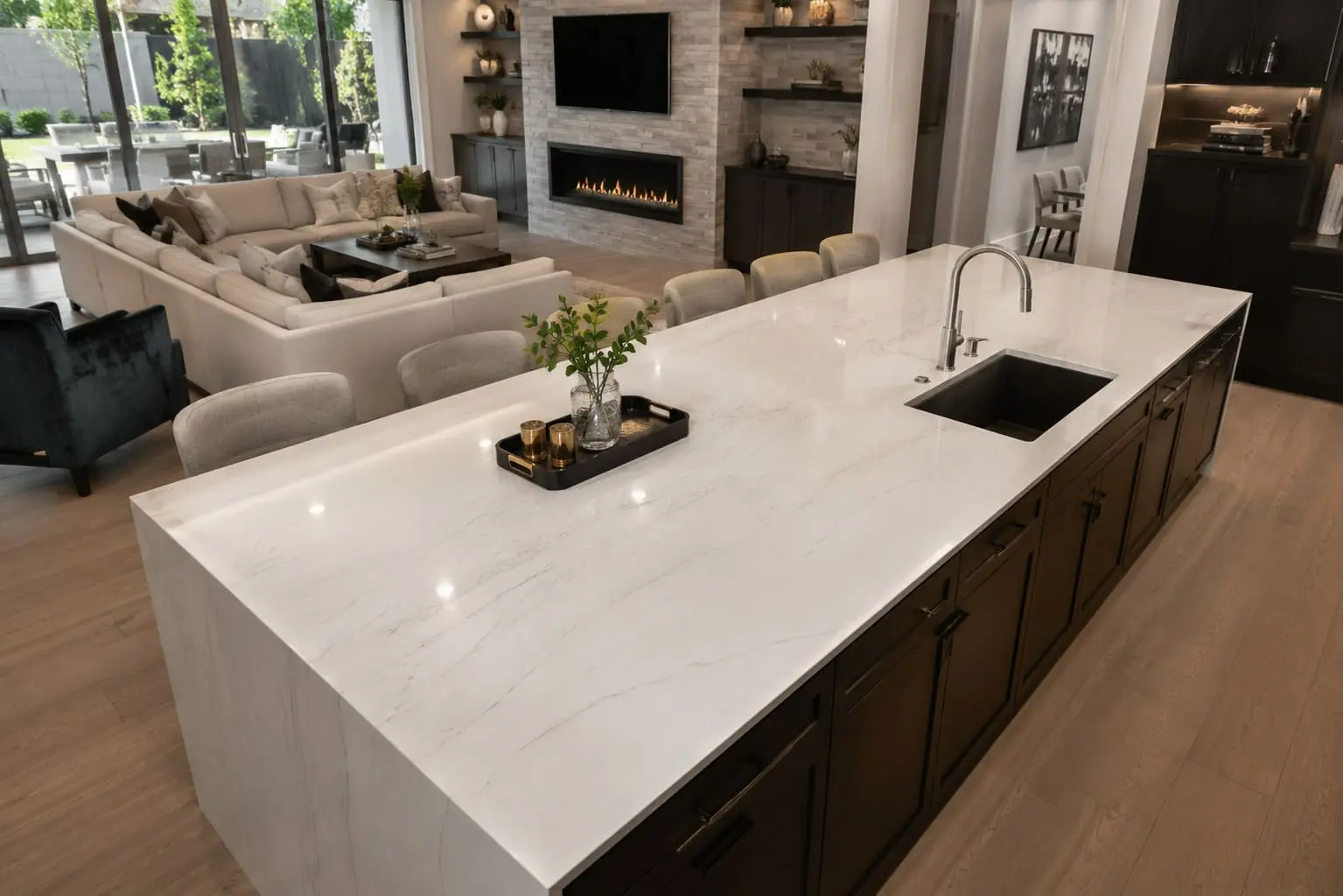
Daily Cleaning Habits That Keep Quartz Countertops Looking New
Quartz does not need sealing the way many natural stones do, since it is engineered to be non-porous. That quality helps it resist everyday residue from cooking oil, coffee, or spills, but a regular wipe-down still keeps it looking its best.
A simple habit of wiping the counter with warm water and a mild dish soap after use is usually enough to maintain its appearance over time. Stain resistance is one of quartz's strong points, yet acidic spills such as wine, citrus juice, or vinegar based dressings still do best when wiped up promptly rather than left to sit during meal prep.
Maintenance is generally low effort with quartz, though bleach and strong solvents are worth skipping, since they tend to dull the finish faster than routine washing would. Homeowners who want a broader reference point can also review general surface care guidelines that apply across different types of stone and engineered materials.
A soft cloth or non-abrasive sponge is generally enough for most cleanup. Drying the counter after wiping it down helps prevent the faint water spots that can build up near a sink or coffee station over weeks of use. Building this into an existing kitchen routine, rather than treating it as a separate task, tends to make the habit stick.
Managing Heat, Scratches, and Everyday Wear
Kitchens naturally involve heat, whether from a pot coming off the stove or an appliance running nearby. Normal kitchen heat is rarely an issue for quartz. Sudden temperature swings from very hot cookware placed directly on the surface, however, can stress it over time.
Keeping a trivet or heat pad within reach is a simple habit that protects both the counter and the resin that holds the material together. Scratches are another common concern in busy households.
Scratch resistance is another advantage, though knife edges can still leave fine marks if food is cut directly on the counter, especially under certain lighting. A cutting board within easy reach solves most of this concern without changing how the kitchen actually functions.
Small habits make a difference too, like sliding heavy cookware across the counter rather than setting it down with force, or wiping up flour and coarse spices before they get pressed into the surface. These small habits add up over months of regular use and help the counter keep its original texture.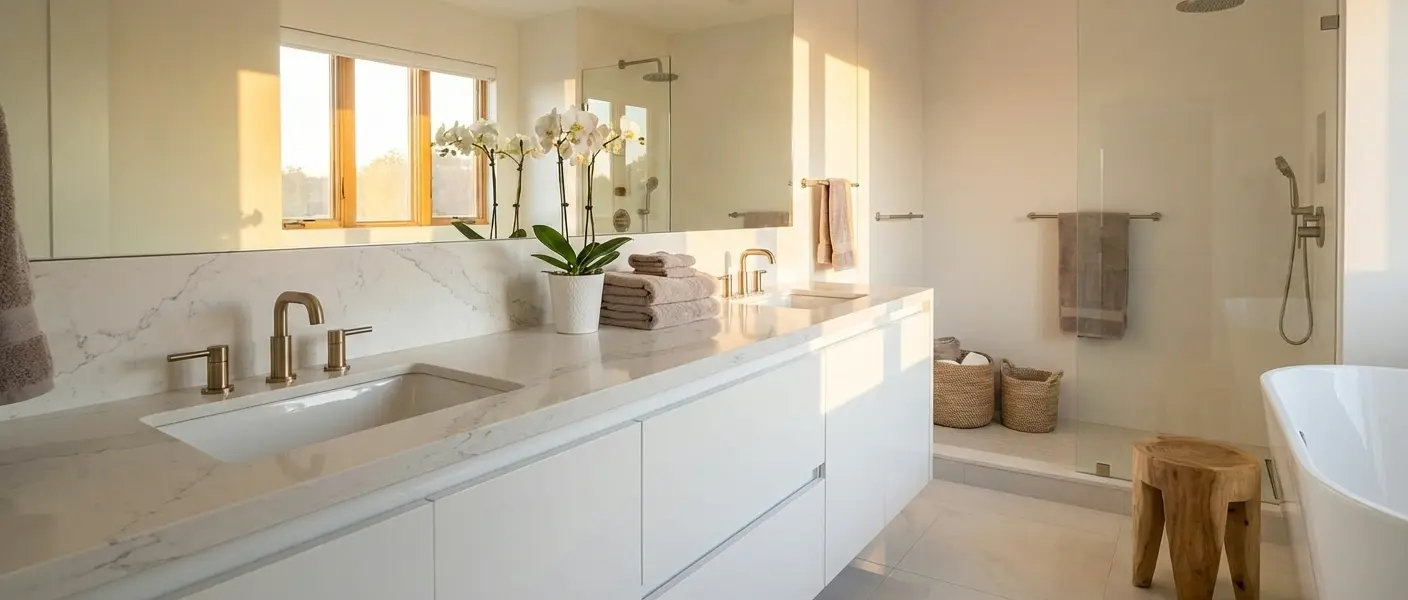
Where a Quartz Countertop Performs Best
A quartz countertop is generally chosen for kitchen counters, islands, and bathroom vanity tops, where steady indoor temperatures and controlled lighting help the material perform the way homeowners expect. Because it is engineered with resin, quartz responds differently to constant sun and shifting outdoor temperatures compared with countertop materials that are quarried specifically for exterior use.
This is part of why it remains such a strong fit for interior kitchens and baths. Homeowners weighing a quartz countertop against a quartzite countertop often want to understand how each material forms and performs before committing to one.
The differences between quartz and quartzite largely come down to that distinction, and understanding it early tends to prevent surprises later in a renovation. Bathroom vanity countertops are a particularly strong fit for quartz, since the material handles everyday moisture from nearby showers and sinks without the extra upkeep that some porous countertop materials can require in humid spaces.
Exploring Quartz Options at Our Minden Showroom
Seeing quartz in person often makes finish and color decisions easier, since lighting and surrounding materials change how a slab reads compared with a small sample chip. At Nova Tile and Stone, our Minden showroom displays a range of quartz countertop slabs in different colors and finishes, alongside other natural stone countertop options.
This gives homeowners across Minden and nearby communities a chance to compare materials side by side in a single visit. Bringing along cabinet samples, paint swatches, or even a few photos of the space helps narrow down options more quickly during a design consultation.
For homeowners ready to talk through a project, a free design consultation is a useful next step for working through layout, finish, and material questions together. Those planning a trip can look at the Minden location ahead of time to map out a stop around other errands nearby.
Conclusion
Keeping a quartz countertop looking new in a Minden home does not require a complicated routine. A little consistency with cleaning, mindful use of heat and cutting surfaces, and an awareness of where the material performs best are usually enough.
Keeping up with these habits helps a countertop look the way it did when it was first put in place. Quartz may already be part of your home, or you might still be comparing it against other surfaces.
Either way, taking the time to understand these basics can make both the decision and the years of use that follow feel a lot more straightforward. For anyone who has already settled on a slab, it is possible to request a quote whenever the time feels right.
Frequently Asked Questions
Daily upkeep is straightforward: a mild dish soap and warm water handle most spills, and taking a moment to dry the surface afterward keeps water spots from forming near sinks or coffee stations over time.
It tolerates everyday kitchen warmth well, though a trivet or heat pad is a smart habit for anything straight off the stove or out of the oven, since sudden heat changes can wear on the surface over the years.
It is a common choice for food prep areas, and pairing it with a cutting board helps protect both the knife blade and the finish from repeated contact.
Sealing is not part of the picture with quartz, since the engineered surface is built to be non-porous from the start. A simple wipe-down routine is what keeps it looking its best.
A polished option leans bright and reflective, while a honed option has a quieter, matte texture. Most homeowners end up choosing based on which look fits the room rather than any difference in day to day durability.
Note: Some images on this page may be conceptual renderings created to illustrate design possibilities and may not depict actual installations.